
There is something about the shift into November that makes hair color feel more considered. The light changes, the contrast between skin and strand sharpens, and the tones people reach for tend to settle into a quieter, richer register. November hair colors in 2026 lean into that instinct, favoring depth over brightness and controlled warmth over anything that reads as summery or overprocessed. The mood is layered, deliberate, and unhurried.
What makes a November tone work has less to do with a single shade and more to do with how several visual variables interact. Across the looks gathered here, the recurring decisions involve tonal range, meaning the distance between the darkest and lightest visible shade in a single head of hair. They involve placement, where highlights or color shifts begin and how far they travel. They involve texture and movement, because curled or waved hair catches color differently than straight, and that changes the way a tone reads in natural or salon light. And they involve restraint, how much of the hair is left untouched or kept close to a natural base, and how that quiet zone anchors everything else. These are the measures that separate a color that looks intentional from one that simply happened.
1. Dark Base With Vivid Magenta Layered Ends
The hair here is cut in visible layers, with a dark brunette base running from root to mid-length and a saturated magenta-pink coloring the lower half and the tips of every layer. The layered cut makes the color shift more dramatic, because each tier catches the pink separately, creating a stacked, feathered effect. The person wears a plain white tee, which keeps all visual attention on the hair itself.
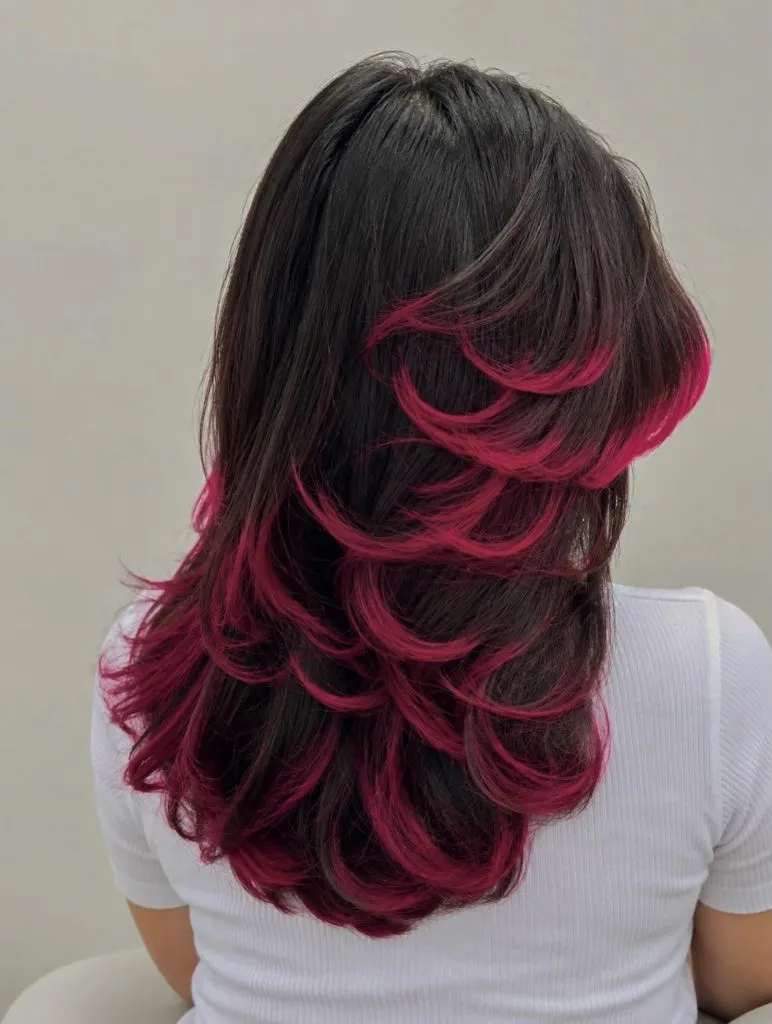
Photo via Instagram
The strength of this color choice sits in the layering. Because the cut is heavily stepped, each section of magenta operates almost independently, catching light on its curved ends and reading darker where it folds under. The dark root zone is left completely uncolored, which gives the eye a resting point before the intensity begins. That contrast between the muted top and the saturated bottom is what keeps the look from feeling overwhelming, and the white shirt functions as a neutral frame that lets the pink occupy the entire visual field without competition.
The reader takeaway is that a bold fashion color gains structure when it follows the architecture of the cut rather than sitting as a flat block. Letting the base stay dark gives the vivid tone a boundary, and choosing a layered cut means the color reveals itself in stages rather than all at once, which makes it feel considered rather than chaotic.
2. Long Ash Blonde Waves With Darker Root Shadow
The hair falls well past the shoulders in loose, wide waves, colored in a cool-toned ash blonde with visible darker roots and a subtle shadow running through the mid-lengths. The lighter pieces sit mostly around the face and through the front sections, while the back and underneath carry more of the natural base tone. A black salon cape covers the clothing, and the setting appears to be a warmly lit salon interior.
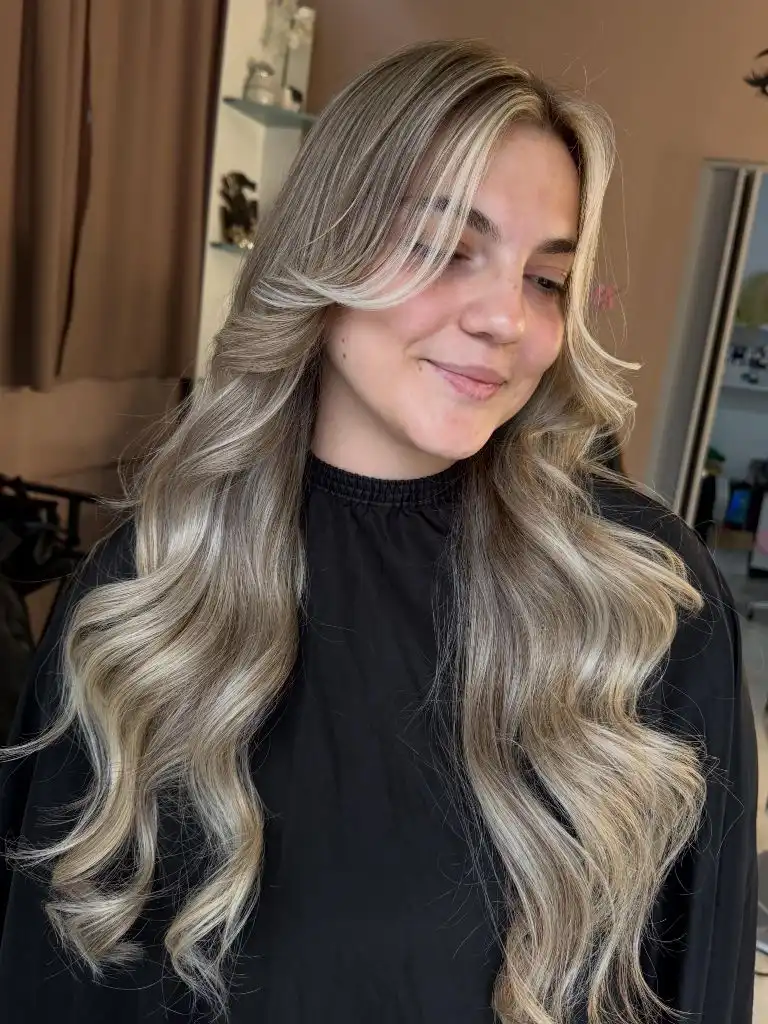
Photo via Instagram
What holds this together is the temperature. The blonde is kept cool and slightly muted rather than golden, which gives it a November-appropriate quietness even at a relatively light level. The root shadow is not a sharp grow-out line but a deliberate gradient that starts dark and eases into the lighter tone across several inches. The waves help, too, because they create pockets of shadow between the lighter surface strands, adding depth that a straightened version of the same color would not have. The face-framing pieces are the brightest point, which draws attention upward and inward.
The useful move here is recognizing that a cool-toned blonde reads as seasonal and grounded when paired with a visible root shadow. The gradual transition from dark to light matters more than the lightness itself, and loose waves add the internal contrast that keeps a single-process look from feeling flat.
3. Ash Mushroom Blonde With Soft Curtain Fringe
Mid-length hair falls in soft, open waves, colored in a muted ash-toned mushroom blonde. The roots are slightly darker, but the overall range is narrow, staying within a close band of cool brown and ashy taupe. A curtain fringe parts softly at the center, framing the face. The person wears a black salon cape branded with the word “Loft,” and the background shows a salon wall with shelves of nail polish.
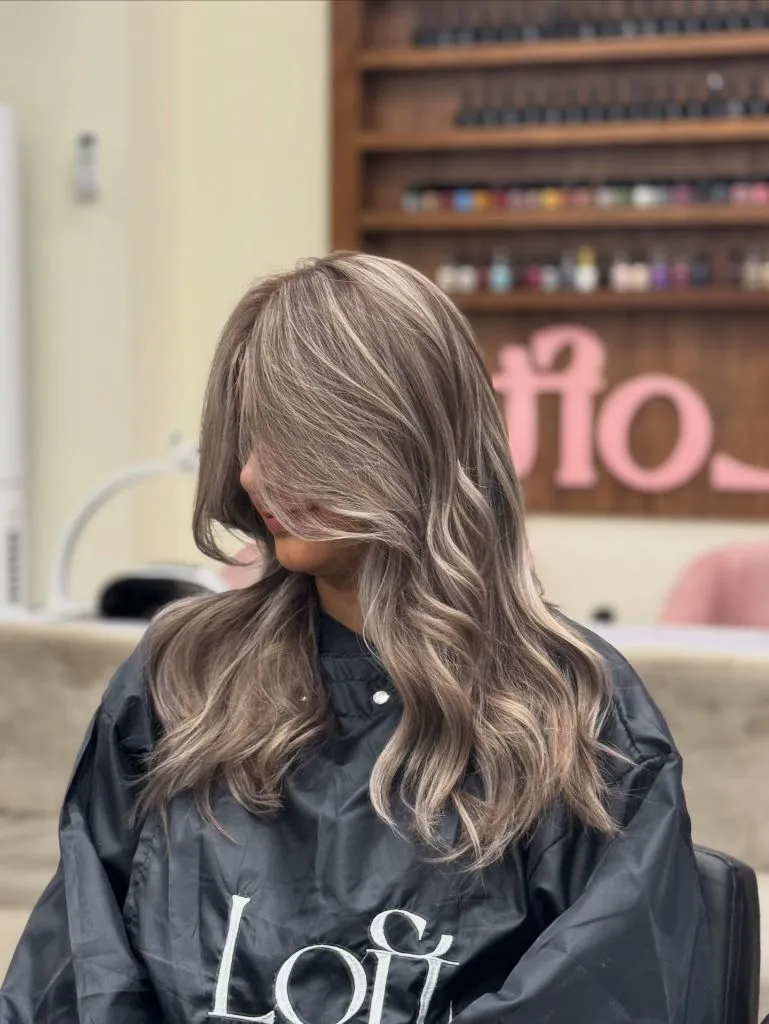
Photo via Instagram
The tonal range here is deliberately compressed. There is no dramatic shift from dark to light, just a quiet play between a slightly deeper root and a cool, desaturated mid-tone that carries through the lengths. This is the kind of color that reads as almost natural but slightly refined, as if the base tone were simply polished rather than changed. The fringe adds shape without weight, and because it matches the rest of the color exactly, it does not create a separate visual zone. The waves are loose enough to show dimension but not so defined that they impose a pattern.
The strongest lesson is that a low-contrast color can still carry quiet depth when the undertone is cool and ashy rather than warm. Keeping the fringe and lengths in the same tonal family creates unity, and the narrow range between root and end makes the whole look feel effortless and seasonally appropriate.
4. Grown-Out Ombré With Warm Blonde Ends
Long straight hair parts at the center, showing a dark brunette root zone that extends several inches before transitioning into a warm, golden blonde through the mid-lengths and ends. The color shift is gradual but visible, with the blonde becoming lighter and warmer toward the tips. The hair appears mostly unstyled, with a natural, slightly textured surface. The person sits in a salon chair wearing a black cape, with the same “Loft” branding visible in the background.
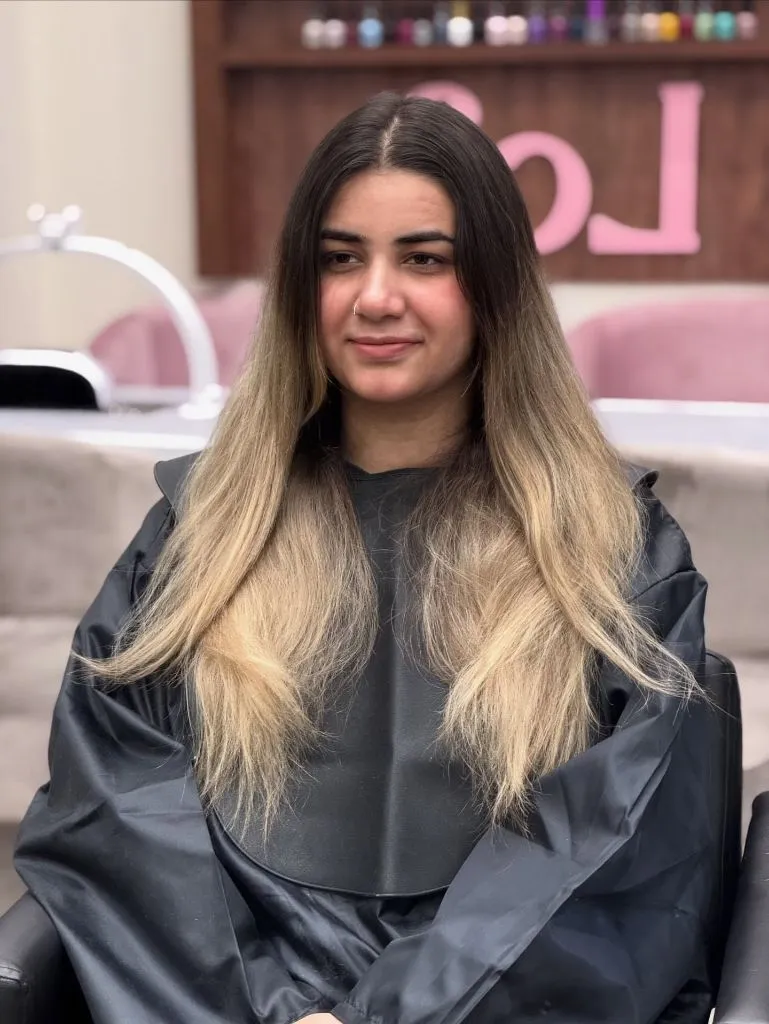
Photo via Instagram
This reads as an ombré that has been growing for some time, with the root area now occupying a larger portion of the overall length than it might have originally. That extended dark zone actually works in its favor for November, because it grounds the warmth of the blonde and prevents it from reading as overly bright or summer-coded. The lack of styling is part of the story here, too. Without curls or waves to break up the surface, the color transition is fully exposed, and the gradient from dark to light has to stand on its own. It does, largely because the tones are complementary rather than clashing.
What stands out most is how a longer root zone changes the character of a blonde ombré. When the dark portion grows past the ears and into the mid-lengths, the overall impression shifts from highlighted to rooted, which gives the warm blonde tones a more grounded, autumnal quality without any new color being applied.
5. Deep Auburn Red With Natural Straight Texture
The hair is long, straight, and colored in a deep auburn red that catches warm, coppery light across the surface. The roots appear slightly darker, but the overall color is relatively uniform from scalp to ends. The texture is smooth and natural, with no visible curling or waving. The person is photographed outdoors in front of a brick building, wearing a black leather jacket over a dark sweater with a light collar visible underneath.
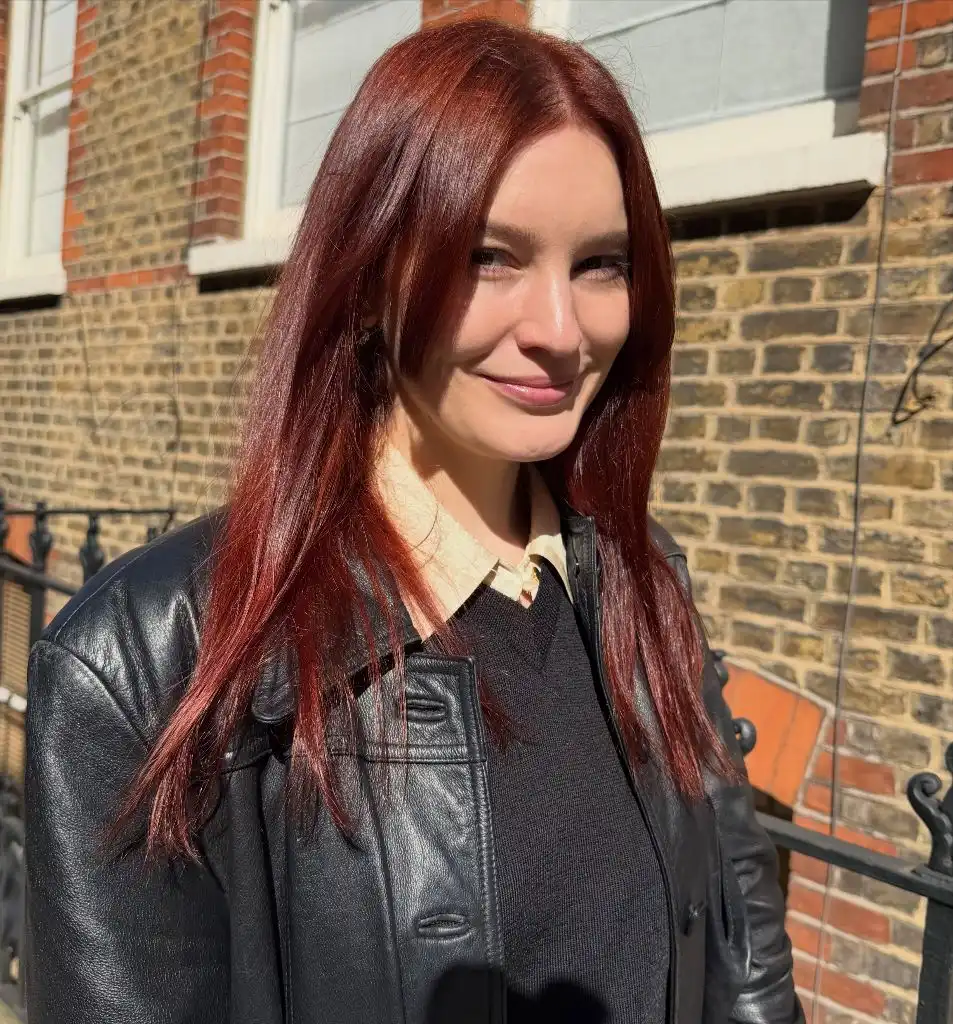
Photo via Instagram
Auburn in this depth reads as a November color almost by default, because it sits in that zone between brown and red where the warmth is present but not aggressive. The straight texture lets the color show itself evenly, without the pockets of shadow and highlight that waves would create, which means the tone has to be well-calibrated to avoid looking flat. Here it works because of the slight variation between the darker root and the lighter mid-shaft, which gives the eye just enough movement. The leather jacket and dark clothing create a moody, cool-toned frame that makes the red warmth of the hair stand out even more sharply.
The best move here is pairing a warm hair tone with cooler, darker clothing so that the color contrast happens between the hair and the outfit rather than within the hair itself. That external contrast can make a single-tone red feel more intentional and more striking than it would against lighter or warmer fabrics.
6. Warm Bronde Balayage With Curtain Fringe
The hair is long and styled in loose, defined waves, colored in a warm bronde balayage that transitions from a slightly darker root through golden and honey tones at the mid-lengths and ends. A soft curtain fringe frames the face, parting naturally at the center. The setting is a busy salon space with white walls and high ceilings, and the person wears a black salon cape with an “O&M” logo visible.
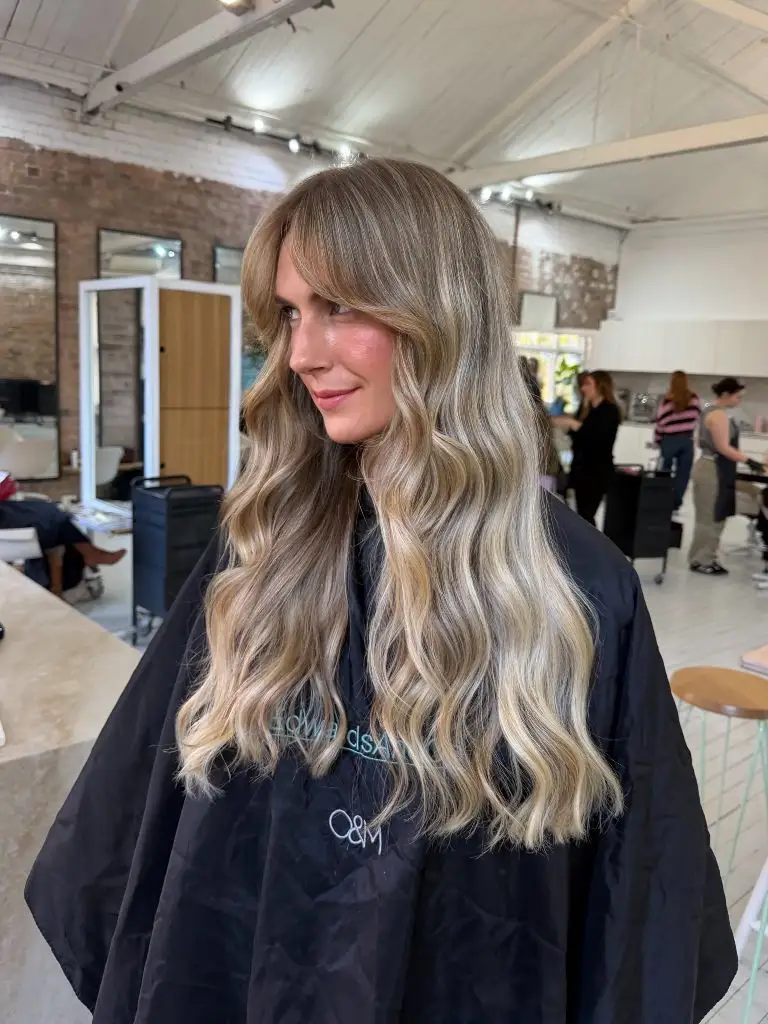
Photo via Instagram
The balayage here is well-placed, concentrating the lightest pieces around the face and through the front sections while the back and underneath stay closer to the natural base. This creates a sense of brightness that is directional rather than all-over, which keeps the warmth from overwhelming the whole head. The waves add internal shadow, making the color look more dimensional than it would on a flat, straight surface. The fringe is an important detail because it carries some of the lighter balayage tones right up to the forehead, which means the brightness begins at the very top of the visible hair rather than only appearing halfway down.
The useful idea is that face-framing pieces do most of the work in a balayage, and when the fringe carries the same lighter tone, the brightness reads as intentional and complete. Keeping the back slightly darker saves the look from going too uniform and preserves the depth that makes November-appropriate color feel rich.
7. Dark Cherry Ombré With Sleek Blow-Dry
The hair is long and sleek, styled in a smooth blow-dry with soft curled ends. The color runs from a very dark, nearly black root zone through a deep cherry-burgundy that intensifies toward the tips. The surface is glossy and the color transition is seamless, with no harsh lines between the dark top and the red-toned lower half. The person is seen from the back, wearing a dark top, and the background is a bright, softly lit salon.
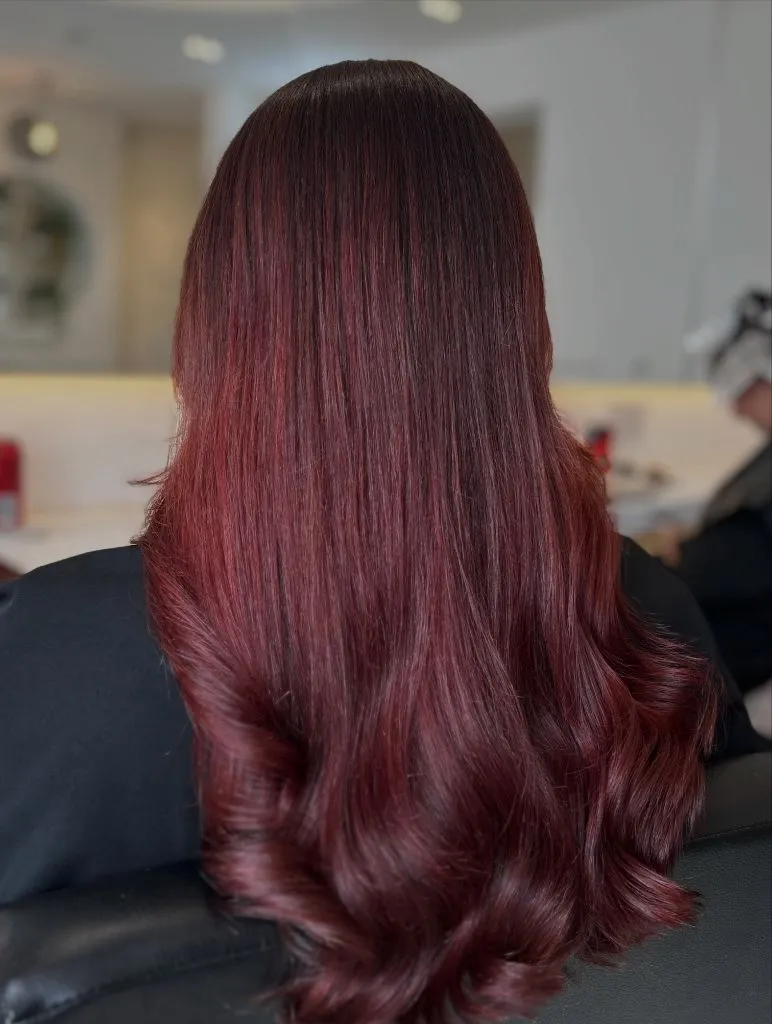
Photo via Instagram
The gloss is doing a lot of the work here. Because the surface is completely smooth and reflective, the color catches light in a continuous band that makes the burgundy look deeper and more saturated than it might on textured or matte hair. The dark root zone is significant, occupying perhaps the top third of the hair, which means the cherry tone emerges gradually and never dominates the overall silhouette. The curled ends are the only moment of movement, and they lift the very darkest, richest portion of the color into three-dimensional shapes that reveal slightly different tones on each curve.
The reader takeaway is that gloss and smoothness amplify depth in a dark color more than any amount of added highlights would. A deep burgundy or cherry tone gains richness from surface finish, and keeping the styling sleek lets the color itself become the texture and the visual interest.
8. Warm Honey Blonde Waves With Natural Root
Long hair is styled in soft, bouncy waves and colored in a warm honey blonde that transitions smoothly from a slightly deeper, natural-looking root. The tonal range is moderate, staying within the golden and beige family without reaching either platinum or true brunette. The surface shows good shine, and the waves create natural pockets of lighter and darker tone. The person faces away, and a decorative mirror is visible in the background salon setting.
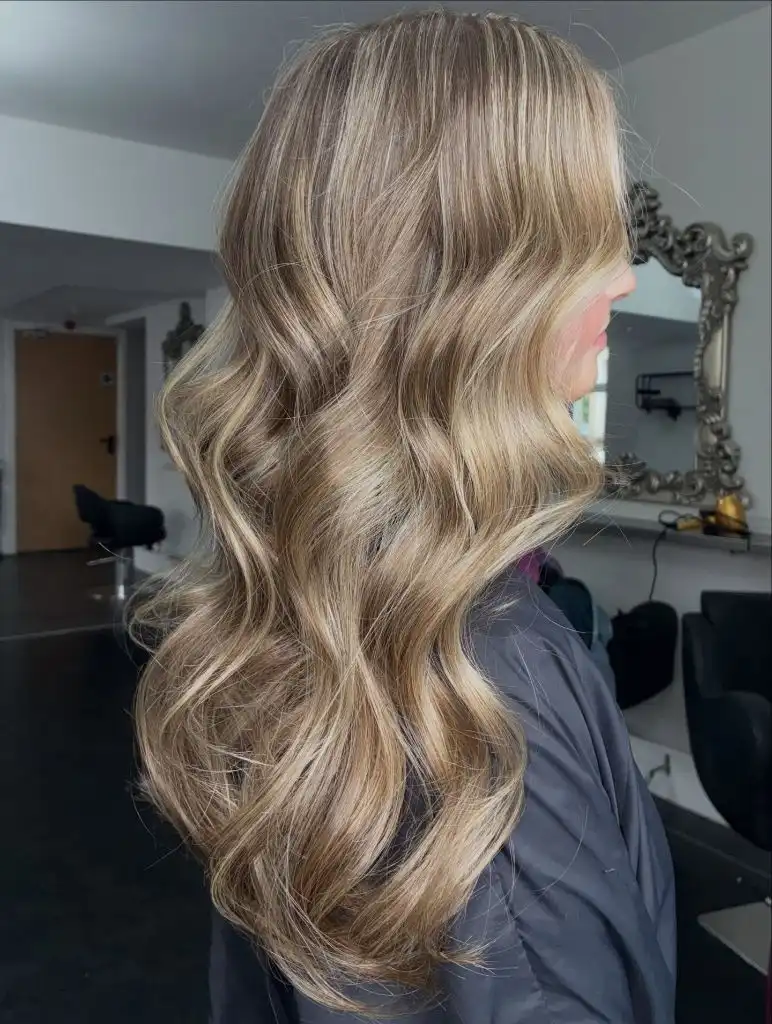
Photo via Instagram
The warmth here is the defining quality. Every visible tone sits in the gold-to-honey range, with no cool or ashy notes to interrupt the palette. That consistency gives the color a rich, almost caramel quality that feels appropriate for the cooler months because it reads as warm from within rather than sun-bleached. The waves are key to the dimension, creating alternating bands of lighter surface and shadowed interior that make a relatively narrow tonal range look much more complex than it is. The root is present but gentle, never creating a sharp line.
The strongest lesson is that a warm blonde does not need a wide tonal range to look dimensional. Waves alone can create the illusion of multiple shades from a single well-chosen tone, and a gentle root shadow keeps the overall look grounded without darkening the feeling of the color.
9. Medium Brown With Visible Texture and Natural Ends
The hair is long and shown from the back, colored in a medium warm brown that appears relatively unprocessed. The texture is natural and slightly wavy, with some visible frizz and a rougher surface compared to a salon-styled finish. The ends are lighter than the roots, suggesting either natural sun-lightening or faded previous color. The person wears a black salon cape, and a mirror and salon shelf are visible behind.
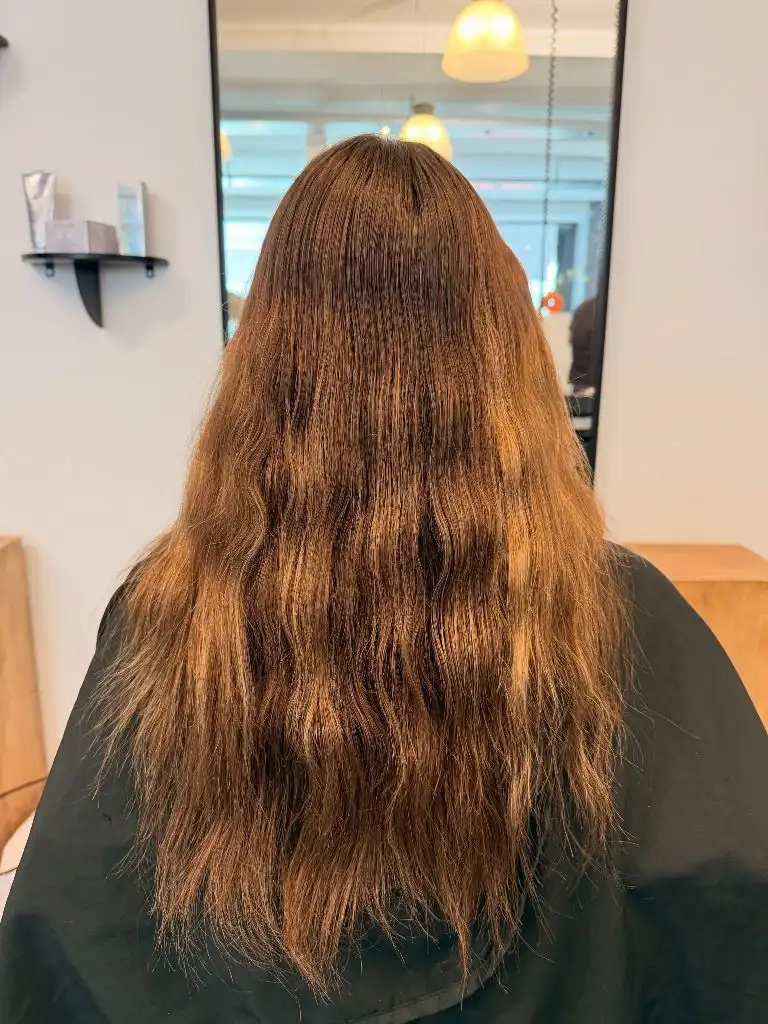
Photo via Instagram
This image reads as a before photo or a starting point, and that context is what makes it useful in a color conversation. The natural texture is unmanipulated, which means the color is showing itself without any styling assistance. The warm brown base is even enough, but the lighter, slightly brassy ends suggest that whatever was there previously has faded unevenly. The root-to-end transition is not a designed gradient but an organic one, which creates a different kind of visual rhythm, less controlled, more lived-in. The overall impression is honest rather than curated.
What stands out most is how unprocessed or faded hair reveals the natural tonal range that a colorist would later work with or against. Understanding a starting point like this, where the warmth sits, where the lightness has accumulated, is part of what makes a final November color feel intentional rather than formulaic.
10. Brown-to-Blonde Balayage With Loose Texture
The hair is medium-long, styled in loose, soft waves, and colored in a balayage that moves from a medium brown root through warm caramel and into lighter blonde at the ends. The transition is smooth and hand-painted in character, with no foil-like striping visible. The setting appears to be a modern salon with pampas grass in the background, and the hair is seen from the back.
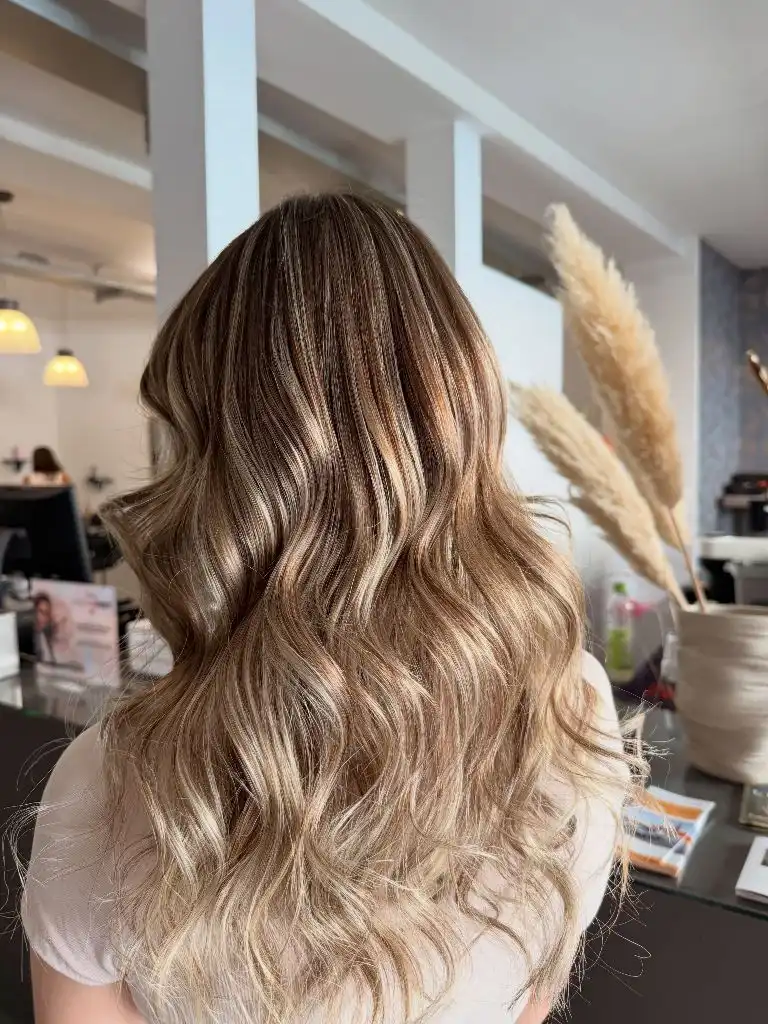
Photo via Instagram
The balayage placement here follows the classic pattern of keeping the top darker and sweeping light through the lower half, but the execution is soft enough that there are no hard transitions anywhere. The brown at the roots is warm and natural-looking, and it blends through a caramel zone before arriving at the blonde ends, which gives the eye a three-stage journey rather than a simple dark-to-light split. The loose waves add depth without imposing a strong pattern, and the lighter pieces catch more light on the outer curves of each wave. This kind of graduated warmth works well in November because it feels like a natural deepening from summer tones.
The useful move here is allowing a balayage to include a visible middle zone between the root and the lightest point. That caramel bridge prevents the color from reading as simply “dark on top, light on bottom” and instead creates a more believable, multi-tonal narrative that carries well into the cooler months.
11. Glossy Dark Brunette With Straight Blow-Dry
The hair is medium-long, styled completely straight in a smooth, glossy blow-dry, and colored in a very dark brunette that appears close to the natural shade. The surface is highly reflective, showing a clear light band running down the length. The person is seen in profile, leaning back slightly in a salon chair, wearing a dark red or maroon top. A small section of lighter root or regrowth is visible near the part line.
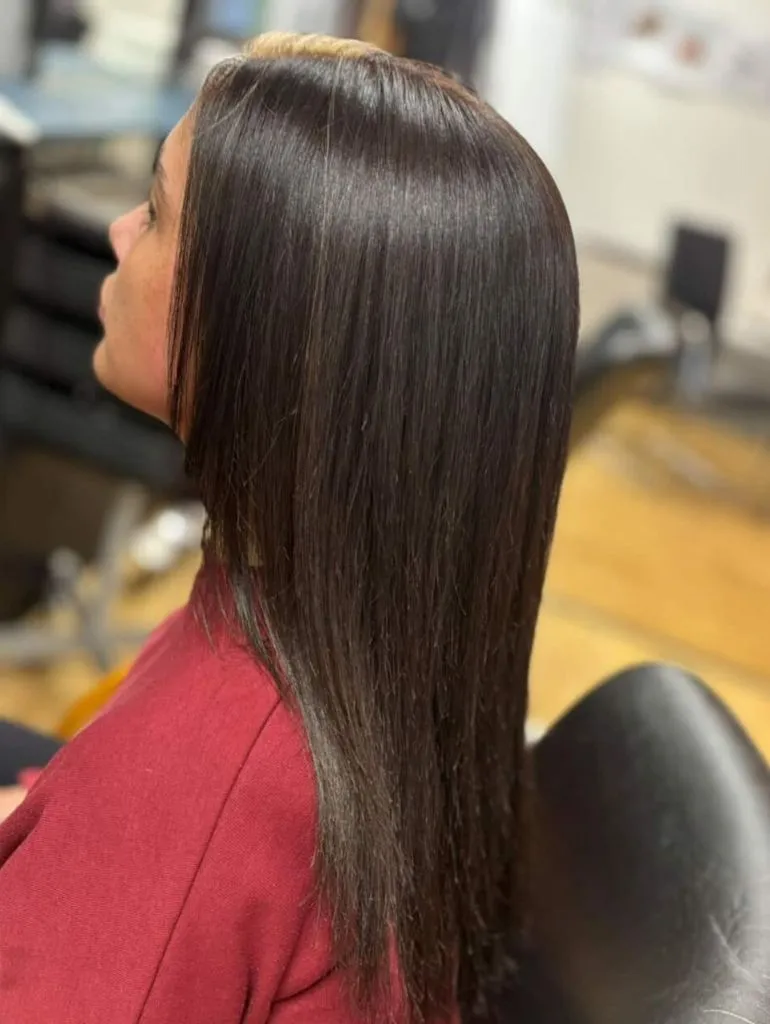
Photo via Instagram
The power here is almost entirely in the finish. The color itself is simple, a deep, cool-leaning brunette with minimal visible variation, but the straightness and the gloss turn it into something that reads as very deliberate. The light band running down the center of the hair functions like a built-in highlight, created by the smooth surface rather than any applied color. The dark red clothing picks up just enough of the warmth in the brown to create a subtle echo without matching it exactly. That slight dissonance between the cool hair and the warm fabric keeps the palette interesting.
The beauty of this is how a single-tone dark color can look rich and considered with nothing more than a polished finish. No highlights or lowlights are needed when the surface itself creates dimension through shine, and a smooth blow-dry on dark hair can carry as much visual weight as a complex color treatment.
12. Sandy Blonde Balayage With Beachy Wave Texture
The hair is very long, falling past the mid-back, styled in loose, beachy waves with a sandy blonde balayage. The roots are a medium brown, and the lightness builds gradually through the lengths, reaching its brightest point at the very ends. The texture appears somewhat lived-in, with a natural, slightly tousled quality. The person sits in a salon chair, and the setting is a light, airy space.
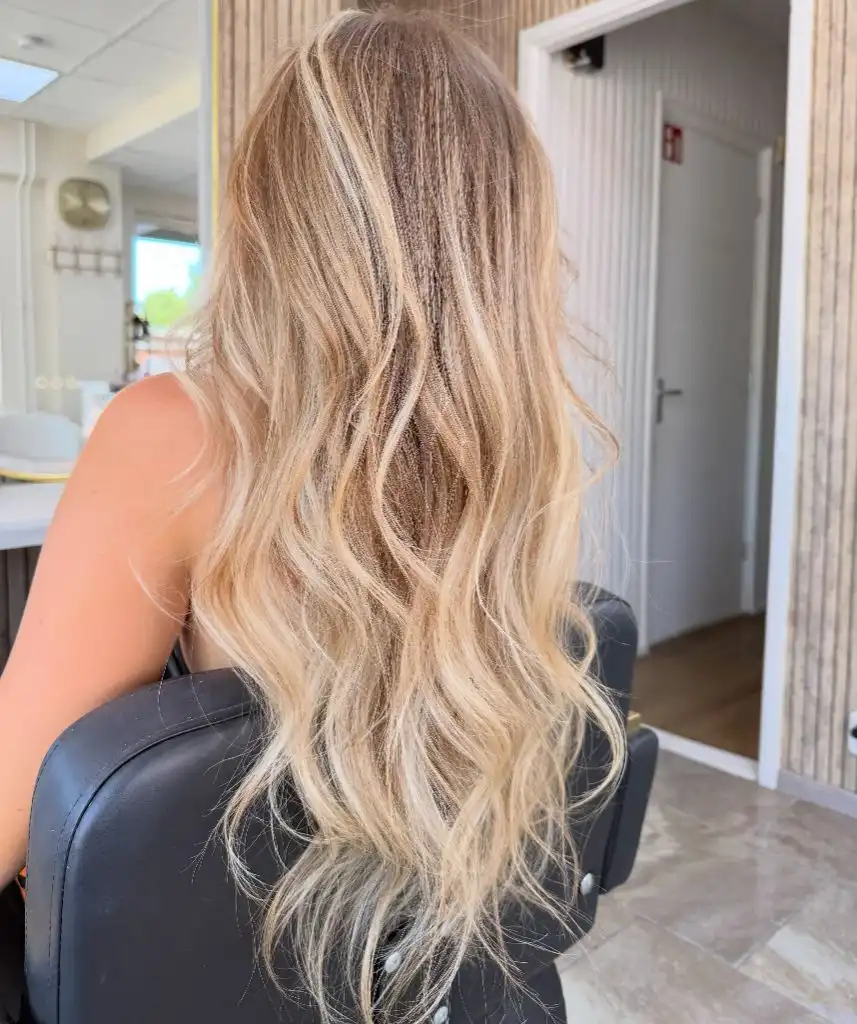
Photo via Instagram
The length is an important part of the color story here because it gives the gradient more real estate to unfold. With this much hair, the transition from brown root to sandy blonde end can happen over many inches, which means there is no abrupt shift anywhere. The beachy texture adds to the casual, low-maintenance impression, suggesting this is a color that was designed to grow out gracefully rather than one that demands frequent touch-ups. The brightest sections sit at the very tips, which is the part of the hair most likely to catch light naturally, reinforcing the organic quality.
The reader takeaway is that length and color gradient are deeply connected. When the hair is long enough to support a very gradual transition, the result looks more natural and less manufactured, which is exactly the kind of effortless depth that suits the November mood of quieter, more settled styling.
13. Warm Chocolate Waves With Subtle Caramel Dimension
The hair is medium-long, styled in soft, defined waves, and colored in a warm chocolate brown with subtle caramel highlights woven through the mid-lengths. The overall impression is of a rich, warm brunette rather than a highlighted look, with the lighter pieces visible only where the waves catch light. The person faces the camera, smiling, in what appears to be a salon with a decorative tree branch in the background. A light blue graphic tee is visible.
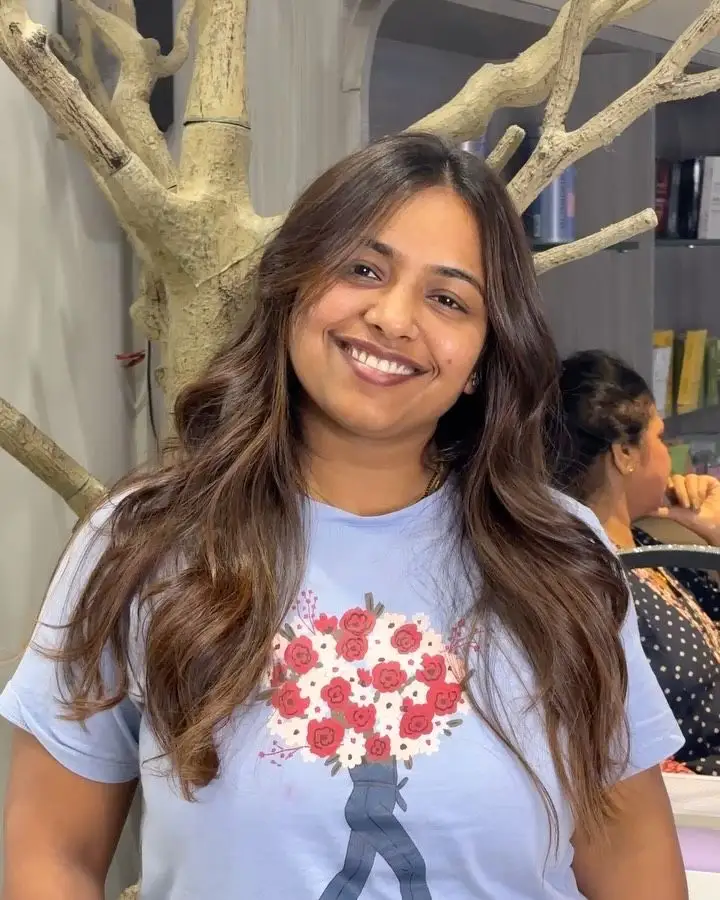
Photo via Instagram
The subtlety is the point. The caramel dimension is present but never dominant, appearing only where the wave structure lifts a section into the light. This means the overall read is “warm brunette” rather than “highlighted,” which is a useful distinction for anyone who wants dimension without drama. The smile and the casual clothing reinforce the approachability of the look, and the warm salon lighting probably flatters the tone, but the underlying color decision is sound regardless of lighting. The warmth in the brown sits in the right zone for November, deep enough to feel grounded but not so dark that it loses all variation.
The useful idea is that dimension in brunette hair can come from very few lighter pieces placed where the natural wave pattern will reveal them. This kind of restraint in highlighting keeps the base tone dominant and the overall feeling warm, which is exactly what rich brunette tones need to look their best in autumn light.
14. Grown-Out Brunette Ombré With Warm Mid-Lengths
The hair is medium-long, straight, and seen from the back in a salon setting with a mirror reading “Hair @ 340” visible in the background. The color shows a dark brunette root zone that extends several inches before warming into a lighter brown through the mid-lengths and ends. The transition is gradual and appears somewhat grown out, with no sharp demarcation line.
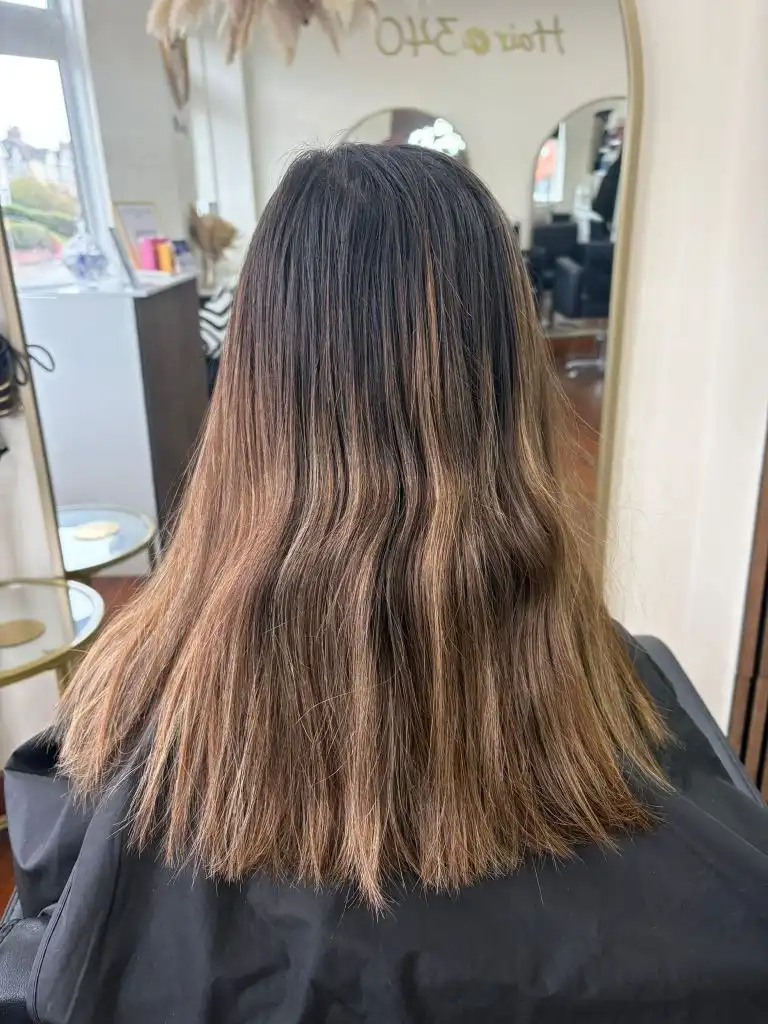
Photo via Instagram
This is another starting-point read, where the color tells a story of time rather than a single salon visit. The dark root has grown out significantly, pushing the warmer section lower and creating a natural gradient that is less about design and more about the passage of weeks or months. That said, the overall palette is not unappealing. The dark brown and the warmer brown coexist without clashing, and the straight texture means the transition is fully visible without being softened by waves. It looks honest, which has its own kind of appeal in a season that tends to favor authenticity over polish.
The strongest lesson is that a grown-out color does not automatically look neglected. When the underlying tones are in the same family, the natural gradient that happens over time can look like a deliberate tonal shift, and recognizing that can inform the decision about whether to refresh or simply let the hair continue its journey.
15. Rich Dark Chocolate With Soft Wave Body
The hair is medium-length, styled in soft, open waves, and colored in a rich, uniform dark chocolate brown. The roots and ends appear to be the same shade, with almost no visible lightening or highlighting. The setting is the same “Hair @ 340” salon, with pampas grass hanging overhead and gold wall lettering visible. The person wears a black salon cape and is photographed from the back.
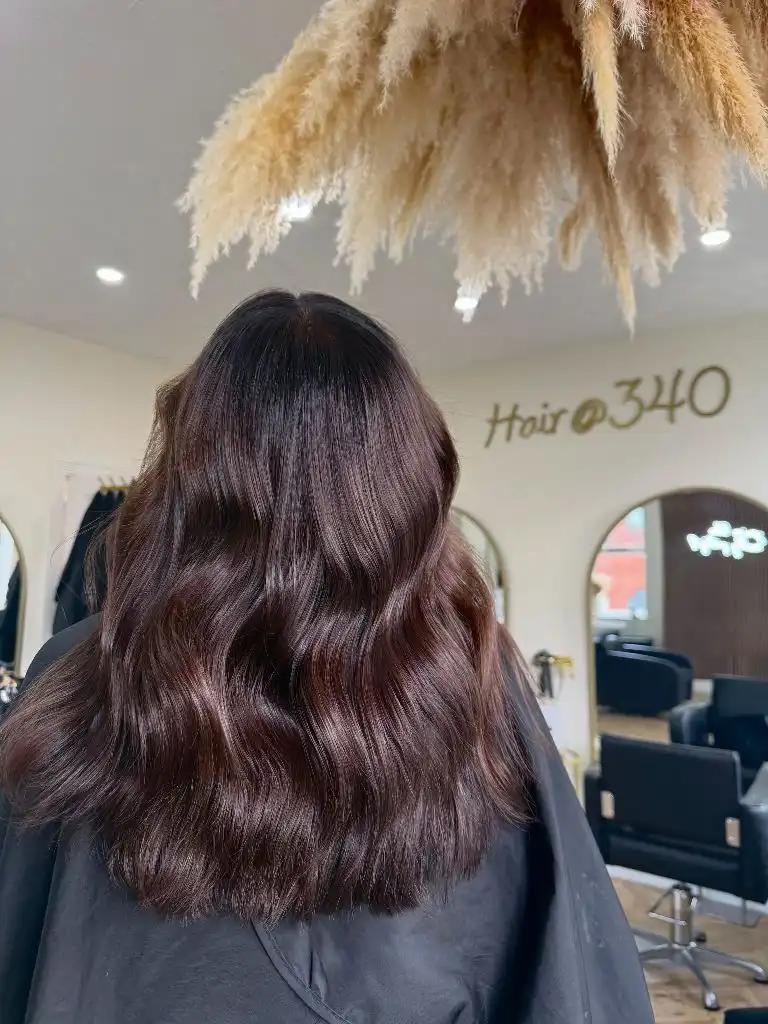
Photo via Instagram
The decision to keep the color completely uniform is what gives this look its strength. Without any highlights or lighter sections to create contrast, all the dimension comes from the wave pattern and the way light moves across the surface. The dark chocolate shade is warm enough to avoid looking flat or matte, and the slight body in the waves lifts sections just enough to catch a subtle sheen. I find that this kind of single-tone commitment works particularly well in cooler months, because the depth of the color feels like it belongs to the season rather than fighting against it.
What stands out most is how a single rich shade, when well-chosen and well-applied, can feel just as considered as a multi-tonal color. The key is choosing a brown that has enough warmth to show movement in the light and pairing it with enough wave texture to give the surface some visual life.
16. Warm Chestnut Waves With Golden Undertone
The hair is long, styled in smooth, defined waves, and colored in a warm chestnut brown with a golden undertone that becomes more visible on the outer curves of each wave. The root area is slightly darker, but the range between darkest and lightest is quite narrow. The person faces away, with hands lifted behind the head, wearing a black long-sleeved top. The background is a neutral gray wall.
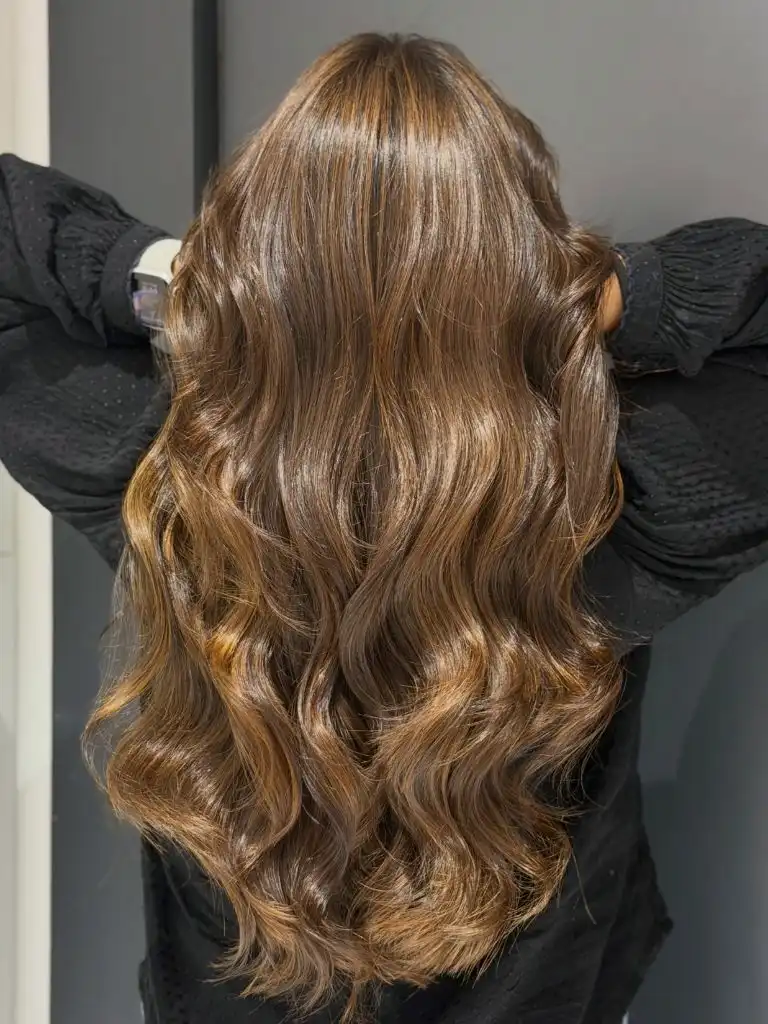
Photo via Instagram
The golden undertone is doing the most important work in this image, because it is what lifts the chestnut from simply dark brown into something warmer and more alive. The narrow tonal range means the color reads as essentially one shade, but the warm base prevents it from looking flat, especially where the waves curve outward and expose the slightly lighter undersides of each section. The pose, with arms raised, also fans the hair slightly and creates more space between sections, allowing more light to reach the interior layers. This kind of warm brunette styling has a way of looking effortlessly seasonal.
The best move here is selecting a brunette with a golden or amber undertone rather than a neutral or ashy one when the goal is warmth without highlights. The undertone does the dimensional work invisibly, and the wave pattern amplifies it by creating natural zones of shadow and light across a single cohesive shade.
17. Platinum Blonde With Peachy Pink Ombré Ends
The hair is medium-length, styled in loose curls, and colored in a platinum to icy blonde that warms into a peach-pink ombré at the lower third. A few slightly deeper pink strands are visible at the very tips. The roots show a slightly warmer, golden-toned grow-out. The person is seen from the back, wearing a dark top, and the setting is a salon with a muted green-gray wall.
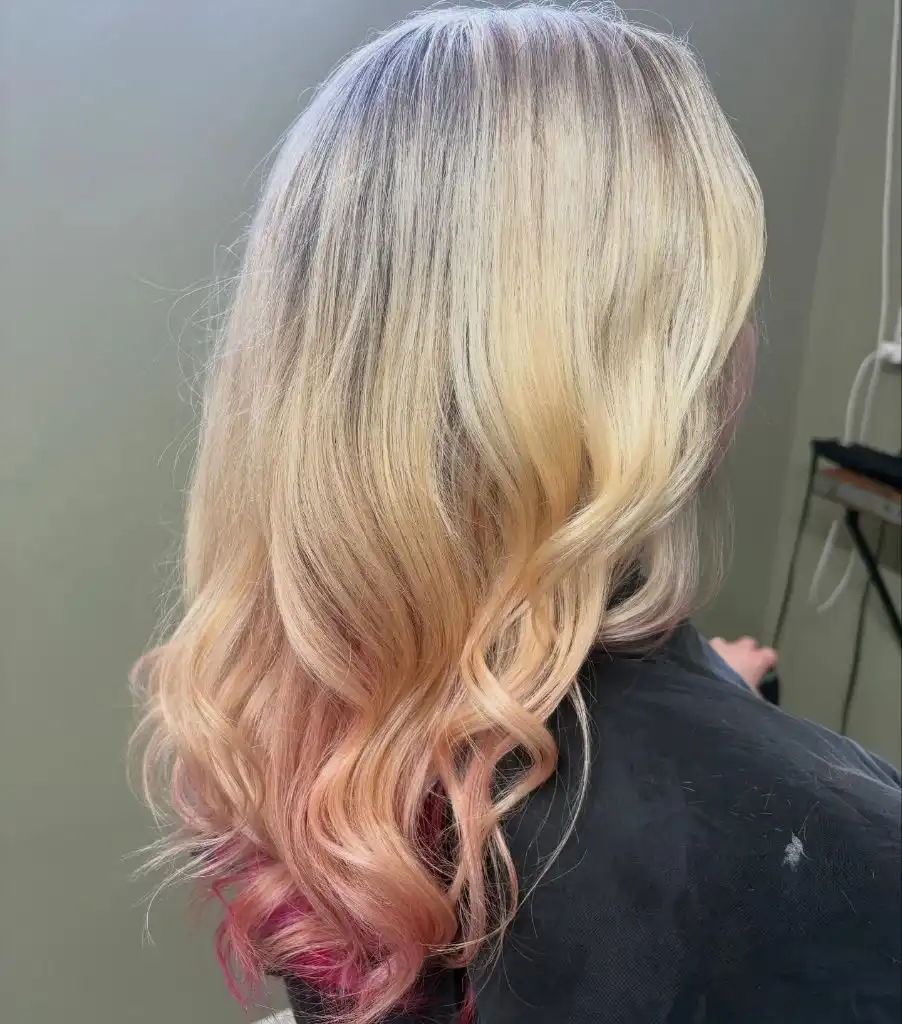
Photo via Instagram
The palette here moves through three distinct temperature zones: the cooler platinum at the top, the warm golden grow-out near the roots, and the soft peach-pink at the ends. That temperature journey is unusual and gives the look a playful complexity that a standard blonde would not have. The pink is kept subtle enough that it reads as a tint or a faded wash rather than a bold fashion color, and the deeper pink strands at the very tips anchor the transition so it does not simply dissolve. The curls help blend the color zones by mixing lighter and darker sections within each ringlet.
The reader takeaway is that a pastel or tinted ombré works best when it exists alongside natural tones rather than replacing them. The golden root grow-out and the platinum mid-section give context to the pink ends, and that layering of temperature is what makes the color feel like a deliberate seasonal choice rather than leftover festival hair.
18. Icy Platinum With Seamless Root Melt
The hair is medium-length, straight, and colored in a high-lift icy platinum blonde with a seamless root melt that transitions from a slightly darker, ashy tone at the scalp into pure platinum through the lengths and ends. The surface is smooth and the color is very even, with no visible banding or breakage. A stylist’s hand holds the ends, and the person wears a black salon cape in what appears to be a small, warm-toned salon interior.
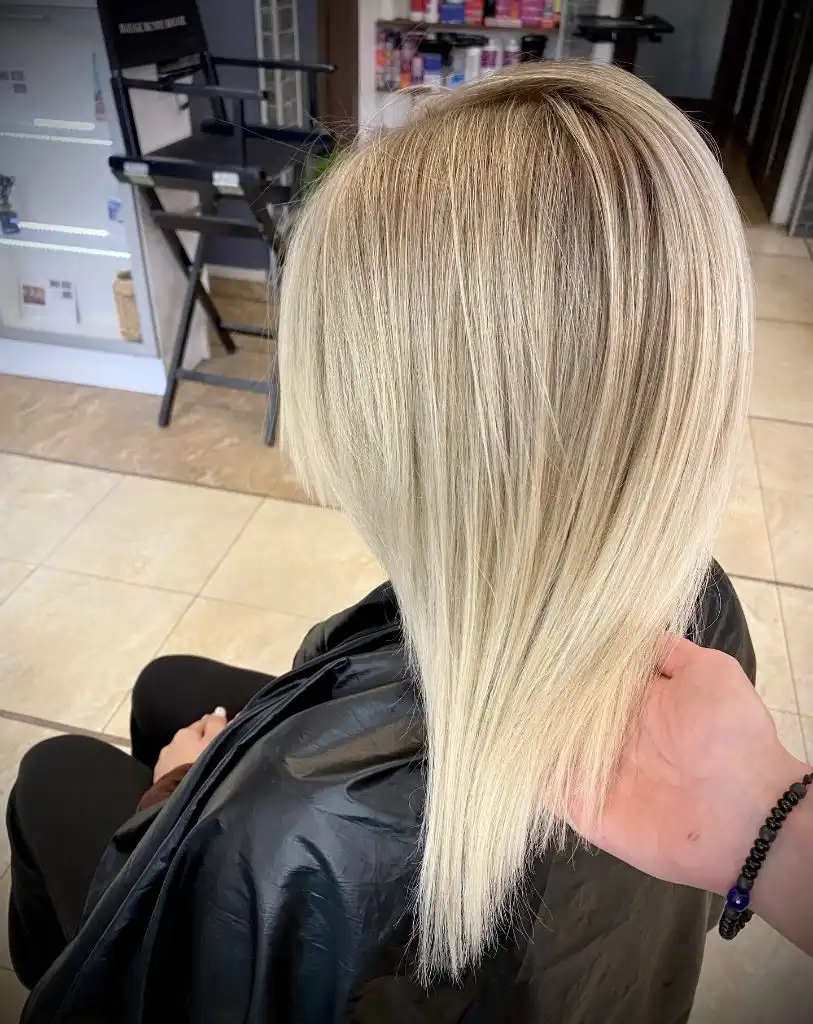
Photo via Instagram
The execution here is technically precise. A root melt at this light a level requires careful control to avoid warm banding, and the transition visible here is smooth enough that there is no discernible line between the slightly deeper root and the icy mid-lengths. The straightness of the hair puts the color work on full display, because there are no waves or curls to mask unevenness. The cool, desaturated tone of the platinum makes it a less obvious November choice, but the seamless blending and the absence of any warm or golden notes give it a wintry sharpness that reads as intentional for the season.
The useful move here is understanding that very light colors can still feel seasonally appropriate when the tone is kept cool and the finish is precise. A platinum that looks effortless is actually the result of careful technical work, and the smoothness of the root transition is often what separates a polished result from a grown-out one.
19. Copper Ginger With Sleek Straight Finish
The hair is very long and completely straight, colored in a uniform warm copper-ginger that runs evenly from roots to ends. The surface is extremely smooth and reflective, with a silky, almost glass-like finish. The person is seen from the back, wearing a light peach-colored top, and the salon background shows shelves with products and greenery.
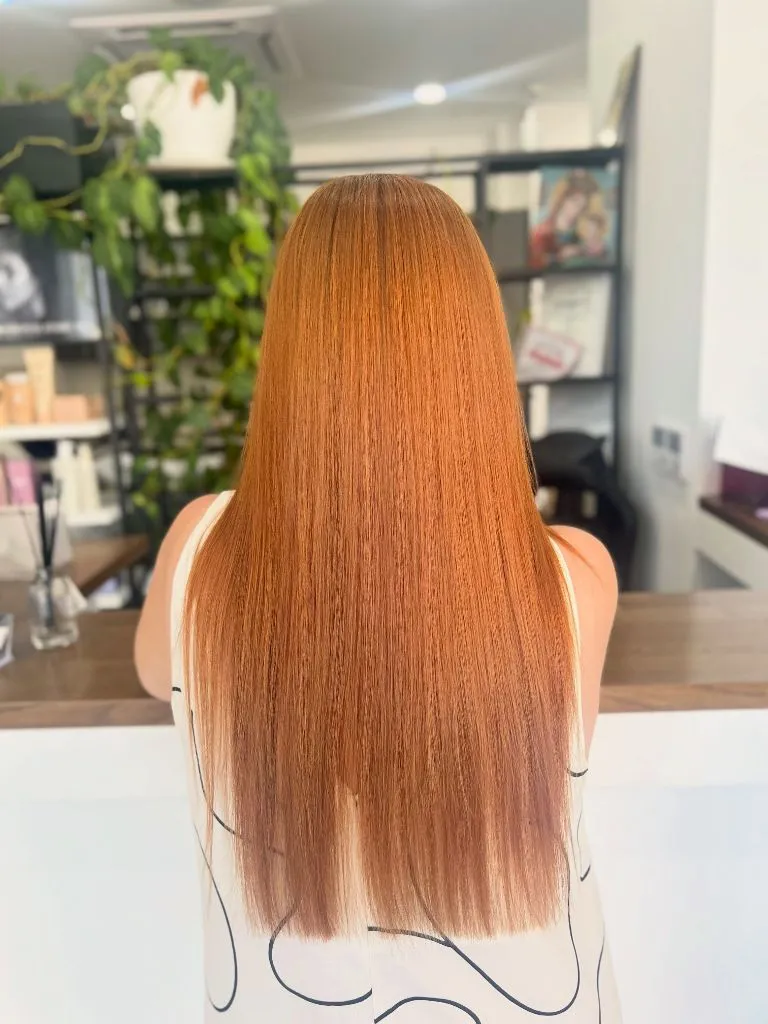
Photo via Instagram
The uniformity is the statement. There is no root shadow, no lighter ends, no variation in depth anywhere visible in the image. The copper-ginger tone is consistent from top to bottom, and the extremely straight, reflective surface means the color is the only visual event happening. This is bold in its simplicity, because any imperfection in tone or application would be immediately visible on a surface this smooth. The peach top is a close tonal neighbor to the hair, which creates a monochromatic effect that makes the copper look even more saturated by extending its warmth into the clothing.
The strongest lesson is that a single, well-executed tone does not need dimension from highlights or lowlights when the finish provides all the visual interest. The mirror-like surface of this copper creates its own light play, and matching the clothing to the hair family amplifies the warmth rather than competing with it.
20. Dark Brunette Balayage With Subtle Warm Highlights
The hair is long, styled in soft waves, and colored in a dark brunette base with very subtle warm highlights woven through the mid-lengths. The lighter pieces are close in tone to the base, creating a low-contrast, dimensional effect rather than an obviously highlighted look. The person is seen from the back, wearing a white top, and the setting appears to be a home or studio with a white door visible behind.
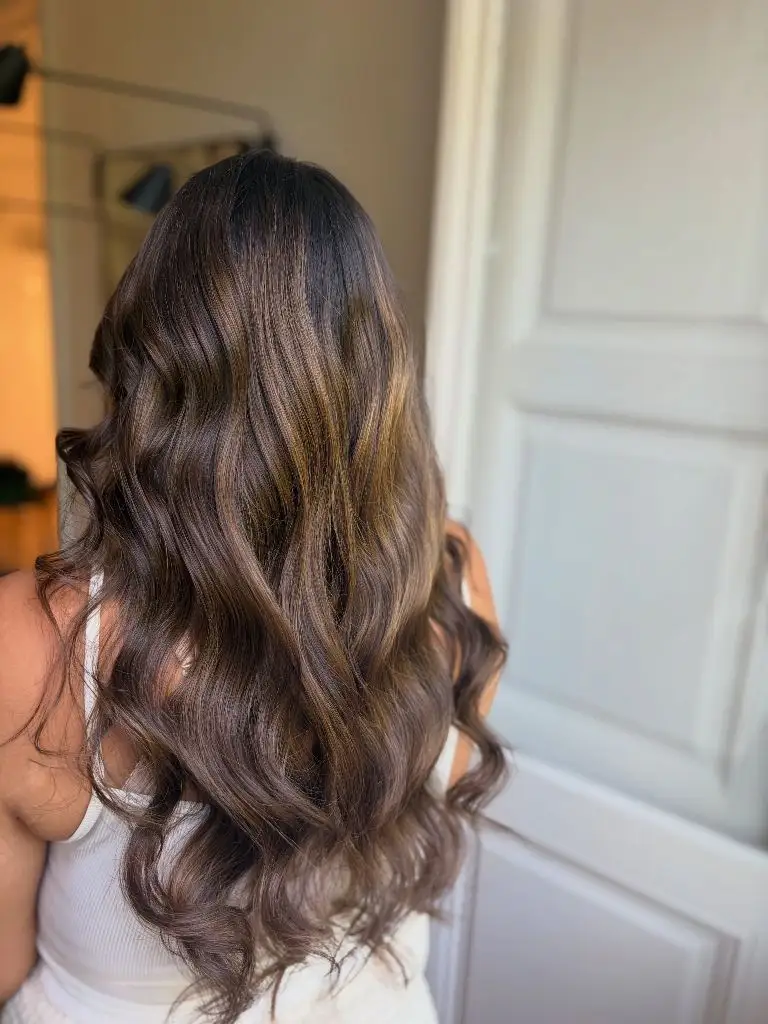
Photo via Instagram
The restraint in the highlighting is what defines this look. The lighter pieces are only one or two shades above the base, which means they show themselves primarily through the wave pattern rather than as distinct stripes. This creates a feeling of natural movement within the brunette, as if the hair simply has more life and depth than a single flat color would provide. The white top acts as a clean backdrop that makes the dark tones look richer by contrast, and the soft waves are open enough to reveal the interior layers without being heavily styled.
The beauty of this is that the most effective brunette dimension often comes from highlights that barely register as highlights at all. Keeping the contrast low and the placement within the mid-lengths preserves the overall dark impression while allowing just enough variation to keep the eye engaged as it moves from root to end.
21. Rich Dark Chocolate With Uniform Soft Waves
The hair is medium-length, styled in soft waves, and colored in a rich, deep chocolate brown that appears uniform from root to tip. The setting is again the “Hair @ 340” salon, with the same pampas grass and gold lettering visible. The person wears a black salon cape, and the hair is seen from the back. The color is warm but deep, with no visible highlighting or lighter sections.
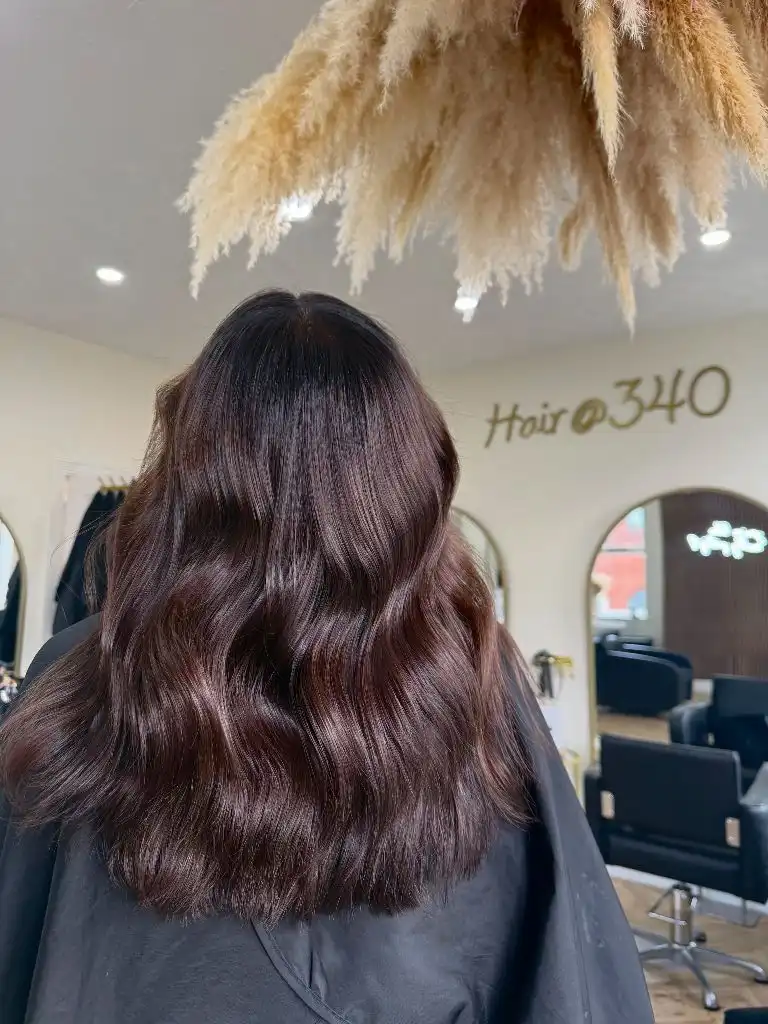
Photo via Instagram
This look shares the same commitment to a single rich shade seen earlier, but the wave texture creates slightly different shadow patterns that give it its own character. The depth of the brown is just warm enough to avoid reading as black, which preserves a sense of softness even at this level. The consistency from root to end signals a fresh application or a well-maintained all-over color, and the waves provide all the surface dimension the look needs. The warm salon lighting may be adding some golden reflection, but the underlying tone is clearly a true chocolate without leaning red or ashy.
The useful idea is that revisiting a single shade across different textures and lengths shows how much the cut and styling contribute to the way color is perceived. The same chocolate brown on waves looks warmer and more dynamic than it would on a straight surface, which is a useful consideration when choosing between tones.
22. Ash Blonde Balayage With Rooted Dimension
The hair is long, styled in smooth, polished waves, and colored in a cool-toned ash blonde balayage with a clearly defined darker root zone. The transition from root to blonde is gradual and well-blended, and the lightest pieces sit at the ends and through the front sections. The surface is shiny and smooth, and the overall palette stays cool without any visible golden or warm tones. The setting is a salon with a warm beige-brown background.
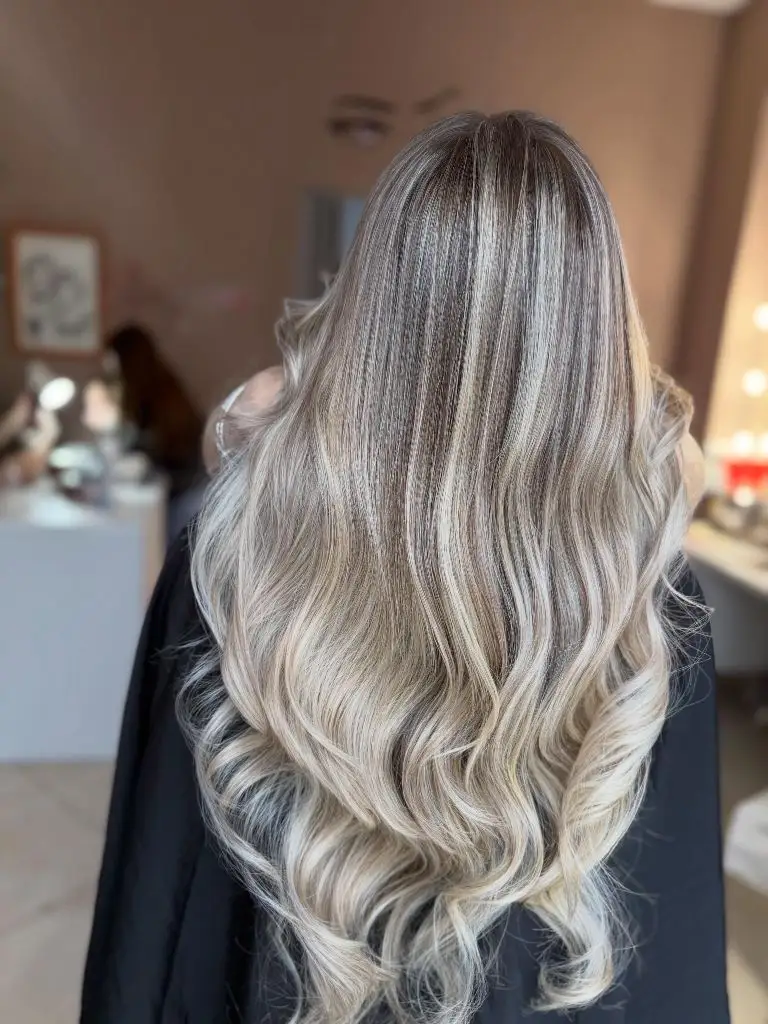
Photo via Instagram
The temperature discipline is impressive. Every lighter section stays within the ashy, cool register, which gives the whole head a cohesive feel even though the range from dark root to light end is quite wide. The polished wave texture creates clean light reflections that show off the blending work, and the gradual root melt ensures there is no harsh line where the color begins. The cool tone is what makes this feel like a November color despite its relative lightness, because it avoids the sun-kissed warmth that would pull it back toward summer. The waves are controlled and smooth, which matches the precision of the color placement.
The best move here is committing fully to a cool undertone throughout the entire gradient. When every lighter piece stays ash rather than gold, the balayage reads as unified and deliberate, and the cool temperature gives even a relatively light blonde the kind of quiet sophistication that suits the November palette.
23. Ash Mauve Brunette With Half-Up Twist
The hair is medium-long, colored in a muted ash mauve-toned brunette, and styled in a half-up twist that gathers the crown section into a small knot at the back while leaving the lower layers loose in soft waves. The overall color is desaturated and cool, sitting somewhere between brown and a dusty lavender-gray. The person is photographed from the back in a salon setting with decorative wooden screens and dark furniture visible behind.
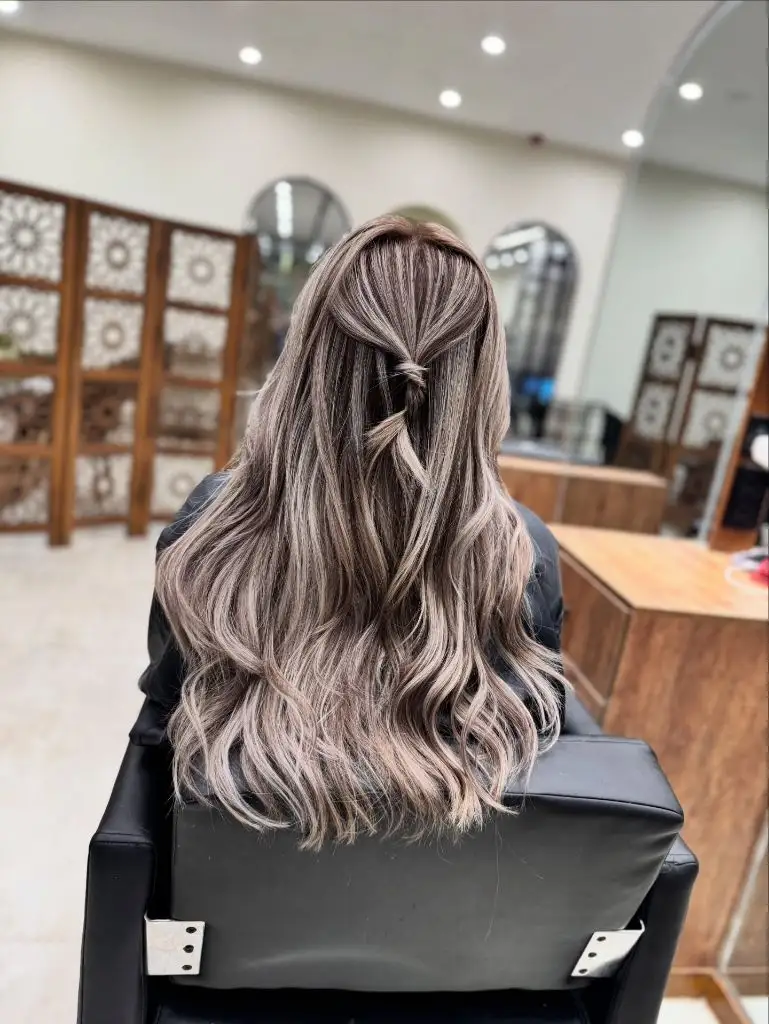
Photo via Instagram
The half-up twist is a styling detail that interacts directly with the color. By pulling the upper section away, it reveals the lighter, ashier tones of the lower layers, creating a visible contrast between the slightly darker gathered crown and the more exposed, dimensional lengths below. The mauve undertone is subtle, reading more as a coolness in the brown than as an overt fashion color, which keeps it in the realm of wearable November tones rather than something more editorial. The soft waves in the lower section catch just enough light to show the dimensional play between slightly darker and lighter strands.
The reader takeaway is that styling and color are always in conversation, and a simple half-up look can change which tones are visible and which are hidden. A muted, cool-toned brunette gains an extra layer of interest when the styling creates zones of different exposure, making the same color appear slightly different from section to section.

Hi, I’m Zoey Mitchell, the creator of ChicStyle Blog.
I share simple, wearable outfit ideas, hairstyles, nail trends, and beauty tips that feel natural and easy to recreate.
This blog is where I explore everything that makes a woman feel put together and confident every day. I’m not an expert — just a woman who genuinely loves style, mixing looks, and discovering what works.
If you love effortless fashion with a personal touch, you’ll feel at home here.