Every fall I find myself reaching for deeper shades, richer textures, and that specific kind of hair moment that only happens when the light starts shifting golden around late September. It’s the season where I actually look forward to sitting in the salon chair again. But the questions always pile up around this time of year: which cuts still look intentional six weeks after the appointment, is it finally time to let go of that summer blonde, and what’s actually going to feel right as the weather cools and the wardrobe shifts toward knits and layered coats? The mood this fall is warm without being heavy, detailed without being fussy, and low-key enough that you’re not married to a blowout every three days. If you’re already saving looks and mentally budgeting for a color appointment, these fall hairstyles for long hair 2026 are exactly where I’d start.
Warm Chocolate Balayage with Curtain-Framed Loose Waves
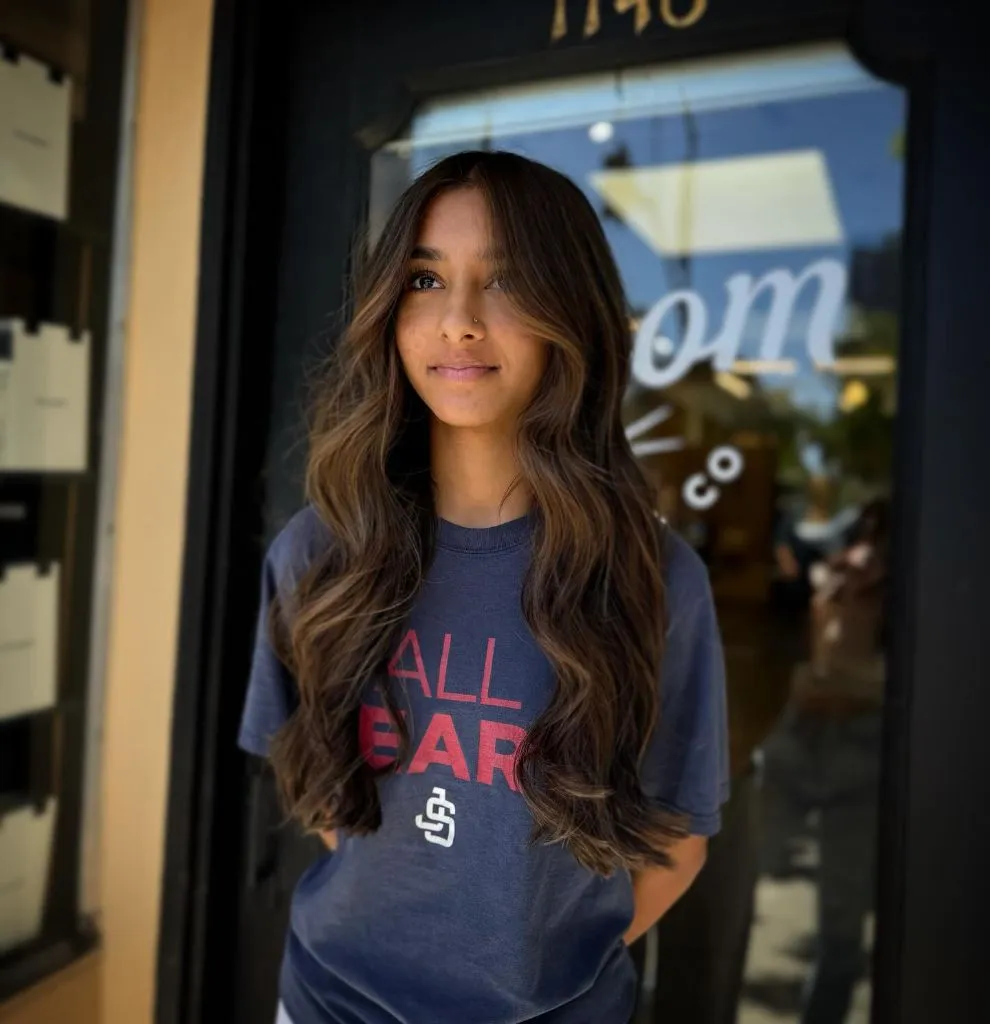
I keep coming back to this look because the balayage isn’t doing anything loud, and that’s what makes it work. The base is a deep espresso brown, but the mid-lengths and ends open up into a warm chocolate that catches light without screaming “highlights.” The curtain-framing pieces around the face are just barely lighter than the rest, which gives the whole thing a sun-touched quality even though the palette is clearly headed into fall. Long layers with loose, slightly undone waves create movement that lets the dimensional color shift as she turns her head. It’s the kind of Warm balayage that doesn’t announce itself from across the room; it just makes people look twice.
For color like this, ask your colorist for a hand-painted balayage with a root shadow that sits about a half-shade darker than your natural base. That shadow is what keeps everything looking seamless as it grows out, and it means you’re not back in the chair every five weeks. A sulfate-free shampoo like Pureology Hydrate will keep those warm chocolate tones from washing out too quickly, since sulfates tend to strip warm pigment faster than cool ones. Tracey Cunningham has built her whole reputation on this kind of naturally sunlit-looking brunette color, where the dimension looks like it’s always been there.
Maybe it’s the season talking, but this shade paired with a chunky cream sweater and a leather jacket just feels like the right answer to October. I’ll probably be saving this one for a while.
Rich Auburn Brunette That Deepens at the Root
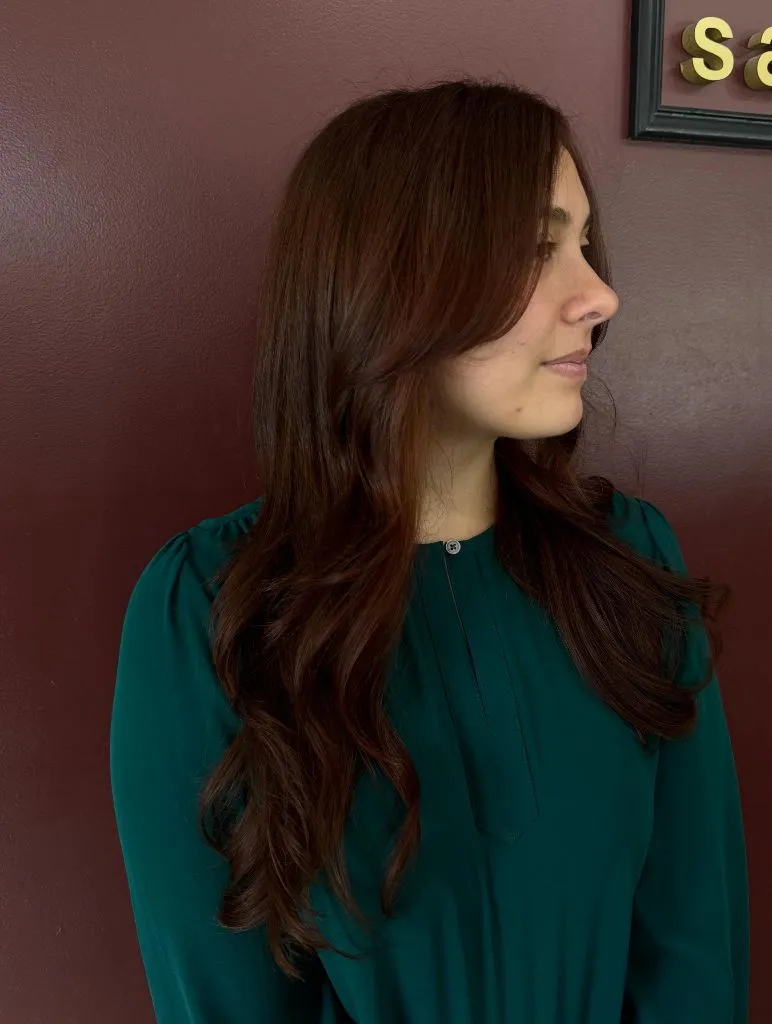
The first thing I noticed about this color is the way it shifts from a cool, almost muted brown at the root into a warmer auburn as it moves toward the ends. It’s not a red that’s trying to be red. It’s more like what happens to dark brunette hair when it sits in the sun for three months and picks up a copper undertone naturally. The single-process depth at the crown keeps it grounded, and the long, slightly curled ends let that warmth really breathe. Worn with a deep teal blouse here, the auburn practically glows against the green. This is a Glossy fall brunette hair color that feels intentional without being high-maintenance.
If you’re going auburn for fall, pay attention to your toner. A demi-permanent gloss in a copper-chestnut family, refreshed every six to eight weeks, will keep this shade from going brassy or washing out into an orange you didn’t sign up for. Cool-water rinsing actually matters here more than with most colors, because red pigment molecules are larger and sit closer to the outer cuticle, so they fade faster when the cuticle lifts in hot water. Davines Alchemic Copper Conditioner is one I’d recommend for depositing just enough warmth between appointments without turning things neon.
It reminds me of maple leaves just starting to turn, that brief window where the color is rich but still has warmth running through it. The kind of shade that looks just as good with bare skin and a turtleneck as it does dressed up.
Soft Mushroom Brunette with Wispy Bangs and Face-Framing Highlights
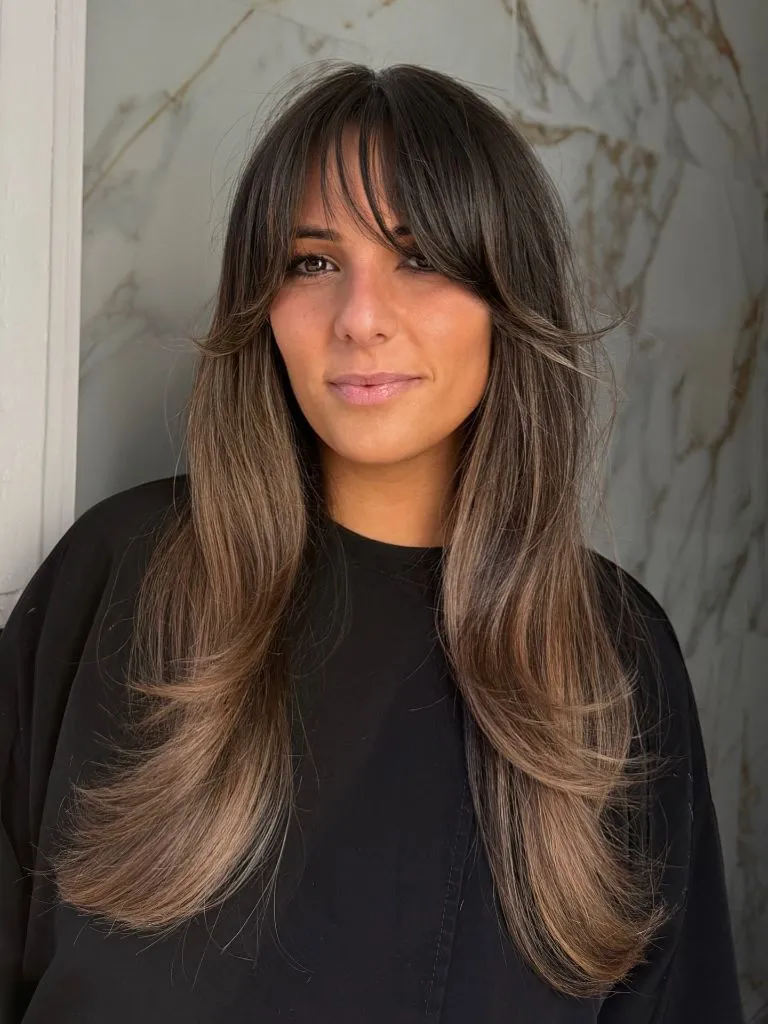
Now this version sits in a space between brunette and bronde that’s hard to pin down, and I think that’s exactly the point. The roots are a dark, smoky brunette, almost a cool charcoal-brown, and the lengths transition into a mushroom-beige that catches light in this really specific muted way. It’s not ashy enough to feel cold, and it’s not golden enough to feel like summer. The wispy bangs make the whole thing feel a little ’70s, a little Birkin, and the face-framing highlights are placed right at the temples so they brighten the complexion without touching the overall depth of the color. This is a fall hair color idea that reads as completely modern while borrowing from something vintage.
Bangs this wispy need a light hand with product. Oribe Dry Texturizing Spray on second-day bangs keeps them from going limp without weighing them down, and a tiny amount of Moroccanoil Treatment on the mid-lengths keeps that mushroom tone looking polished rather than dusty. The key to this particular shade is asking for babylights through the face frame and a broader balayage through the mid-lengths, with the toner pulled cool-neutral rather than warm. Plan on a toner refresh every seven to eight weeks; mushroom shades drift warm faster than you’d expect.
Honestly, this is the color I’d bring to my colorist if I wanted something that photographs differently in every light. With a black crew-neck tee it looks ashy and editorial; with a camel coat it suddenly looks warmer. That range is what keeps it interesting.
Dark Chocolate Waves with a Subtle Warm Shift
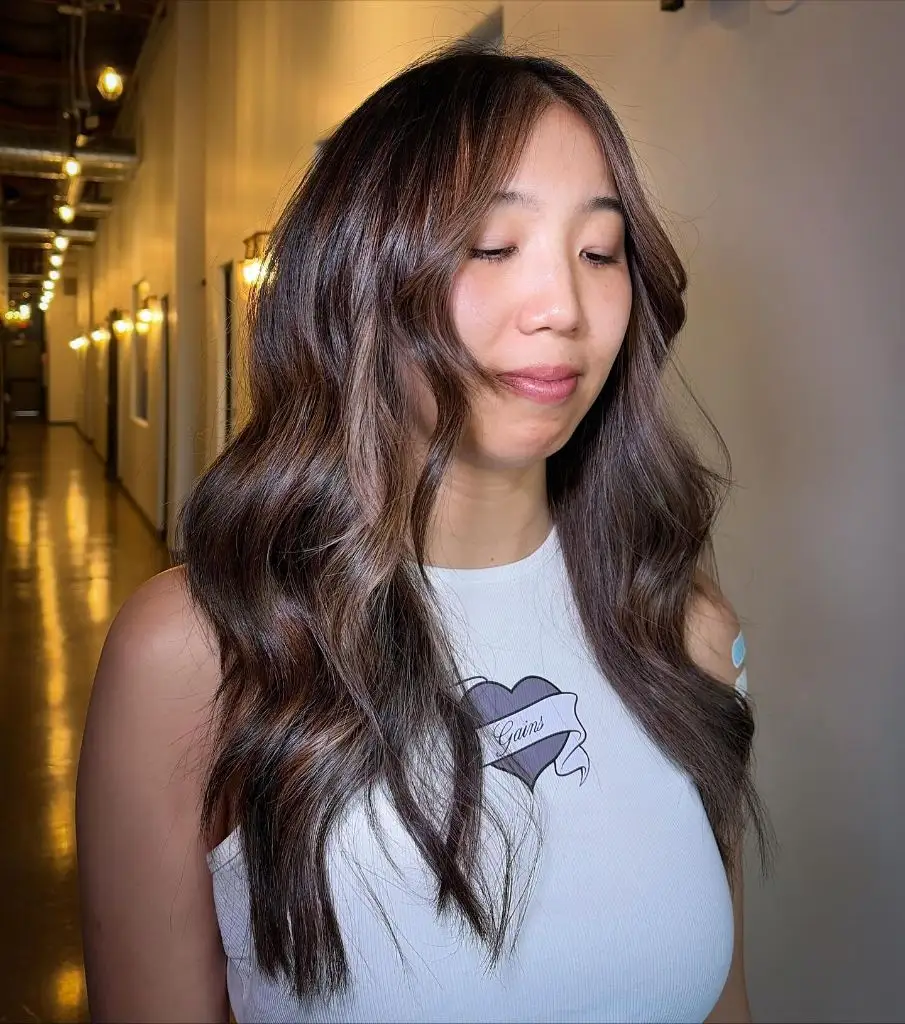
There’s something about dark brunette waves that just makes sense in fall. This shade is close to a level 4 dark chocolate, with just the faintest warm shift through the mid-lengths when the light hits. It’s not highlighted in any traditional sense; the warmth reads more like natural variation than a salon technique. The waves have that slightly tousled, just-left-the-house texture that comes from a large-barrel iron used loosely rather than a tight curl pattern. The curtain-parted front pieces frame the face softly and add a little lift at the root.
This is the kind of color that doesn’t need much to maintain. A color-safe shampoo like Kérastase Bain Chromatique and a deep conditioning mask once every week or two will keep the surface smooth enough that the dark tone reflects light the way it should. When dark hair looks dull, it’s almost always a cuticle issue, not a color issue. K18 Leave-In Molecular Repair Mask is worth working into the routine every four or five washes; it actually rebuilds the keratin chains in the hair shaft rather than just coating the outside, which means the shine comes from structure, not silicone.
I keep thinking about how this shade does all its work quietly. It doesn’t compete with anything. Throw on a mustard scarf or a burgundy lip and the hair just holds the frame together.
Bronde Balayage with Lived-In Texture and Root Depth
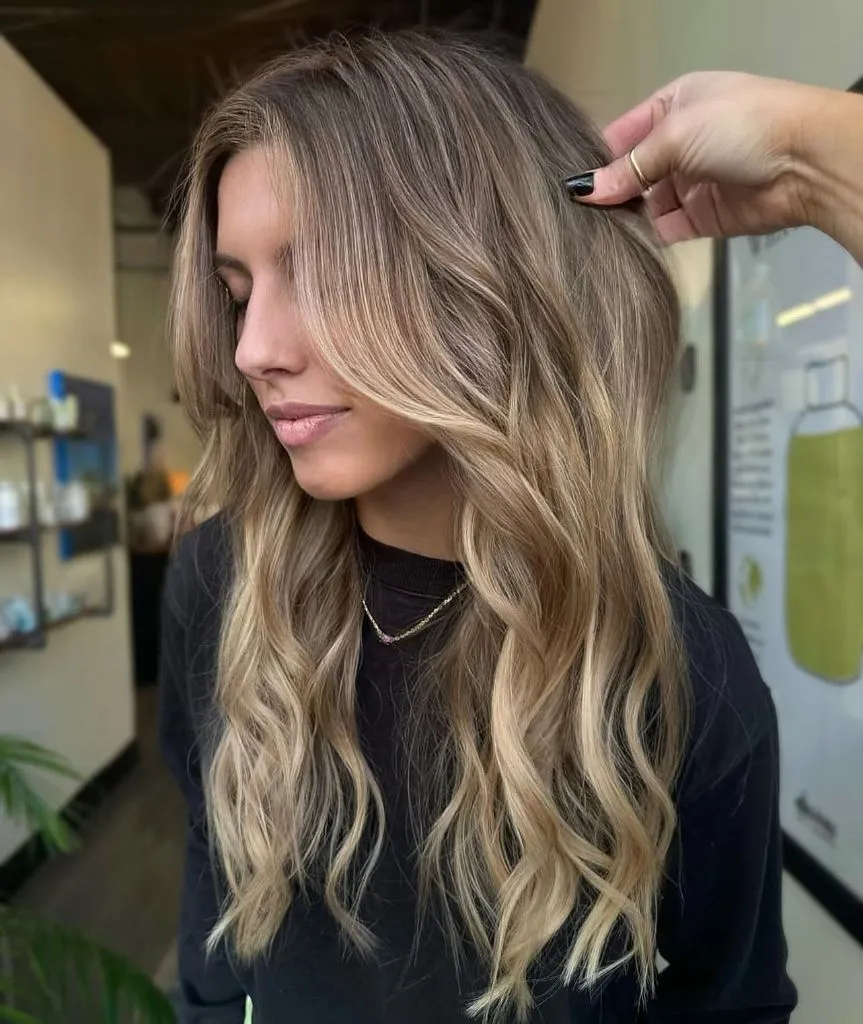
Okay, this is the one I’d actually book. The root is a natural level 5 or 6 brunette, and the balayage opens into a warm bronde that’s heavier through the face-framing pieces and lighter toward the ends. It’s the fall version of “I spent the summer outside,” except it’s been polished up and refined. The waves are medium-sized with that slightly brushed-out look, which lets the tonal transitions show up in a way that tighter curls would hide. You can see at least three different depths between root and tip, and none of them feel disconnected.
A lived-in balayage like this is built for low maintenance, but that doesn’t mean no maintenance. A purple shampoo once every ten days or so will keep the lighter pieces from drifting too yellow; more often than that and you’ll push them into an over-toned grey-purple that reads muddy rather than bright. I’d go with Amika Bust Your Brass for this, since it’s strong enough to correct without over-depositing if you’re keeping sessions short. Matt Rez is known for exactly this kind of strategic face-framing brightness on brunettes, where the lightest pieces land right where they’ll catch the most natural light.
Whether paired with a tailored blazer or a worn-in denim jacket, this is the color that transitions from a late-summer barbecue to a fall dinner reservation without changing a thing. That’s the whole appeal.
Golden Honey Blonde with Soft Waves and Natural Movement
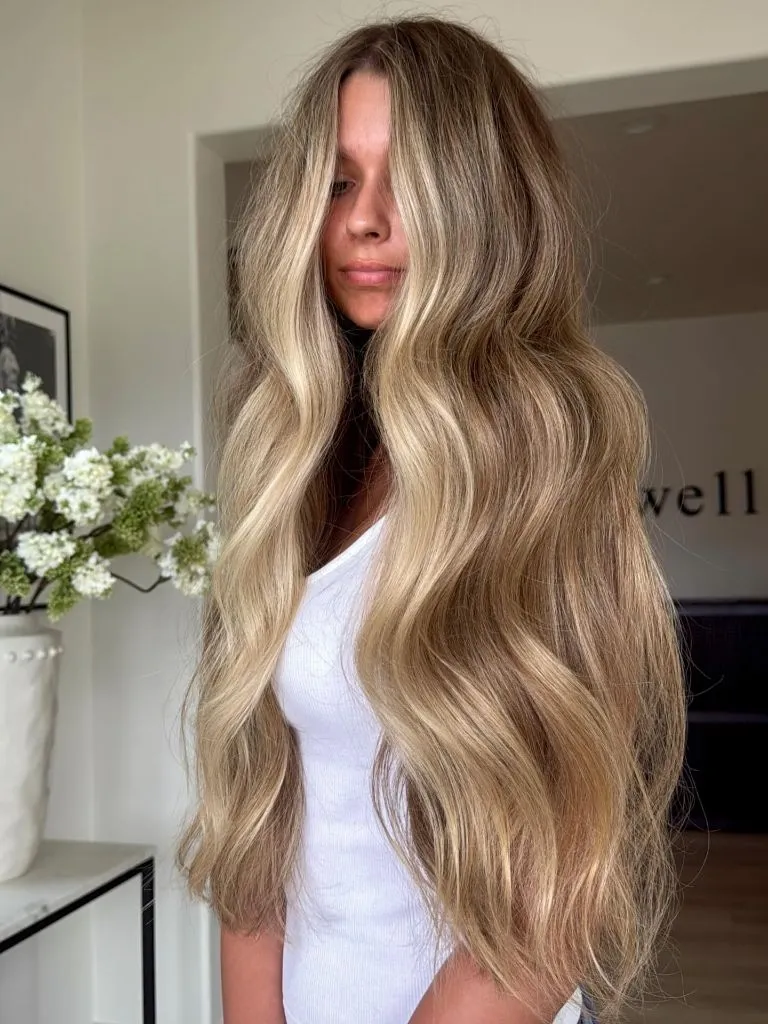
If I had to pick one color that perfectly captures the shift from summer to fall, it’s this kind of golden honey blonde. The roots sit in a natural dark blonde-light brunette range, and the lengths are warm gold without crossing into platinum territory. The hair is long enough that the waves almost look like they were set overnight rather than with a curling iron, and that casual, undone texture is what keeps the blonde from reading too done-up. There’s a richness here that cooler blondes don’t have. The warmth feels almost candlelit.
Keeping warm blonde this clean takes a little strategy. Sulfate-free is non-negotiable, and Living Proof Perfect Hair Day Shampoo is a solid pick here because it cleanses without stripping those golden pigments. The bigger thing is gloss appointments. A clear or warm-toned gloss every eight weeks lays the cuticle down flat and makes the blonde reflect light the way it’s supposed to, without adding any more bleach to already-lightened hair. Bond-building matters more on ends like these because the cuticle is more porous where it’s been lifted, so an Olaplex No. 3 treatment at home between appointments genuinely extends the life of the color. Jen Atkin’s whole approach to styling leans into this kind of natural, movement-first texture; less product, more air-drying, let the hair do what it wants.
Some blondes instantly make me think of oversized knit sweaters and golden late-afternoon light through a window. This is that blonde.
Curled High Ponytail in Warm Champagne Blonde
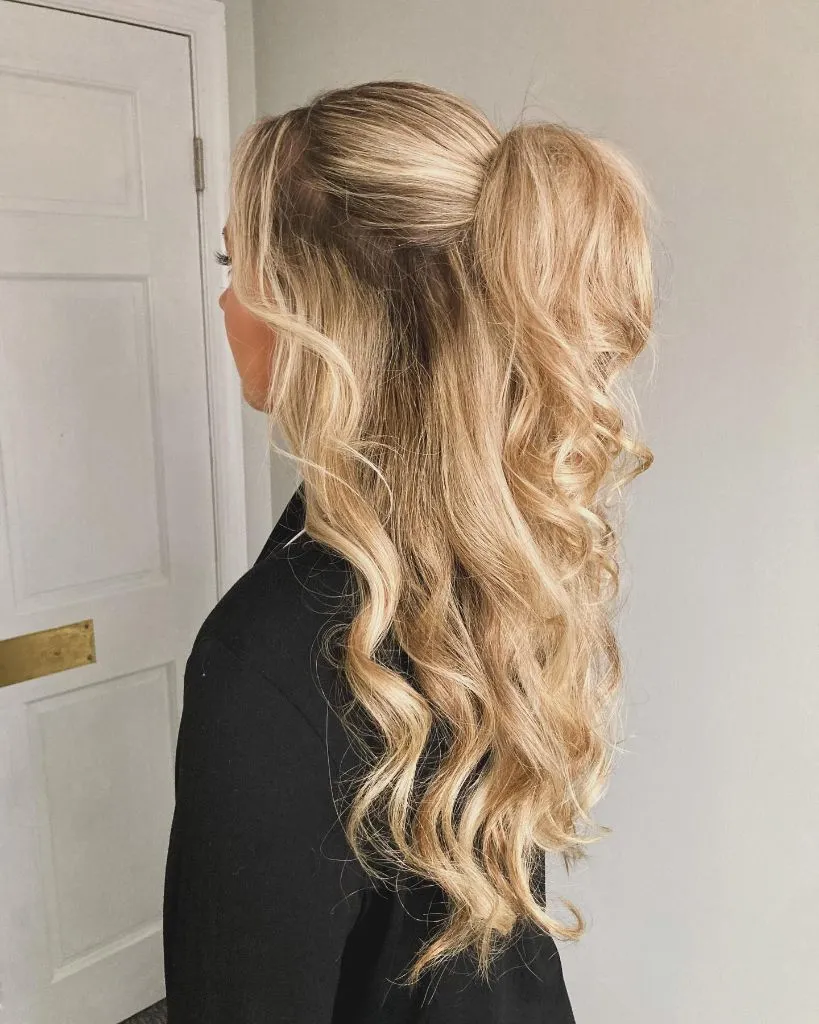
This one’s a little different, and that’s the point. It’s not a down-and-loose look; it’s a high ponytail with big, bouncy curls cascading from the tie, and the color is a warm champagne blonde that’s deeper at the crown and lighter through the lengths. The volume at the base of the ponytail comes from teasing or a volumizing clip trick, not from the hair being naturally that thick. A few face-framing tendrils are left out and curled, and they sit at just the right length to soften the pull without making it look messy. This is a Long style that works for an October wedding, a nice dinner, or honestly just a Saturday when you want to feel put-together.
The curls here are set with a 1.25-inch barrel and clearly hit with a flexible-hold hairspray while warm. Color Wow Cult Favorite Firm + Flexible Hairspray is the one I’d reach for because it holds without that crunchy, shellacked feeling. For the volume at the base, a little Bumble and bumble Thickening Dressing Creme worked through the roots before pulling the ponytail up gives that fullness without requiring backcombing. The champagne tone is a great summer-to-fall transition hair color, warm enough to nod at the season without committing to a full autumn brunette.
It feels like getting dressed up without the fuss, which is maybe the best thing a ponytail can do. Pair it with a black blazer and gold earrings and you’re done.
Ash Bronde with Bold Money Pieces and Beachy Texture
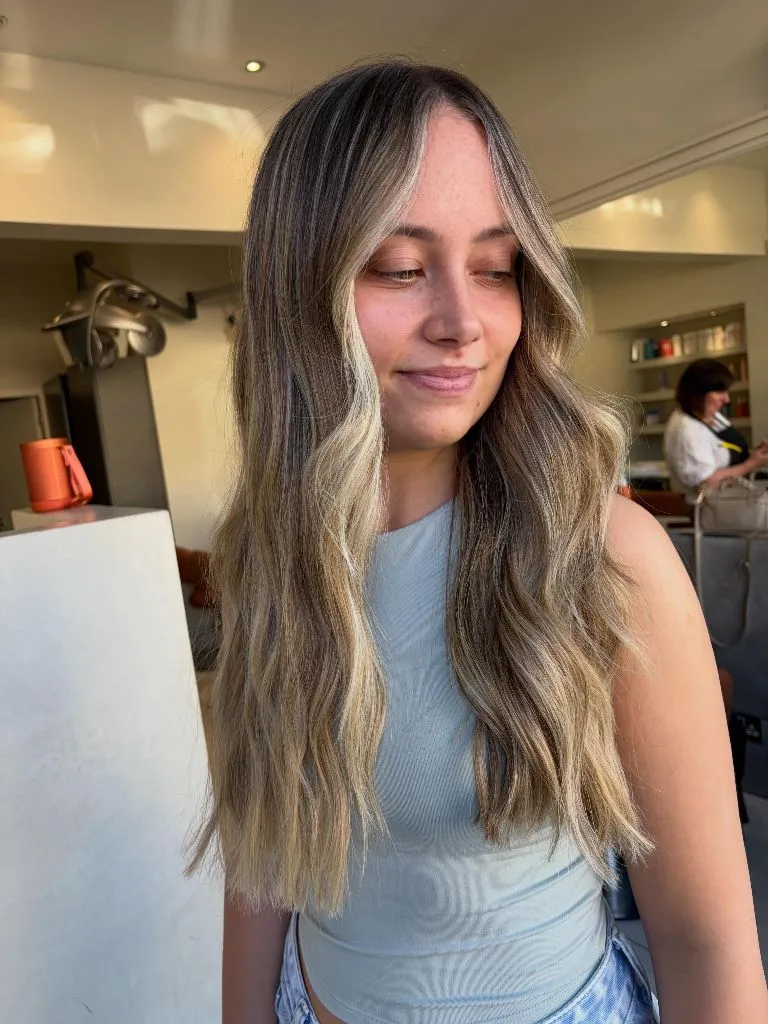
I didn’t expect to love this as much as I do, but the money pieces here are doing so much work. They’re a bright, almost platinum blonde against a darker ash-bronde base, and the contrast is bold enough that it reads as intentional without tipping into chunky early-2000s highlights. The rest of the hair sits in a cool, muted bronde with beachy, slightly tousled waves. It’s the kind of look that works on a Wednesday at the office and still looks good in photos at a weekend market. The roots are kept dark on purpose, which is what grounds the whole thing and keeps the money pieces from floating in space.
Money piece highlights fall in the category of high-impact, low-commitment color because they’re concentrated in a small area, which means less bleach overall and easier touch-ups. Ask your colorist to keep the face-framing sections no wider than about an inch on each side; go wider and it starts to flatten the dimension. Pureology Strength Cure Shampoo is a good pairing here since those front pieces take the most lightening and need the protein support. Chris Appleton’s whole philosophy centers on making sure the hair looks healthy first, color second, and that mindset especially matters when you’ve got a two-tone situation where the lighter sections can look dry faster than the rest.
If your Pinterest board is already filling with autumn hair inspiration, this one deserves a spot. It’s casual, it’s a little bit bold, and it works with everything from oversized flannels to a simple white tee.
Warm Brunette with Caramel Face-Framing Layers
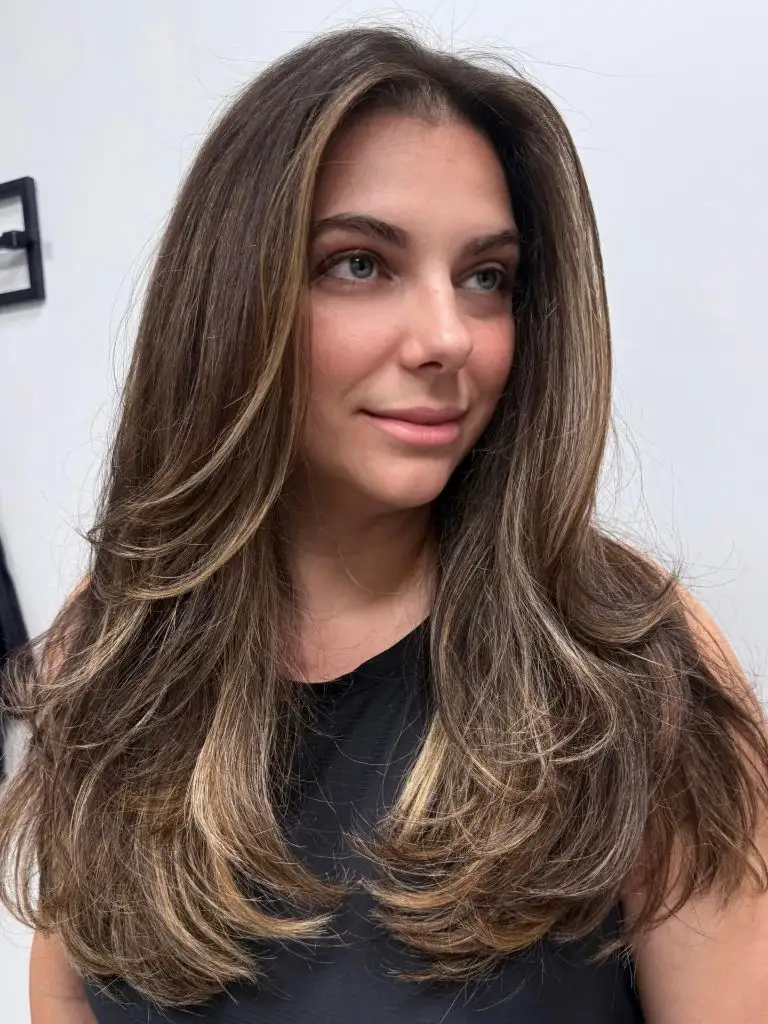
The caramel pieces here are thin and precise, almost like ribbons of warm light woven through a medium brunette base. They’re concentrated around the face and through the front layers, fading out toward the back where the hair stays a solid, rich brown. The cut is long with visible Layered movement, the kind where you can see distinct pieces flipping outward at the ends rather than all blending into one curtain. That layering is what lets the caramel streaks show up individually instead of blurring together.
This is exactly the kind of look where the cut and the color are working together, and if you did one without the other you’d lose half the effect. The layers need to start around the chin or just below to get that outward flip at the ends, and the face-framing highlights should be hand-painted starting about two inches from the root so they grow in naturally. Redken Shades EQ is the industry workhorse for gloss appointments on brunette shades like this; it deposits enough tone to keep the caramel from going brassy while adding a layer of shine. Maintenance-wise, this is an eight-to-ten week color because the root shadow and hand-painted placement are designed to blur as they grow.
I keep thinking about how this color shifts depending on what you’re wearing. A dark green sweater makes the caramel pop warmer; a grey coat makes the whole thing look more neutral. That kind of flexibility is genuinely useful when your wardrobe is rotating through fall layers.
Glossy Copper-Caramel Melt on Extra-Long Layers
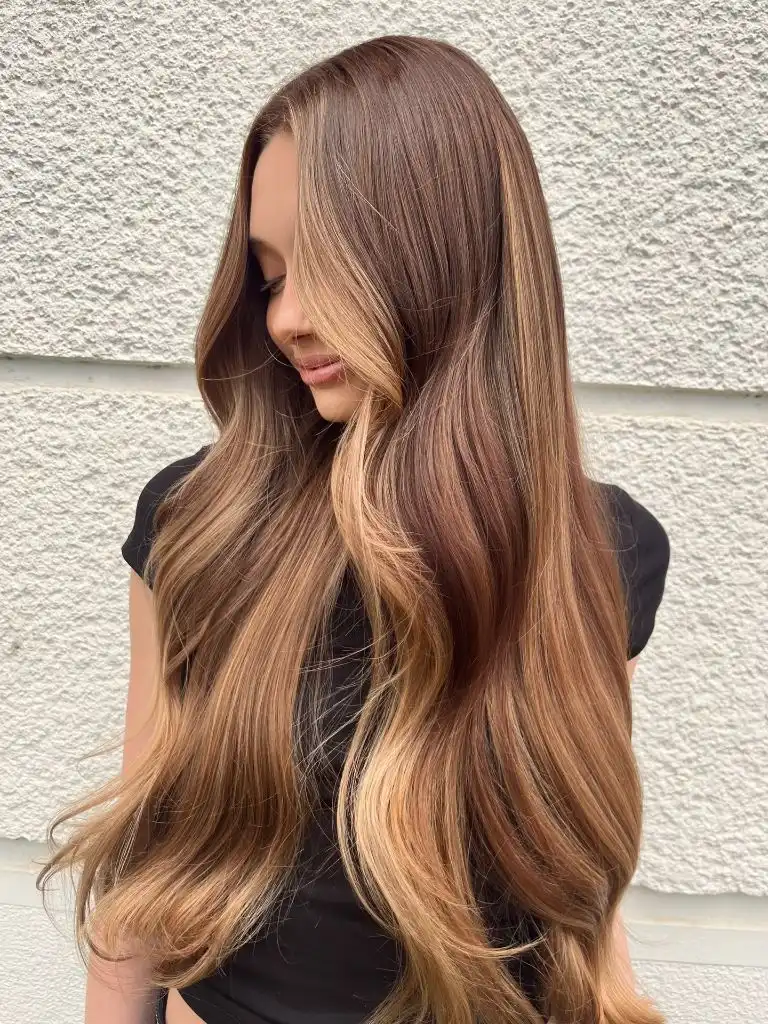
Whenever I see copper this rich and glossy, I know the color was freshly toned and the hair is in genuinely good condition, because copper is one of the hardest shades to keep looking polished. This one melts from a deeper cinnamon root through warmer caramel mids and into golden-copper ends, and the transition is so smooth it almost looks like an ombré built entirely from warm tones. The hair is extra-long with minimal layering, which means the color melt gets a long, uninterrupted canvas to work with. The slight bend at the ends is just enough to show off the tonal shift without hiding it in a curl pattern.
Copper-caramel like this fades faster than almost any other color family, so your maintenance game has to be tight. dpHUE Gloss+ in Copper is one of the better at-home options for depositing warmth between salon visits; use it every two to three weeks as a shower treatment and you’ll stretch your salon visits to every eight weeks instead of six. The shine here is also partly a function of cuticle health. A weekly rinse with cool water after conditioning seals the cuticle layer and traps the pigment, which matters specifically with copper because the molecules are large and prone to washing out. Allure has run multiple fall color trend roundups featuring exactly this kind of warm, glossy copper melt, and there’s a reason it keeps showing up.
Some shades just feel like the end of summer bleeding into the beginning of something warmer and slower. This is that shade, and it looks just as good with a worn leather bag and ankle boots as it does with a sundress on the last warm weekend.
Soft Strawberry Blonde with Gentle Volume and Feathered Ends
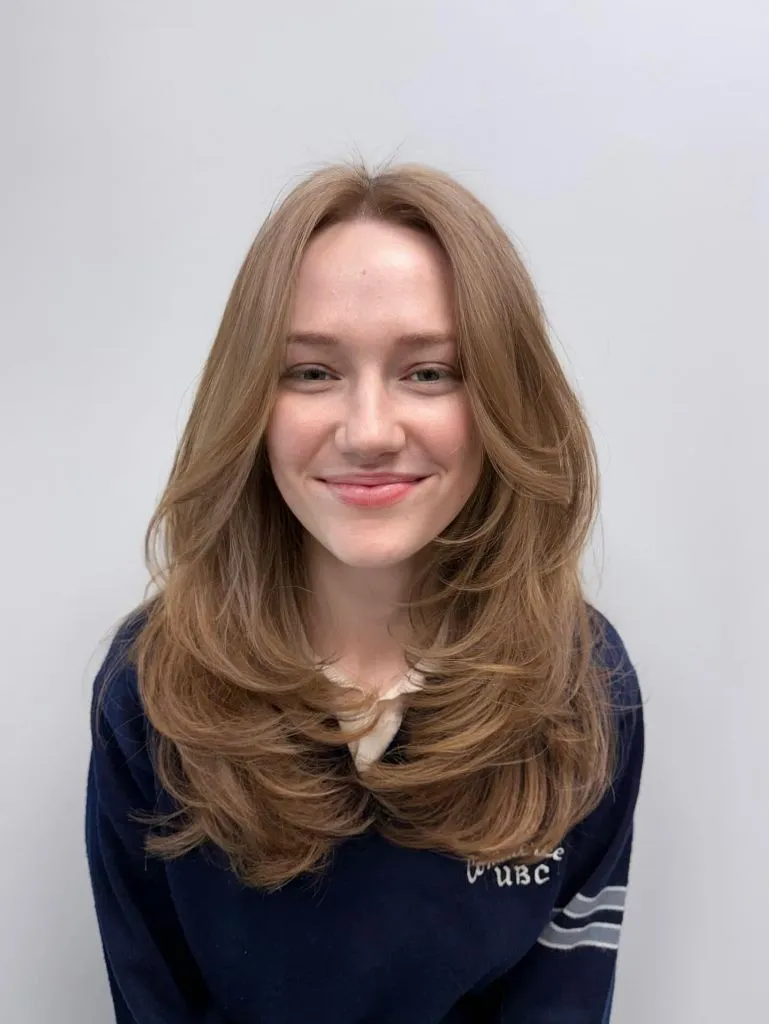
This one feels like the quiet version of going red. It’s a soft strawberry blonde, not orange, not copper, but that specific warm blonde with a pink-gold undertone running through it. The cut is shoulder-length with feathered ends that flip outward slightly, and there’s a lot of natural volume at the crown that gives it a ’90s feel without a blowout bar finish. The parting is slightly off-center, and the way the hair falls in two distinct curtains around the face makes the color look warmer on one side where the light is hitting it directly. It’s the kind of color that people will call “red” even though it isn’t, really.
Strawberry blonde occupies a tricky middle ground between blonde and red maintenance. You need to avoid purple shampoo entirely because it’ll cancel out the warmth you’re paying for, and instead lean on a gentle, color-safe formula. Virtue Recovery Shampoo is a good one here since it uses keratin protein to keep the hair strong without stripping any warm pigment. For styling this kind of feathered volume, a round brush blowout on medium heat with the nozzle pointed downward gets you most of the way there; the feathering at the ends comes from wrapping the last two inches around the brush and directing them outward rather than under. Refinery29 has been spotlighting strawberry and rose-gold tones in their fall hair color roundups consistently, and this softer interpretation is especially well-suited for fair skin.
It’s funny how a color this subtle can shift the entire energy of a face. With a navy crewneck sweater and minimal jewelry, it’s the only statement you need.
Jet Black Butterfly Layers with Wispy Curtain Bangs
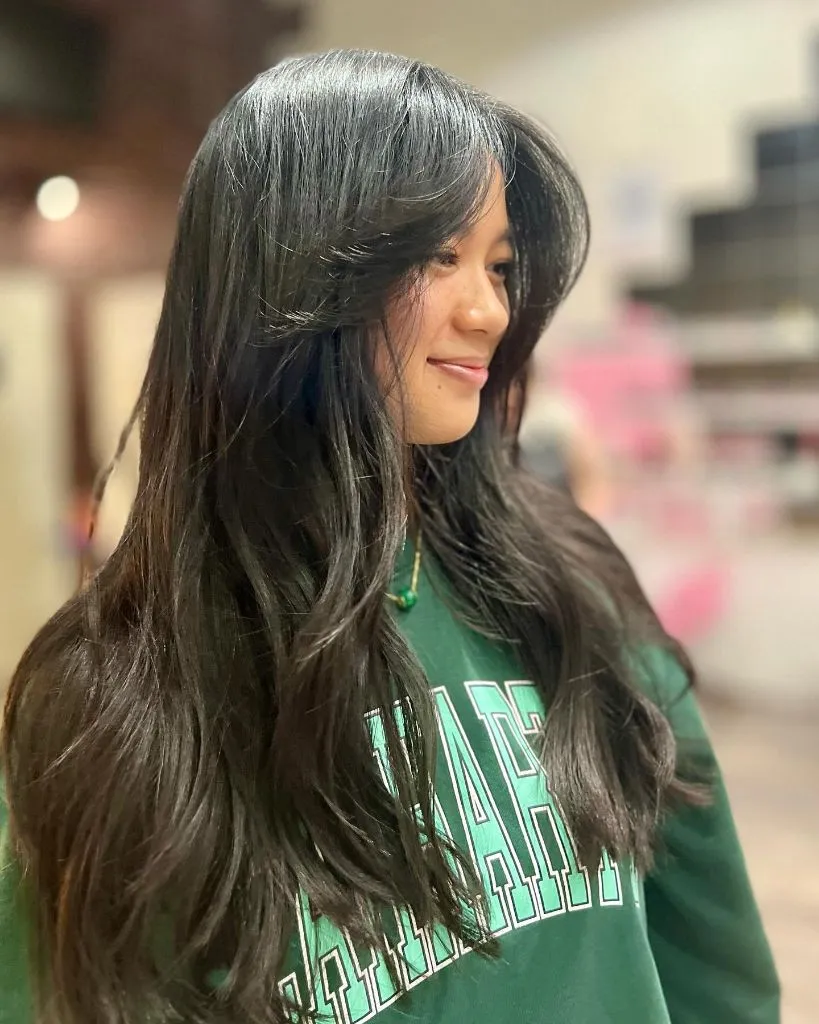
Some hair colors immediately make me think of a specific season, and jet black with this kind of movement is pure fall. The butterfly layers here are doing the heavy lifting: shorter layers sit at the chin and jaw, longer layers fall through the mid-lengths, and the whole thing fans out into a wide, almost wing-like silhouette. The curtain bangs are wispy and parted slightly off-center, framing the face without covering it. The texture is wavy but not curled, more like the hair was braided overnight and shaken out. Against a saturated green sweatshirt, the black has a slight blue-cool sheen that makes it look incredibly healthy.
Butterfly layers on long hair need a specific cutting technique where the shorter interior layers are cut with a razor or point-cut for softness, not blunt-cut, because blunt shorter layers on black hair tend to look chunky rather than airy. Moroccanoil Hydrating Styling Cream is the kind of product that works here: it gives enough hold to define the layers without weighing down the movement or making black hair look greasy. For maintaining depth and shine on jet black, a clear gloss treatment every six to eight weeks makes a bigger difference than most people realize. It doesn’t change the color at all; it just smooths the cuticle so the light reflects cleanly instead of scattering, which is the difference between black that looks rich and black that looks flat. Vogue’s fall trend coverage regularly features this kind of structured layered cut on long dark hair, and the butterfly shape in particular has been building momentum since late 2024.
At some point you stop overthinking it, and this is that point. Black, layered, slightly undone. It works with literally everything in your closet.
Sleek Dark Brunette with Long Face-Framing Layers
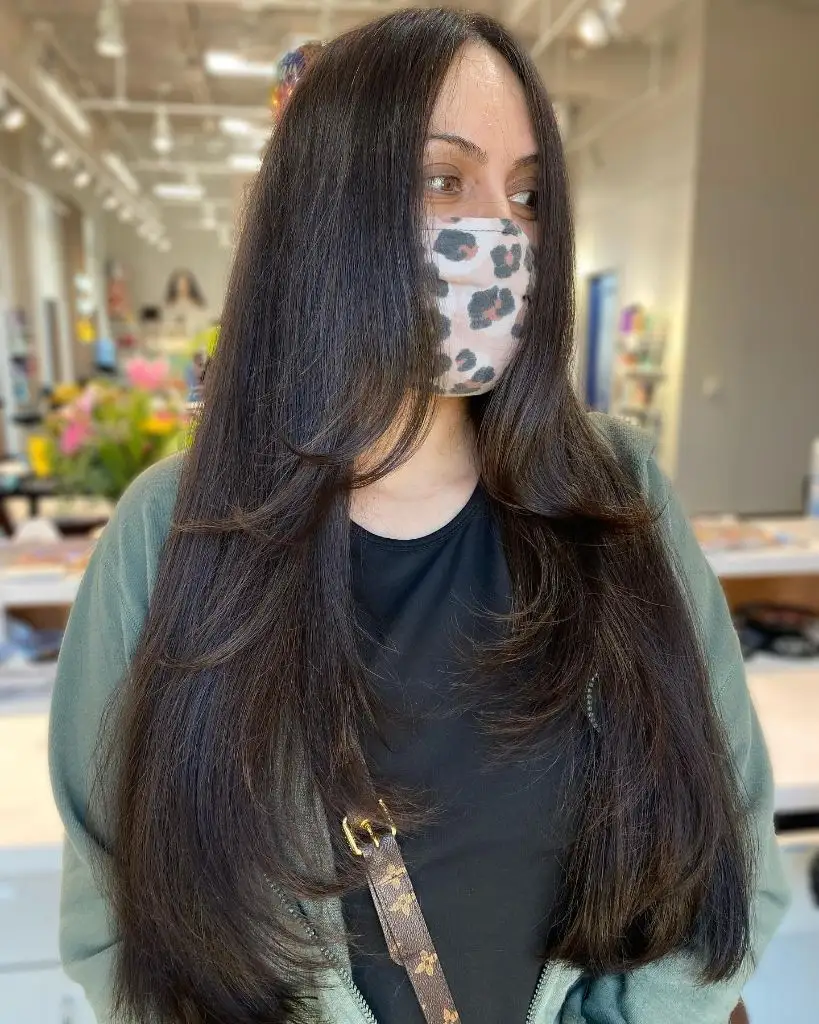
The hair is nearly jet black, with a very subtle warm undertone visible in the lower lengths where the light catches the thinnest sections. What makes this different from the previous look is the texture: this is Sleek. No wave, no curl, just a clean, straight fall with long layers that taper gradually from the collarbone down. The face-framing layers are long and blended rather than wispy, which gives the whole style a sharp, intentional quality. It’s the kind of silhouette that looks different depending on whether the hair is tucked behind an ear or left forward.
Straight, long hair shows every bit of damage and dryness because there’s nowhere for split ends or frizz to hide in a curl pattern. Blunt ends in particular require trims every six to eight weeks to stay looking clean. IGK Good Behavior Spirulina Protein Smoothing Spray is a solid pick before flat-ironing because it gives heat protection while smoothing the cuticle without weighing things down, and on naturally dark hair like this, you don’t need much else. For dark brunettes who want to avoid single-process touchups, a root shadow or demi-permanent gloss will refresh the tone and add shine without the commitment of permanent color. This is also a look where a good cut matters more than color, because the shape is carrying the whole style.
Honestly, there’s a reason sleek dark hair keeps coming back every single fall. With a sage green jacket and gold hoops, this is dinner-ready before you’ve even thought about it.
Buttery Beach Blonde with Tousled Waves
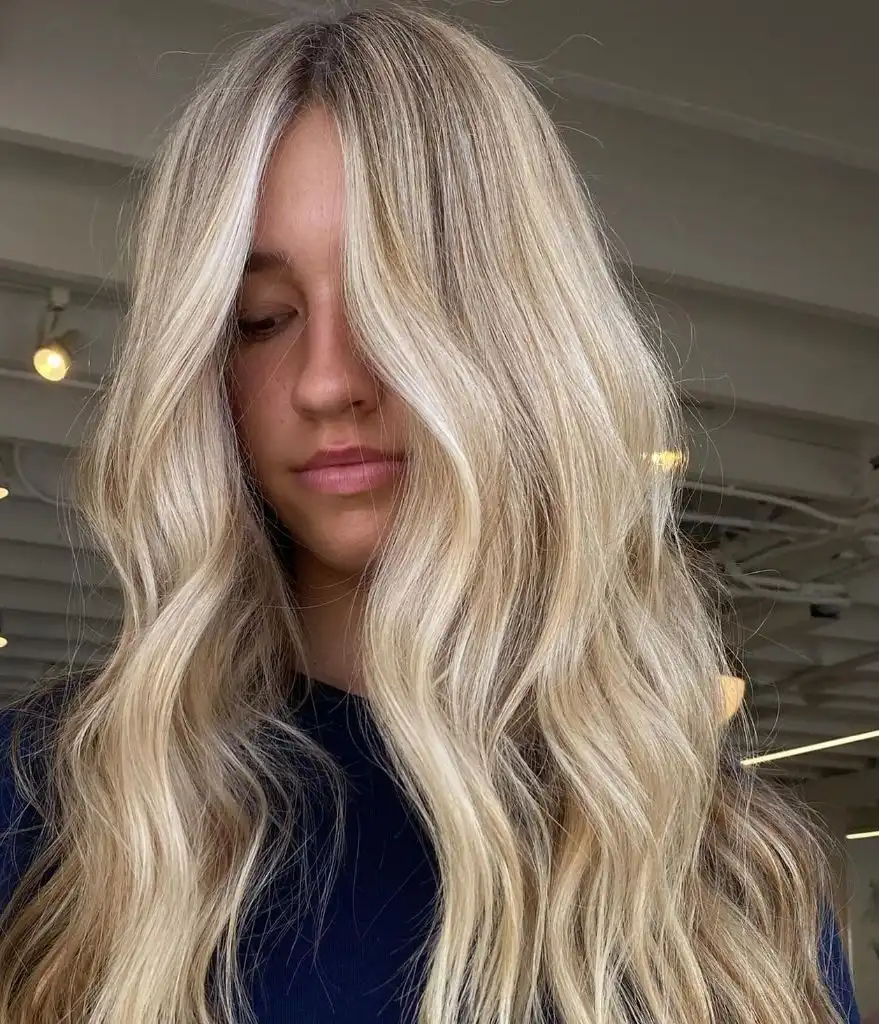
Out of everything here, this might be the one I’d bring to my colorist first if I were blonde. The shade is a buttery, warm Blonde that avoids going icy or platinum. The roots are a soft, natural dark blonde, maybe a level 7, and the lengths are a creamy butter tone with just enough dimension that it doesn’t read as a flat, single-process blonde. The waves are wide and tousled with a center part, and they’re clearly a second-day texture rather than a fresh-out-of-the-salon bounce. That lived-in quality is the whole mood.
To get this particular shade of warm blonde and keep it from yellowing, you want your colorist to use a warm-neutral toner rather than a cool one. Cool toners are the default at most salons, but they’ll push this kind of butter blonde into ashy territory within a week. Olaplex No. 5 Bond Maintenance Conditioner used consistently keeps the ends from going dry and straw-like, which is the number one thing that makes blonde look cheap rather than expensive. For the tousled wave pattern, the trick is using a 1.5-inch barrel and alternating the direction of each section, then not touching it until it’s fully cooled before raking through with fingers. No brush. A little Ouai Wave Spray on damp hair before air-drying gets you about 70% of the way there without any heat at all.
Maybe it’s the season talking, but I always want to lean into warmer blondes as the air gets cooler. This one with a tan trench coat and cream knit underneath is the exact fall energy I’m chasing this year.
Dusty Rose Double Dutch Braids with a Low Ponytail
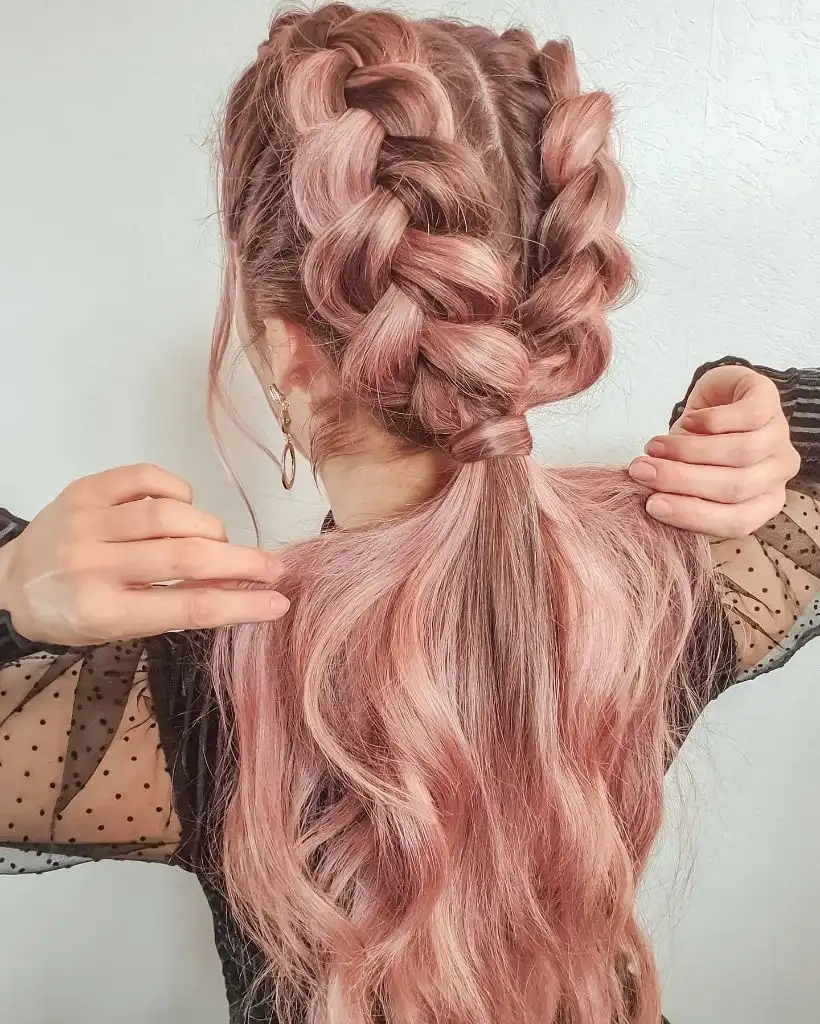
I tried something close to this color last spring and the maintenance was intense, but the compliments were relentless. This dusty rose shade sits somewhere between mauve and copper-pink, and it’s been applied as an all-over color with slightly deeper roots for dimension. The double Dutch braids are chunky and loosely plaited, pulled into a low ponytail at the nape, and the whole thing has a romantic, slightly undone quality. It’s a Pink that doesn’t feel costume-y; the muted, dusty tone pulls it into wearable territory. The sheer, polka-dot sleeves add to the mood here, but the hair could hold its own with a plain black tee.
Fashion colors like this fade fast. Period. Washing with cold water and a sulfate-free formula is the bare minimum, and I’d add Amika The Kure Intense Bond Repair Mask once a week because this shade requires pre-lightening to a level 9 or 10 before the pink goes on, which means the hair has been through a lot by the time you’re styling it. Vernon François has spoken extensively about the importance of protecting hair integrity before and after color, especially on styles that involve both chemical processing and tension from braiding. Space those two things apart: color first, let it settle for a week, then braid. Protective styles like this are actually a smart pairing with fashion color because the hair spends less time exposed to friction and heat between washes.
It reminds me of dried flowers and late-autumn afternoon light, that faded, romantic quality that somehow looks more beautiful as it softens. This color actually gets prettier as it fades, which is rare.
Dimensional Brunette Waves with Caramel Highlights Throughout
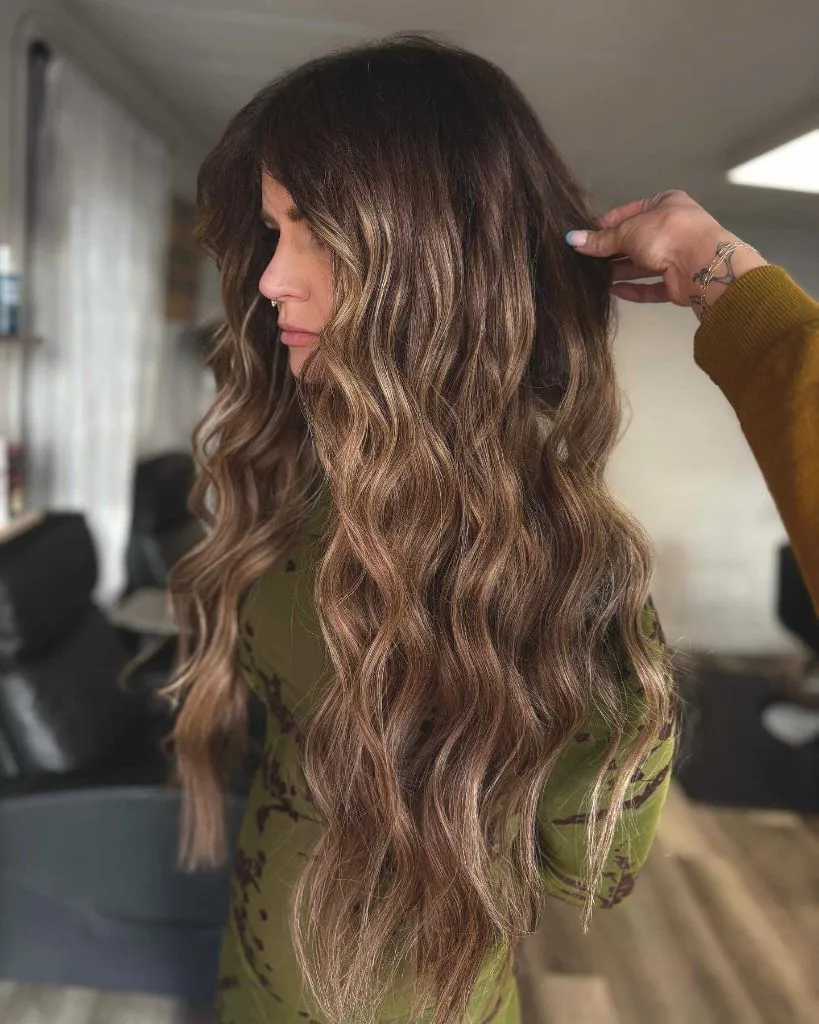
There’s a kind of quiet confidence to this one. The base is a rich, chocolatey brunette, and the caramel highlights are scattered throughout rather than concentrated at the face. They show up more in some sections than others, which is what gives it that real, lived-in look versus a perfectly uniform foil pattern. The waves are Wavy in a loose, unstructured way, the kind that comes from diffusing or braiding rather than a curling iron, and they change direction somewhere around chin level, which makes the tonal variation even more visible. The length is well past the shoulders with minimal layering, letting the color do the talking.
For this kind of all-over dimensional color, foil work mixed with hand-painted pieces is the best approach. The foils give you brightness and lift in specific areas while the hand-painted sections create those softer, more gradual transitions. A root shadow about one to two inches deep at the scalp is what ties the two techniques together and makes the grow-out look intentional rather than neglected. Kérastase Elixir Ultime Oil is the kind of finishing product that works here because it smooths frizz on the wave pattern while boosting the light reflection on those caramel pieces. Brunettes with this much dimension should plan on color appointments every ten to twelve weeks if the root shadow is done properly, which makes it one of the more forgiving fall hair color options for people who don’t want to live at the salon.
Whether paired with a deep wine lip or a bare-faced weekend look, the color adjusts. That’s the thing about good dimensional brunette. It shapeshifts.
Dark Brunette Balayage with Warm Caramel Ends
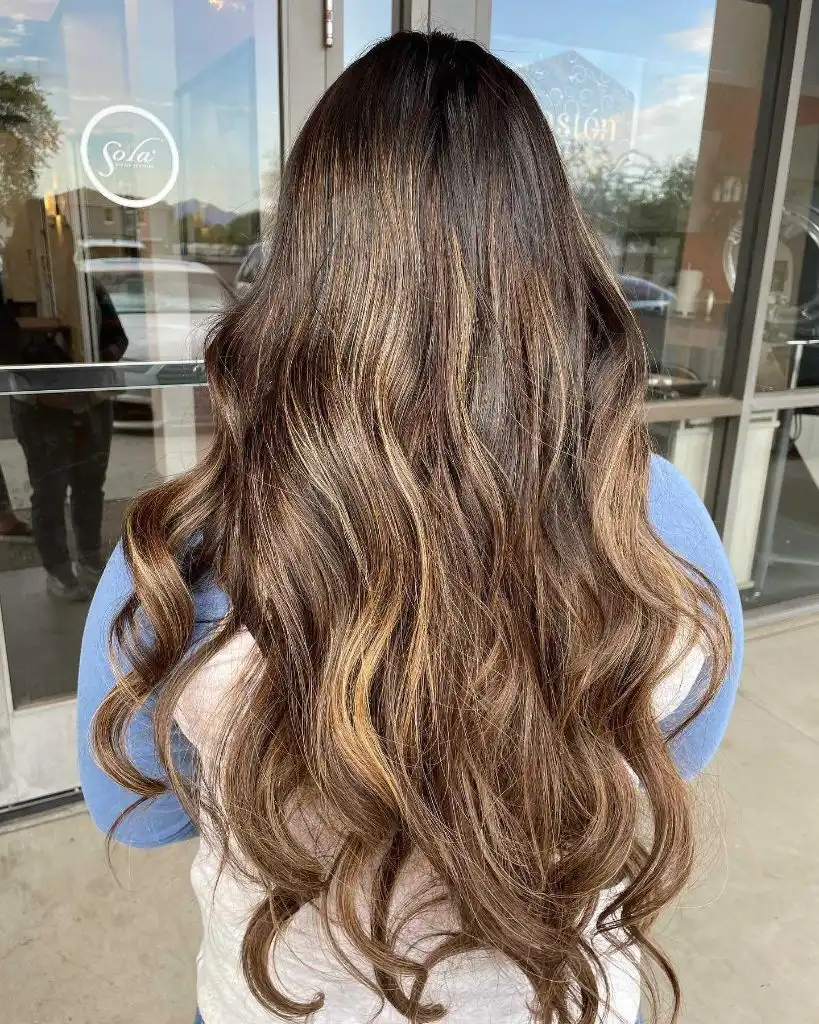
This is what I’d call a no-overthinking-required hair color. The roots and upper half are a deep, cool-toned brunette, almost black, and the balayage begins around mid-length, warming into caramel and light golden brown at the ends. The back view shows how gradually the transition happens; there’s no obvious line or demarcation, just a smooth melt from dark to warm. The curls at the ends are loose and bouncy, clearly set with an iron but softened by a little brushing or finger-raking. It’s a classic fall balayage that feels current because the warmth is concentrated low, which keeps the overall impression dark and rich rather than highlighted.
The trick to keeping a balayage this dark and warm from looking muddy is maintaining separation between the dark base and the lighter ends. Your colorist should resist the temptation to blend too heavily through the mid-lengths; a little contrast is what makes the color melt readable. Redken All Soft Conditioner is a straightforward pick for keeping the lighter ends hydrated without depositing any unwanted tone, and it’s affordable enough to use as a daily conditioner rather than saving it for special occasions. Elle’s autumn hair trend reporting has consistently leaned into this kind of dark-rooted brunette balayage as a cornerstone of fall hair color with dark roots, and it’s easy to see why. It reads as expensive. It grows out well. It works on most natural base colors.
I’ll probably be saving this one for a while. It’s the kind of low-maintenance color that somehow still looks like you made an effort.
Straight Brunette Ombré with Visible Root Grow-Out
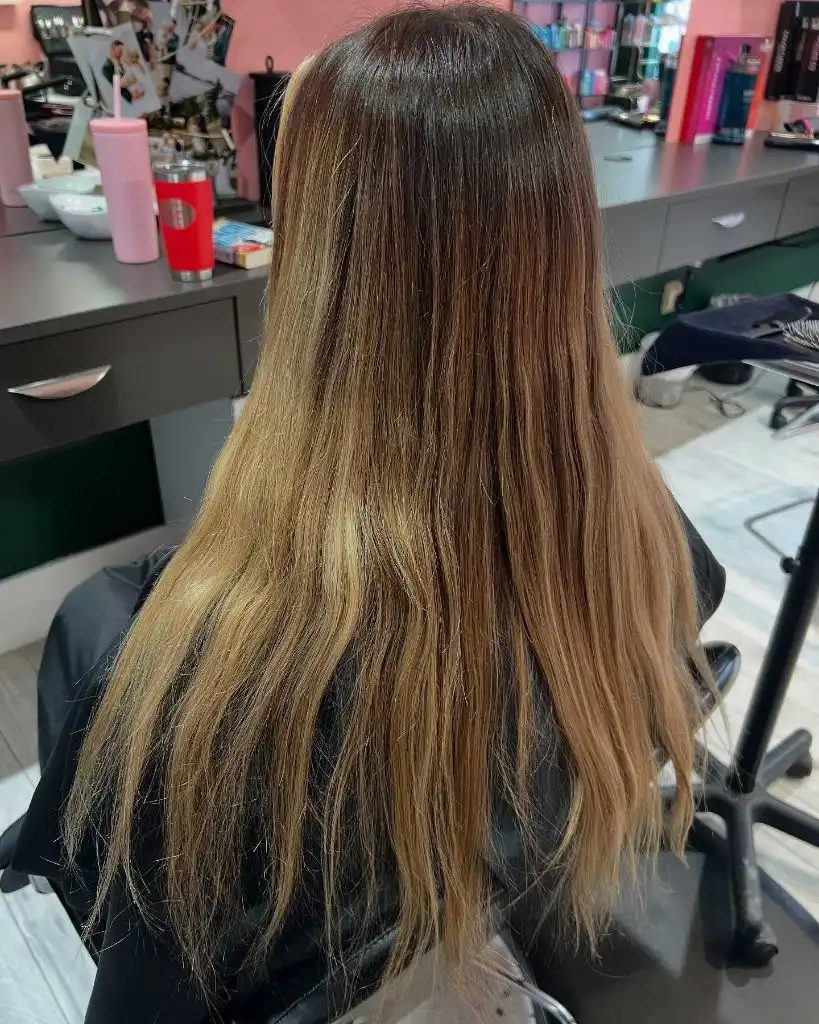
If I’m honest, this shade snuck up on me. It’s not the most polished image in this roundup, and that’s actually what makes it useful. This is what real ombré looks like several weeks after a salon visit, with visible dark root grow-out transitioning into lighter, warmer golden-brown ends. The hair is straight and unstyled, which means you’re seeing the true color without any wave pattern to add perceived depth or movement. It’s honest. And honestly? I think more people need to see this because it shows that a good ombré is designed to look fine even at this stage.
The lesson here is about placement and planning. If your colorist places the transition point three to four inches below the root rather than right at the root line, you get months of natural-looking grow-out instead of a harsh line appearing at four weeks. This is also where a root shadow or root smudge technique pays off; it blurs that top edge so the regrowth blends rather than stacks. Moroccanoil Color Depositing Mask in Champagne is a low-commitment way to refresh the warmer ends at home without touching the dark roots. It’s a wash-out formula, so if you overshoot the warmth you haven’t committed to anything. For anyone considering a late-summer or early-fall transition hair color, starting with an ombré like this is the smartest move because it gives you the most room to grow.
It’s a small thing, but knowing your color is built to grow out well changes how you feel about the whole appointment. Less anxiety, more patience. That’s worth something.
Long Brunette Before-Shot with Natural Texture
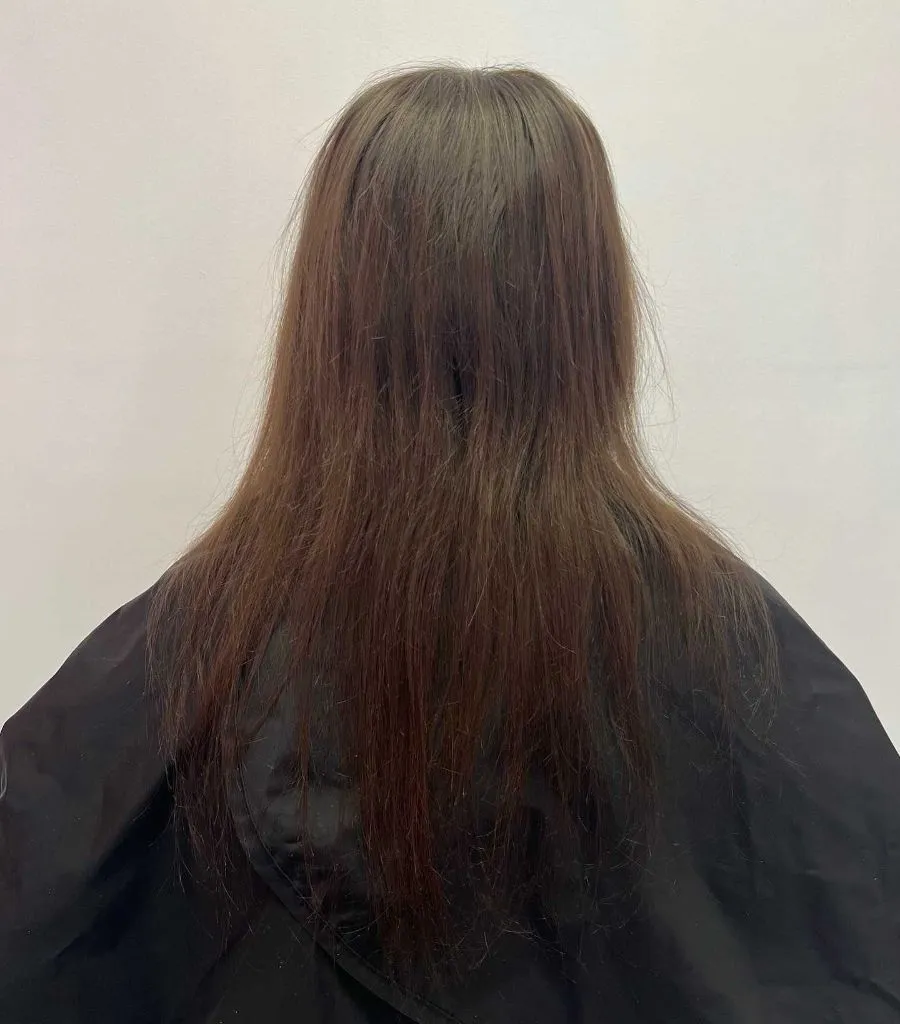
I wanted to include this because every good transformation starts somewhere, and this is the somewhere. The hair is long, unstyled, and a natural mid-to-dark brunette with a slight reddish cast visible in the lower lengths, probably from previous color or sun exposure. There’s visible dryness and some unevenness in the texture, which is real life. Most of us walk into the salon looking something like this. The length is there; the health and shape need attention.
Before doing any color work, a stylist worth their chair will address condition first. A Olaplex No. 0 and No. 3 treatment before the appointment strengthens the bonds that previous color or heat damage has weakened, which means the new color deposits more evenly and lasts longer. Matt Rez has been vocal about not rushing to lighten hair that isn’t structurally ready for it, and that approach saves clients money and breakage in the long run. A good trim, even just an inch or two of damaged ends, immediately changes how the remaining length sits, moves, and catches light. If you’re planning a fall color transformation, book a conditioning treatment and trim appointment two weeks before the color session. It makes a measurable difference in the final result.
Sometimes the most exciting part of a new look is knowing where you’re starting from. This is the honest beginning that makes every other photo in this roundup possible.
Dark Brunette in the Chair with Wet Sectioning
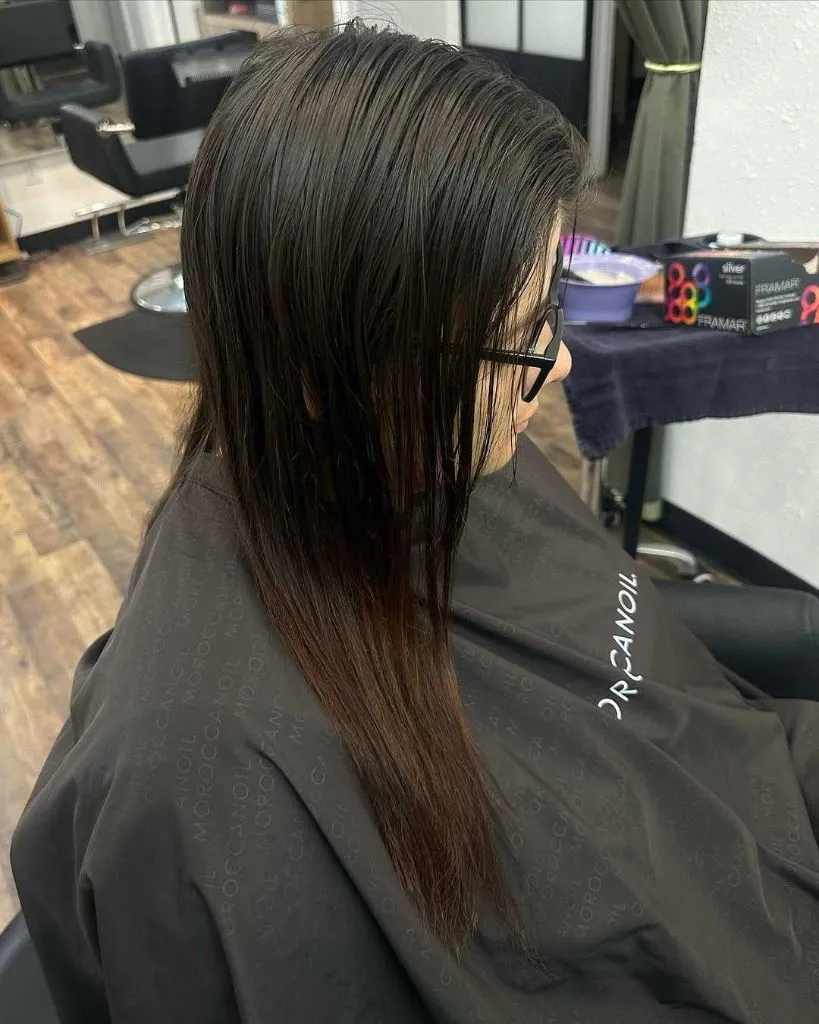
It’s a small detail, but I find this kind of in-progress salon shot genuinely helpful. The hair is wet and sectioned, which is when you can actually see the true base color without styling, lighting, or product changing the way it reads. This is a natural level 2 or 3 dark brunette with warm undertones visible at the ends where previous color is fading. The length is past the shoulders, and the Moroccanoil cape in frame tells you this is a salon that takes product seriously.
The reason I’m including a process shot is because understanding your starting point matters for the conversation you have with your colorist. A dark base like this can support rich Brunette tones, warm balayage, or even a slow, multi-session journey toward lighter color, but each path requires a different technique and a different timeline. Rushing to lift dark hair in one session is how you end up with orange banding and breakage. Davines’ bond-building treatment line is one of the better options for in-salon use during lightening because it works inside the cortex during the chemical process rather than just coating afterward. The takeaway is simple: the chair is where the real magic happens, and trusting the process, especially with a multi-appointment color plan, is how you get results that look like the other photos in this roundup eight weeks later.
Honestly, I love seeing the behind-the-scenes moments. They’re the reminder that none of this is instant. The best color takes patience, the right products, and a colorist who knows when to stop lifting.
Hi, I’m Zoey Mitchell, the creator of ChicStyle Blog.
I share simple, wearable outfit ideas, hairstyles, nail trends, and beauty tips that feel natural and easy to recreate.
This blog is where I explore everything that makes a woman feel put together and confident every day. I’m not an expert — just a woman who genuinely loves style, mixing looks, and discovering what works.
If you love effortless fashion with a personal touch, you’ll feel at home here.