
When the temperature drops and natural light shifts cooler, blonde winter hair color ideas become less about brightness alone and more about how light and shadow sit together across a single head of hair. The principle that holds every successful winter blonde together is soft dimension, meaning tonal variation that reads as depth without introducing harsh contrast. A slightly deeper root, a muted mid-shaft, or a brighter end all serve the same function: they let the color breathe.
Blonde winter hair color ideas work best when you stop thinking of blonde as one flat category and start reading it as a relationship between warm and cool, light and slightly less light, smooth and textured. Across the twenty-two examples below, compare where the darkest tone sits relative to the lightest, how much distance exists between root and end, and whether the surface finish amplifies or quiets the dimension underneath.
1. Icy Platinum Waves With Cool Root Shadow
A front-facing, slightly angled view shows long hair styled into large, loose barrel waves. The color is a very pale, almost white platinum blonde, with the faintest cool shadow visible at the root area near the part. The waves create deep ridges of light and dark across the surface, and the ends curl inward softly. The background is a dark interior wall with warm Edison-style bulbs visible at the upper left.
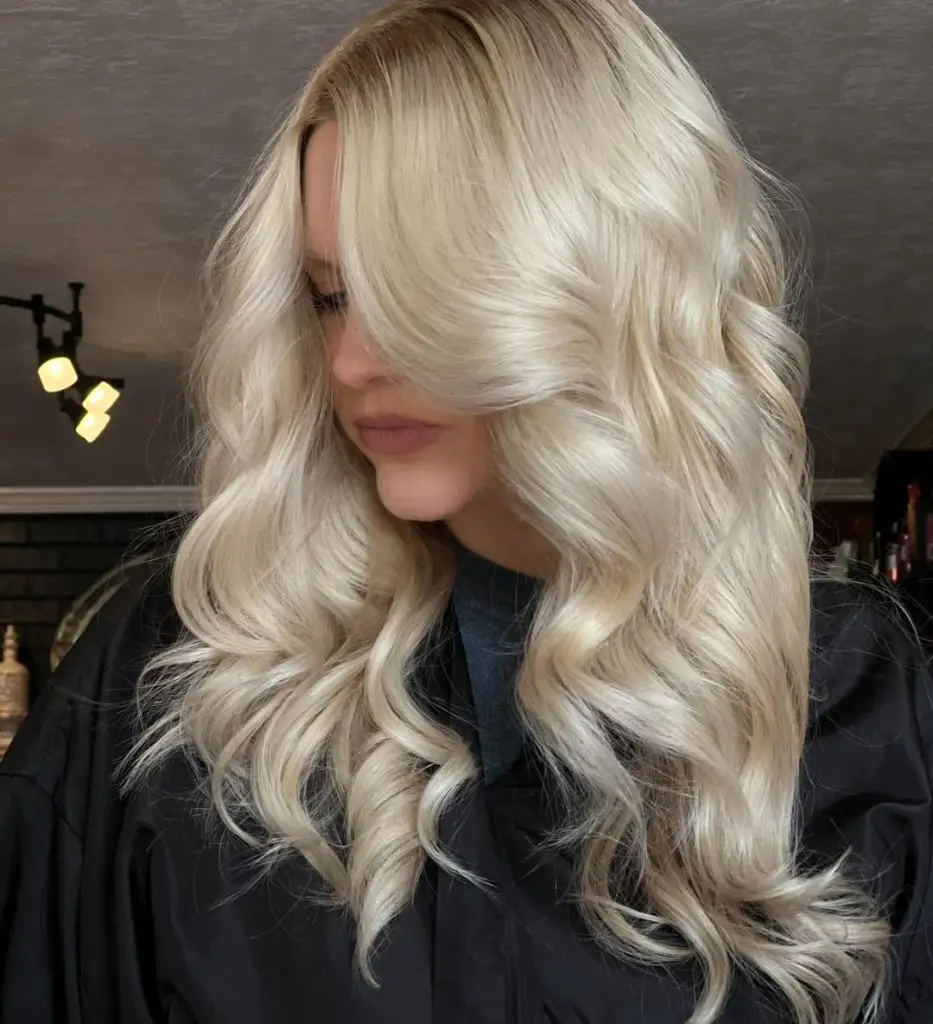
The mechanism here is value contrast generated entirely by shape rather than by color variation. Because the blonde is so uniformly pale, every wave becomes a light-catching ridge beside a shadowed valley, producing the illusion of dimension that does not actually exist in the pigment itself. The surface finish looks smooth and reflective, which amplifies this effect by making the highlights almost mirror-bright against the troughs.
To adapt this for hair that is a few shades darker at the root, lean into the shadow rather than fighting it. A slightly visible root actually strengthens the depth that the waves alone are providing, so maintaining a root smudge of one to two levels darker keeps the style looking intentional without requiring a full lift to the scalp.
2. Warm Golden Blonde With Curtain Framing
Long, straight-to-wavy hair falls past the chest in a front-facing view. The color is a warm, golden-toned blonde that is slightly deeper at the crown and lighter through the mid-lengths and ends. Long, face-framing pieces sweep to one side, creating a curtain-like parting. The hair has a natural, lived-in texture with soft bends rather than structured curls. The background includes partial text on a wall and a white athletic jersey.
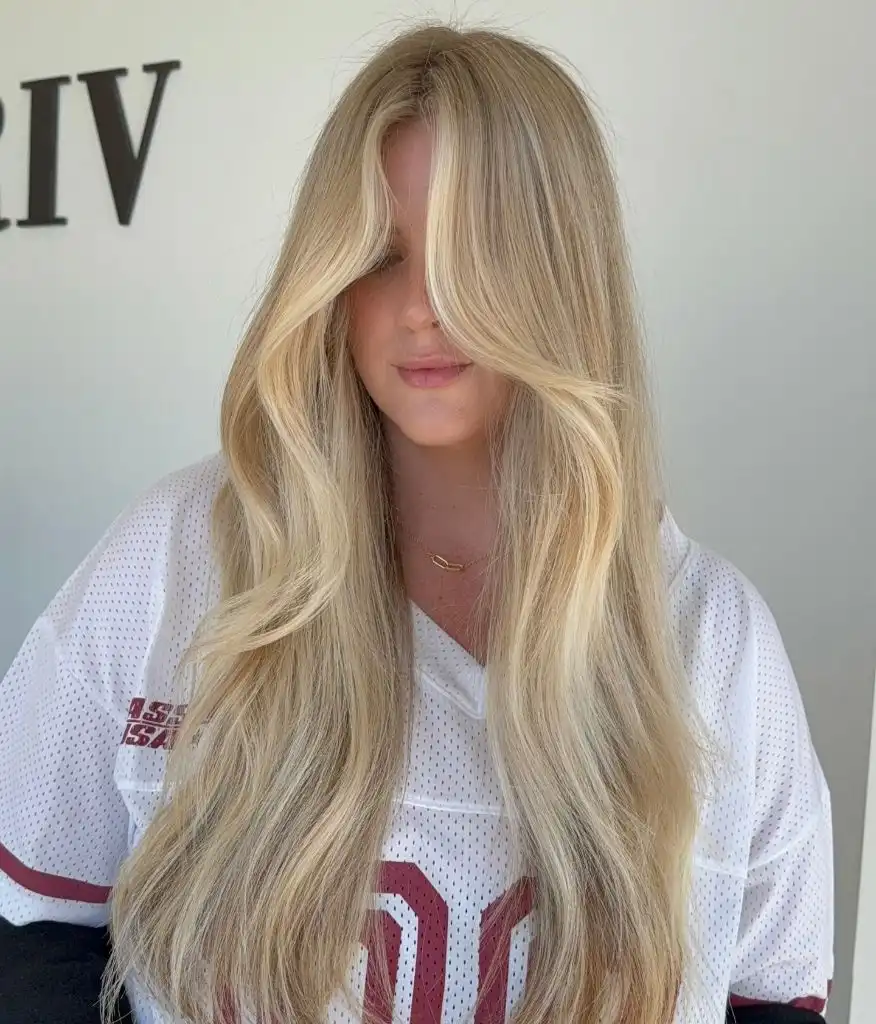
The strength of this color lies in tonal layering within a narrow range. The crown sits perhaps one and a half levels deeper than the ends, and the transition is so gradual that no single line of demarcation appears. This creates a reading of thickness and movement without any bold contrast point. The face-framing lighter pieces act as a visual anchor, drawing attention upward while the darker crown recedes.
If your natural base is already a medium blonde, this effect can be achieved with minimal lightening by simply preserving some of the deeper natural tone at the root zone and concentrating brightness only from the ear down. The key proportion to maintain is keeping the lighter zone larger in area than the darker zone, so the overall impression still reads as blonde.
3. Dimensional Dirty Blonde With Visible Root Depth
A three-quarter view shows medium-length hair just past the shoulders, with a clear transition from a medium-brown root into blonde through the mid-shaft and ends. Face-framing highlights are visible, and the texture is soft with gentle movement. The ends flip outward slightly. The background includes a brick wall and a white window frame, partially visible.
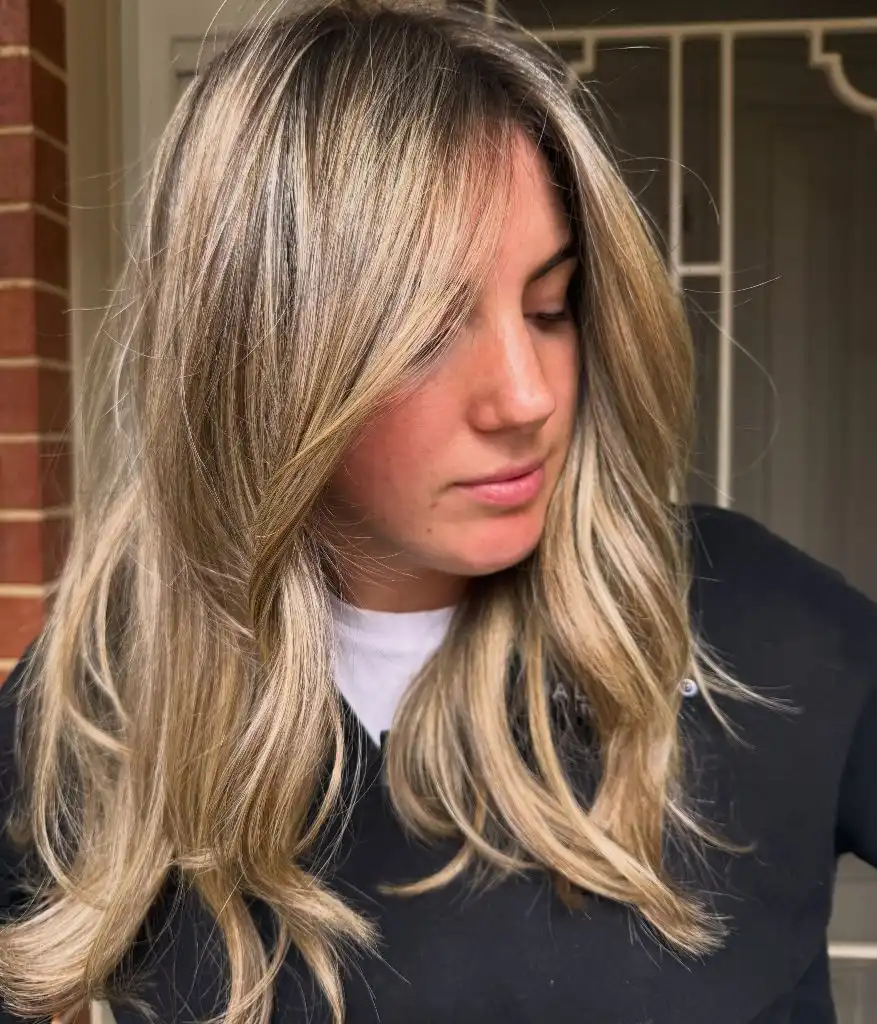
This is a study in deliberate interruption. The brown root does not blend invisibly into the blonde; instead, it occupies a visible stripe at the top of the head that grounds the lighter color below. That interruption keeps the blonde from reading as flat or washed out. The face-framing pieces are lighter than the rest, creating a second zone of contrast that pulls the eye forward and inward.
For anyone whose grow-out tends to look unfinished, this example demonstrates that the gap between root and blonde only reads as neglect when the transition is patchy. Here, the root is even and consistent in depth, which signals intention. Keeping root touch-ups on a longer cycle and asking for a root melt rather than a hard line is the practical adaptation.
4. Sun-Bleached Blonde With Lived-In Texture
A close three-quarter view captures long hair with soft, irregular waves. The color moves from a medium-dark root through warm blonde mid-lengths to lighter, almost pale blonde ends. The texture looks natural and slightly wind-touched, with some strands separating. The face is partially visible, and the background is a storefront window with reflections and partial signage.
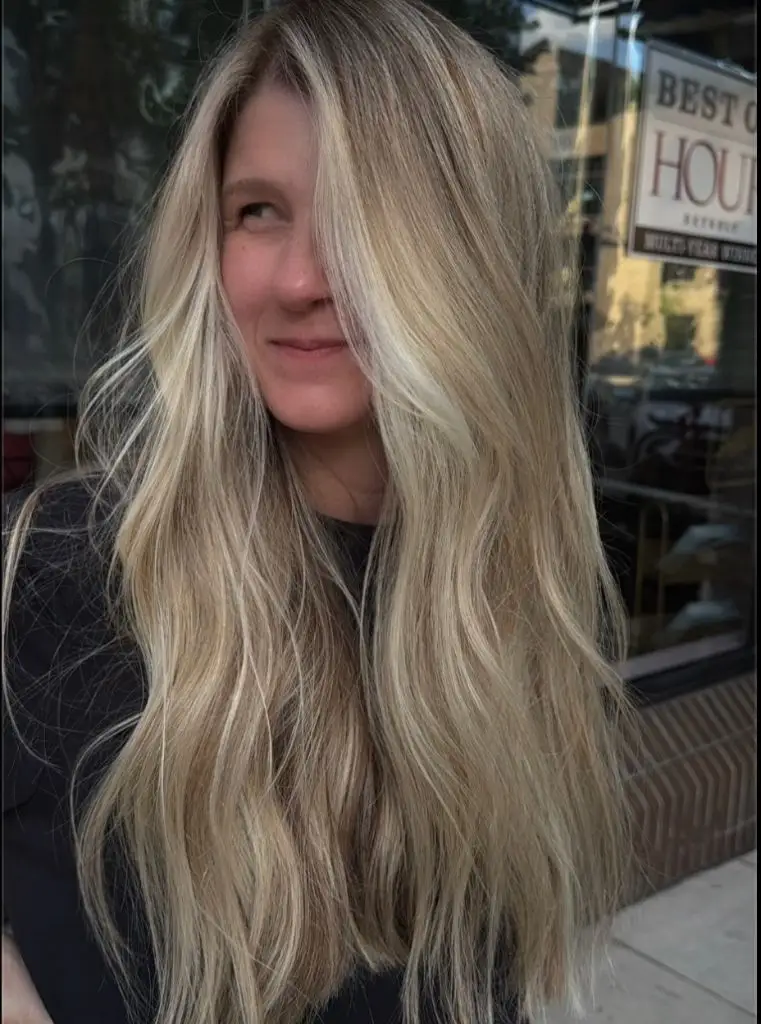
The color repetition across three tonal zones is what makes this read as cohesive rather than ombre. The root, mid-length, and end each occupy a distinct level, but all three sit within the same warm undertone family. No cool ash interrupts the gradient, so the eye travels smoothly from dark to light without stuttering. The separated, slightly rough texture adds to the natural reading by breaking up any bands that a smoother finish might reveal.
To push this effect slightly bolder, you could request a brighter concentration around the front pieces while keeping the interior sections more muted. The adaptation that weakens this look is the opposite: going too bright all over eliminates the gradient and flattens the dimension that makes winter blonde hair color ideas feel three-dimensional rather than monotone.
5. Warm Strawberry Blonde Layered Blowout
A side-back view at a slight downward angle shows medium-length hair blown out into a smooth, rounded shape with flipped ends. The color is a warm, peachy strawberry blonde, very even from root to end with only the faintest darker shadow at the very top of the crown. The hair is sleek, and layers create a slight step at the bottom third. The background is a room with patterned wallpaper and a wooden door.
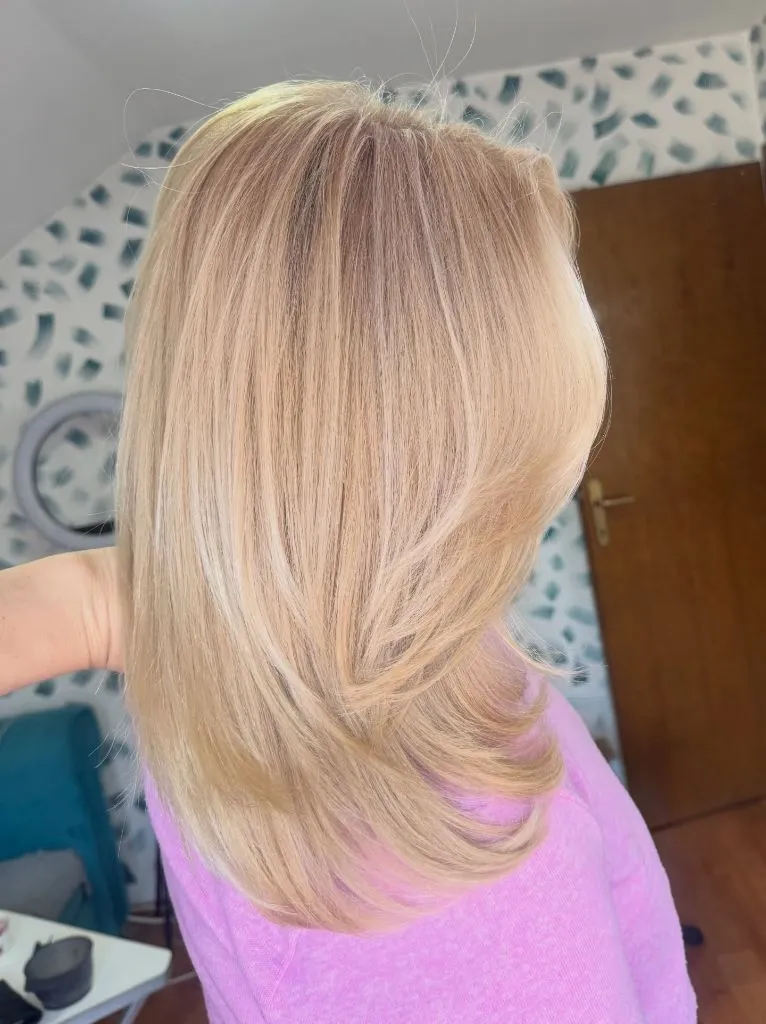
The silhouette outline does all the work here. Because the color is nearly uniform, the visual interest comes entirely from the rounded shape at the crown tapering into a flipped, stepped end. The light catches the smooth surface evenly, creating a continuous sheet of color that emphasizes the form rather than the pigment variation. This is restraint operating at its simplest, where one uniform tone relies entirely on cut and styling to produce dimension.
For anyone considering a single-process blonde for winter, this demonstrates that uniformity is not the same as flatness. The warm undertone prevents the color from washing out under cool light, and the blowout shape creates enough shadow and curve to compensate for the absence of highlights. Keeping the tone warm rather than ashy is the critical detail.
6. Long Dark Brunette With Center Part
A front-facing view shows very long, straight hair reaching past the waist. The color is a uniform medium-dark brown with no visible highlights or color variation. The center part is clean and precise, and the hair lies flat against the chest on both sides. The texture is smooth with a very slight natural wave toward the ends. The background is a plain, light-textured wall.
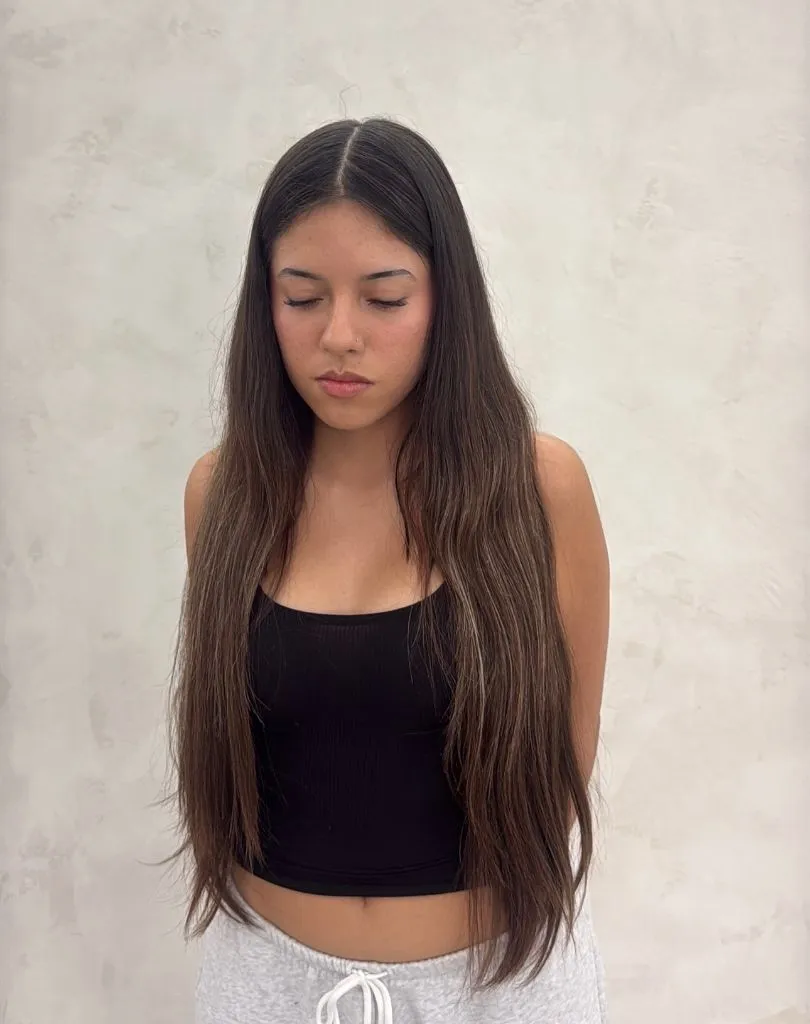
This image operates as a visual baseline. The absence of any blonde or lightened tone creates a reading of density and weight that the other examples in this set work against or away from. The center part splits the hair into two symmetrical panels, and the near-total lack of texture means there are very few shadows within the hair itself. All the value contrast comes from the hair against the light background.
If this is your starting point and you are considering a shift toward blonde, the most important variable is how much of this density you want to preserve. A balayage that keeps the interior sections dark while lightening only the outermost layers will retain the weight and thickness visible here while introducing just enough brightness to read as dimensional.
7. Cool-Toned Blonde Seen From The Back
A back view shows medium-long hair with arms raised, hands behind the head. The color is a cool, ashy blonde that is slightly darker at the root and crown, transitioning to a lighter blonde through the mid-lengths and ends. The texture is straight with very slight natural movement, and the ends are blunt-cut. The background is a plain light gray wall with a cast shadow.
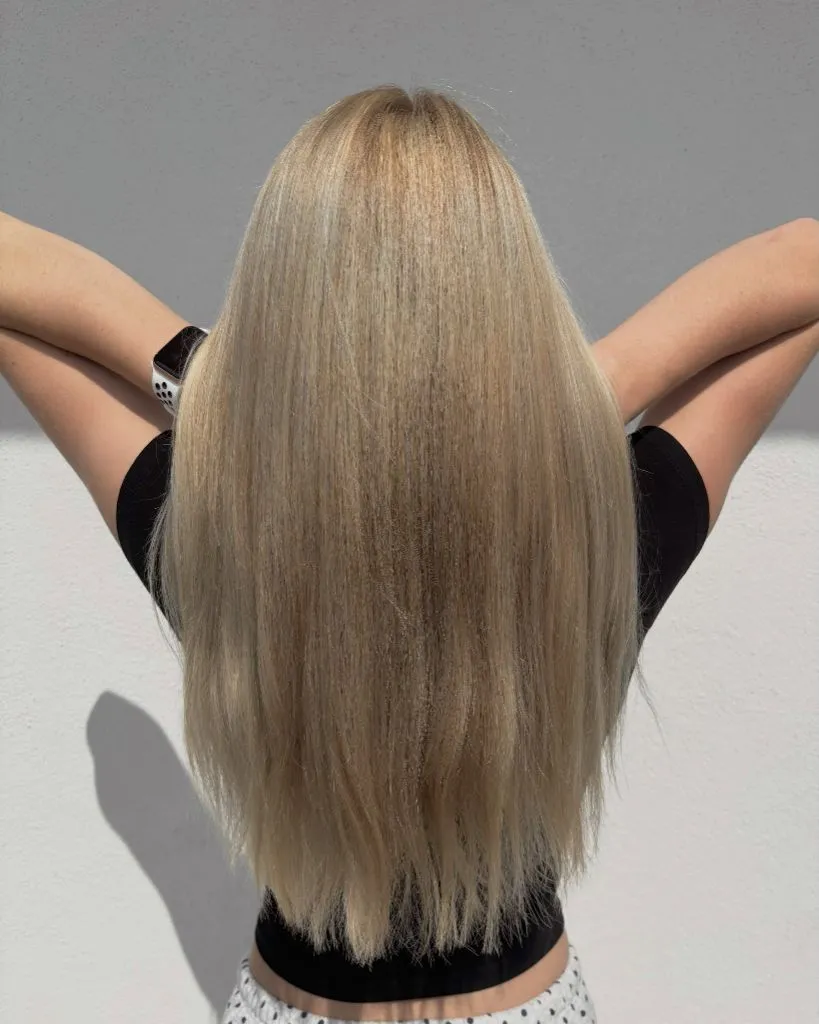
The vertical line dominates this composition. With the arms up and the hair falling straight down, every strand runs parallel from root to tip, and the tonal shift from darker crown to lighter end reads as a smooth vertical gradient. The blunt cut at the bottom creates a hard horizontal stop that contrasts with the softness of the gradient above. This tension between a gradual color shift and a sharp structural edge is what makes the image feel balanced.
For winter, this cool ash tone can read slightly flat in warm indoor lighting, so the practical adaptation is to ensure your toner sits in the neutral-to-cool range rather than going fully silver or gray. Keeping one degree of warmth at the root prevents the color from appearing dull under artificial light.
8. Platinum Ombre Falling Straight From Behind
A back view shows long, very straight hair held by a hand with a blue-and-gold clover bracelet. The root area is a dark, cool blonde that transitions sharply into a very light, almost white platinum from the mid-shaft down. The hair appears freshly smoothed, with high shine and no visible wave. The background is a bright salon interior, softly out of focus.
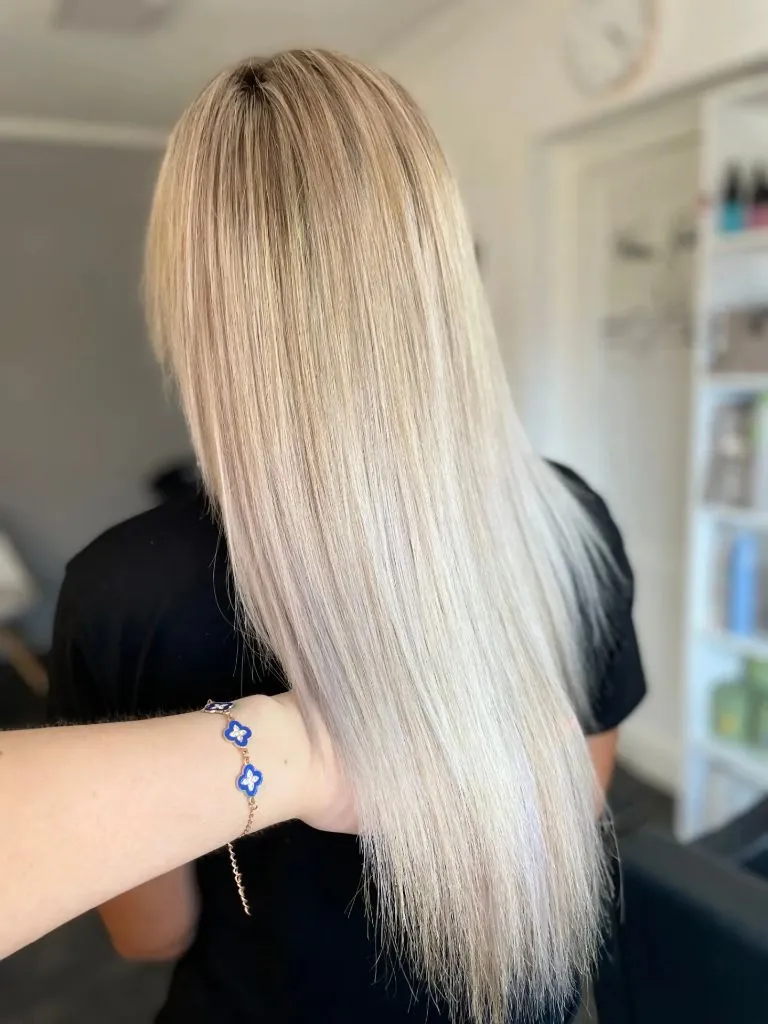
Contrast in value is the dominant force. The jump from dark root to platinum end covers perhaps four to five levels, which is significantly more range than most of the other examples here. This wider gap creates a dramatic reading that is offset only by the perfectly straight, smooth texture, which keeps the drama feeling controlled rather than chaotic. The high shine surface eliminates any texture-based shadow, so the color alone carries all the visual weight.
The adaptation for a softer version is to narrow the gap. Asking your colorist to bring the mid-tone blonde lower, bridging the root and platinum more gradually, will produce a version of this with less drama but more wearability for everyday styling where you might not always straighten. The bracelet and salon context suggest this is a freshly finished result, and the platinum ends will require careful toning maintenance to stay this clean.
9. Ash Blonde Balayage Framing The Face
A front-facing close view shows medium-long, straight hair with a slight outward flip at the ends. The color is an ash blonde with a noticeable cool-toned root shadow, and lighter pieces frame both sides of the face. The hair is parted slightly off-center, and the finish is smooth with a polished, blown-out appearance. The background is a warm-toned salon interior, blurred.
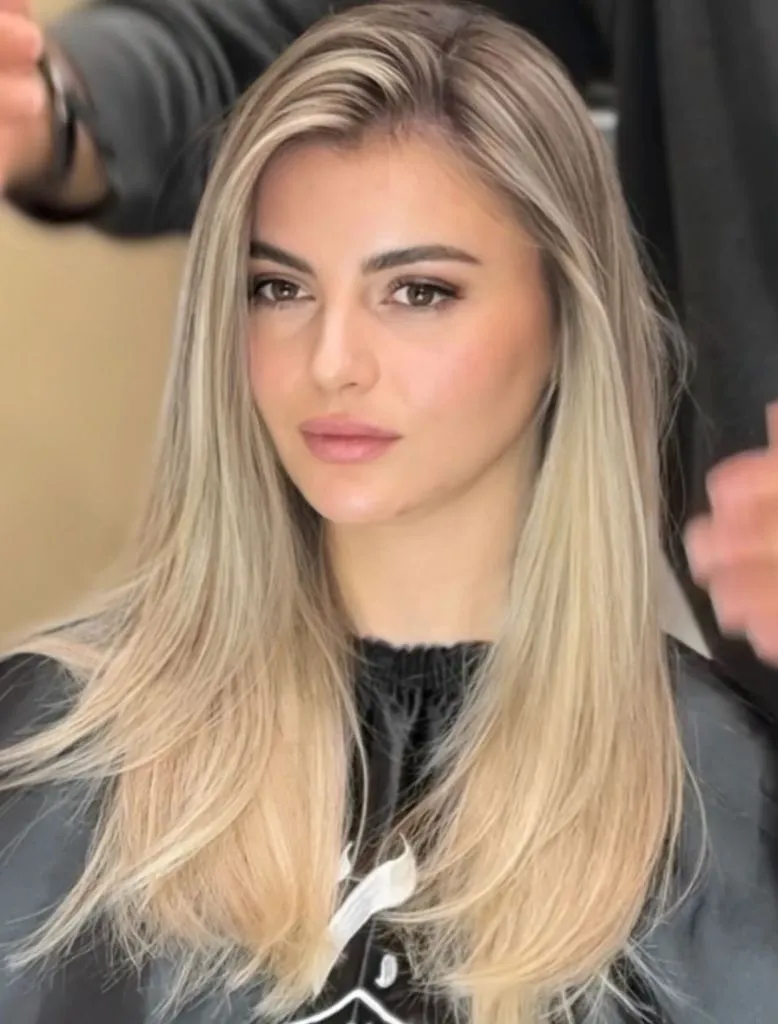
Placement and zoning control how this color reads. The lightest pieces are concentrated at the face frame and the outermost layer, while the interior and root carry a cooler, slightly deeper tone. This zoning means that from the front, the hair looks brighter and more lifted than it would from the side or back, creating a built-in flattering effect without requiring uniform lightness everywhere.
The takeaway for adapting this to shorter lengths is that the face-framing zone can be proportionally smaller. On a lob or shoulder-length cut, keeping the bright pieces within the first two inches around the part and temples achieves the same framing effect without overwhelming a smaller overall canvas of hair.
10. Bright White Blonde Waves From Behind
A back view shows medium-length hair styled into soft, bouncy waves. The color is a very bright, near-white blonde with an even tone from root to end and only the faintest shadow at the very crown. The waves are uniform in size, creating a repeating pattern of ridges and valleys. The finish is smooth and highly reflective. The background is a soft, warm-toned interior with a framed photo and a wicker object.
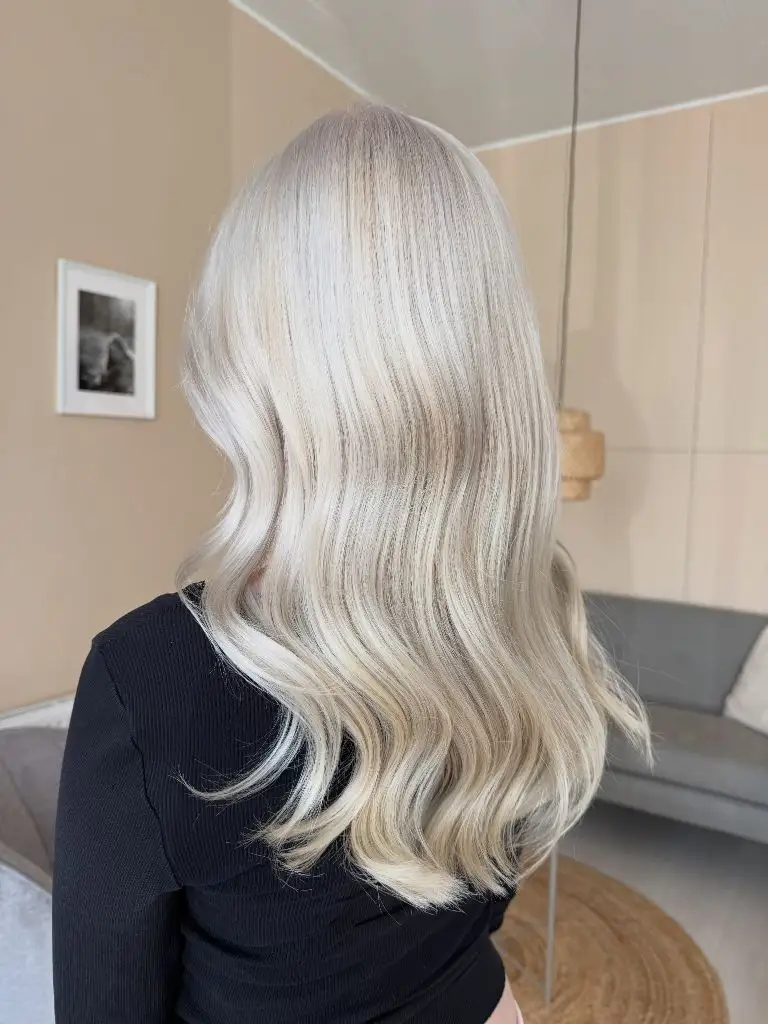
Rhythm drives this image. The evenly spaced waves create a regular pattern of light and shadow that functions almost like a visual texture layered on top of the flat color. Because the blonde is so uniform, every wave ridge catches light identically, producing a rhythmic repetition that makes the hair look thicker and more voluminous than a straight version of the same color would.
The critical detail for maintaining this kind of near-white blonde through winter is purple shampoo frequency. Too much will push the tone toward lavender, too little allows yellow buildup. The waves themselves can be recreated with a large-barrel iron, keeping sections uniform in size to maintain that repeating rhythm rather than mixing curl sizes.
11. Warm Honey Balayage With Root Melt
A back view shows medium-long hair with soft, loose waves. The root is a warm medium brown that melts gradually into a honey-gold blonde through the mid-lengths and ends. The transition is seamless, with no harsh lines. The finish is smooth with a natural-looking sheen, and the ends are slightly thinner than the crown. The background is a modern salon space with wood flooring.
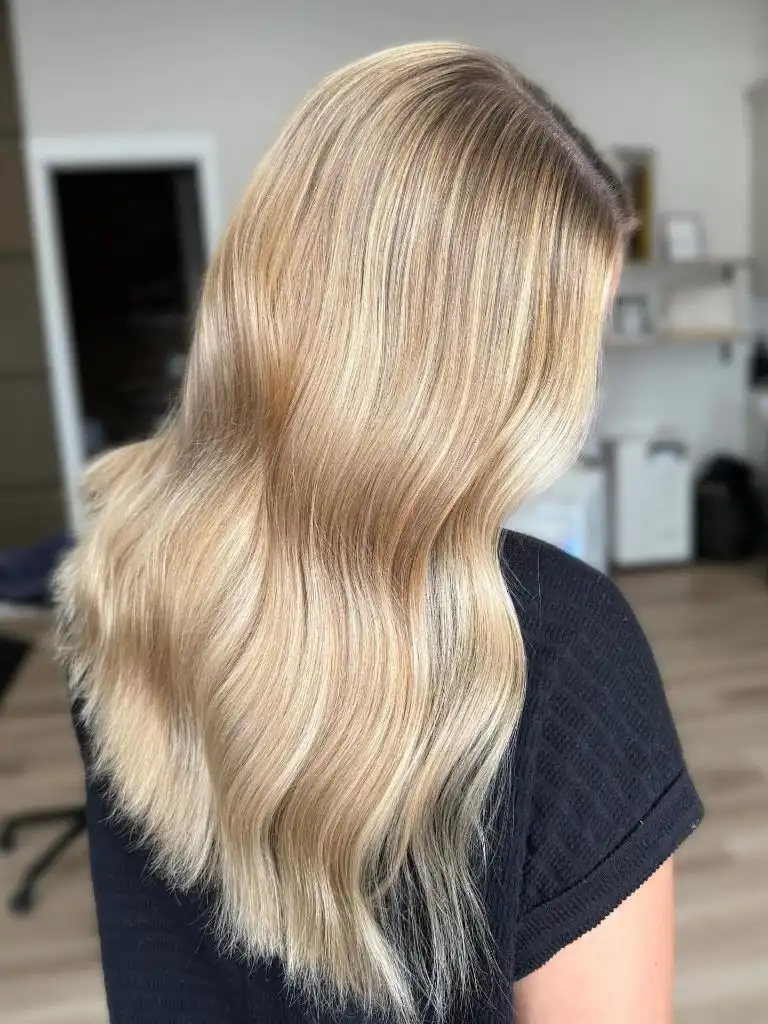
Tonal layering within a warm family creates the depth here. Every visible shade sits on the same warm, golden spectrum, so the eye reads the gradient as a single continuous color that simply shifts in lightness rather than two competing tones. The softness of the waves means the transition zones are stretched and blurred, which hides any banding that a straight style might reveal.
This is one of the most adaptable blonde winter hair color ideas for anyone with a naturally warm base. The root melt means fewer salon visits, because the grow-out mimics the intentional gradient. Asking for the melt to start lower, closer to the eyebrow level, extends the wearable life of this color even further.
12. Rich Golden Blonde Waves On A Long Silhouette
A back view shows very long hair styled into large, glossy Hollywood-style waves. The color is a rich, warm golden blonde, slightly deeper at the crown with a smooth gradient to bright gold at the ends. The waves are wide and uniform, producing a polished, sculptural look. The finish is very shiny. Hair extension wefts in various shades are visible on a rack in the background.
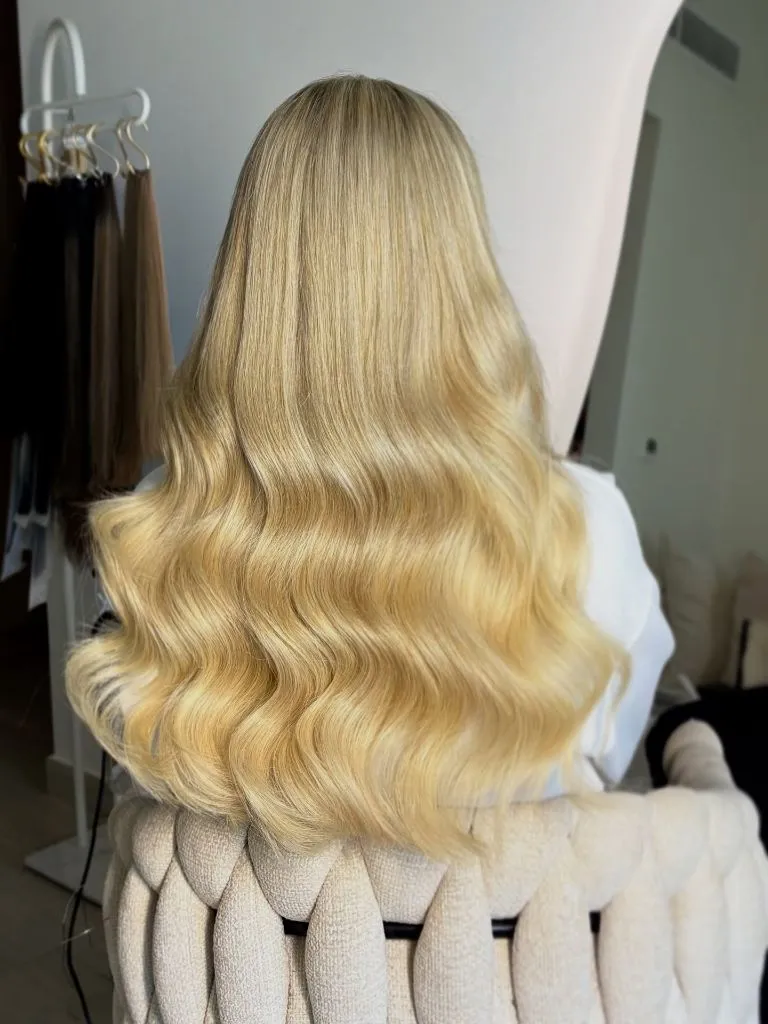
Scale of pattern is the operating lens. These waves are large enough that each one occupies several inches of vertical space, which means the light-and-shadow cycle is slow and dramatic rather than rapid and textural. On shorter hair, the same wave size would produce only one or two full curves, but on this length there are four or five visible repetitions, creating a cascading effect that amplifies the golden tone.
The practical consideration is that length and weight work together here. Shorter hair would need a slightly smaller barrel size to achieve a similar number of wave repetitions, preserving the rhythm without the same amount of length. Keeping the tone in the golden range rather than pushing toward ash or platinum also supports the high-shine effect, since warm tones reflect light more evenly.
13. Rooted Beach Blonde With Textured Waves
A three-quarter front view shows very long, wavy hair with a clearly visible dark root zone that extends two to three inches before transitioning into a bright, warm-to-cool blonde. The texture is loose and beachy, with uneven wave patterns and some strand separation. Lighter, almost platinum pieces concentrate around the face and front. The background is a salon interior with warm tones and greenery.
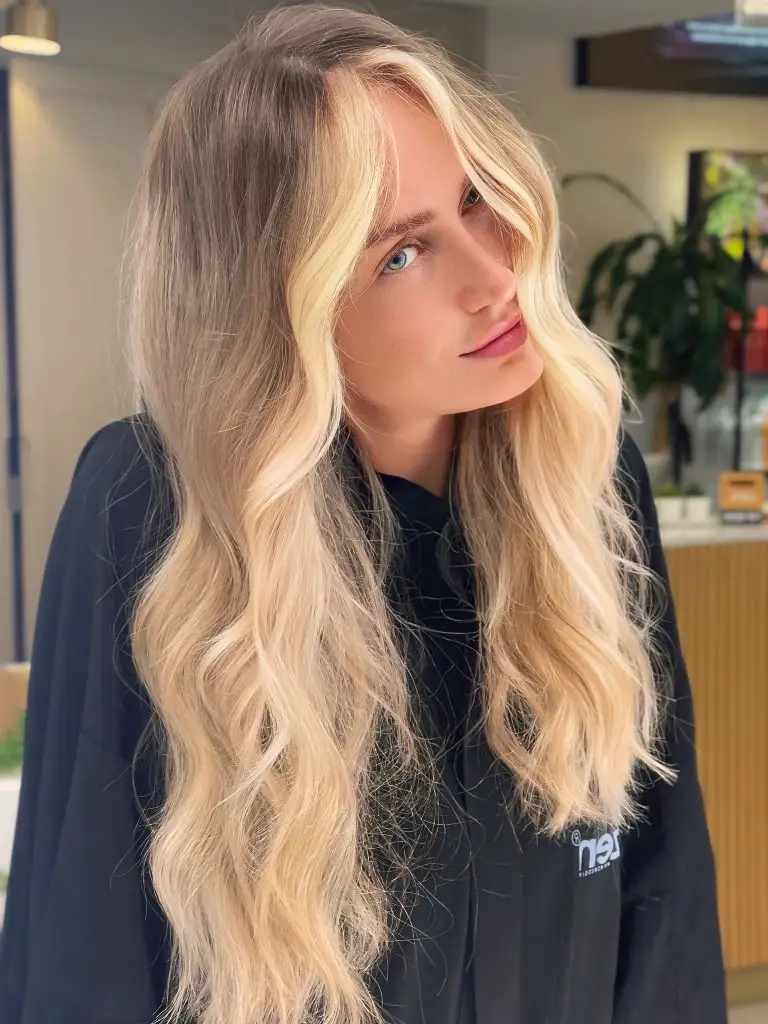
The contrast between the dark, visible root and the bright blonde creates a grounding effect. Without that root, the lighter blonde would float visually, appearing less connected to the scalp and head shape. The root provides an anchor, and the textured, slightly rough finish adds another layer of contrast: smooth dark root against separated, airy blonde ends. Two types of contrast operate simultaneously, which keeps the eye engaged.
The adaptation for a subtler version is to narrow the root zone. Pulling the dark tone down only an inch rather than two or three preserves the grounding anchor without as much drama. For winter specifically, a slightly deeper root absorbs less light and can actually make the blonde portions appear brighter by comparison.
14. Natural Ombre Cascading From Brown To Blonde
A back view shows very long, straight-to-slightly-wavy hair. The upper half is a medium-warm brown that transitions gradually into a golden blonde through the lower half. The shift is gentle with no stark line. The ends are slightly uneven and natural-looking. The background is an industrial-style salon interior with exposed brick, concrete, and a mirror.
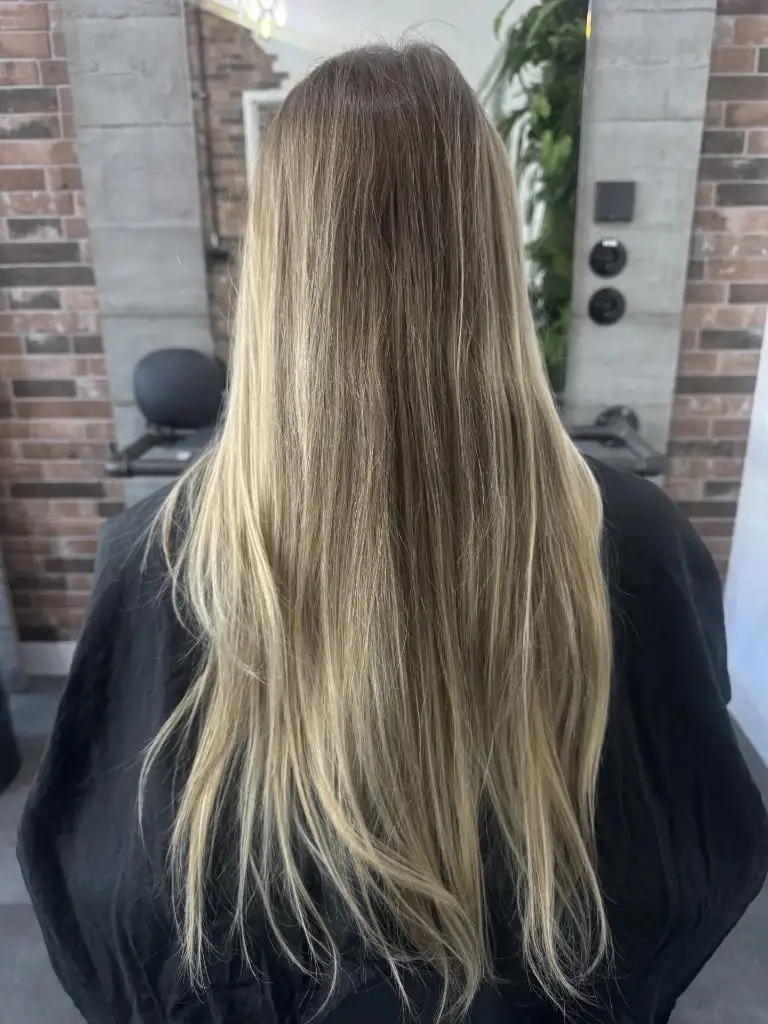
Proportion between the two tonal zones controls the reading. Here, the brown and blonde occupy roughly equal territory, which creates a balanced, symmetrical gradient. If the brown occupied only a small strip at the top, the reading would shift toward rooted blonde. If the blonde were confined to just the last few inches, it would read as sun-faded brunette. The even split is what makes this distinctly an ombre rather than either of those alternatives.
For anyone with naturally brown hair considering a blonde transition for winter, this proportional split is a useful starting point. It requires less overall lightening than a full blonde and preserves the strength of the natural color at the crown. The lower maintenance is a genuine practical benefit, since the grow-out simply extends the brown zone without creating an obvious regrowth line.
15. Polished Lob In Light Blonde With Side Part
A front-facing view shows a shoulder-length lob styled with a smooth blowout. The color is a light, cool-leaning blonde that is very even from root to end, with only a subtle, slightly warmer root. The hair is parted to one side, and one section sweeps across the forehead. The ends flip slightly inward, creating a rounded silhouette. The background is blurred, showing a figure behind in neutral clothing.
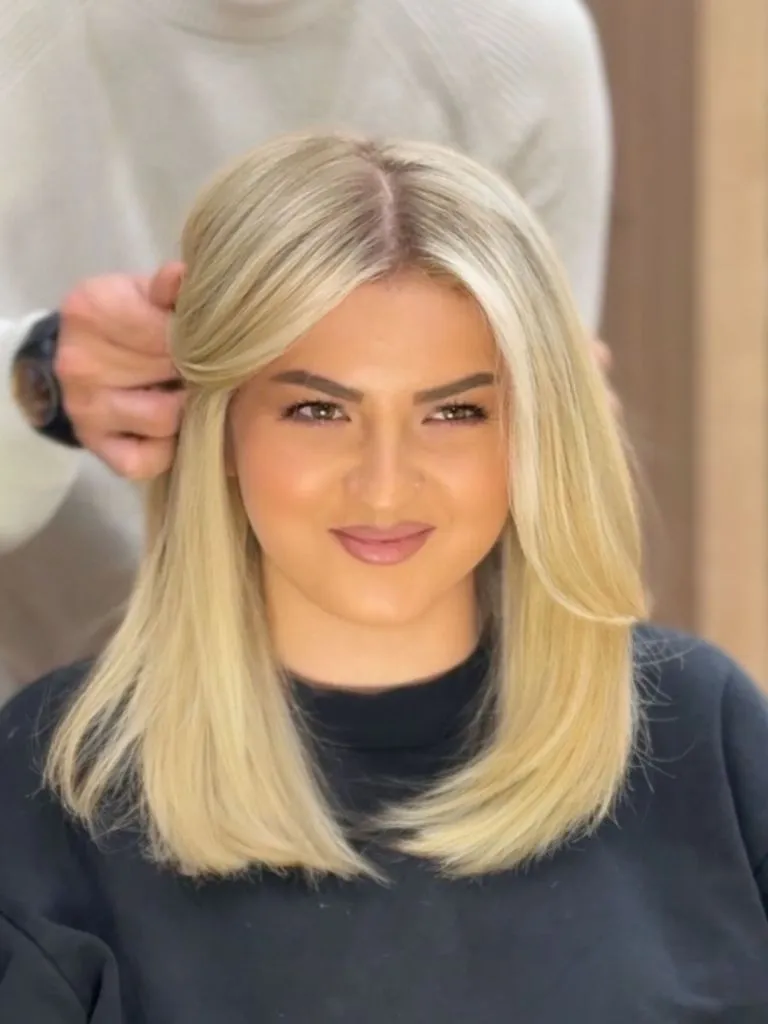
The silhouette outline is the primary source of visual interest. Because the color is so uniform, the rounded shape of the blowout, with its volume at the crown and inward-flipping ends, becomes the focal point. The side part introduces asymmetry, giving one side more weight and sweep than the other. This asymmetry prevents the even color from reading as monotonous.
For shorter blonde styles in winter, maintaining this level of smoothness requires heat protection and a round brush during blow-drying. The more important takeaway is that uniform color on a shorter length only works when the cut and styling provide enough shape to compensate. Without the rounded silhouette and the side sweep, this same color on a blunt, flat style would appear considerably less dimensional.
16. Cool Ash Blonde Bob Seen From Behind
A back view shows a straight, blunt-cut bob that falls just past the shoulders. The color is a cool, ashy blonde, slightly warmer at the root with a smooth transition to a lighter, more silver-toned blonde at the ends. The texture is sleek and straight with high shine. The bob is cut to a single, clean length. The background is a bright salon interior, softly blurred.
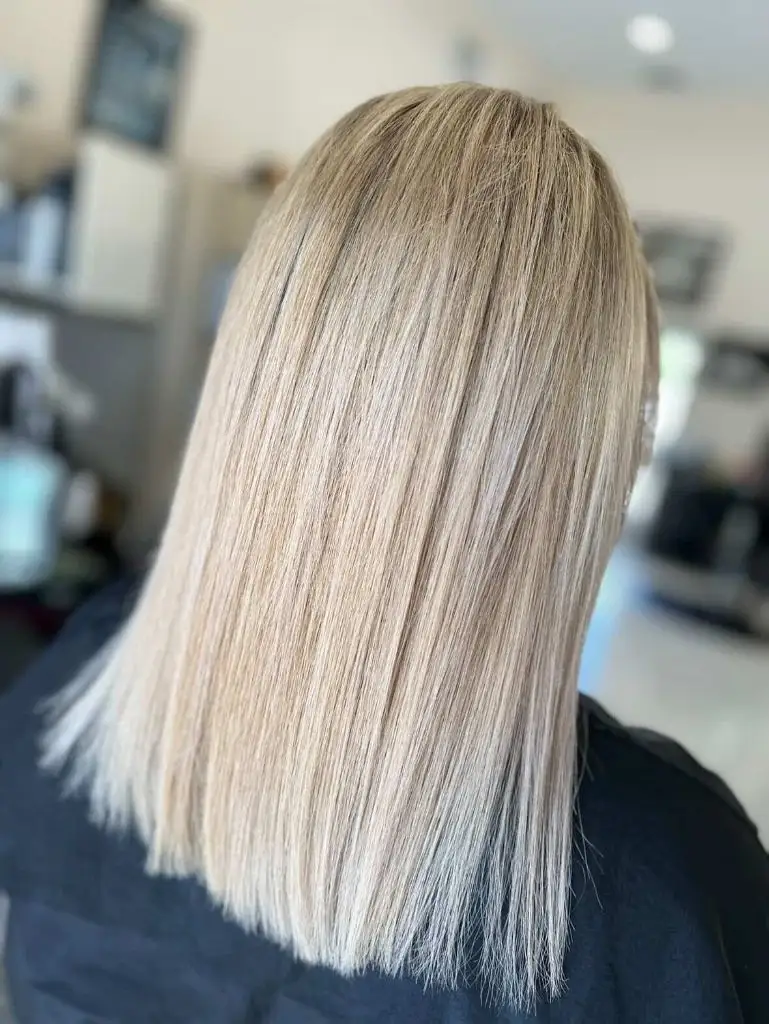
Negative space, in the form of the exposed neck and shoulders below the blunt cut line, frames the color block of the hair. The sharp horizontal line of the cut acts as a hard boundary, and the contrast between the smooth blonde rectangle and the empty space below it makes the color appear denser and more saturated than it might on a longer, more graduated cut.
The detail worth noting is the blunt line itself. On cool ash tones that can sometimes read thin or wispy, a blunt cut adds visual density by keeping every strand at the same termination point. If you are carrying this ash tone into winter, maintaining the blunt edge with regular trims prevents the see-through, scraggly ends that undermine the clean geometry.
17. Long Warm Blonde Waves With Center Part
A front-facing seated view shows very long, wavy hair falling past the chest. The color is a warm, buttery blonde that is slightly deeper at the crown and lighter through the lengths, with a center part. The waves are loose and natural-looking, with some strand separation at the ends. The finish has a natural sheen without extreme gloss. The background is a modern salon with concrete floors and a chrome chair.
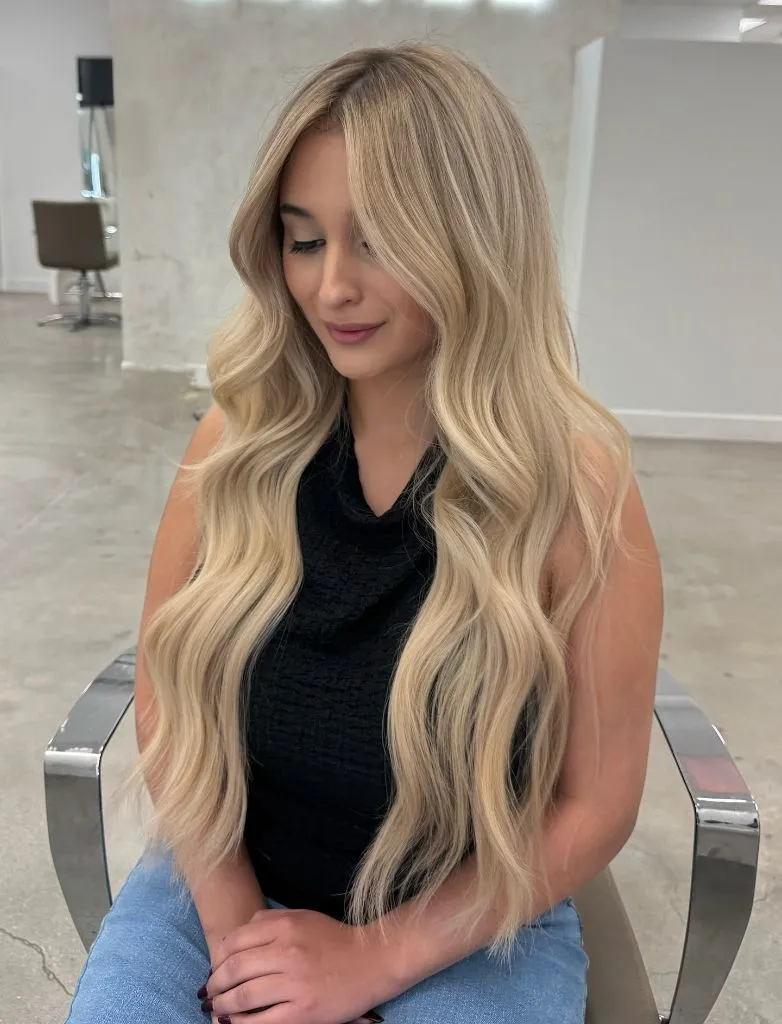
Color echo across the length is the mechanism. The same warm, buttery tone appears at every point from mid-shaft to end, creating a visual echo that reinforces the warmth. The slightly deeper crown does not introduce a competing cool tone; it simply dials back the brightness by half a level, which reads as shadow rather than as a different color. This internal consistency is why the hair appears so cohesive despite its length.
For very long hair, this kind of tonal consistency can be difficult to maintain because the ends receive more cumulative lightening and styling damage. Using a gloss treatment every four to six weeks keeps the ends matching the mid-shaft in tone and prevents them from drifting into a brassy or hollow shade that would break the echo effect.
18. Dark Brunette Waves With Warm Highlights
A front-facing view shows medium-length, wavy dark brown hair with subtle warm highlights visible primarily at the mid-lengths. The overall reading is brunette with a gentle lift rather than blonde. The waves are soft and relaxed, and the hair is parted slightly off-center. The background is a light, textured wall similar to the earlier brunette image.
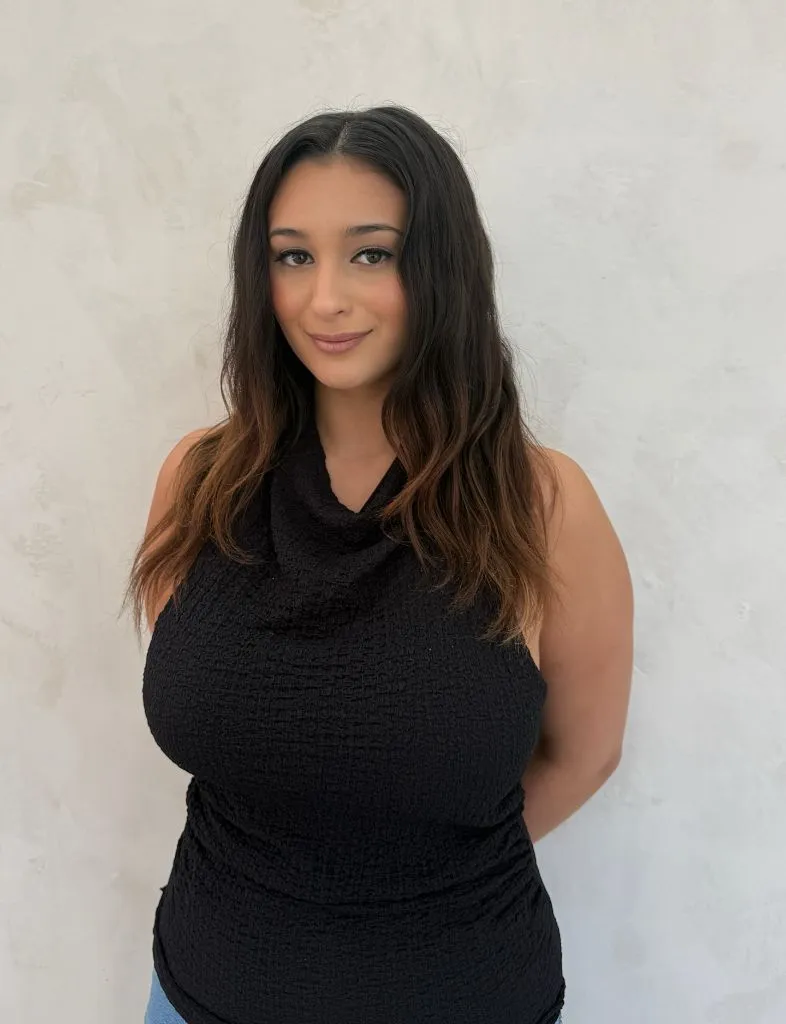
One accent against many operates here. The warm, caramel-toned highlights are sparse enough that they read as individual moments of light within a mostly dark composition. This is the opposite approach to a full blonde, where the light tone dominates and the dark tone provides contrast. Here, the dark tone dominates and the lighter pieces simply punctuate it, creating a quieter, more restrained form of dimension.
This serves as a useful reference point for anyone moving gradually toward blonde winter hair color ideas rather than committing to a full transformation. Starting with a few strategically placed warm highlights at the mid-shaft and face frame introduces brightness without overhauling the base. Each subsequent appointment can widen the highlighted sections until the desired balance is reached.
19. Smooth Ombre Bob With Dark Roots
A back view shows a medium-length bob, straight and smooth, with a clear ombre transition from a dark, cool-toned root and crown into a lighter, warm blonde at the mid-lengths and ends. The cut is blunt and falls just past the shoulders. The finish is sleek with a healthy-looking sheen. The background is a salon interior with shelving, product bottles, and a gold curtain.
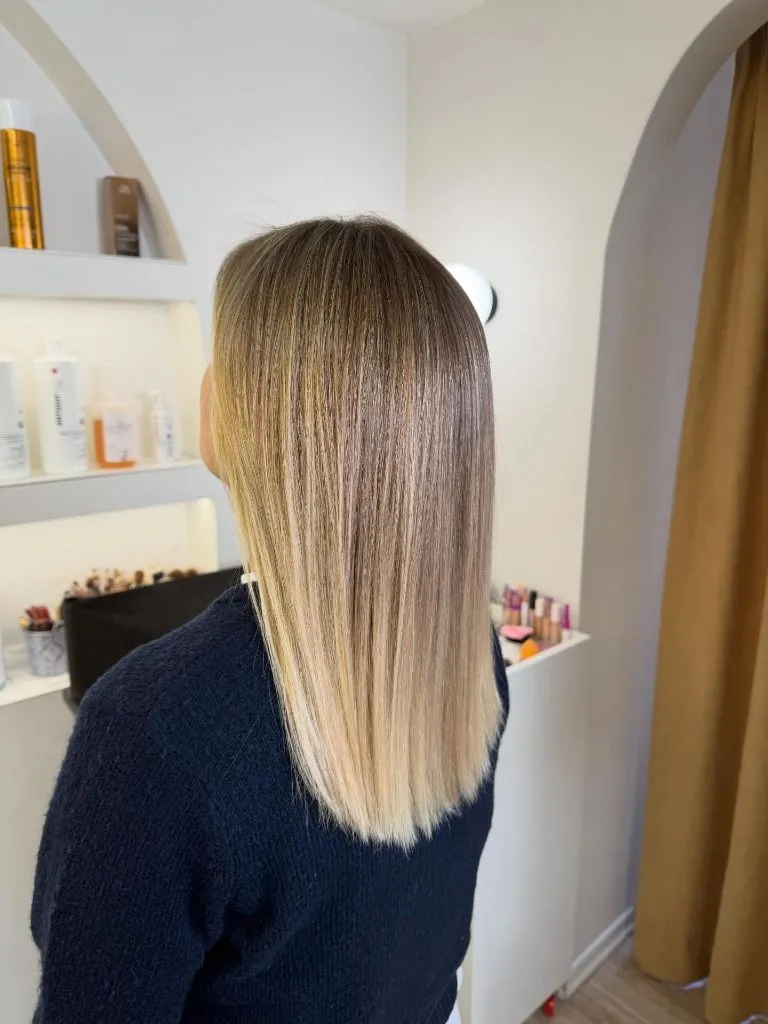
The zoning is binary. The upper third is definitively dark, the lower two-thirds are definitively blonde, and the transition between them is narrow. This clear division into two zones creates a graphic quality that reads as deliberate and structured. The straight, smooth texture reinforces the graphic reading by eliminating any textural noise that would blur the boundary.
The strongest proportion here is the two-thirds blonde to one-third dark split. Reversing it, with two-thirds dark and only a small blonde zone at the tips, would lose the blonde reading entirely and become something closer to highlighted brunette. If you want to keep this graphic ombre but soften the line, requesting a slightly wider melt zone of two to three inches rather than one will ease the transition without eliminating the two-zone structure.
20. Warm Blonde Waves With Soft Bounce
A back view shows long hair with large, soft waves and visible bounce. The color is a warm, medium blonde that is even and consistent throughout, with only the faintest root depth at the crown. The waves are loose and appear freshly styled, with a uniform size. The background is a bright salon interior with white walls, shelving, and a wooden counter.
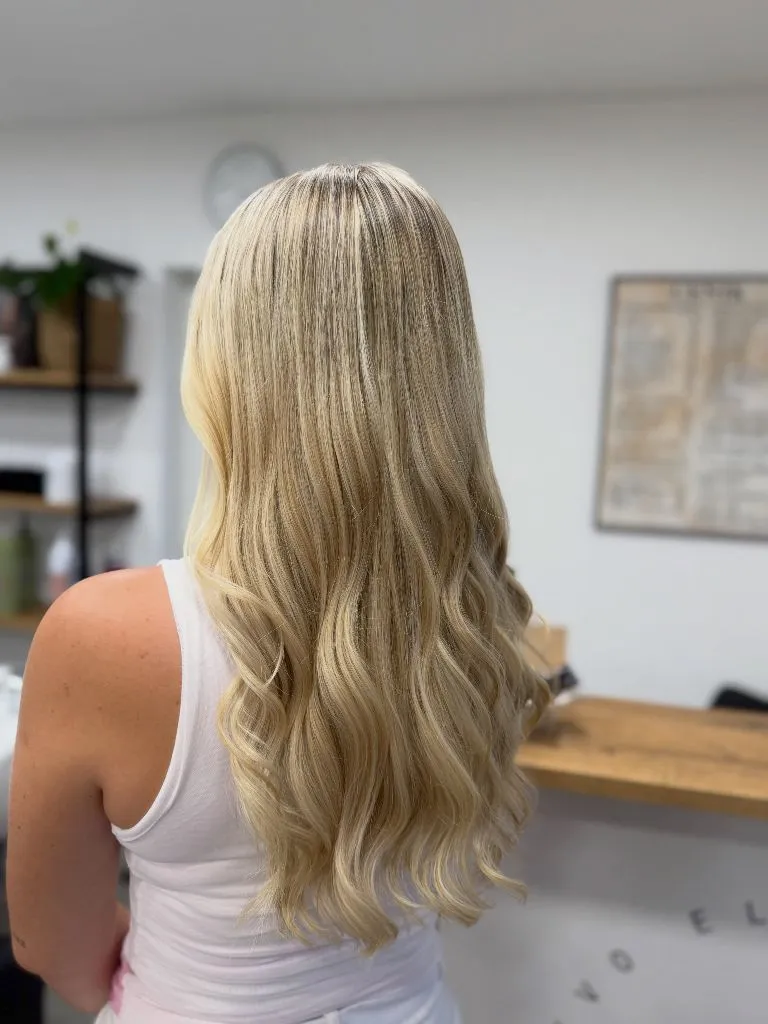
Texture against smoothness is the lens. The waves create a textured surface that catches and releases light in an irregular pattern, but the individual strands within each wave are smooth and reflective. This combination means the hair has macro-texture from the wave pattern and micro-smoothness from the strand finish, and these two scales working together produce a richness that neither flat-ironed straight nor roughly tousled hair would achieve alone.
To maintain this level of bounce between salon visits, wrapping large sections around a wide-barrel iron and allowing them to cool before releasing is the most reliable method. The important detail is curl direction: alternating the direction of each section creates the natural, interleaving wave pattern visible here rather than a uniform ringlet effect that reads as more formal.
21. Warm Honey Blonde Blowout With Volume
A close front-facing view shows medium-long hair styled in a voluminous blowout with the ends curling outward and away from the face. The color is a warm honey blonde with subtle golden and strawberry undertones, slightly deeper at the root and brighter at the face frame and ends. The overall reading is warm and dimensional. The finish is smooth with a polished sheen. The background is a dark salon interior.

Color saturation drives this reading. Compared to the cooler, ashier blondes earlier, this honey tone is more saturated, meaning it carries more pigment density per strand. That saturation means the hair absorbs and reflects warm light more intensely, producing the glowing quality visible here. Under winter lighting, which tends toward cooler tones, this extra warmth compensates and keeps the color looking lively rather than dull.
For anyone whose blonde tends to go flat or lifeless in winter months, increasing the warmth by even half a tone at the toner stage makes a significant difference. The face-framing pieces here are perhaps a full level brighter than the back sections, which is a useful zoning strategy that concentrates the most impactful brightness where it interacts with skin tone.
22. Cool Ash Blonde With Subtle Root Depth
A side-back view shows medium-long, straight hair with a slight inward curl at the ends. The color is a cool, neutral-to-ash blonde with a visible but soft root area that is perhaps one to two levels deeper. The transition from root to blonde is smooth and blended. The texture is sleek and straight, and the overall impression is understated and clean. The background is a bright white wall with a woven basket detail at the edge.
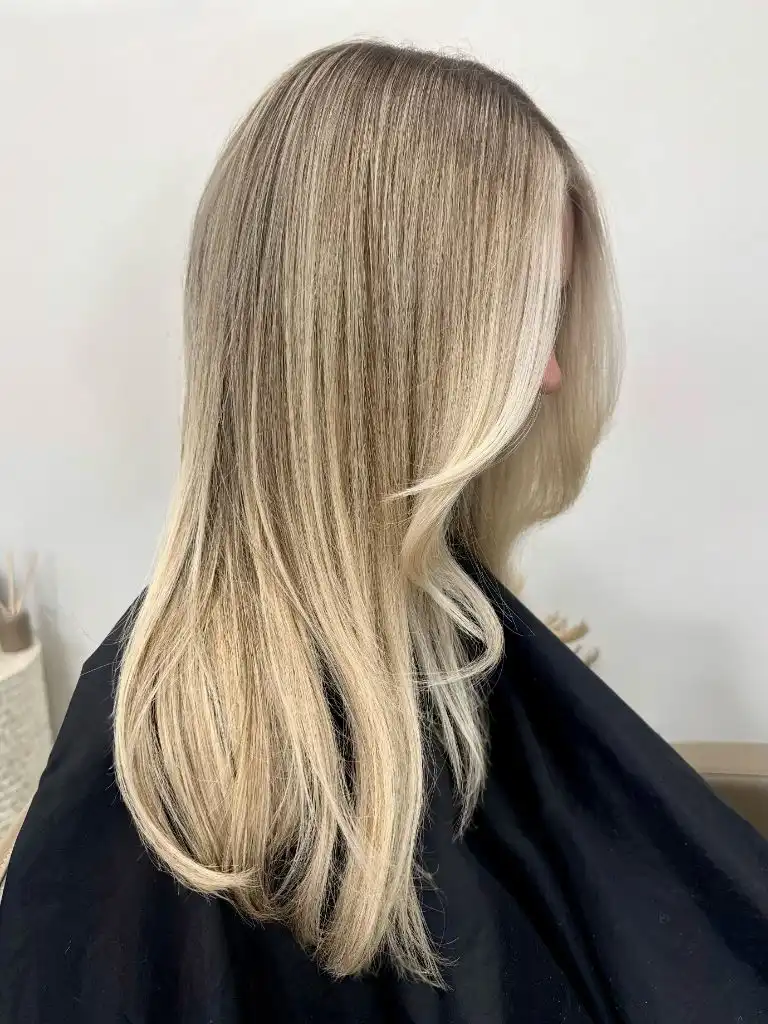
Restraint is the defining quality. The tonal range here is narrow, perhaps two levels from root to end, and both the root and the blonde sit in the same cool undertone family. There is no warm accent, no face-framing brightness, no textural drama. The inward curl at the end provides the only shape variation. This narrowness of range is what makes the color appear expensive and considered, because the precision of the match between root and length signals careful, intentional work.
The adaptation for making this slightly more dynamic without losing the restraint is to introduce one or two very fine, slightly brighter pieces at the front hairline. They would not be visible from this angle but would catch light from the front, adding just enough variation to prevent the cool tone from reading as flat in lower-light winter environments while preserving the clean, quiet character of the original.

Hi, I’m Zoey Mitchell, the creator of ChicStyle Blog.
I share simple, wearable outfit ideas, hairstyles, nail trends, and beauty tips that feel natural and easy to recreate.
This blog is where I explore everything that makes a woman feel put together and confident every day. I’m not an expert — just a woman who genuinely loves style, mixing looks, and discovering what works.
If you love effortless fashion with a personal touch, you’ll feel at home here.