
There is something in the way a woman past forty wears her hair that reads less like decoration and more like a quiet announcement. The silver threading through dark roots, the deliberate length that stops just above a collarbone, the texture left slightly undone — these are not accidents. They are decisions. Trendy haircuts for women over 40 carry a specific kind of confidence, one built on understanding proportion rather than chasing novelty.
What makes a cut work at this stage has less to do with trend calendars and more to do with how a few visual variables interact on an individual frame. Throughout this guide, the organizing principles are shape, meaning the silhouette a cut creates around the face and neck; texture, whether hair reads smooth, layered, waved, or deliberately rough; color placement, including how gray integrates with darker tones, where highlights land, and how root contrast functions; and proportion, the relationship between hair volume and the body’s lines from shoulders to jaw. Each image here demonstrates a different combination of those four variables. No single approach is presented as correct. Instead, the interest lies in reading how each cut balances its own internal decisions — where it commits to volume, where it pulls back, and what it leaves alone. For more on how face-framing choices shape perception, the interplay between these elements is always worth studying.
1. Silver-Streaked Waves With a Nose Ring Accent
A woman is photographed from slightly below, dark hair streaked heavily with silver and white strands falling past her shoulders in loose, undone waves. She wears a textured blue sweater with a high neckline, a small gold nose ring on the left nostril, and minimal visible makeup in warm neutral tones. The hair parts loosely off-center, and the silver concentration is heaviest around the face and crown.
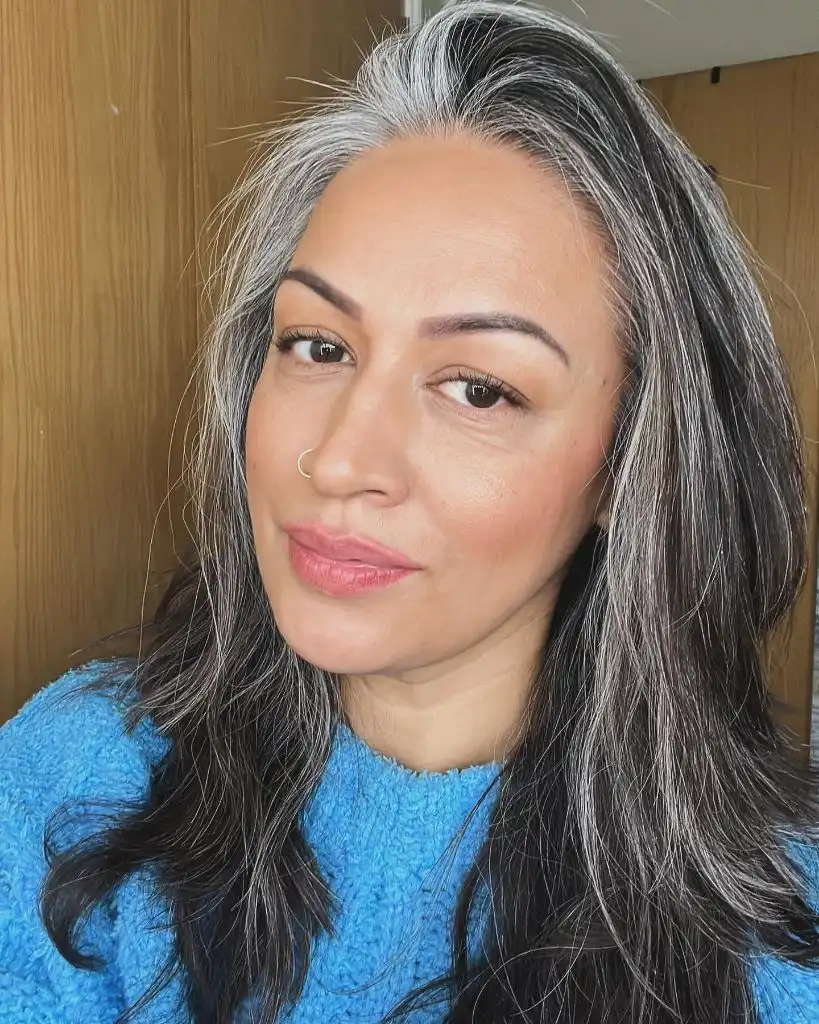
Photo via Instagram
What anchors this look is the tension between the cool metallic quality of the silver hair and the warmth of the blue sweater and skin tone beneath it. The waves are not styled into uniformity — they carry just enough movement to read as natural rather than arranged. The nose ring introduces a small metallic signal that echoes the silver without competing for attention. The eye moves from the brightest silver at the temples down through the darker lengths, creating a tonal gradient that gives the face a quiet frame.
The reader takeaway is that allowing silver to concentrate around the face rather than distributing it evenly creates a natural spotlight effect. The principle applies broadly: letting the highest-contrast element sit closest to the features draws attention inward rather than scattering it across the full length of the hair. More on how color placement around the face influences the way a cut reads from a distance is worth considering.
2. Loose Silver Lengths With a Black Jacket Layer
A woman sits in a car, seatbelt crossing her torso, wearing a black jacket over a pink patterned blouse. A chunky gold chain necklace sits at the collar. Her hair is predominantly silver with some darker strands underneath, falling in soft loose waves past her shoulders. Small gold earrings are visible. She smiles broadly, and the lighting comes from outside the car window behind her.
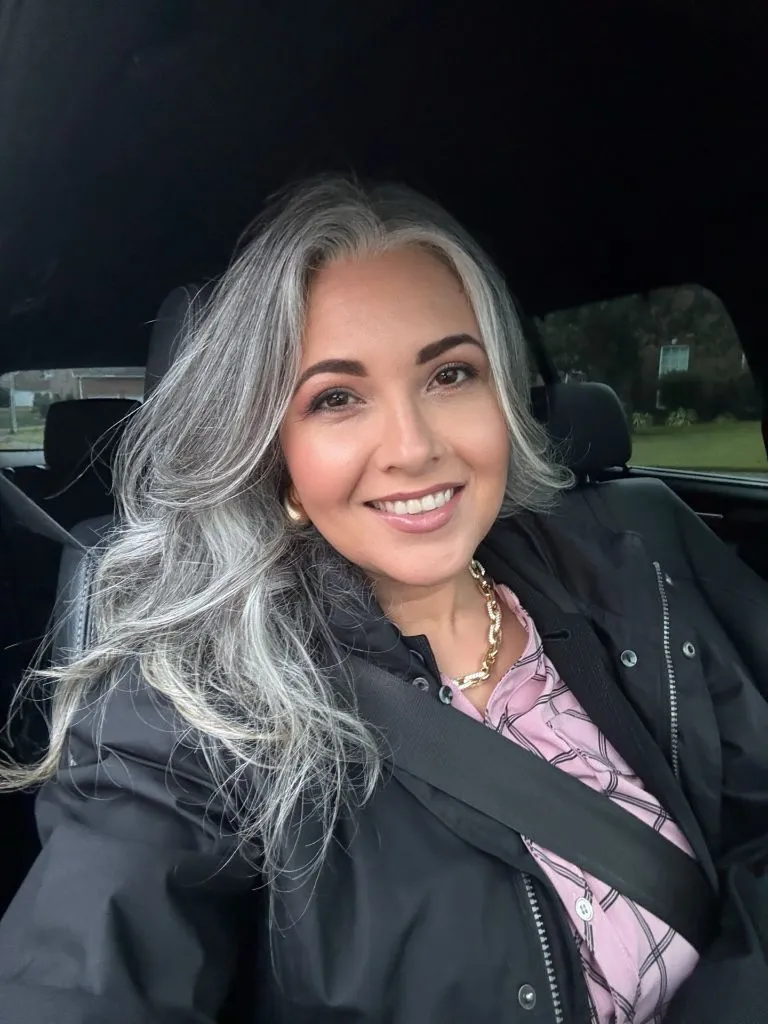
Photo via Instagram
The gold chain necklace does important structural work here, creating a warm horizontal line that separates the dark jacket from the silver hair above. Without it, the look might read as top-heavy, with all the visual brightness sitting in the hair zone. The pink blouse introduces a third tonal layer — softer than the gold, warmer than the silver — and that layering of temperature keeps the eye circulating rather than settling. The hair itself is not overly styled; it reads as lived-in, which suits the casual setting and reinforces the relaxed proportion of the open jacket collar.
The useful move here is the way a single accessory bridges two otherwise disconnected color zones. A warm metallic accent between cool hair and dark outerwear creates continuity, and the principle works regardless of hair length or color — it is about linking visual temperatures across the frame.
3. Long Gray Waves With a Floral Print Neckline
A woman sits near a window with white frames and greenery visible behind her, gray curtains to one side. Her hair is long, predominantly silver-gray with faint darker undertones, falling in soft natural waves well past her shoulders. She wears a white top with a blue floral print and a wide neckline. Her expression is warm and relaxed, with minimal visible makeup.
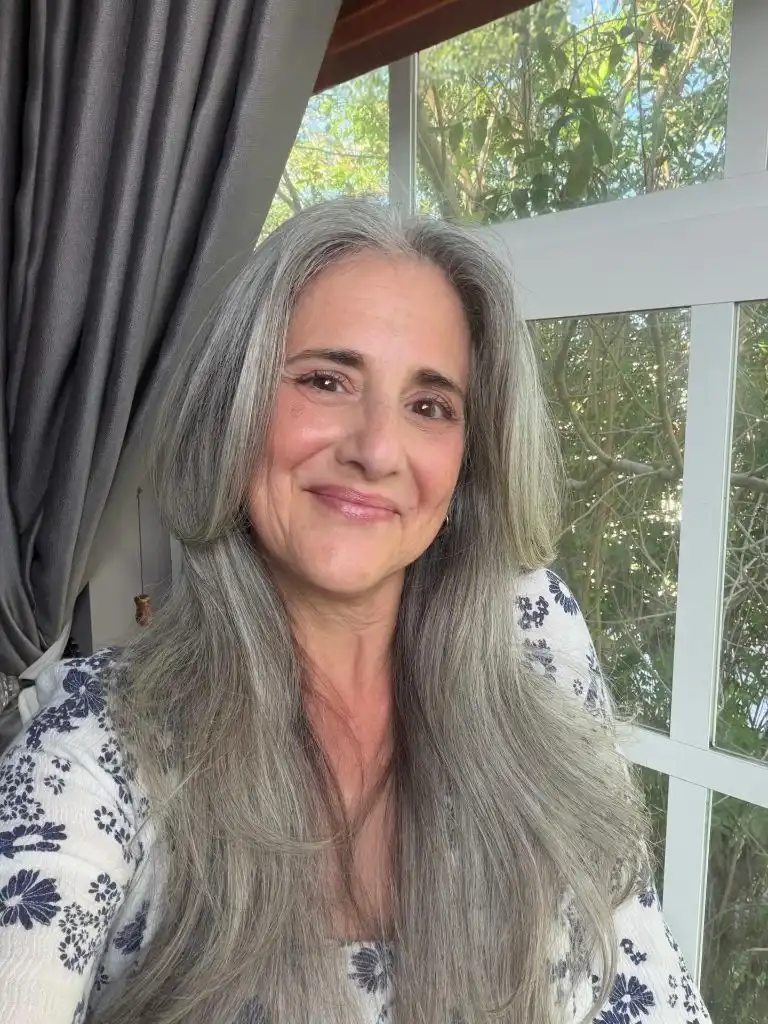
Photo via Instagram
The length here is the first thing that registers — silver hair this long reads as a deliberate commitment rather than a default. The natural wave pattern provides enough texture to prevent the length from appearing flat or heavy, and the lack of visible layering gives the silhouette a calm, uninterrupted line from crown to ends. The floral neckline picks up the blue tones that can sometimes read in silver hair under natural light, creating a subtle color conversation between fabric and strand. The window light behind her adds a soft backlit quality that makes the silver appear almost translucent at the edges.
The strongest lesson is that very long gray hair works when the wave pattern provides its own visual rhythm, eliminating the need for heavy layering or product-driven texture. Keeping the neckline wide and the print small allows the hair to remain the dominant visual element without competition from the clothing.
4. Shoulder-Length Blonde With a Dark Turtleneck
A woman stands against a plain off-white wall, wearing a dark brown or black turtleneck. Her hair is a medium blonde with slightly darker roots, cut to shoulder length in a blunt or lightly textured style, parted slightly off-center. The hair appears straight with a very slight natural bend at the ends. Her expression is neutral and direct, with minimal visible makeup and light blue-green eyes.

Photo via Instagram
What functions well here is the sharpness of the contrast between the dark turtleneck and the blonde hair — the high neckline pushes all the attention upward toward the face and the clean line where hair meets fabric. The blunt ends keep the silhouette geometric rather than soft, which pairs with the direct, unadorned simplicity of the outfit. There are no accessories competing for attention, no layered textures, and no visible product sheen. The root shadow is slight but present, grounding the blonde tones in something more dimensional than a single flat color.
What stands out most is the restraint. A dark high neckline beneath blonde hair creates a natural pedestal effect for the face. The principle is transferable to any hair color: when the cut is simple and the clothing below the jaw is dark and unbroken, the geometry of the haircut itself becomes the primary design element. For those exploring how neckline and hair length interact, this pairing offers a clean reference point.
5. Salt-and-Pepper Waves With a Plaid Flannel Collar
A woman takes a selfie in a car interior with gray seats visible behind her. Her hair is a mix of silver, gray, and some remaining brown and blonde tones, falling in soft waves to just past her chin in what reads as a medium-length layered cut. She wears a black-and-white plaid flannel jacket or shirt with a sherpa-lined collar. Her expression is calm with a slight smile, and her eyes appear hazel or green.
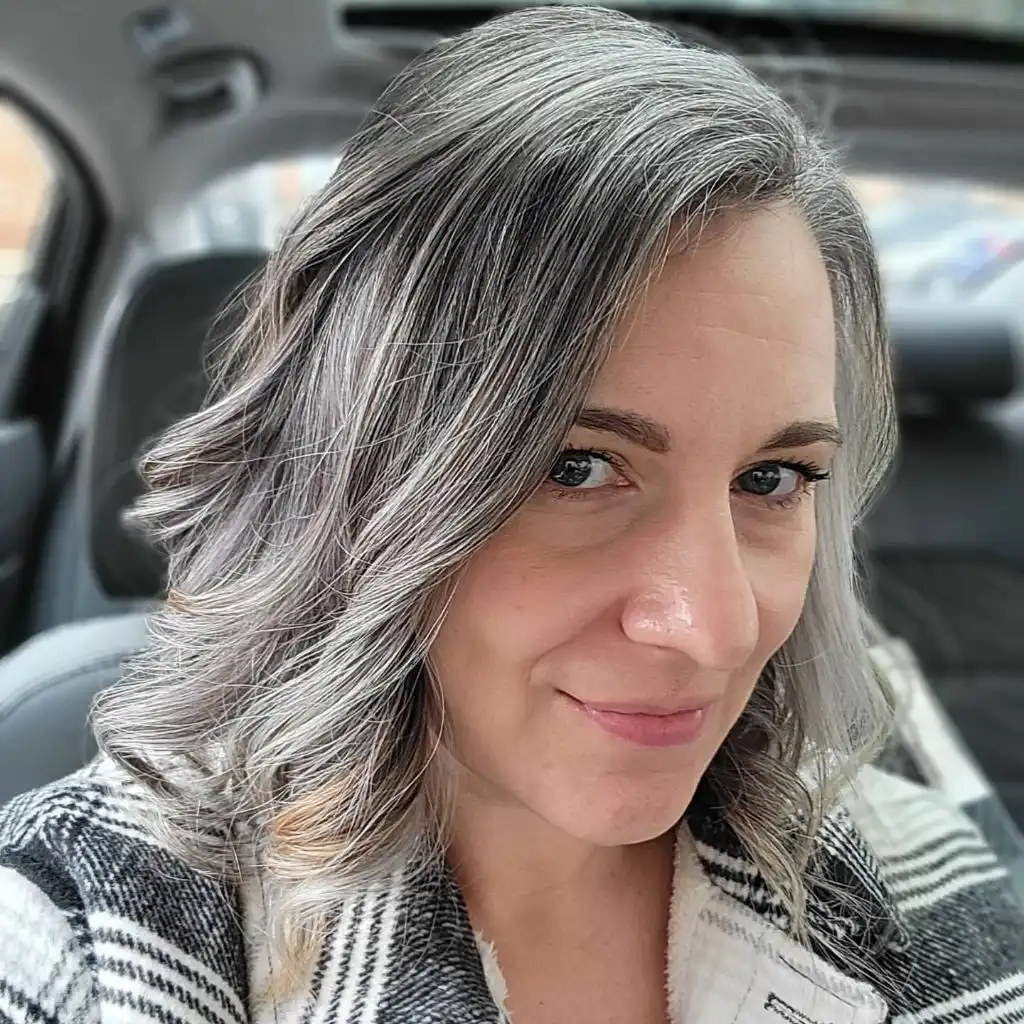
Photo via Instagram
The multi-tonal quality of this hair — silver, brown, blonde, and darker gray all present simultaneously — gives the cut a visual density that a single color could not achieve. The waves create volume around the jawline, widening the silhouette at its midpoint, while the plaid pattern beneath echoes that sense of mixed tones in fabric form. This is a quiet but effective kind of pattern-to-hair harmony, where neither element is dominant but both share a tonal family. The medium length stops at a flattering point, clearing the neck without exposing it fully.
The useful idea is that hair in transition between colors benefits from a cut with enough wave or curl to let the multiple tones catch light differently. Straight hair separates colors into visible blocks, while movement blends them into a unified texture that reads as intentional rather than in-between.
6. Gray-Streaked Lengths With Hoop Earrings in Warm Light
A woman sits in what appears to be a restaurant or lounge, warm ambient lighting behind her with booth seating and track lighting visible. Her hair is long, dark brown streaked with prominent silver-gray strands, falling past her shoulders. She wears a mauve or dusty pink hoodie-style sweatshirt and large silver hoop earrings. Her makeup is polished — defined brows, soft pink lip, subtle eye color.
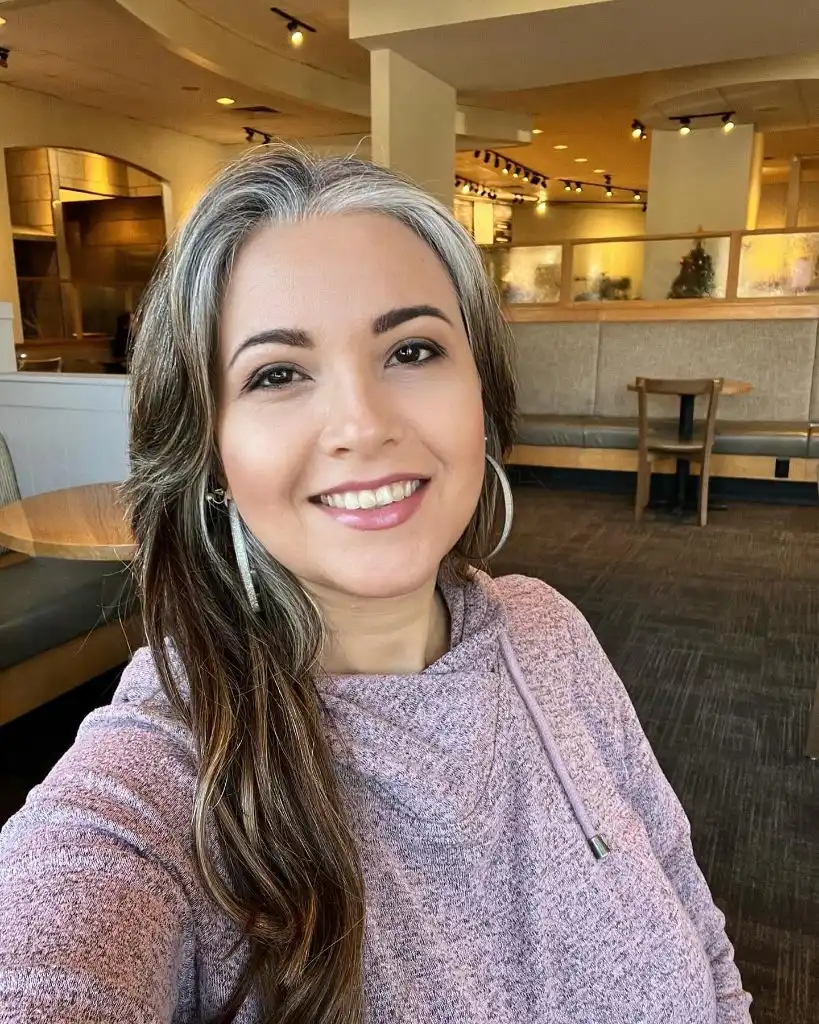
Photo via Instagram
The hoop earrings serve as a visual bridge between the silver in the hair and the more casual pink of the sweatshirt, creating a metallic midpoint that holds the two zones together. The warm background light catches the silver strands and the hoops simultaneously, unifying them into the same tonal register. The hair hangs long and relatively straight, which makes the silver streaks read almost like hand-painted highlights rather than natural graying — a deliberate effect reinforced by keeping the lengths smooth and the parting clean. The polished makeup adds structure to what might otherwise read as too relaxed.
The best move here is recognizing that silver hoop earrings beside silver-streaked hair amplify rather than compete with the gray. The metallic accessory normalizes the silver tones and frames them as a style choice. The broader principle is that when a feature of the hair could read as either aging or styling, accessories in the same color family tip the reading toward intention.
7. Chin-Length Gray Blend With an Abstract Print Top
A woman takes a selfie in an interior space with a large ornate mirror visible behind her, reflecting another person and a dimly lit room. Her hair is chin-length to slightly below, a blend of dark brown and silver-gray, parted on one side with a slight wave. She wears a patterned top in shades of pink, gray, black, and purple with an abstract floral or marble-like design. Her makeup includes a defined mauve lip, groomed brows, and subtle eye makeup. Silver hoop earrings are partially visible.
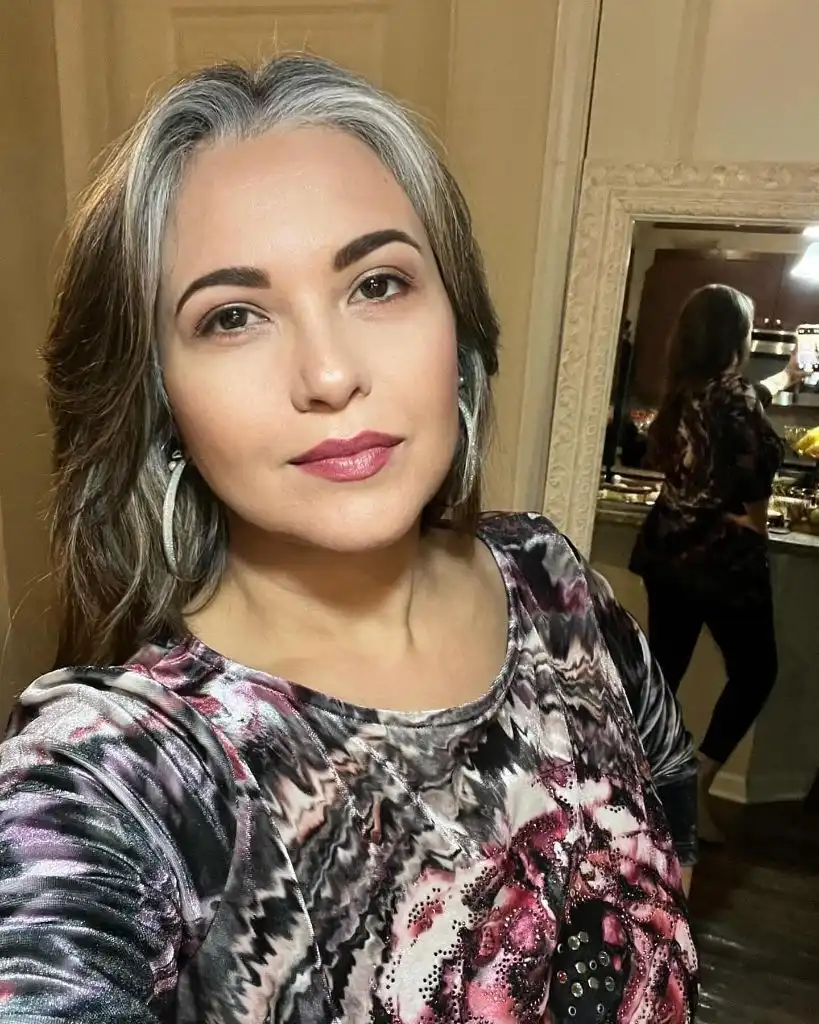
Photo via Instagram
I like how the abstract pattern of the top mirrors the mixed-tone quality of the hair — gray, pink, dark — so that the eye does not separate the head from the body but reads the whole frame as a single color story. The chin length is doing something specific: it ends right where the jawline sits, sharpening the lower face without adding weight below it. The side part sweeps the fuller section of hair across the forehead, giving the top half of the silhouette a slight asymmetry that prevents the cut from reading as too structured. The mauve lip pulls color from the print upward, anchoring the face within the pattern rather than floating above it.
The beauty of this is the color threading between hair, clothing, and makeup. When a printed top already carries the same tones present in transitioning hair, the combination looks coordinated rather than accidental. The transferable principle is to treat the hair as part of the outfit’s palette, not separate from it.
8. Medium-Length Straight Brown Hair in Salon Setting
A person is photographed from behind in what appears to be a salon, wearing a gray styling cape. The hair is medium-length, falling a few inches past the shoulders, in a warm medium-brown tone with subtle lighter ends. It is straight, smooth, and appears freshly treated or blown out. The cut shows a slight U-shape at the hemline with minimal visible layering.
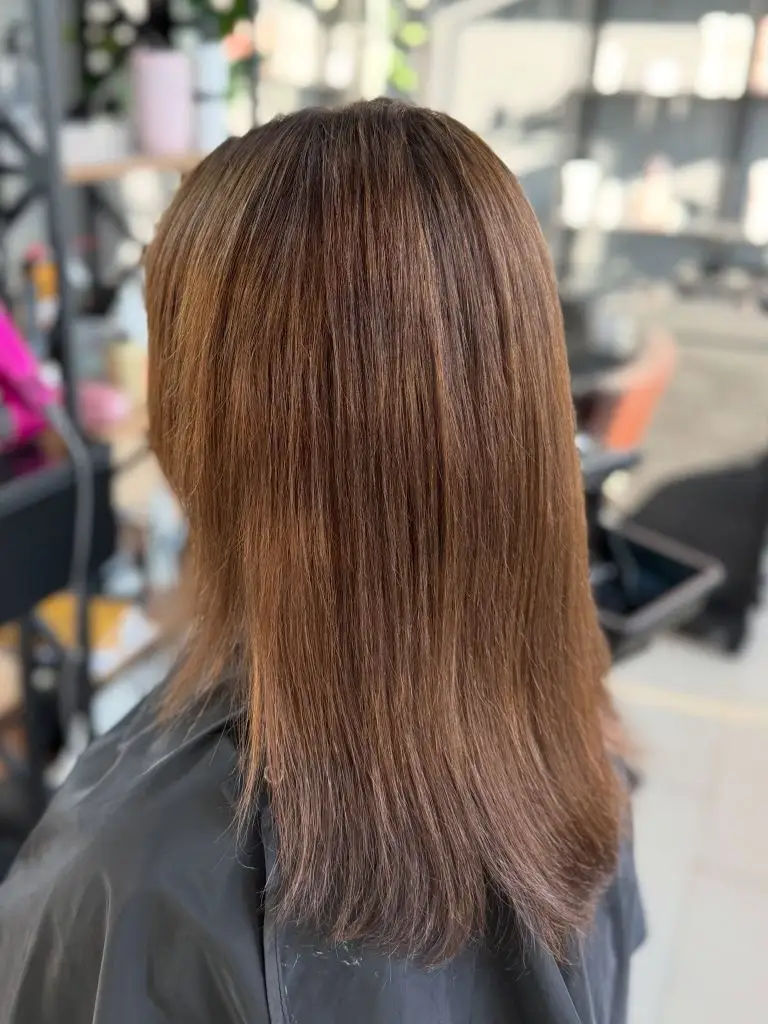
Photo via Instagram
The simplicity here is the entire point. There is no dramatic layering, no visible color technique, and no texture manipulation — just a clean, straight fall of hair in a single warm-brown tone with the slightest lightening toward the ends. The U-shaped hemline keeps the bottom edge soft rather than blunt, allowing the hair to taper naturally at the sides. The smooth finish catches light evenly along the length, which is what makes this cut read as polished rather than plain. The uniformity of tone from root through mid-length creates a calm visual field that the eye can rest on.
The reader takeaway is that not every cut needs to announce itself. A single-length, single-tone style with minimal layering communicates clarity and care through its simplicity. The principle works especially well for those considering trendy haircuts for women over 40 who prefer maintenance to be invisible — where the effort shows in the condition rather than the construction.
9. Layered Auburn Waves With Volume at the Crown
A person is photographed from behind in a salon with a teal-green wall and mirror visible. The hair is medium to long, auburn or warm reddish-brown, with visible layering that creates volume through the mid-lengths and a slight flipped movement at the ends. The texture is wavy and appears slightly coarse or thick, with the crown area lifted and the layers falling in a cascading pattern down the back.
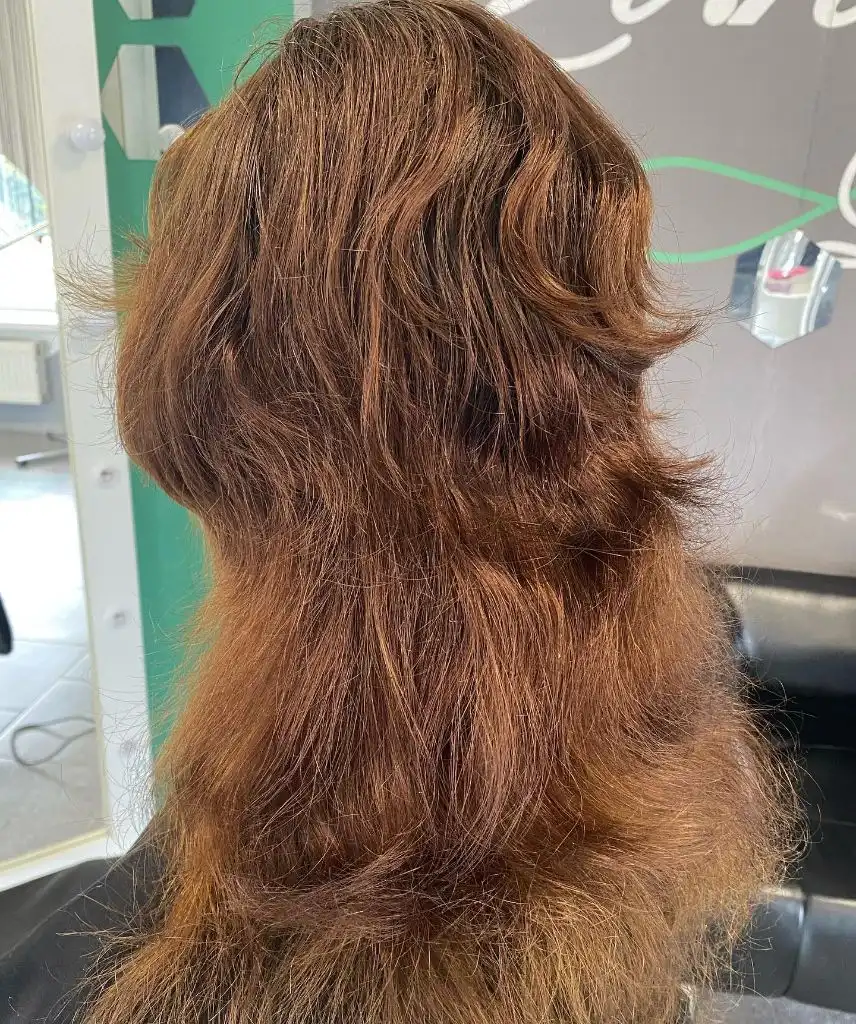
Photo via Instagram
The layering here is doing two things simultaneously: building volume at the crown and creating movement through the ends. The longest pieces reach well past the shoulders while the shorter interior layers lift the top section away from the head, preventing the weight from pulling the shape flat. The warm auburn tone catches light unevenly across the textured surface, which makes the waves appear more dimensional than they might in a cooler or darker shade. The slight flip at the ends reads as natural body rather than heat-styled curl, suggesting thick hair with inherent movement.
The useful move here is understanding that layering in thick hair serves a structural purpose beyond aesthetics — it redistributes weight so the shape holds itself up. If the hair is naturally wavy and dense, layers create internal architecture that allows the cut to function with minimal daily intervention. More thoughts on how natural texture and layering work together can deepen this understanding.
10. Tapered Sandy Bob From the Back
A person is photographed from behind in a salon, wearing a white styling cape. The hair is a short, rounded bob or tapered cut in a warm sandy-blonde or light brown tone, with very subtle lighter tones blended through. The nape is clean and tapered close, and the hair graduates upward to fuller volume at the crown and sides. Pearl earrings are visible at each ear. The overall shape is smooth and neatly rounded.
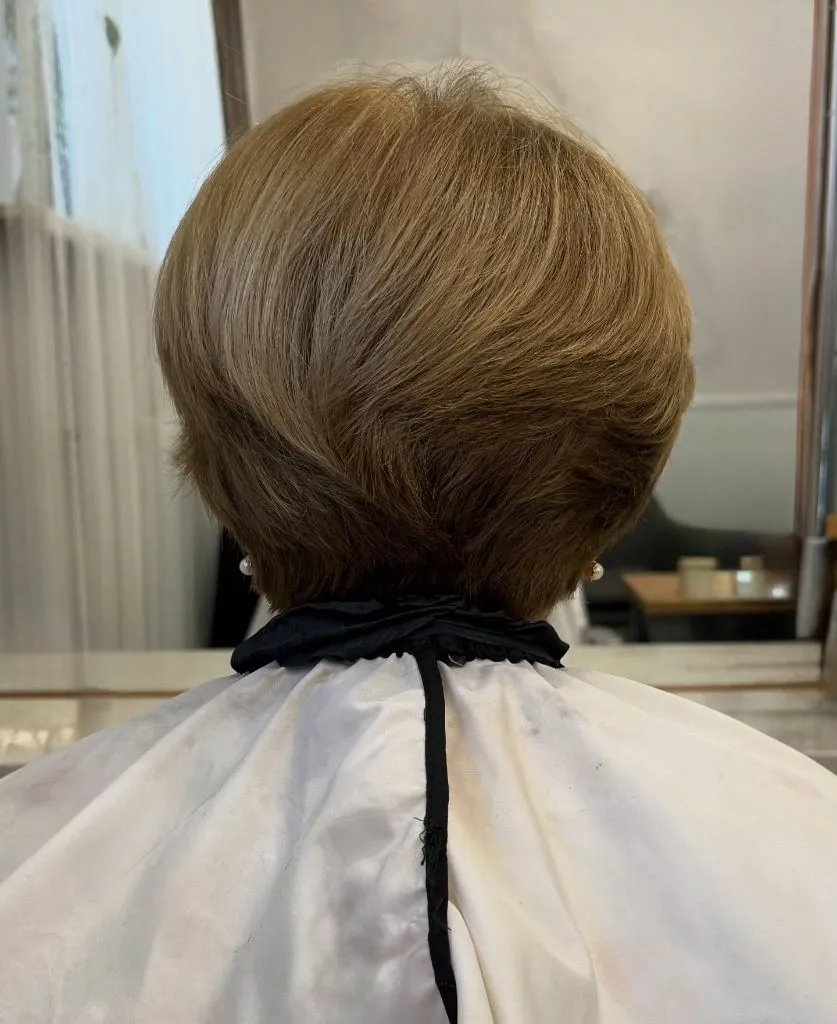
Photo via Instagram
The graduated shape creates a silhouette that reads almost architectural — a clean dome that narrows precisely at the nape and widens symmetrically toward the crown. The sandy tone is uniform enough that no color contrast distracts from the geometry of the cut itself. The pearl earrings introduce a single point of refinement that echoes the smoothness of the hair without adding visual noise. Every line here feels intentional, from the tapered edges to the way the fullness at the sides maintains the rounded profile.
The strongest lesson is that a short cut gains its presence through shape rather than color or texture. When the silhouette is this controlled, the cut reads as designed rather than simply short. The transferable principle is that investing in the geometry of a bob — the gradation, the taper, the crown height — matters more than any specific length or color choice.
11. Dark Stacked Pixie With Side-Swept Volume
A person is photographed in profile from the left side, showing a short pixie or stacked bob in a dark brown or near-black shade. The crown area has noticeable height and volume, with the hair sweeping forward into a short fringe that curves along the forehead. The back is cropped close to the nape, and the overall shape tapers from full on top to tight at the bottom. The texture appears smooth with a slight wave.
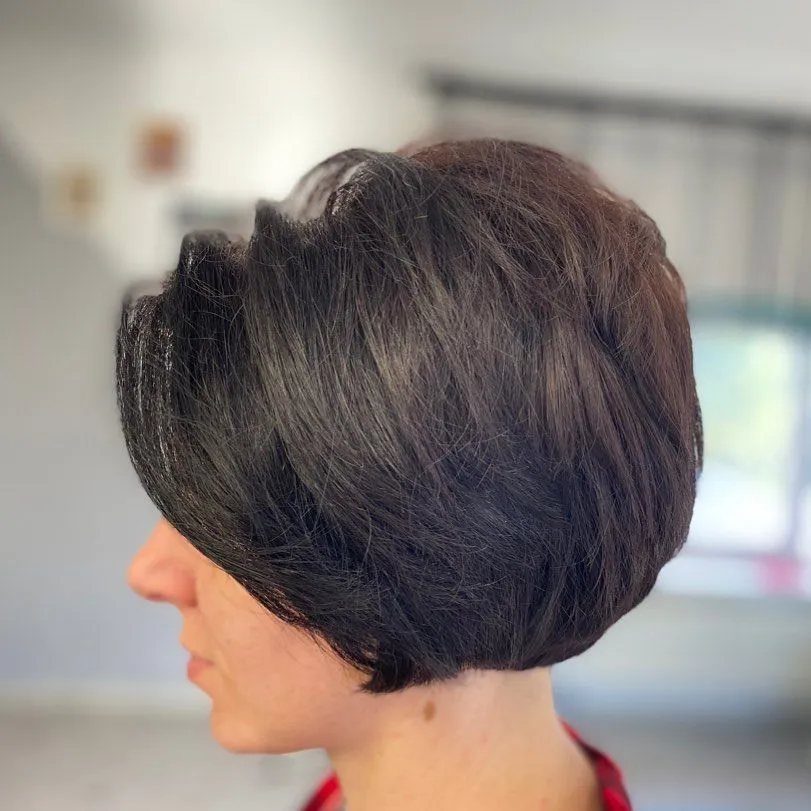
Photo via Instagram
The drama of this cut lives entirely in the contrast between the volume at the crown and the close-cropped nape. Seen in profile, the shape almost suggests a wave frozen mid-crest — high and full at the top, curving smoothly down to nearly nothing at the neck. The dark color intensifies this sculptural quality because there are no lighter tones to break the surface; the eye reads the form as a single continuous shape. The forward-swept fringe softens what could otherwise feel severe, adding a curved line that bridges the forehead and the temple.
What stands out most is how a single-color dark pixie can create its own visual weight through shape alone. No highlights, no color variation — just structure. The principle is that when cutting short, the relationship between crown height and nape length defines the personality of the cut more than any styling product or color technique could.
12. Close-Cropped Black Pixie With Textured Crown
A person is photographed from behind at a slight angle, showing a very short pixie cut in black or very dark brown hair. The hair is tapered at the nape and around the ears, with slightly more length and texture on the crown and top. A small gold hoop earring is visible on the left ear, and a gold chain necklace sits at the collar. The person wears a white top. Salon elements including plants and chairs are visible in the background.
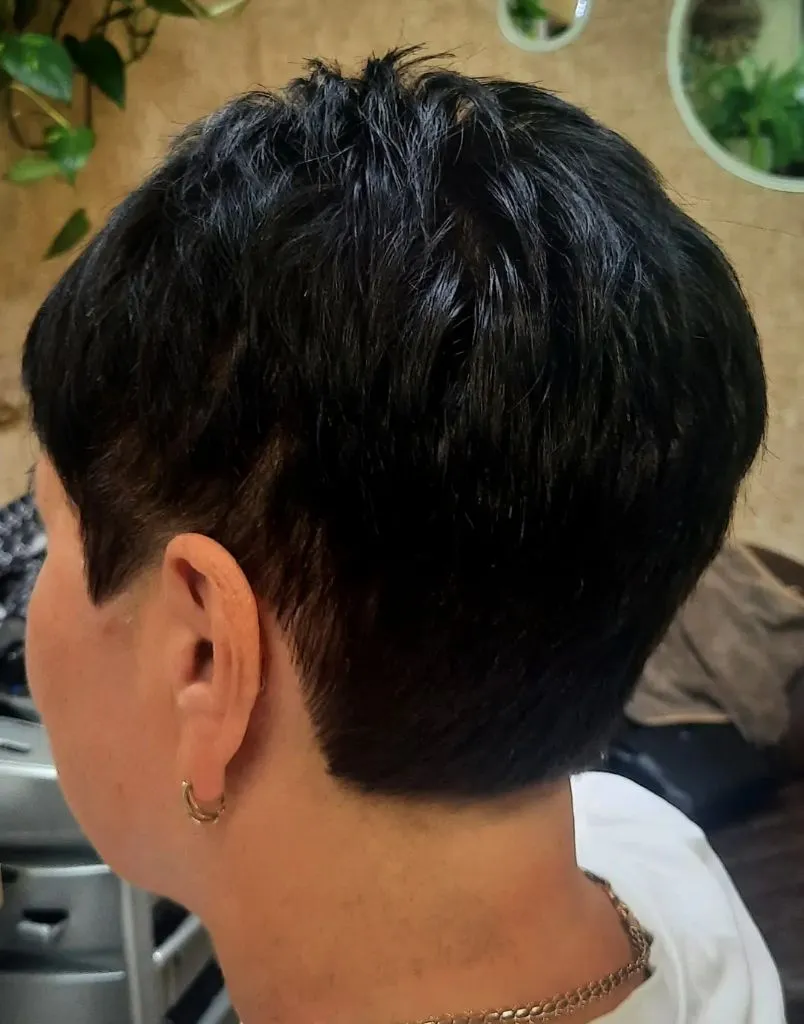
Photo via Instagram
The very close taper at the nape and around the ears exposes the neck and jawline completely, making the gold jewelry the secondary focal point after the haircut itself. The slight extra length on the crown introduces just enough texture to prevent the cut from reading as uniform — there is a sense of movement on top that contrasts with the clean edges below. The gold earring and chain necklace create a warm accent that pops against the dark hair and white top, establishing a minimal but deliberate accessory story.
The useful idea is that a very short cut shifts the visual center of a look downward to the neck, ears, and collarbone. When the hair no longer frames the face in the traditional sense, jewelry and neckline take over that framing function. The principle is to treat a close crop not as a simplification but as a redistribution of where the styling decisions live.
13. Blunt Blonde Bob With Root Shadow
A person is photographed from the side in a salon interior with a light gray textured wall and a door visible behind them. The hair is a chin-length bob, blunt-cut with no visible layering, in a sandy blonde that transitions from slightly darker roots to lighter ends. The hair is straight and smooth, with the hemline sitting precisely at the jaw. The person wears a green floral-print top.
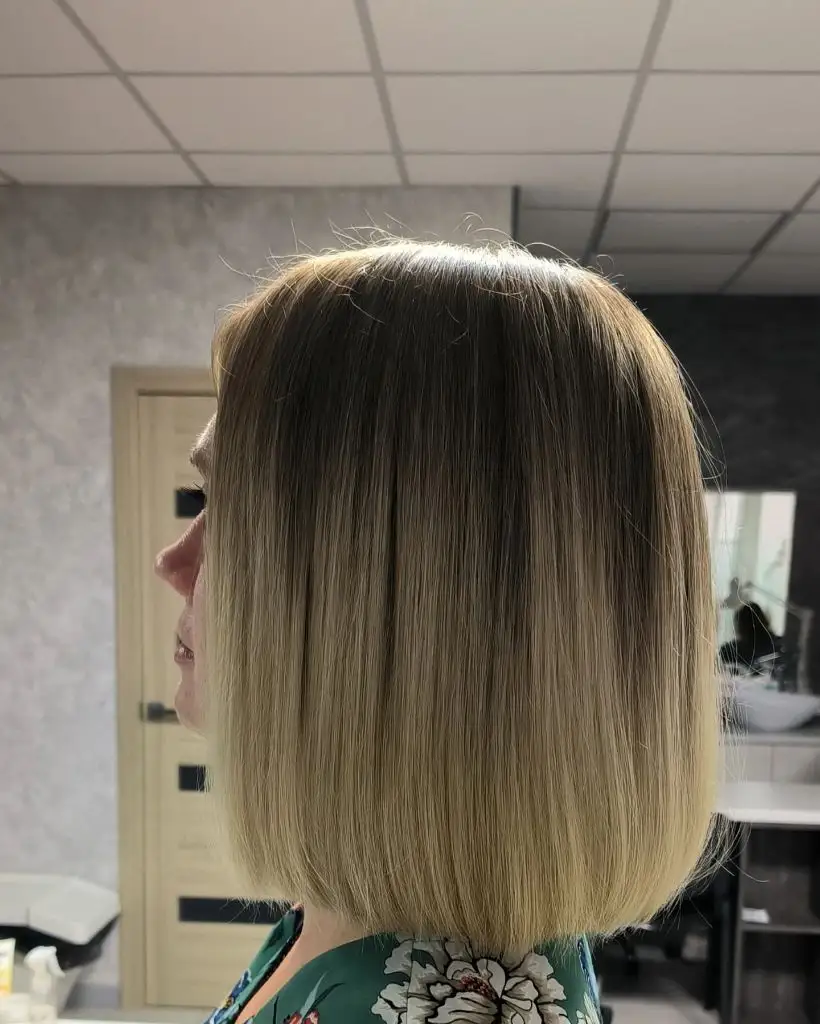
Photo via Instagram
The blunt hemline is the strongest visual element — it creates a hard horizontal line at the jaw that gives the cut a graphic, almost drawn quality. The root shadow adds just enough tonal depth to prevent the blonde from reading as flat, creating a natural gradient from darker crown to lighter ends that suggests dimension without any visible highlighting technique. The straightness is essential to the geometry; any wave would soften the sharp bottom edge and change the character of the cut entirely. The salon light catches the smooth surface evenly, emphasizing the precision of the line.
The reader takeaway is that a blunt hemline at the jaw creates a visual frame as definitive as any accessory. The sharper the bottom edge, the more architectural the bob reads. For anyone considering this shape, the key principle is that blunt cuts demand consistent maintenance of that line — the geometry is the style, and any unevenness in growth changes the reading.
14. Textured Brown Bob With Graduated Back
A person is photographed from behind in a salon, wearing a white top. The hair is a short bob in a medium brown shade, with a graduated back that is shorter at the nape and longer toward the front. The texture shows some slight layering and movement, with the ends appearing slightly uneven or textured rather than blunt. The overall shape is an inverted triangle viewed from behind.
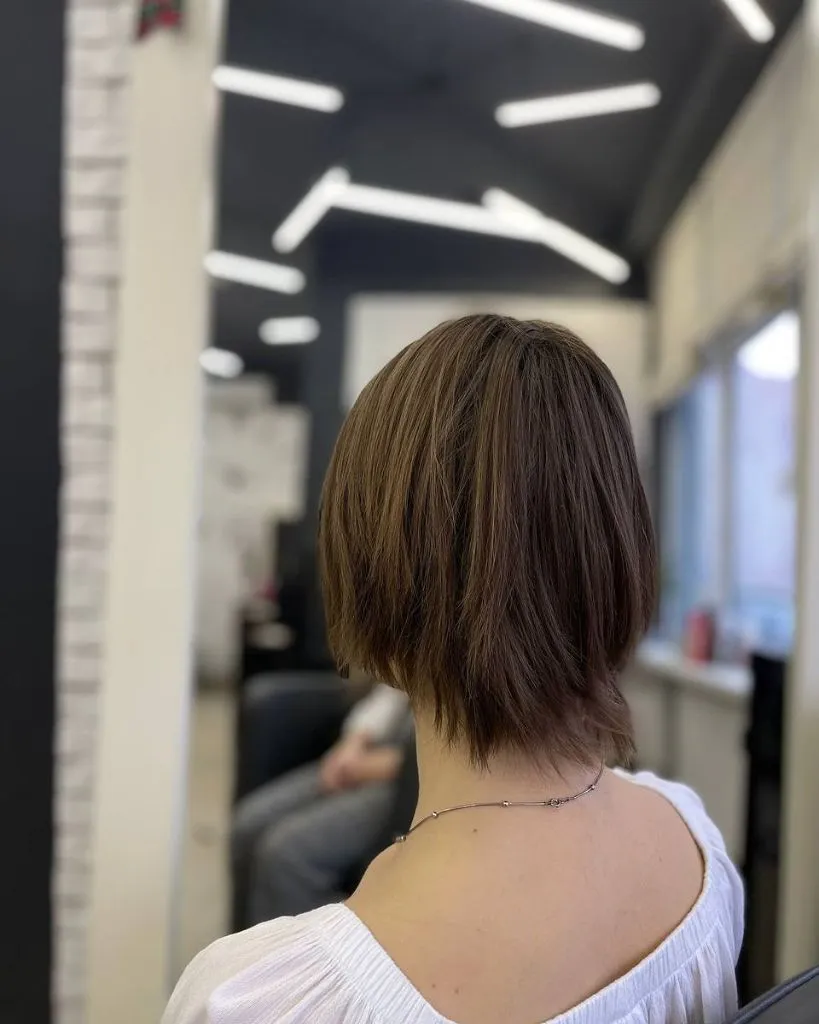
Photo via Instagram
The graduated angle from shorter back to longer front creates forward momentum in the silhouette — even from behind, the eye follows the diagonal line downward toward where the longer front pieces would fall near the face. The textured ends prevent the shape from feeling too precise or rigid, introducing a casualness that balances the structural angularity of the graduation. The brown tone is consistent throughout, which keeps the focus on shape rather than color, and the medium weight of the hair gives the cut enough body to hold its angle without appearing stiff.
The best move here is the way texture at the ends softens an otherwise angular shape. A graduated bob can read as very structured, but when the ends are point-cut or razored slightly, the result feels approachable rather than formal. That balance between geometry and ease is what makes this cut versatile. Exploring how graduated shapes influence face framing can help in choosing the right angle.
15. Rounded Brown Bob With Clean Nape Line
A person is photographed from behind in a salon, wearing a black styling cape. The hair is a short rounded bob in a medium-brown shade, with the back forming a smooth, almost helmet-like curve. The cut is very precise, with the hair hugging the head closely and the nape line clean and slightly rounded. The overall shape is compact and symmetrical.
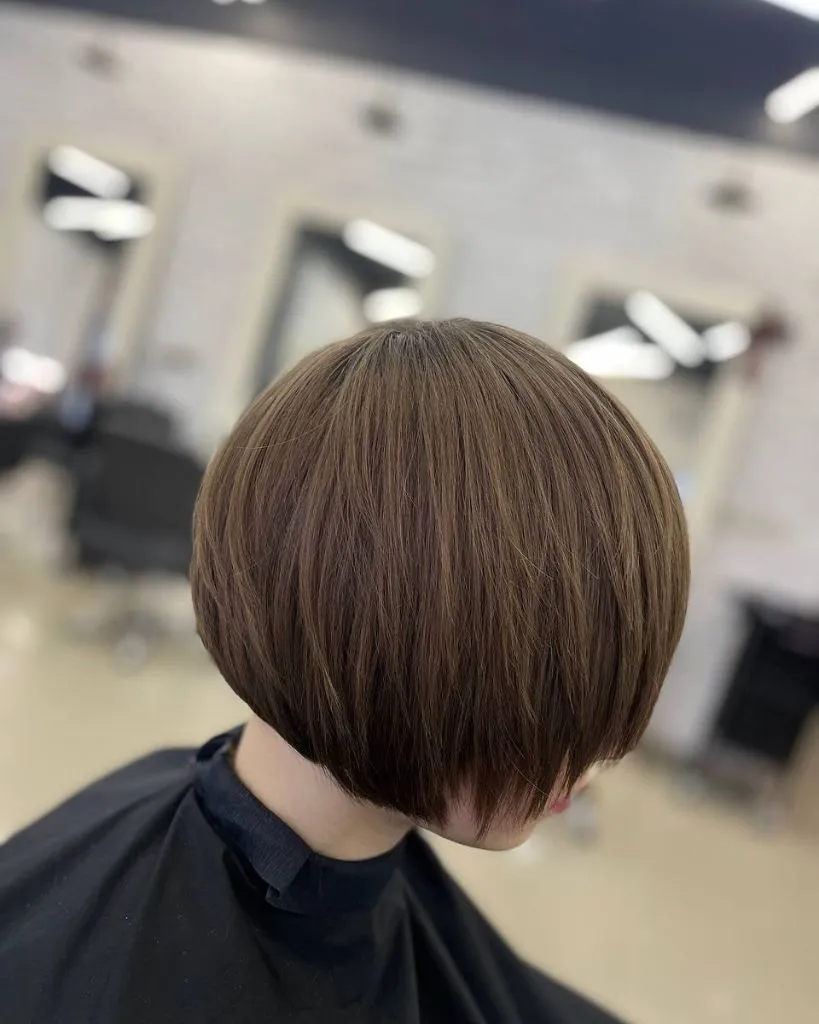
Photo via Instagram
The roundness of this bob is its defining quality — viewed from behind, the shape is nearly circular, with the hair curving inward at every point rather than falling straight or flipping outward. This inward curl compresses the silhouette, making the head appear smaller and the overall look more contained. The clean nape line underscores the precision; there are no wisps, no stray strands, nothing that disrupts the smooth contour. The single brown tone reinforces the sculptural reading, since color variation would break the surface and undermine the shape.
The strongest lesson is that inward movement in a bob creates a contained, polished silhouette that requires very little additional styling to maintain its effect. The principle applies to any short bob: the direction the ends curve — inward, outward, or straight — fundamentally changes the personality of the cut, and an inward curve communicates control.
16. Gray Pixie With Tapered Nape and Dark Undertone
A person is photographed from behind in a salon or barbershop setting, seated in a green leather chair. The hair is a very short pixie in a salt-and-pepper mix of dark gray and white, with a tapered nape and slightly more length on the crown. The person wears a dark burgundy or maroon top. The lighting is warm and dim, with bokeh from lights visible in the background.
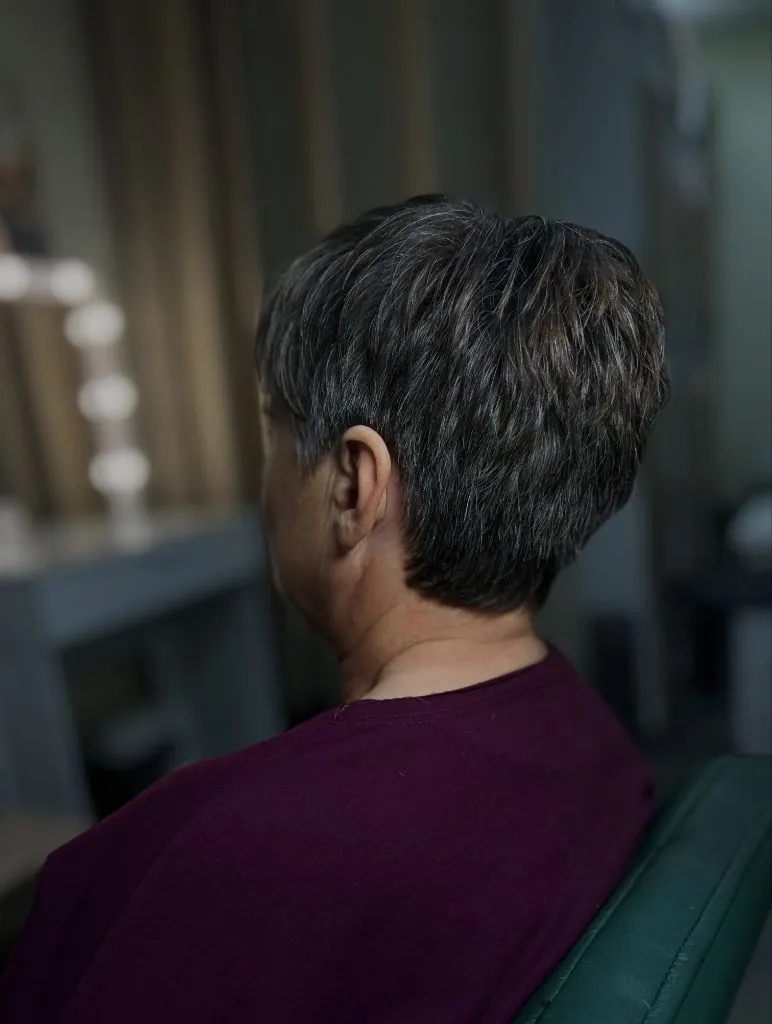
Photo via Instagram
The salt-and-pepper quality of this cut means the texture reads differently than a solid color would — each short strand catches light at a slightly different tone, creating a fine-grained visual texture that makes the hair appear denser and more complex than its actual length might suggest. The tapered nape is clean but not shaved, maintaining a softness at the hairline that suits the warm, dim lighting of the setting. The burgundy top provides a rich, deep contrast beneath the gray, pulling warmth into the lower frame and preventing the cool tones from dominating the image.
The useful move here is pairing a cool-toned gray cut with a warm-toned garment directly below. The temperature contrast makes both elements read more vividly — the gray appears cooler, the burgundy richer. This is a transferable styling principle: the color worn closest to graying hair shifts how that gray reads to the eye, warm tones adding vitality and cool tones amplifying the silver.
17. Sleek Dark Bob at a Beauty Studio
A woman stands in front of a wall with raised lettering that partially reads “BEAUT” and “STUDIO.” Her hair is a chin-length bob in a very dark brown or near-black shade, parted slightly off-center, smooth and straight with a slight inward curve at the ends. She wears a light gray ribbed knit sweater. Her complexion is fair, and her makeup appears minimal and natural. The bob is slightly longer in the front than at the back, suggesting a subtle A-line shape.
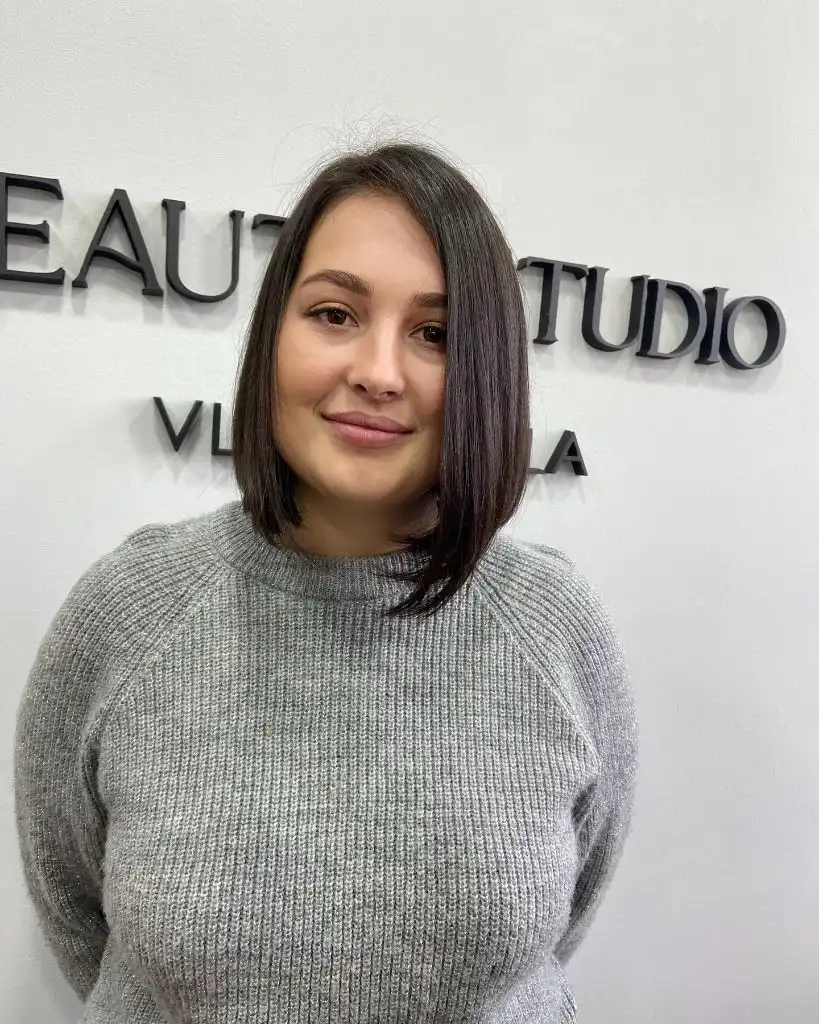
Photo via Instagram
The near-black color gives this bob a density and weight that lighter shades would not carry the same way — it reads as a solid shape rather than individual strands, which makes the slight A-line graduation from back to front appear even more defined. The gray sweater below provides a neutral midtone that neither competes with nor matches the hair, creating a clean visual separation at the jawline. The minimal makeup and soft parting keep everything quiet, letting the shape of the cut do the communicating. The inward curve at the ends closes the silhouette neatly against the face.
The beauty of this is the way a very dark, single-tone bob becomes its own graphic element. Without highlights or color variation, the cut reads almost like a silhouette — the shape itself is the style. The principle here is that when committing to a dark, uniform color, the geometry of the cut becomes the only variable, and it needs to be precise enough to carry that responsibility.
18. Silver Tapered Cut With Close Sides
A person is photographed from behind in a salon, wearing a black hoodie. The hair is a very short, tapered cut in a silver or platinum-gray tone, with the sides and nape cut very close to the head and slightly more length on the crown. The overall shape is neat and close-fitting, with the silver color appearing uniform from root to tip. The salon interior is visible in the blurred background.
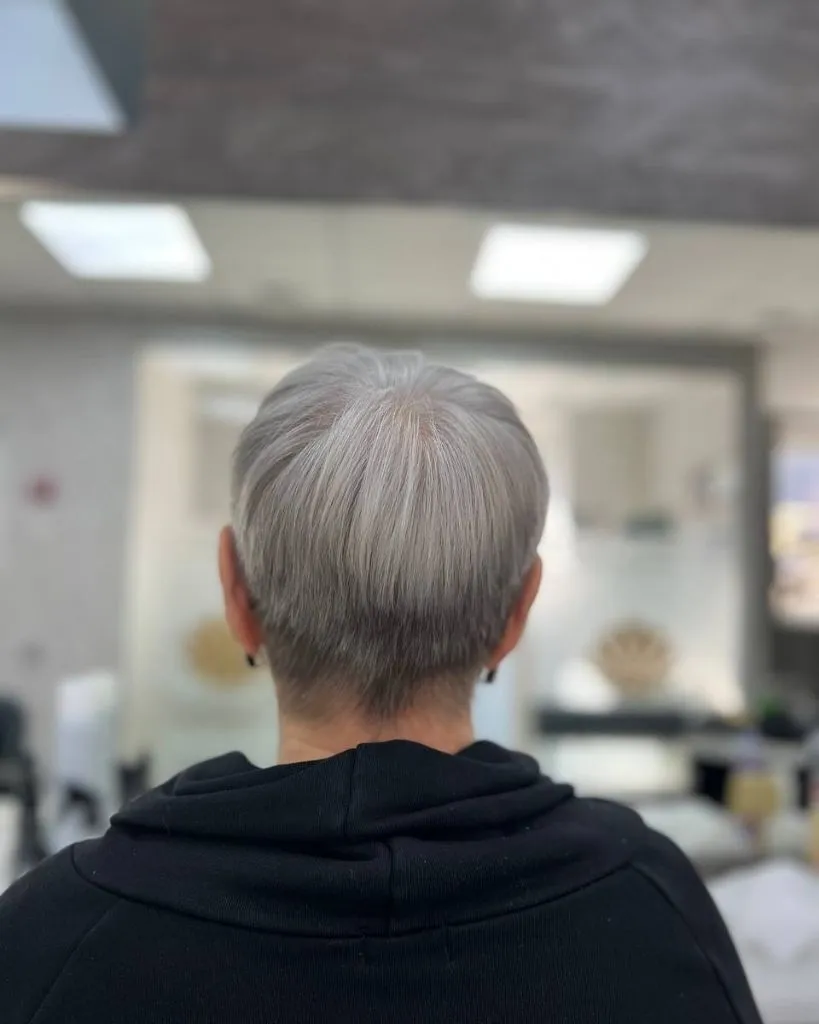
Photo via Instagram
The uniformity of the silver here is striking — from nape to crown, the tone is consistent, which gives the cut a polished, almost metallic quality that reads as entirely intentional. The close taper at the sides creates a clean outline around the ears and neck, and the slight additional length on top introduces just enough surface variation to prevent the cut from appearing flat. The black hoodie beneath provides maximum contrast, making the silver appear even brighter and more pronounced. There is nothing competing with the color; the shape is simple enough to serve as a frame for the tone itself.
What stands out most is how fully silver hair, when cut close and kept uniform, reads as a deliberate color choice rather than a natural process. The principle extends to any age or context: when the color is the statement, the cut should be clean and minimal enough to let that statement come through without structural distraction.
19. Highlighted Pixie With Layered Crown Texture
A person is photographed from behind in a salon, wearing a black cape with “VART” embroidered in white on the back. The hair is a short pixie with visible layering and texture on the crown, in a base of medium brown with blonde or caramel highlights running through the top and sides. The nape is tapered close, and a small earring is visible on one ear. The salon has white brick walls and shelves with hair products.
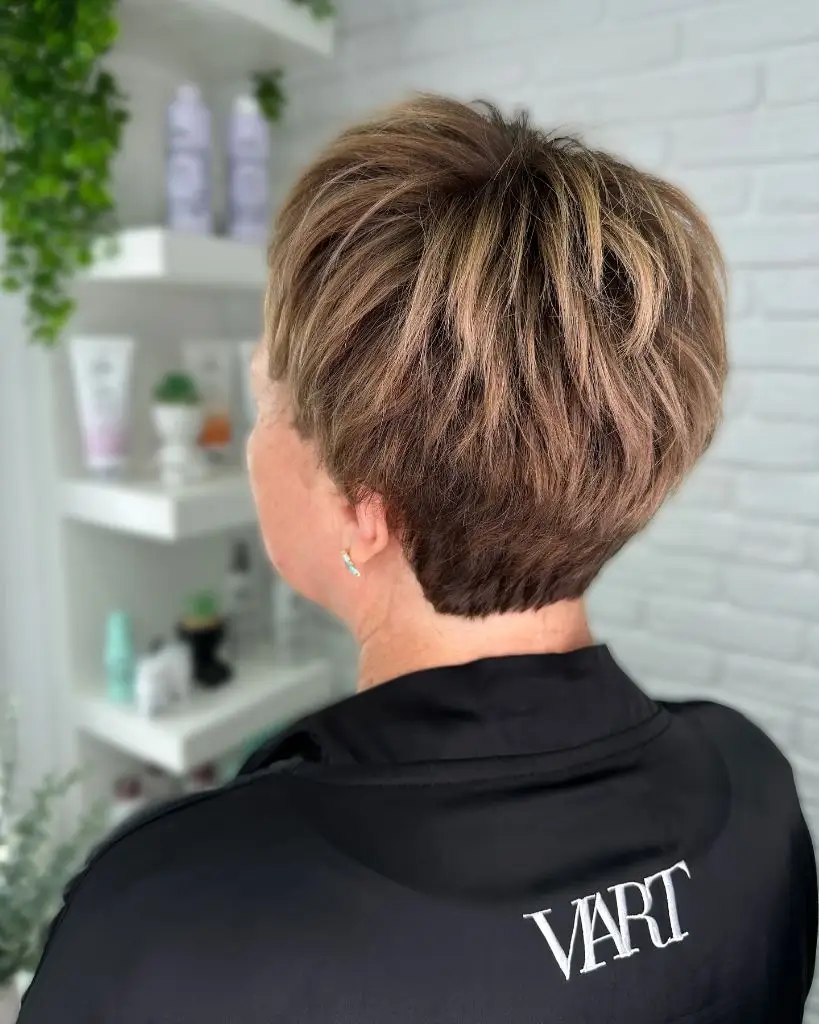
Photo via Instagram
The highlights serve a specific structural purpose in this pixie — they catch the light on the top layers where the texture is most active, emphasizing the movement and separation between strands. The darker brown base at the nape and sides recedes visually, which exaggerates the height of the crown and makes the top section appear more voluminous than it actually is. This is color being used architecturally, not decoratively. The tapered nape keeps the bottom clean, and the layered top provides contrast in both color and texture.
The reader takeaway is that highlights in a short cut work differently than in long hair — they function as structural markers rather than blending agents. Placing lighter tones only where the longest, most textured layers sit creates the illusion of additional volume and movement. This approach to trendy haircuts for women over 40 demonstrates that color placement and cut shape are most effective when designed together.
20. Dark Brown Chin-Length Bob With Soft Flip
A person is photographed from behind in a salon, wearing a black styling cape over a white top. The hair is a chin-length bob in a dark chocolate brown, with the ends flipping slightly outward. The texture appears smooth and healthy, with a subtle volume at the crown. White brick walls and salon equipment including a standing dryer are visible in the background.
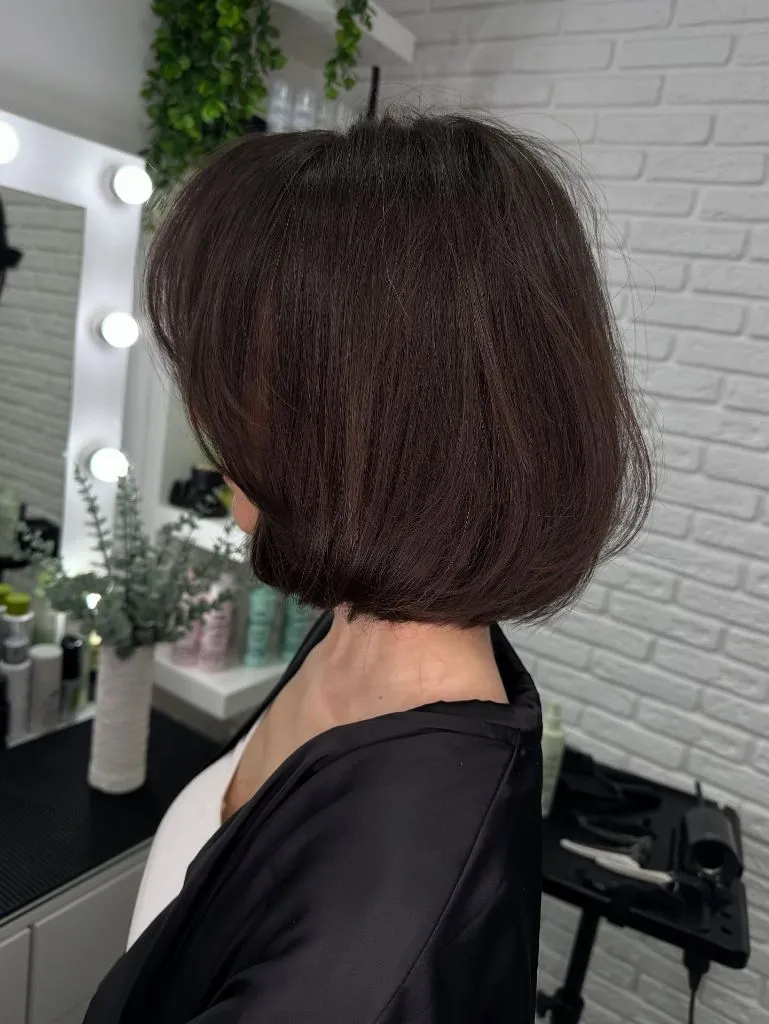
Photo via Instagram
The outward flip at the ends is the key gesture here — it opens the silhouette at the bottom, creating a wider base that makes the head appear lifted and the neck elongated. Compare this to the inward-curving bobs seen elsewhere in this guide, and the difference in personality is immediately apparent: inward curves contain and compress, while outward flips expand and lighten. The dark brown color is rich and uniform, giving the flip a sculptural quality against the lighter background. The crown volume balances the width at the ends, maintaining proportion throughout the shape.
The useful idea is that the direction of the ends controls the mood of a bob more than length or color does. An outward flip reads as relaxed and open, while the same cut curving inward reads as polished and contained. Understanding this single variable — end direction — gives considerable control over how a bob silhouette communicates presence.
21. Dark Layered Pixie With Side Profile Movement
A person is photographed from the right side in front of a glass building exterior. The hair is a short layered pixie or very short bob in a dark brown or near-black shade, with visible texture and layers creating a feathered, swept-back movement from the face toward the crown and nape. The back tapers to the neck, and the longest pieces reach just below the ear. The person wears a beige or light tan top and a thin chain necklace.
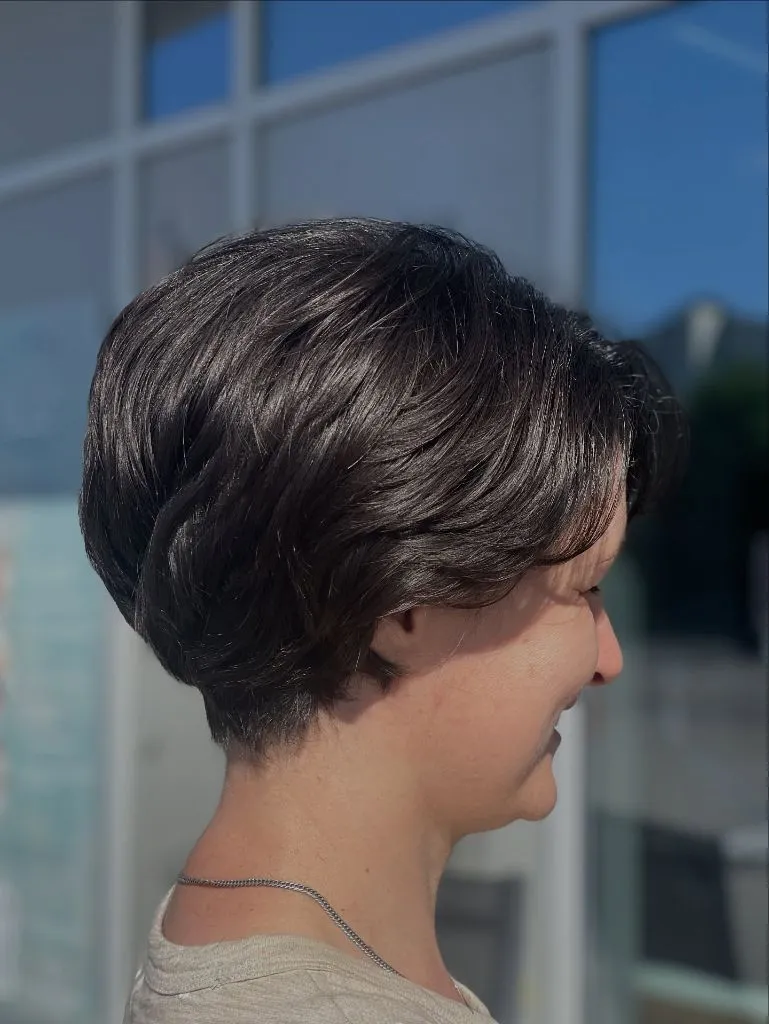
Photo via Instagram
The feathered layers create directional movement that sweeps away from the face, drawing the eye backward along the curve of the head toward the nape. This backward sweep lengthens the profile visually, making the face-to-nape line appear elongated and elegant. The dark color gives each layer a distinct shadow edge, so the individual pieces of the cut are readable even at this short length. The thin chain necklace sits just below where the shortest nape strands end, creating a secondary line that echoes the curve of the haircut without repeating it exactly.
The best move here is using layer direction rather than layer length to create movement in a short cut. When layers are swept consistently in one direction — here, away from the face and back toward the crown — the result reads as windblown and effortless while actually being quite precisely constructed.
22. Long Straight Highlighted Hair With Subtle Layers
A person is photographed from behind in a salon, wearing a bright pink or fuchsia ribbed top. The hair is long, falling past the shoulder blades, in a medium blonde-brown tone with lighter highlights throughout and slightly darker roots. The cut shows subtle layering with a soft V-shape at the hemline. The hair is straight and smooth with a healthy shine. Salon furniture and a wooden counter are visible in the background.
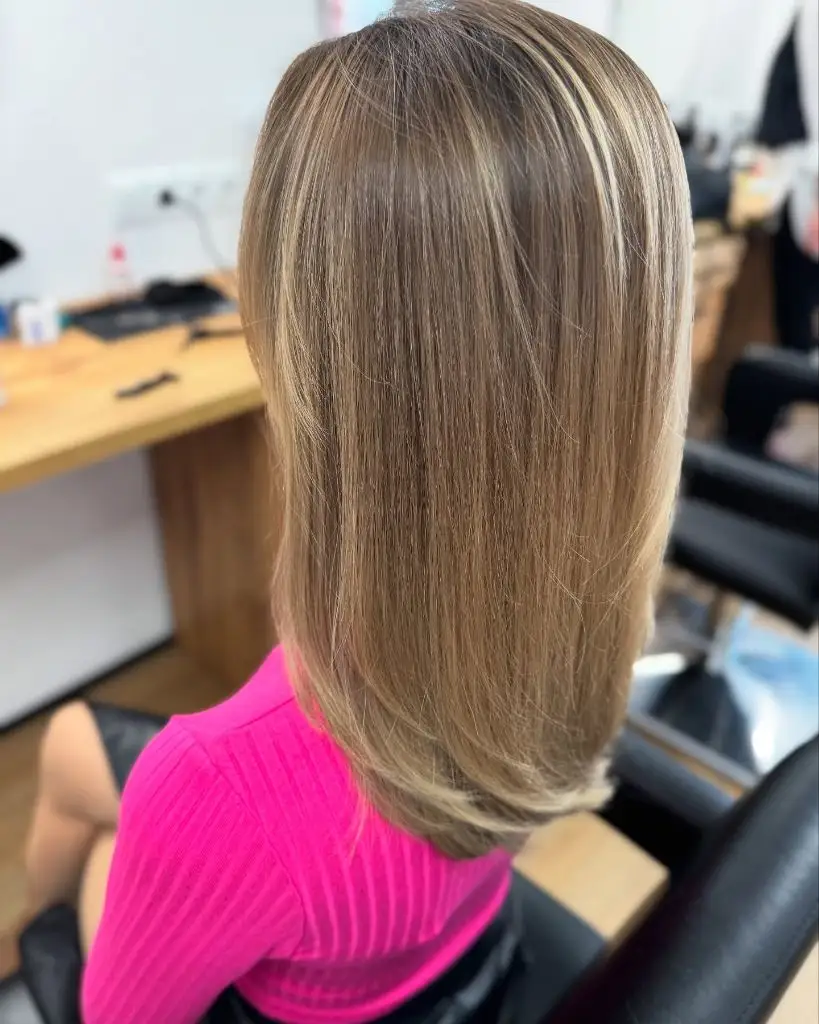
Photo via Instagram
The soft V-shaped hemline here introduces just enough shape to prevent the long length from reading as undifferentiated curtain. The highlights are blended gradually from darker roots through lighter mid-lengths and ends, creating a tonal gradient that gives the straight hair visual depth without any visible texture or wave. The bright pink top beneath provides a bold contrast that makes the warm blonde tones appear richer by comparison — a cooler or neutral top would let the hair recede, but the fuchsia pushes it forward. The shine along the surface reads as condition and care, the kind of quiet maintenance that suggests thoughtful attention to healthy hair.
The strongest lesson is that long, straight hair over forty reads as deliberate when the condition is visibly excellent and the hemline has a considered shape. A V-shaped hem and well-blended color provide enough visual structure to make the length feel purposeful. The principle is that simplicity in shape demands excellence in condition — the simpler the cut, the more the health of the hair becomes the style itself.

Hi, I’m Zoey Mitchell, the creator of ChicStyle Blog.
I share simple, wearable outfit ideas, hairstyles, nail trends, and beauty tips that feel natural and easy to recreate.
This blog is where I explore everything that makes a woman feel put together and confident every day. I’m not an expert — just a woman who genuinely loves style, mixing looks, and discovering what works.
If you love effortless fashion with a personal touch, you’ll feel at home here.