The haircuts defining 2027 share one idea: the cut should do most of the work. Short pixies lean on texture instead of length, bobs get softer or sharper depending on the finish, shags and wolf cuts bring back movement for medium hair, and long layers — including the butterfly cut — keep length while removing weight. These thirty-five cuts cover short, medium and long hair, straight, wavy and curly textures, and the low-maintenance to high-maintenance range, so the right choice depends less on trends and more on how much styling time a cut honestly asks for. This pairs naturally with the ideas in Best Haircuts For Thinning Hair 2026 Trends.
1. Espresso Textured Pixie with a Tousled Crown
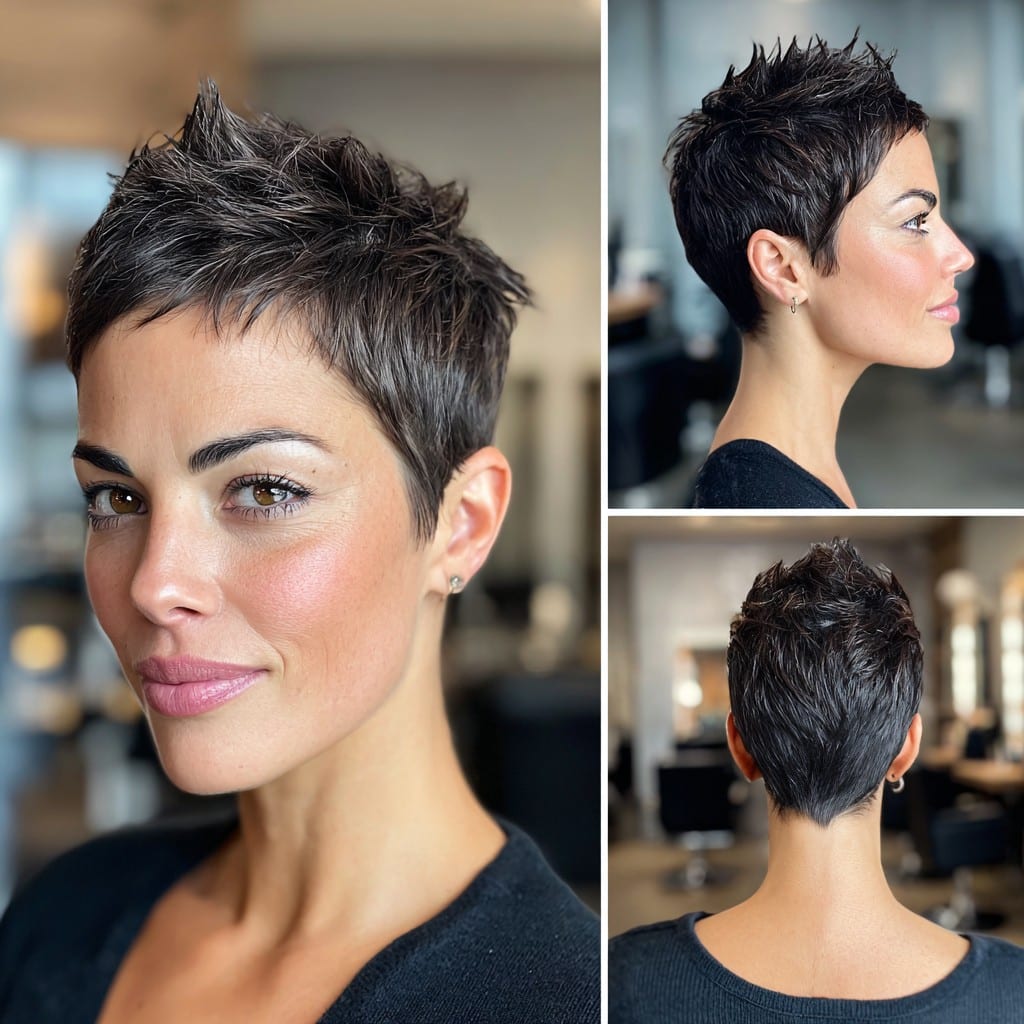
Photo credit by: hairs.london
A deep espresso shade keeps this textured pixie grounded while the tousled crown gives it lift. The texture is cut in rather than styled on, so a small amount of matte paste scrunched through damp hair is usually enough to revive the shape. For readers who want more, Winter Hair Trends 2026 2027 You Need To See keeps the ideas coming.
This is a strong choice for anyone who wants short hair without a severe, helmet-like finish. The trade-off is the appointment schedule: pixies lose their shape fast, so a trim every four to six weeks keeps the crown from collapsing. You’ll find the same spirit in Winter Hair Color 2027.
2. Fresh Choppy Pixie with a Piecey Fringe
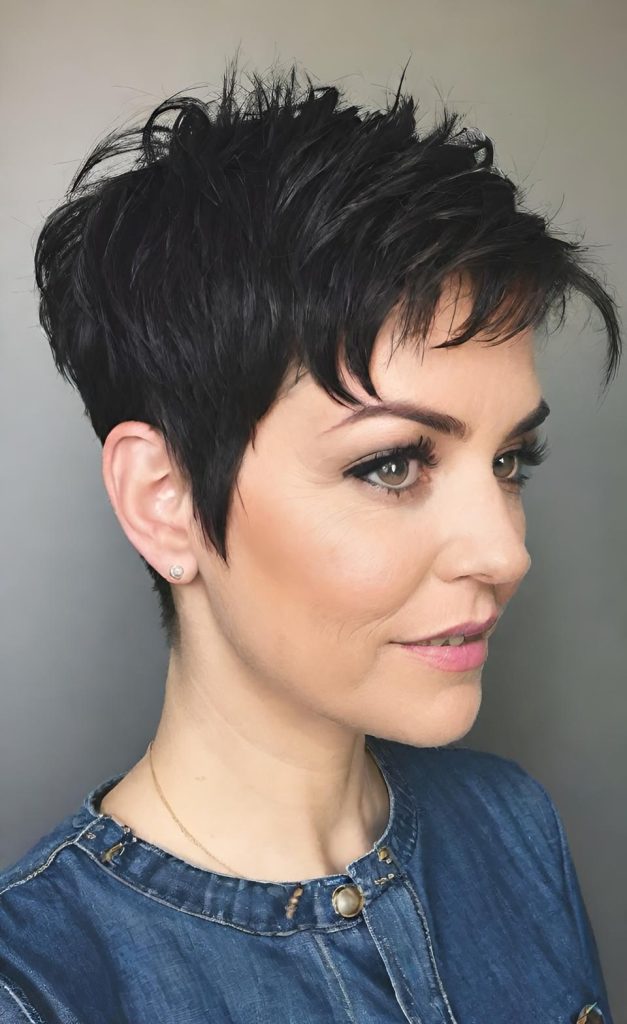
Photo credit by: egitimkultur.com
Choppy ends and a piecey fringe give this pixie its edge. The layers are deliberately uneven, which means the cut looks intentional even on days when it is barely styled — the messiness is built into the shape.
Fine hair benefits most here, since the choppy layers create the illusion of density. The fringe needs attention, though: piecey sections grow out unevenly, so ask for the fringe to be trimmed between full appointments if it starts falling into the eyes.
3. Piecey Silver Pixie with a Tapered Nape
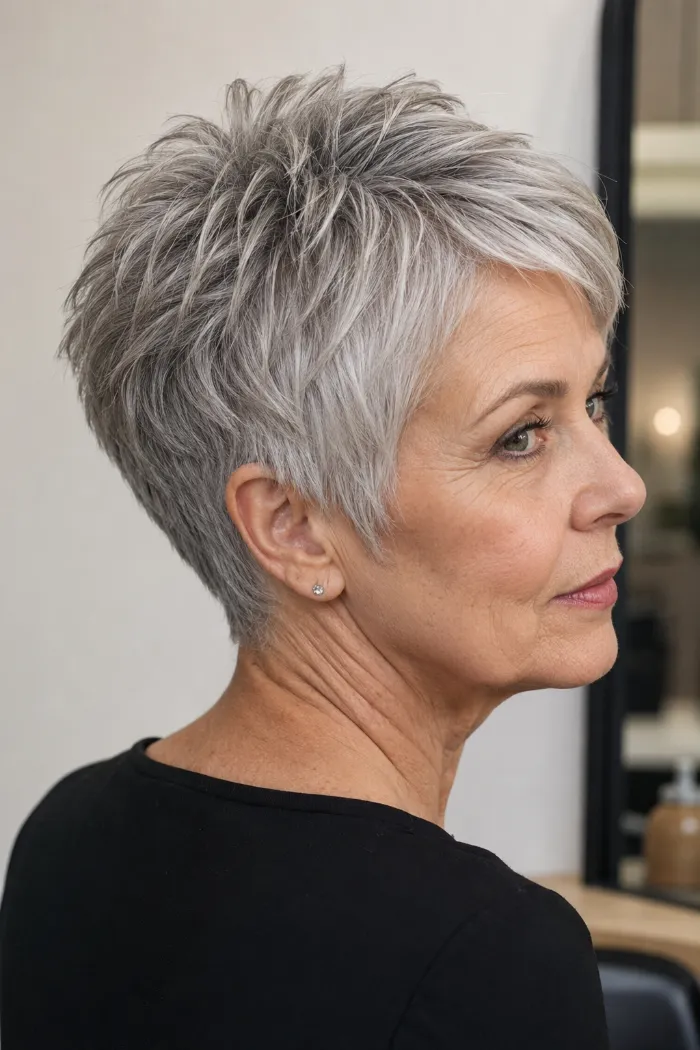
Photo credit by: vivenglow.com
Silver hair and a tapered nape make this pixie feel polished rather than severe. The taper at the back keeps the silhouette neat, while the piecey top stops it from looking like a uniform crop.
Silver and grey shades need a purple-toning shampoo every couple of weeks to stay cool instead of drifting yellow. That small upkeep step is what keeps the colour looking deliberate rather than faded.
4. Chic Short Cut with a Soft Side Sweep
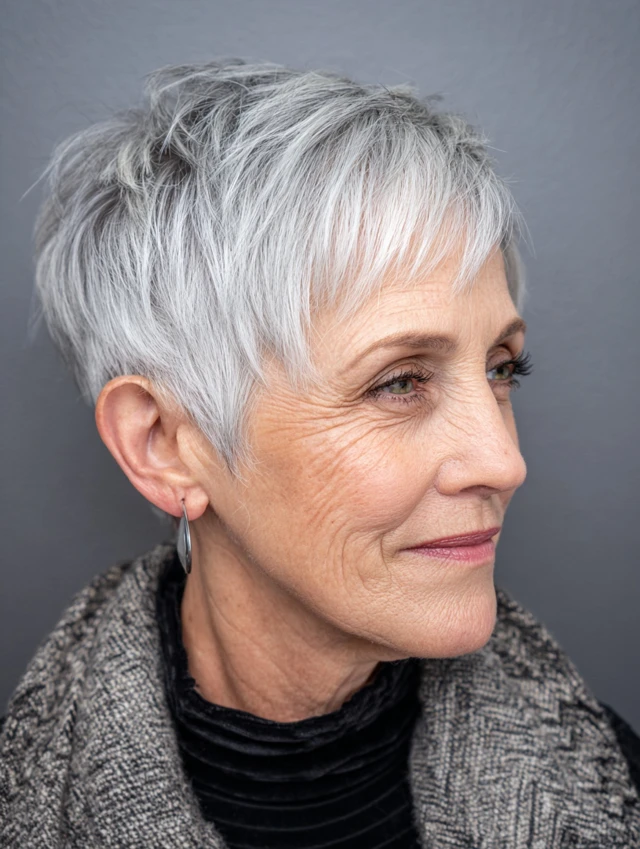
Photo credit by: outfitarea.com
A soft side sweep is the easiest way to make a short cut feel elegant. The longer top section sweeps across the forehead, softening the face, while the shorter sides keep the shape tidy and lightweight.
This cut works across ages because it asks so little: a blow-dry with a side part, or even a finger-combed air dry, is enough. It suits straight and slightly wavy hair best, since very curly hair will fight the sweep.
5. Tousled Bixie with Feathered Layers
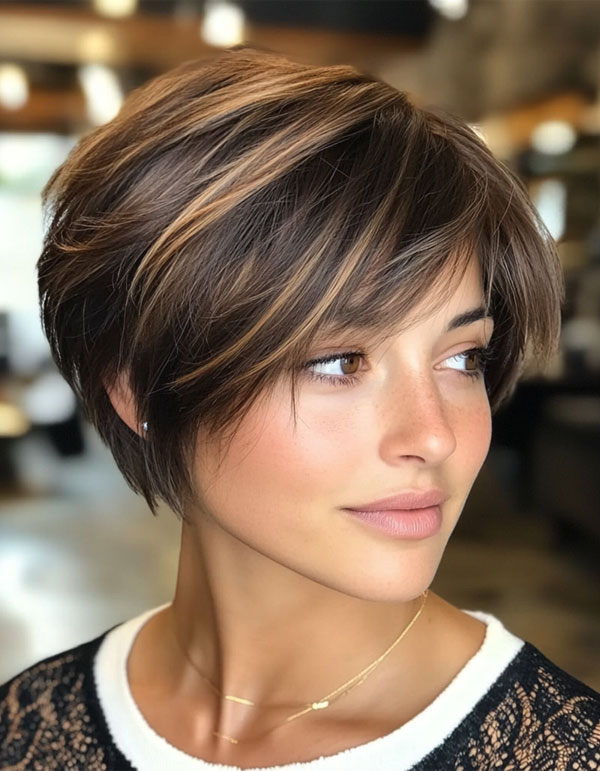
Photo credit by: itakeyou.co.uk
The bixie sits between a bob and a pixie, and this feathered version leans into that in-between length. The layers are cut to flick outward, giving movement that a blunt short cut cannot offer.
It is a good halfway step for anyone growing out a pixie or nervous about going fully short. The feathered ends need a texturizing spray or light wax to hold their direction, but the cut itself supplies the shape. See also Winter Blonde Hair Colors For 2026 2027 for more variations on this look.
6. Textured Bixie with a Side Part
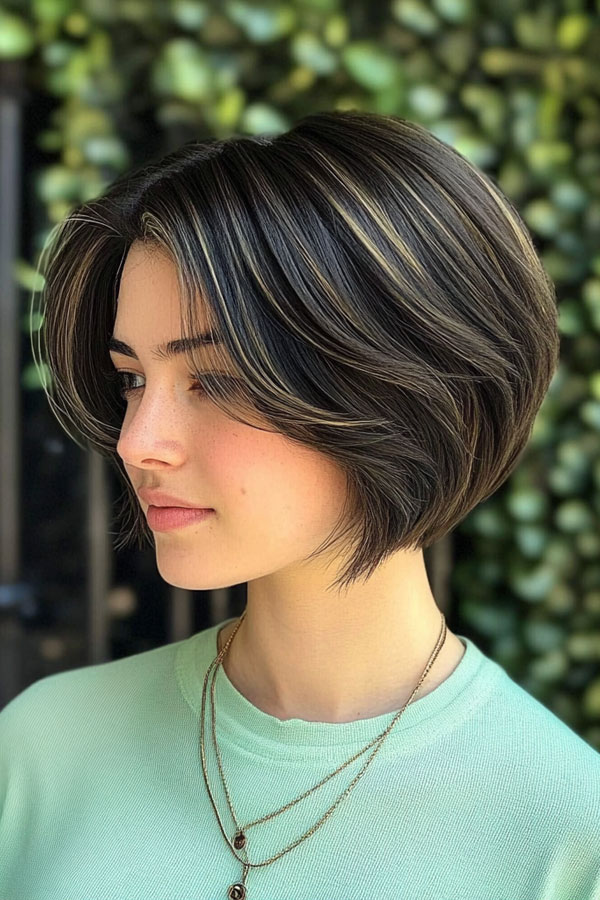
Photo credit by: itakeyou.co.uk
A deep side part gives this textured bixie instant volume at the crown. The asymmetry also means the cut frames the face on one side while staying short and neat on the other.
Side-parted short cuts suit round and square faces particularly well, since the diagonal line breaks up symmetry. Keep the part consistent — flipping it daily makes the layers fall unevenly.
7. Undercut Bixie for Fine Hair
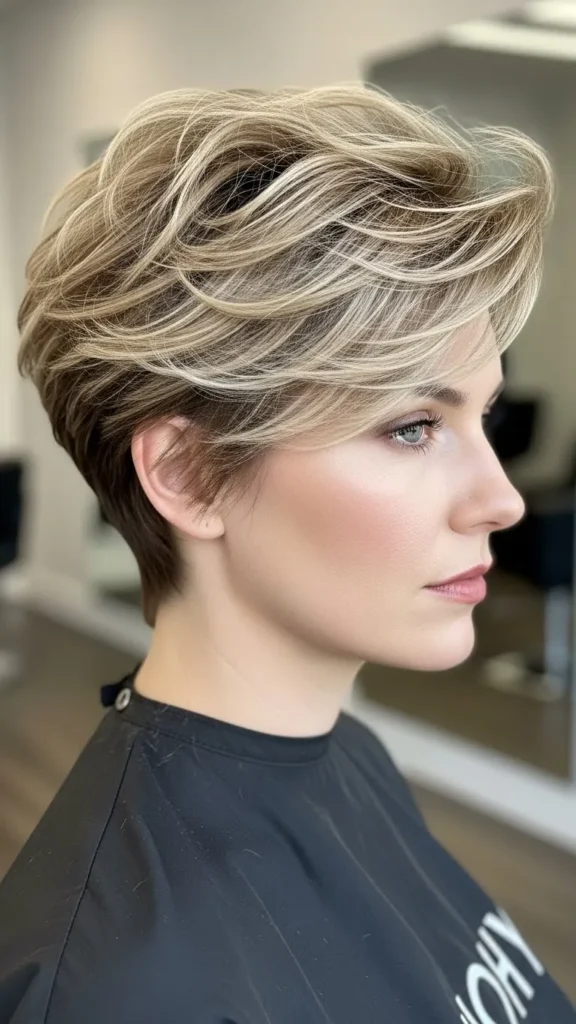
Photo credit by: cravelooks.com
An undercut removes bulk underneath while leaving length on top, which is exactly what fine hair needs to look fuller. The top layers get room to move instead of being weighed down by the hair beneath them.
The honest catch is maintenance: an undercut grows out visibly within weeks, so this cut commits you to regular trims. It is worth it if the alternative is fine hair that falls flat by midday.
8. Lob with Layers and a Side Fringe
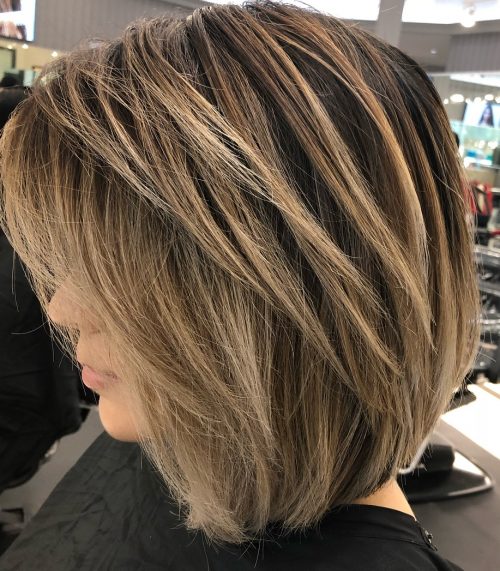
Photo credit by: hairs.london
The lob — a long bob grazing the shoulders — gains softness from layers and a side fringe. The fringe sweeps across the forehead instead of cutting straight across it, so the whole cut reads relaxed rather than geometric.
This is one of the most forgiving medium cuts: it can be air-dried, tied back, or curled without losing its shape. The side fringe grows out gracefully too, blending into the face-framing layers over time.
9. Chin-Length Bob with Curtain Bangs
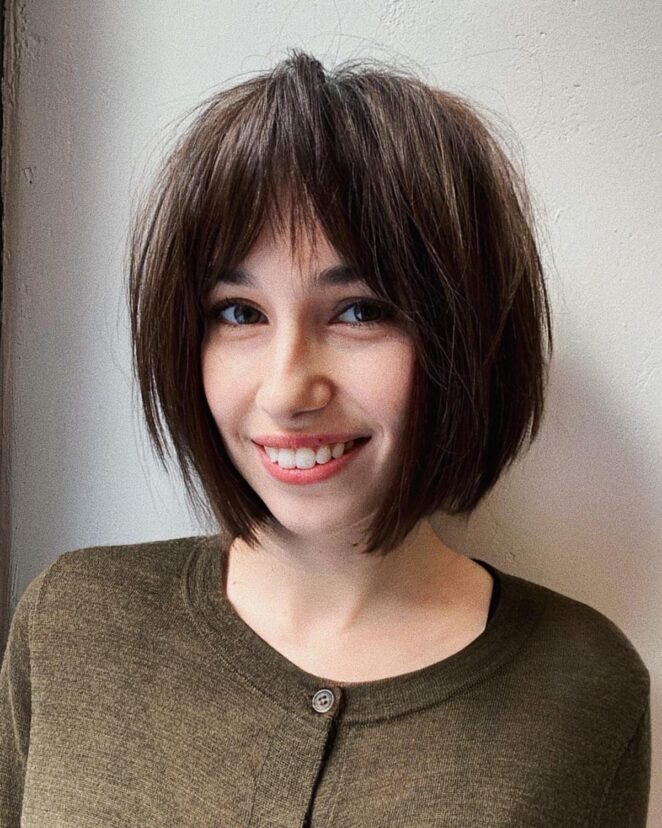
Photo credit by: favoritehairstyles.com
Curtain bangs part in the middle and sweep to each side, framing the cheekbones, and on a chin-length bob they soften what could otherwise be a blunt shape. The combination flatters diamond and oval faces especially well.
Styling is simple: a round brush or a quick pass with a flat iron flicks the bangs outward. Because the bangs are longer than a full fringe, they need trimming less often and grow out without an awkward stage.
10. Classic Straight Chin Bob

Photo credit by: favoritehairstyles.com
Some cuts never leave, and the classic straight chin bob is one of them. The even baseline and clean ends give straight hair a polished, deliberate finish that needs no layers to look complete. Our Black Hair Ideas To Transform Your Look In 2026 rounds up more takes on this exact idea.
The price of that precision is upkeep: a blunt baseline shows uneven growth quickly, so trims every six weeks keep the line honest. A smoothing serum on the ends prevents the shape from frizzing outward.
11. Choppy Bob with Soft, Piecey Ends
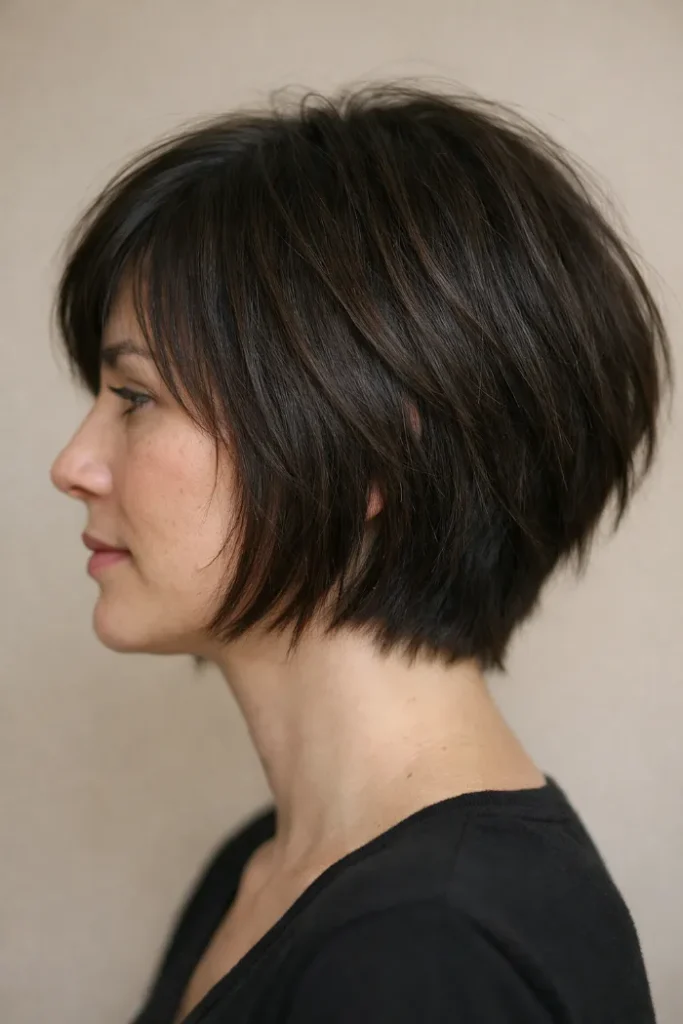
Photo credit by: chicnstylish.com
Choppy ends break up the solid line of a bob, giving fine hair visible texture and movement. The pieces are cut to separate naturally, so the style looks lived-in rather than freshly set.
This is a practical pick for fine hair that goes limp in a blunt cut. A dry texture spray on the ends is usually all it needs, and the choppy finish hides grow-out better than a sharp baseline.
12. Choppy Bob with a Rocker Edge
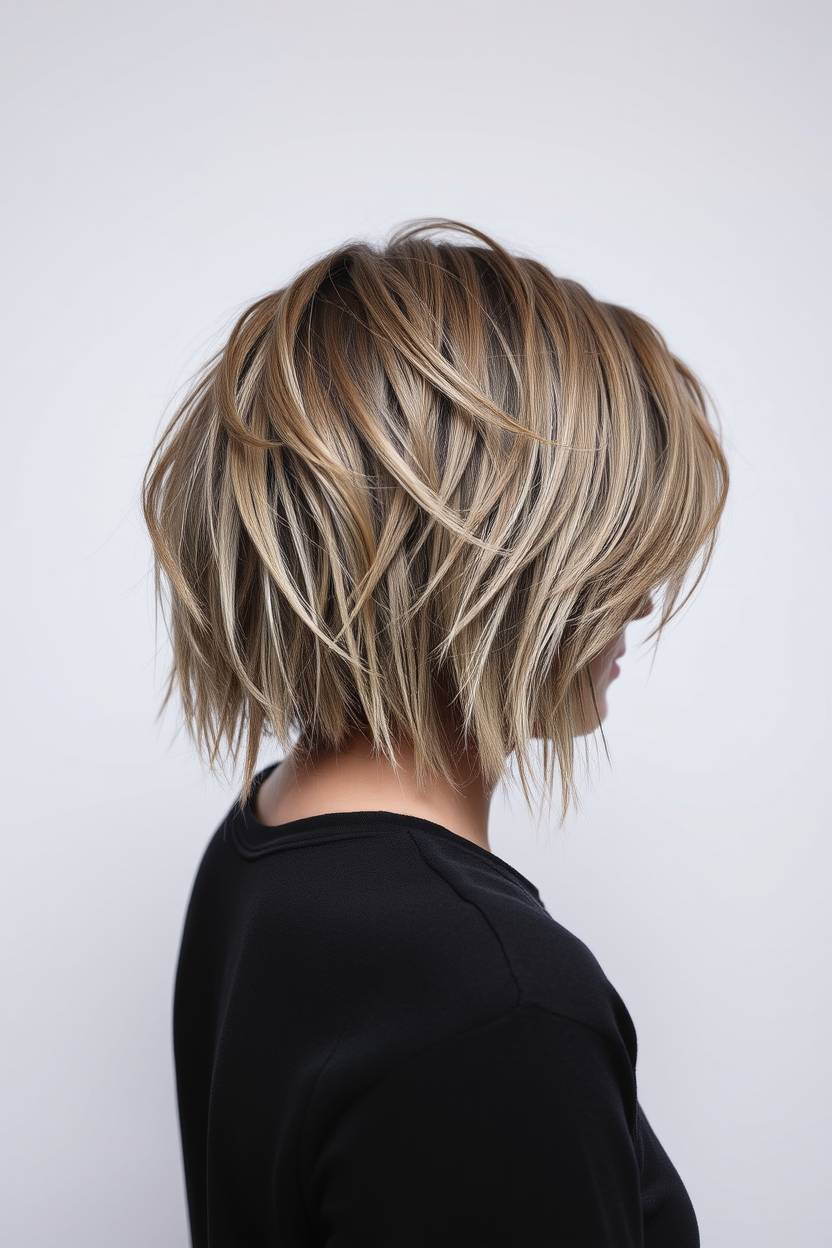
Photo credit by: favoritehairstyles.com
This choppy bob leans bolder, with jagged layers and a tousled finish that reads more rocker than polished. The uneven texture is the point — it gives the cut attitude that a neat bob cannot match.
It suits thick, wavy hair that can hold the piecey separation. On very fine hair the same layers can look thin, so density matters more here than it does for softer choppy bobs.
13. Sleek Ash Blonde Blunt Bob

Photo credit by: fabmood.com
An ash blonde shade cools down a blunt bob and makes the sharp baseline look even more deliberate. The sleek finish shows off the cut’s geometry, which is why this version is usually worn straight.
Ash tones need toning shampoo to stop warmth creeping back in, and the sleek finish needs a flat iron for most hair types. It is low-maintenance in shape but not in styling — worth knowing before booking it.
14. Blunt Bob with Platinum Blonde and Shadowed Roots

Photo credit by: pixelify.net
Platinum blonde against a shadowed root gives a blunt bob depth that all-over platinum lacks. The darker root also makes regrowth far less obvious, stretching the time between colour appointments.
Platinum is still high-commitment colour: bleaching to this level stresses the hair, so bond-building treatments and a good mask are part of the deal. The cut itself is simple, which balances the colour’s demands. We break down a similar look in Stunning Afro Hair Ideas To Elevate Your Look In 2026.
15. Blunt Bob with a Clean Jawline Finish
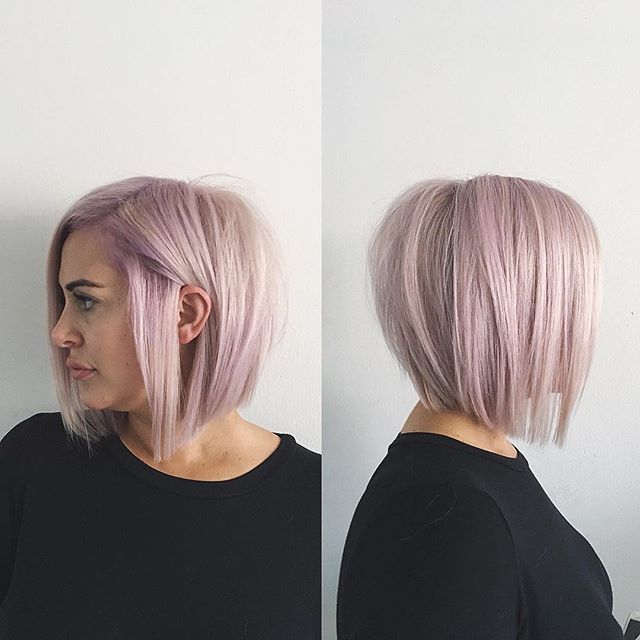
Photo credit by: stylesweekly.com
Ending right at the jawline, this blunt bob draws attention to the jaw and cheekbones. The clean line is the whole statement — no layers, no fringe, just a precise shape.
Jaw-length cuts suit oval and long faces best, since the baseline can shorten the look of a round face. Straight hair shows the line most clearly; wavy hair softens it into something closer to a textured bob.
16. Caramel Blonde French Bob with Bangs
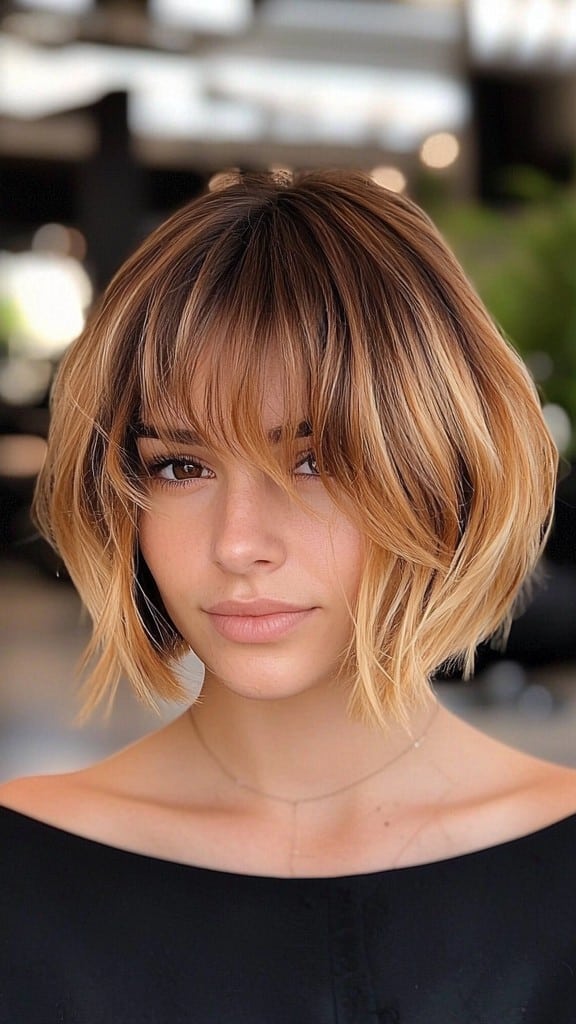
Photo credit by: hairs.london
The French bob is shorter and airier than a classic bob, usually ending near the cheek or jaw, and caramel blonde warms it up beautifully. The bangs complete the Parisian feel without needing a full fringe.
This cut thrives on a slightly undone finish — a bit of wave, a bit of texture spray — rather than poker-straight styling. Over-polishing a French bob removes exactly the charm that makes it work.
17. French Bob for Thin Hair
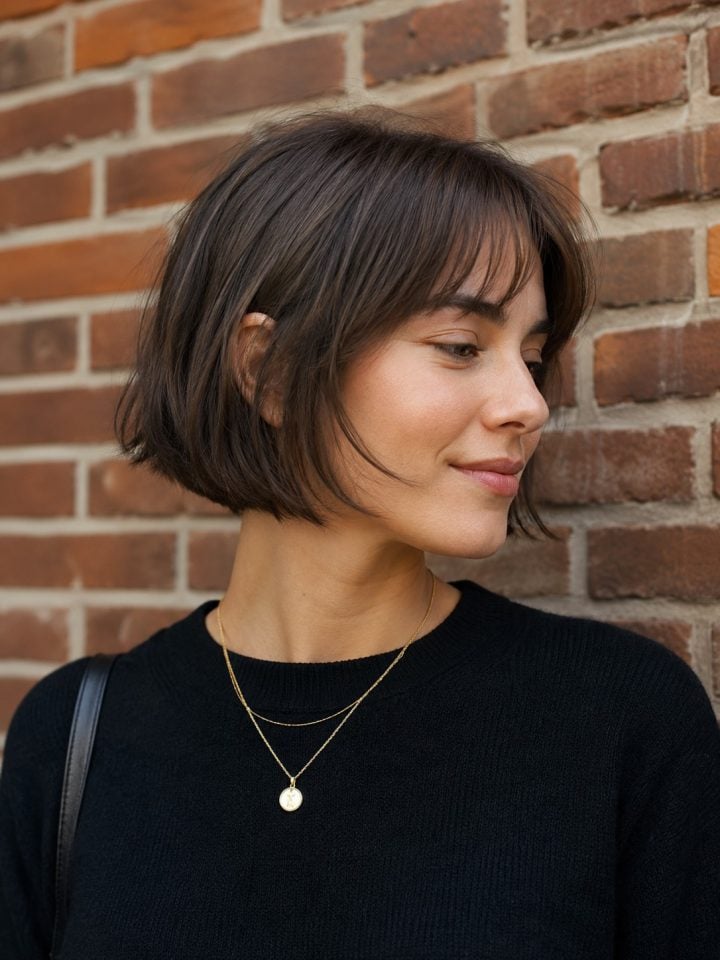
Photo credit by: nextstyleideas.com
Short length is thin hair’s friend, and the French bob proves it: cutting to jaw length removes the weight that drags fine hair flat, so the remaining hair looks denser. A blunt-ish baseline helps the ends read thicker.
Keep the layers minimal here. Too much layering on thin hair removes the very density the cut is trying to create, so the shape should come from the length, not from internal thinning.
18. Curved Lip-Length French Bob
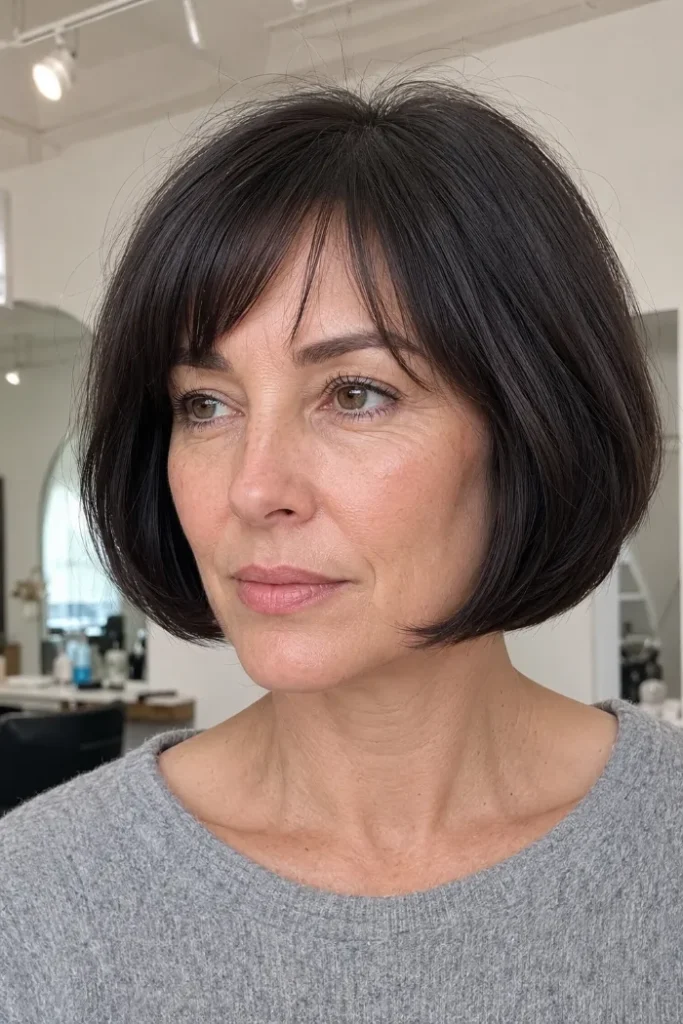
Photo credit by: glownstylish.com
Cut to lip length with a gentle inward curve, this French bob cups the face softly. The curve is created by the cut’s graduation rather than by styling, so it holds even when air-dried.
It is a flattering option for fine hair, since the curved ends tuck under and look fuller than ends that flick outward. A round brush helps on styling days, but the shape does not depend on it.
19. Medium-Length Shag with Textured Ends
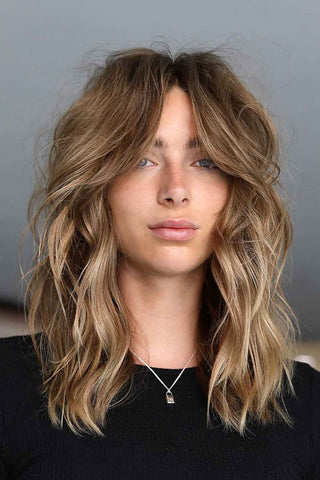
Photo credit by: shoplobelia.co.uk
The medium shag is the workhorse of 2027: long enough to tie back, layered enough to move. Textured ends keep the bottom of the cut from forming a heavy shelf, which is the usual problem with one-length medium hair. The same idea, styled another way, appears in Wet Hair Ideas For 2026 That Will Completely Transform Your Style.
Wavy and thick hair take to this cut most naturally, since the layers release weight and let the wave pattern show. A sea salt spray scrunched into damp hair gives the intended undone texture.
20. Medium Shag with Wispy Layers
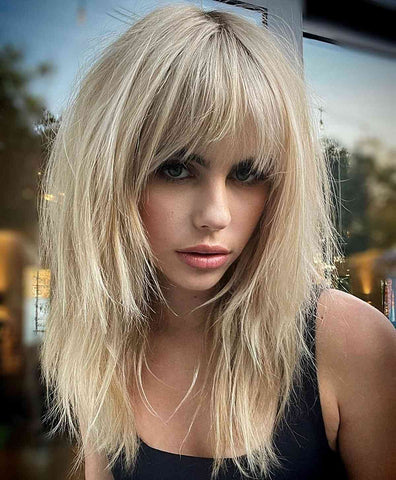
Photo credit by: shoplobelia.co.uk
Wispy layers make a medium shag feel lighter and softer than the choppier versions. The ends feather out instead of landing in a block, so the cut moves easily and frames the face without a heavy fringe.
This version suits fine to medium hair that would get lost in aggressive layering. The wispy finish also grows out gracefully — the layers simply lengthen into longer layers rather than collapsing into a shape that needs rescuing.
21. Midi Wolf Cut for Thin Hair
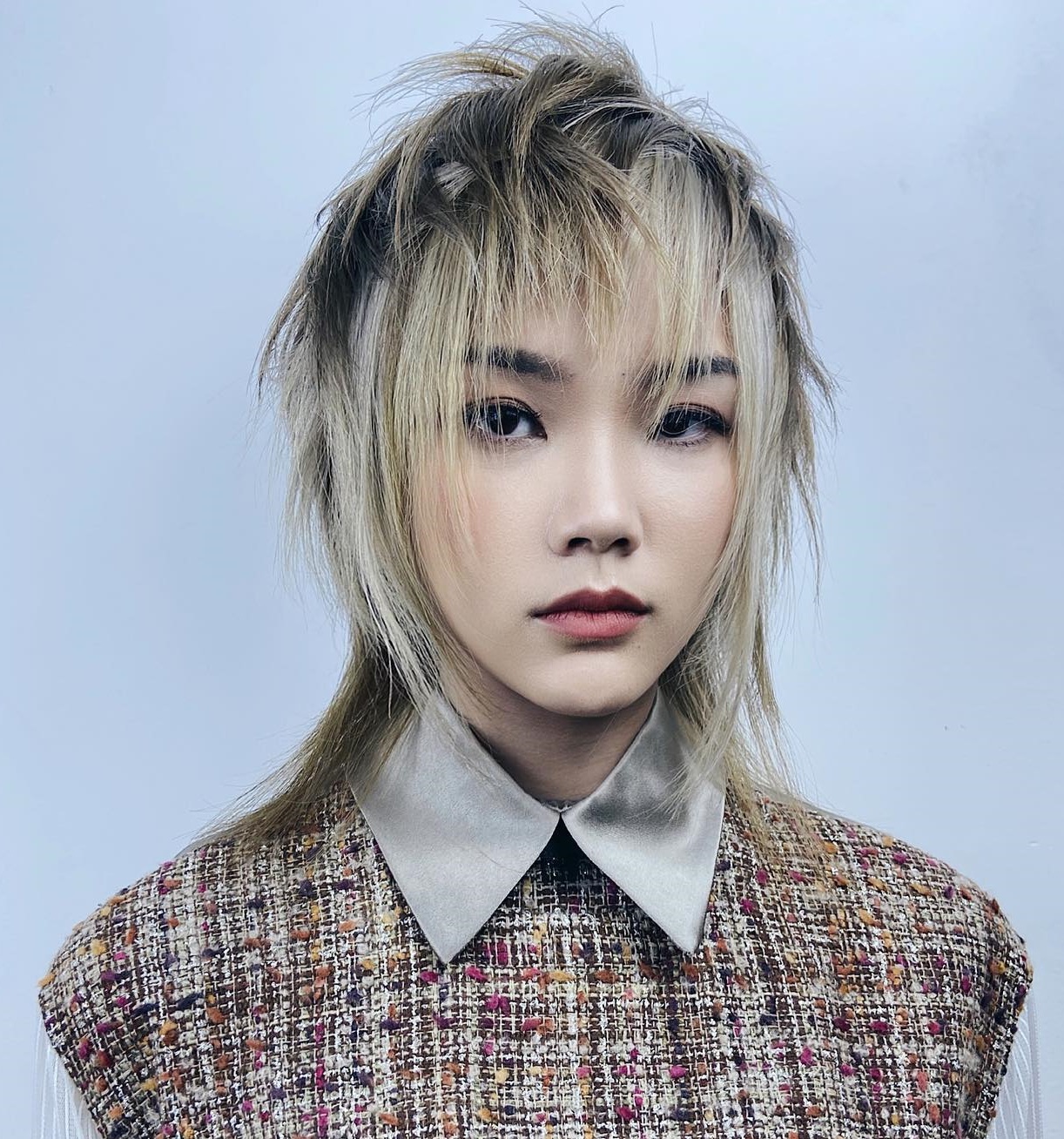
Photo credit by: hairs.london
The wolf cut mixes shaggy layers on top with longer lengths underneath, and at midi length it works even for thin hair. The shorter crown layers create volume where thin hair usually lies flat, while the longer back keeps the length.
Thin hair needs the layers kept soft rather than heavily razored, or the ends can look wispy. A volumizing spray at the roots before drying helps the crown layers stand up to their job.
22. Wolf Cut with Layers Around the Face
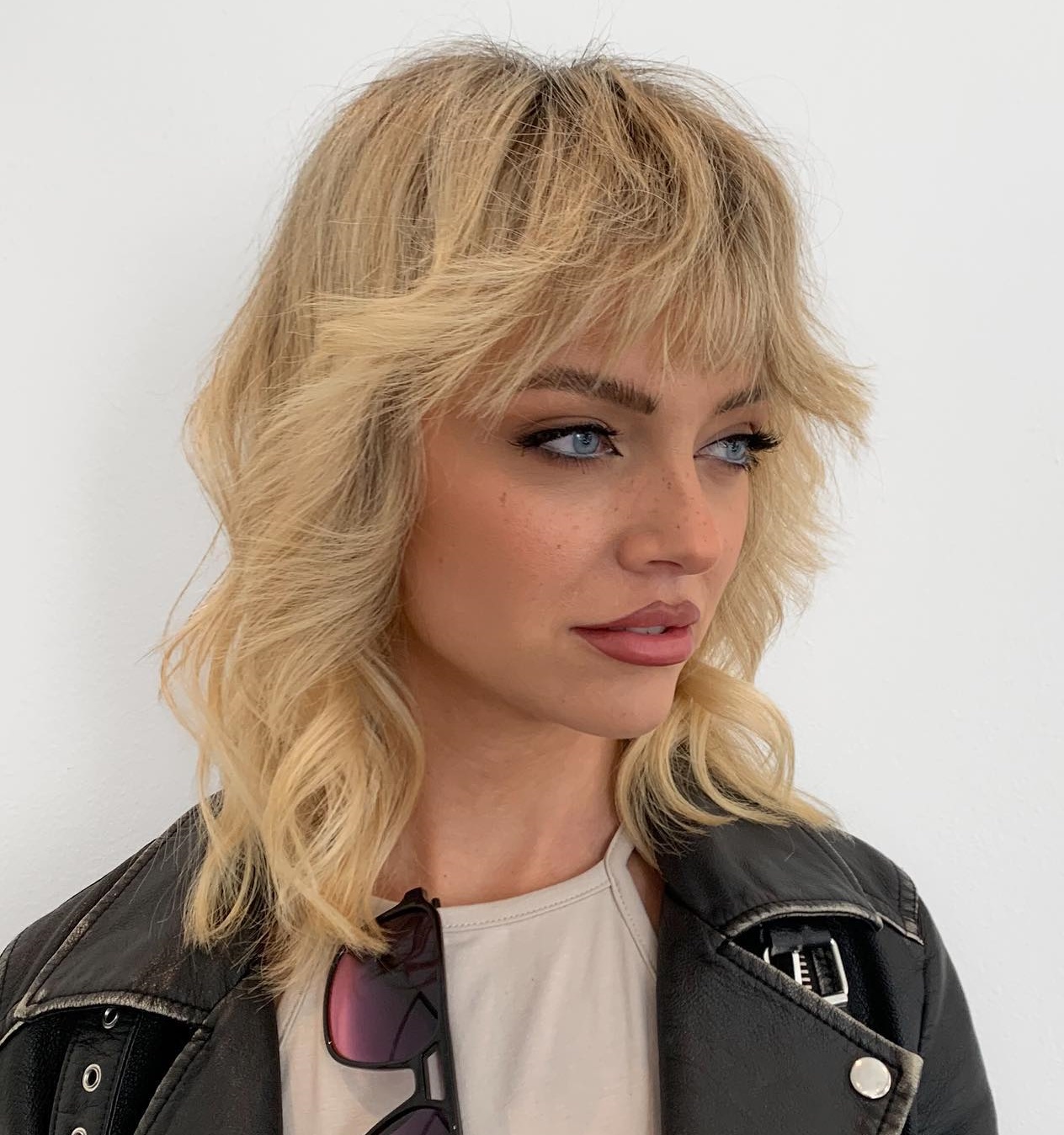
Photo credit by: hairs.london
Face-framing layers are what turn a wolf cut from wild to wearable. The shortest pieces start near the cheekbones and open up the face, while the rest of the cut keeps its shaggy, textured energy.
This is a good entry point into the wolf cut for anyone who finds the full version too extreme. The framing layers can be styled forward with a round brush or left to fall naturally — either way, they do the flattering work.
23. Textured Wolf Cut with a Curtain Fringe
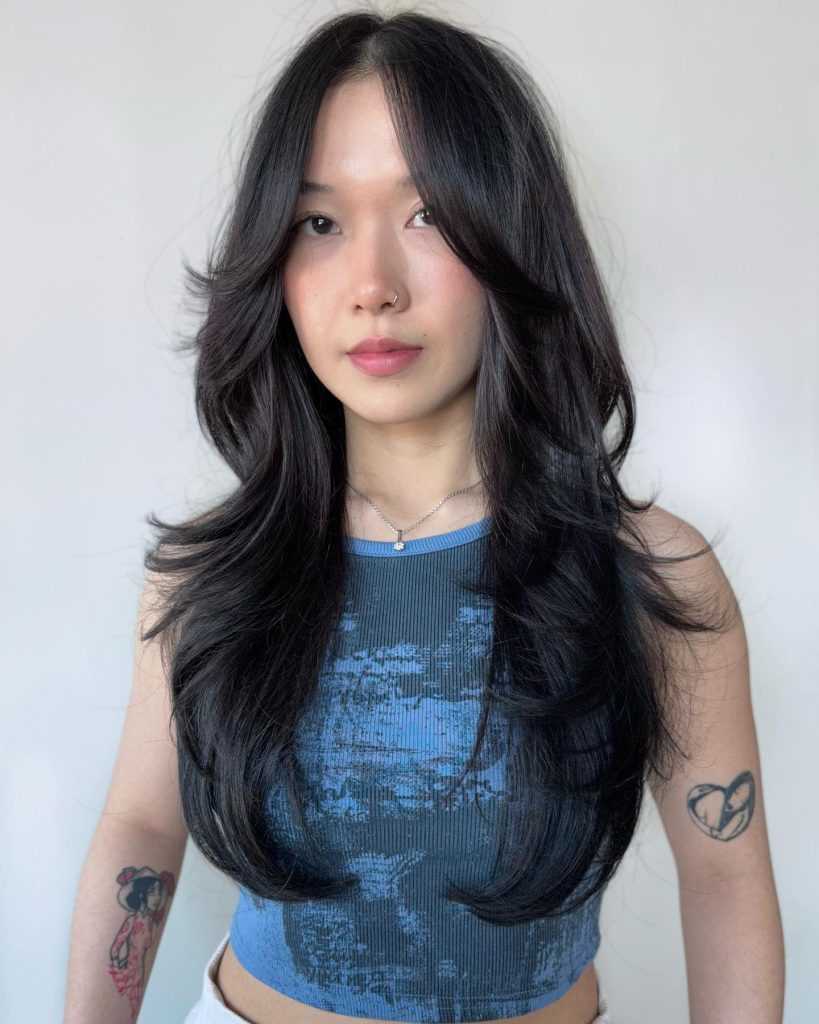
Photo credit by: hairydiary.com
A curtain fringe completes the wolf cut’s retro feel, parting in the middle and blending into the shaggy layers on each side. The texture throughout means the cut rarely looks over-styled, even straight from the salon. For the fuller picture, Fox Hair Color Ideas To Transform Your Look In 2026 is worth your time.
Thick, wavy hair is the natural partner for this cut — the layers remove bulk and the wave supplies the texture. Fine hair can wear it too, but the layers should stay longer to protect density.
24. Curly Shag for Medium Hair

Photo credit by: latest-hairstyles.com
A curly shag works with the curl pattern instead of against it, using layers to shape the volume rather than letting it build into a triangle. At medium length, the curls have room to spring up without losing the shape.
Curly cuts should be done on dry hair whenever possible, since wet curls shrink unpredictably. A curl cream scrunched in after washing defines the layers without weighing them down.
25. Rounded Curly Shag with Soft Volume
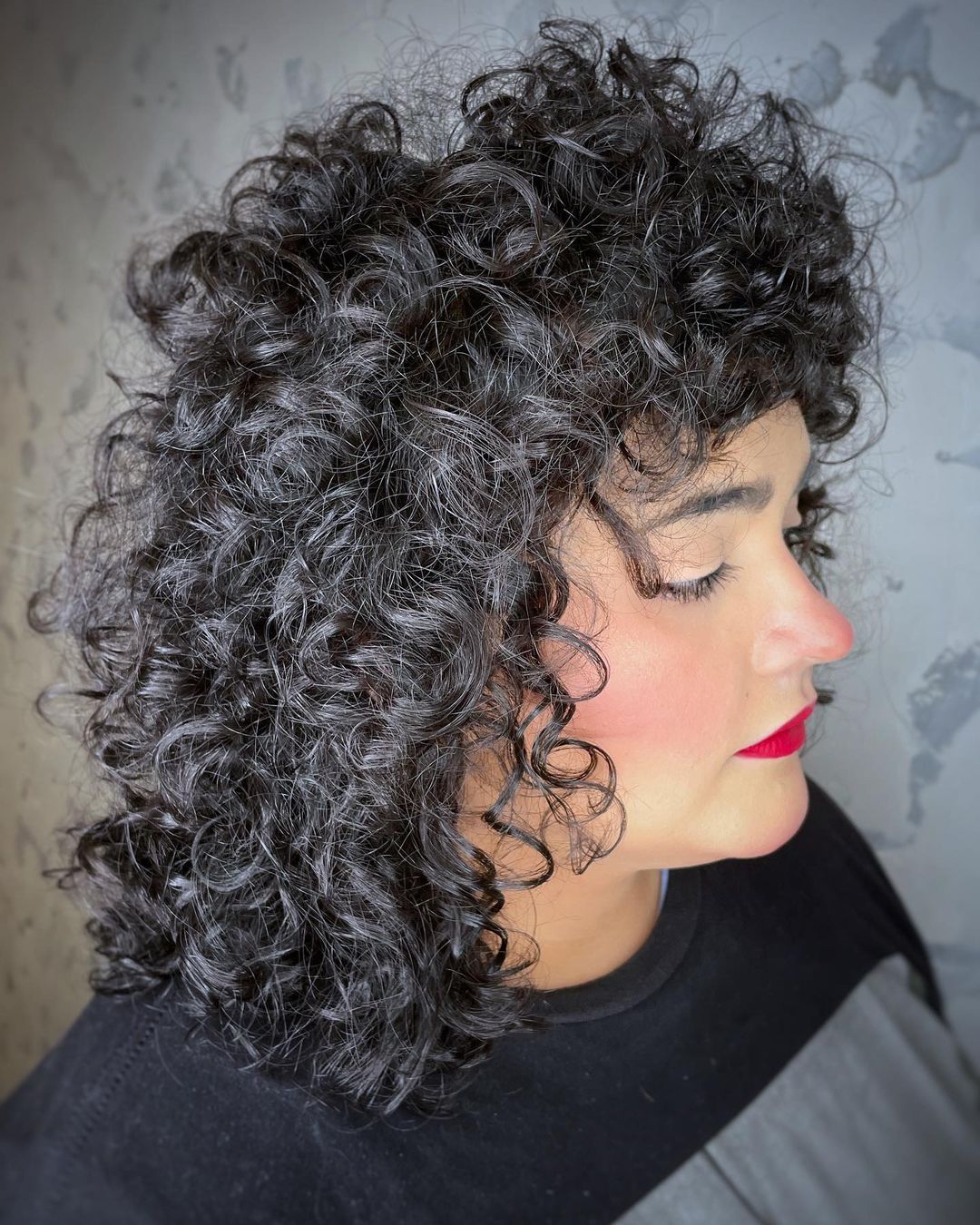
Photo credit by: hadviser.com
This rounded version of the curly shag keeps the silhouette soft and full rather than jagged. The layers are cut to encourage a round shape, so the volume sits evenly around the head instead of concentrating at the ends.
It suits medium to thick curly hair best. Diffusing on low heat preserves the round shape, while air-drying gives a looser, more relaxed version of the same cut.
26. Short Curly Shag with Defined Curls
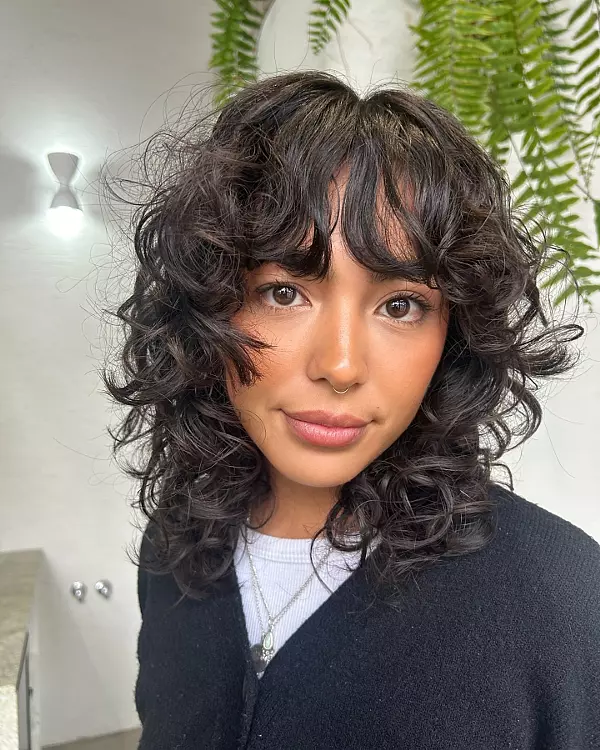
Photo credit by: fabbon.com
Shorter length plus shaggy layers gives curls definition they often lose in longer cuts. Each layer springs to a different length, so the curls separate into distinct, bouncy sections instead of merging into one mass.
The trade-off is shrinkage: short curly cuts can spring up several inches shorter than expected when dry. Discuss the dry length with the stylist before cutting, not after.
27. Layered Lob for Fine Hair
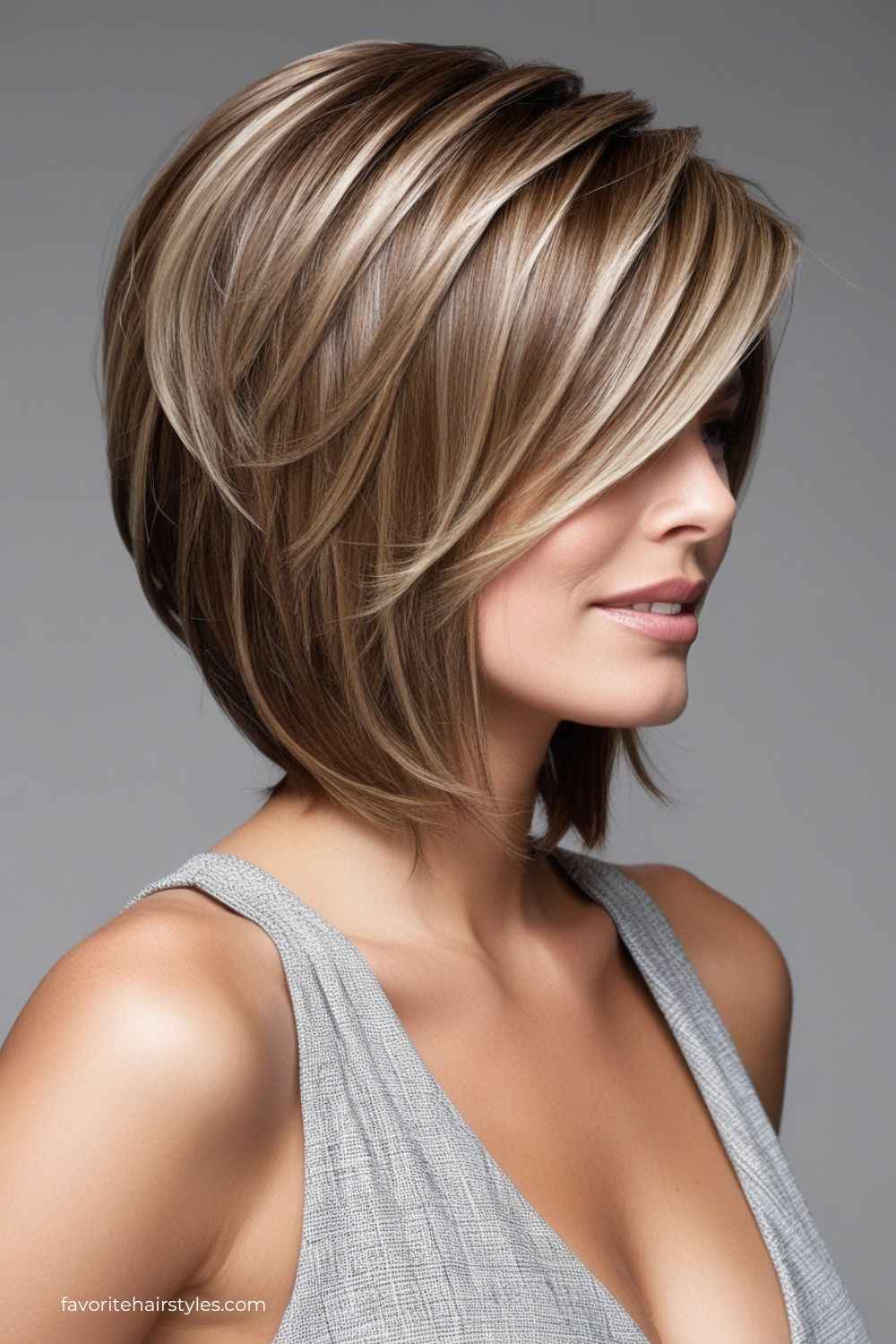
Photo credit by: favoritehairstyles.com
Long layers on a lob give fine hair movement without sacrificing the thickness at the ends. The key is restraint: a few long layers, not a cascade of short ones, so the baseline stays solid.
This is the safest medium cut for fine hair, and it styles easily with a round brush or a large-barrel iron. Avoid heavy thinning shears here — they remove exactly the density fine hair needs. Related reading: Stunning Plum Hair Ideas To Transform Your Look In 2026 takes the same concept further.
28. Layered Lob with Flowing Ends

Photo credit by: stylishhairideas.com
Flowing ends are what separate a layered lob from a blunt one: the layers graduate toward the bottom so the hair moves instead of swinging as a single sheet. The effect is soft and polished at once.
Medium-density, wavy hair shows this cut at its best, since the wave follows the graduation naturally. Straight hair can achieve the same flow with a blow-dry that flicks the ends slightly outward.
29. Textured Wavy Lob

Photo credit by: vexorna.com
Texture is the whole point of this lob: choppy, separated waves replace a smooth finish, giving the cut a casual energy that works for everyday wear. The waves are cut in through layering, then enhanced with a texture spray.
It is forgiving of second-day hair — in fact, slightly lived-in hair often shows the texture better than freshly washed hair. That makes it one of the lowest-effort medium cuts in this list.
30. Wavy Lob with Soft Texture
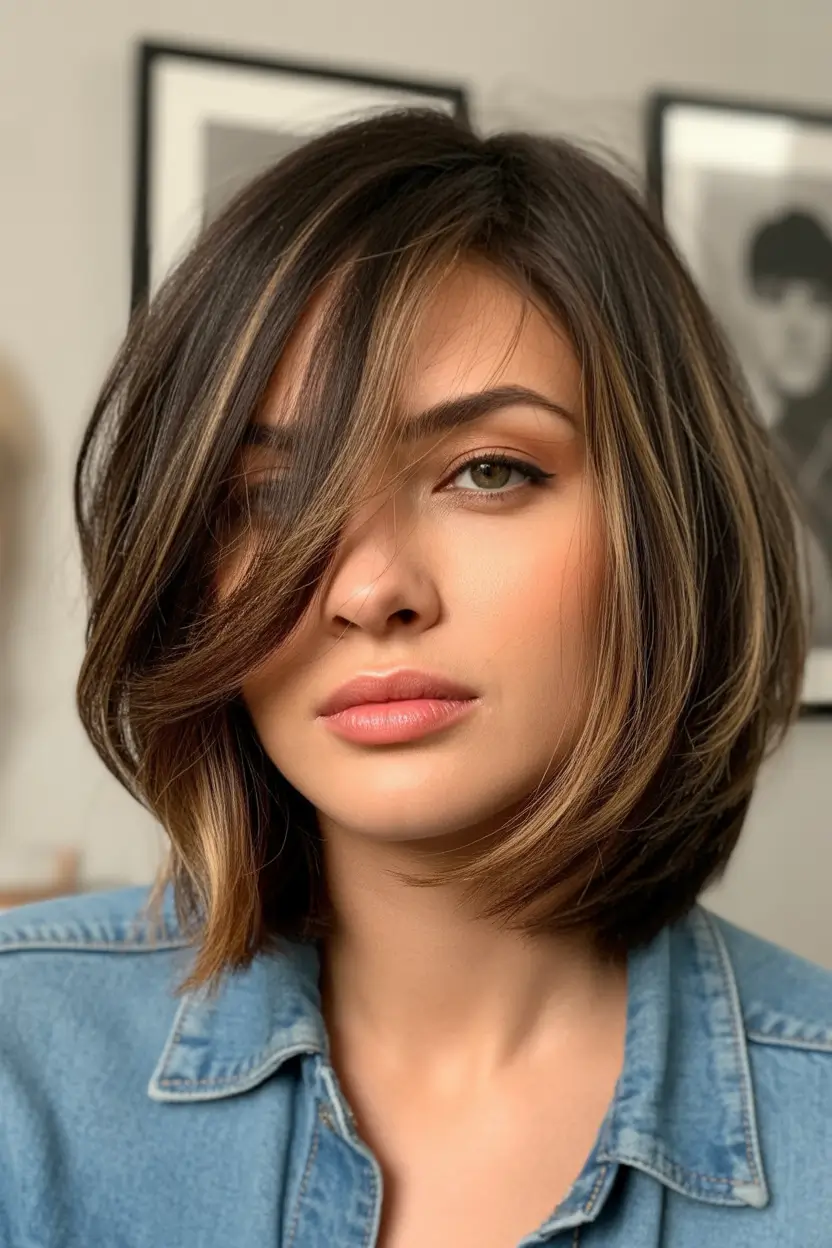
Photo credit by: vexorna.com
Where the previous lob goes bold with texture, this one keeps it soft: gentle waves and a lightly layered finish that reads polished rather than tousled. It is the wavy lob for anyone who prefers their texture subtle.
A large-barrel curling iron creates the wave, and a light-hold spray keeps it from dropping by evening. The soft finish also makes this lob office-friendly in a way the choppier versions are not.
31. Medium Hair with Long Curtain Bangs
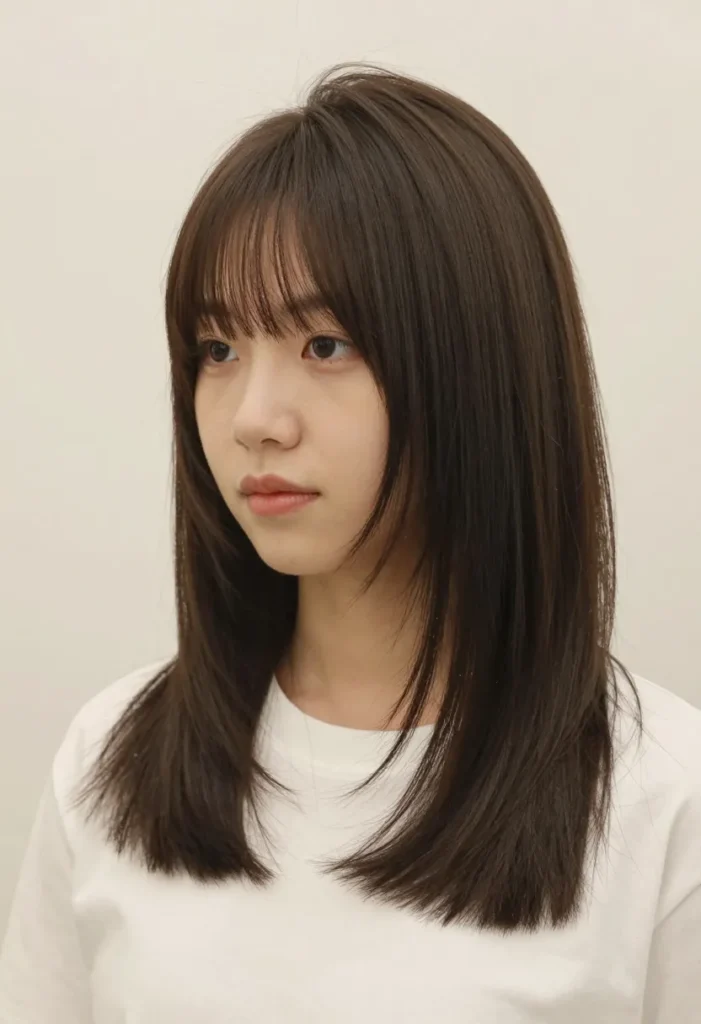
Photo credit by: cravelooks.com
Long curtain bangs are the lowest-risk way to change a medium cut without changing its length. They start at the cheekbones and blend into the rest of the hair, framing the face while leaving the overall shape intact.
Straight hair shows curtain bangs most cleanly, since the parting line stays visible. They grow out without drama — the bangs simply become face-framing layers — which makes them ideal for anyone hesitant about a fringe.
32. Long Straight Black Layered Cut with Bangs

Photo credit by: therighthairstyles.com
Long, straight black hair can look heavy without layers, and this cut solves that with long, subtle layering plus bangs. The layers start below the chin, so the length stays dramatic while the ends gain movement. If this look speaks to you, Must Try Hair Clip Hairstyles For 2026 continues the thread.
Black hair shows shine better than any other shade, which is why this cut looks so sleek — but it also shows split ends clearly, so regular trims every eight to ten weeks matter more here than on lighter hair.
33. Medium Golden Copper Lob
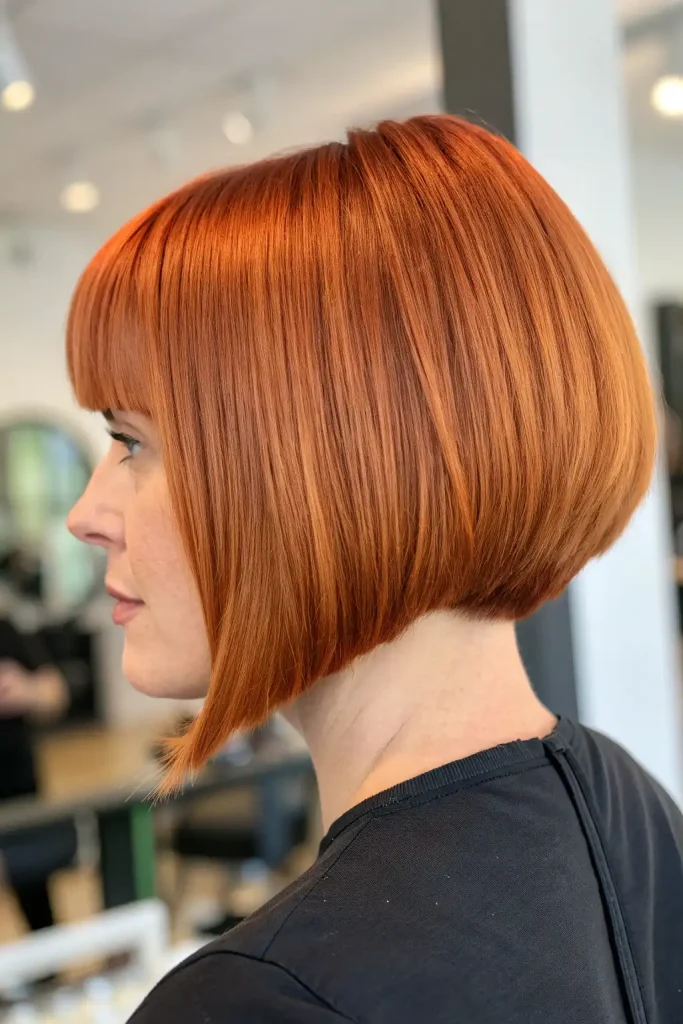
Photo credit by: herstylepulse.com
Golden copper warms up a medium lob instantly, catching light in a way that cooler shades cannot. The colour does much of the styling work: even a simple blow-dry looks finished when the shade has this much dimension.
Copper fades faster than most colours, so colour-safe shampoo and cooler wash water help it last. A gloss appointment between full colour sessions refreshes the tone without another round of dye.
34. Long Butterfly Cut with Face-Framing Layers and Blonde Contouring
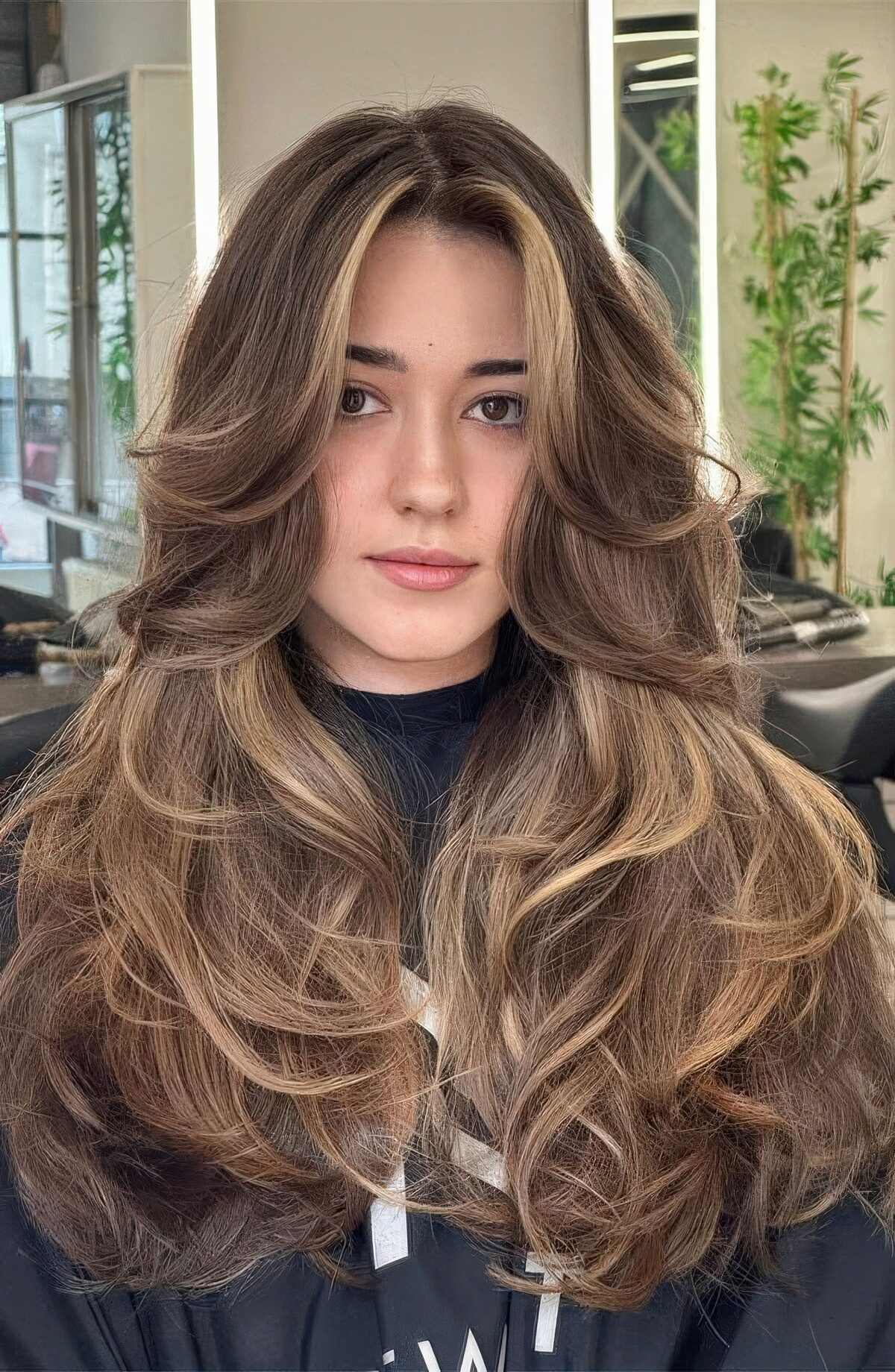
Photo credit by: styleoholic.com
The butterfly cut gets its name from its wing-like shape: short, face-framing layers on top that look like a short cut from the front, with long lengths preserved underneath. Delicate blonde contouring around the face highlights those shorter layers.
It is the best of both worlds for anyone who wants the look of short hair without losing length. The shorter top layers need a blow-dry with a round brush to show their shape, while the long back can be left to air-dry.
35. Long Butterfly Cut with Soft Textured Layers
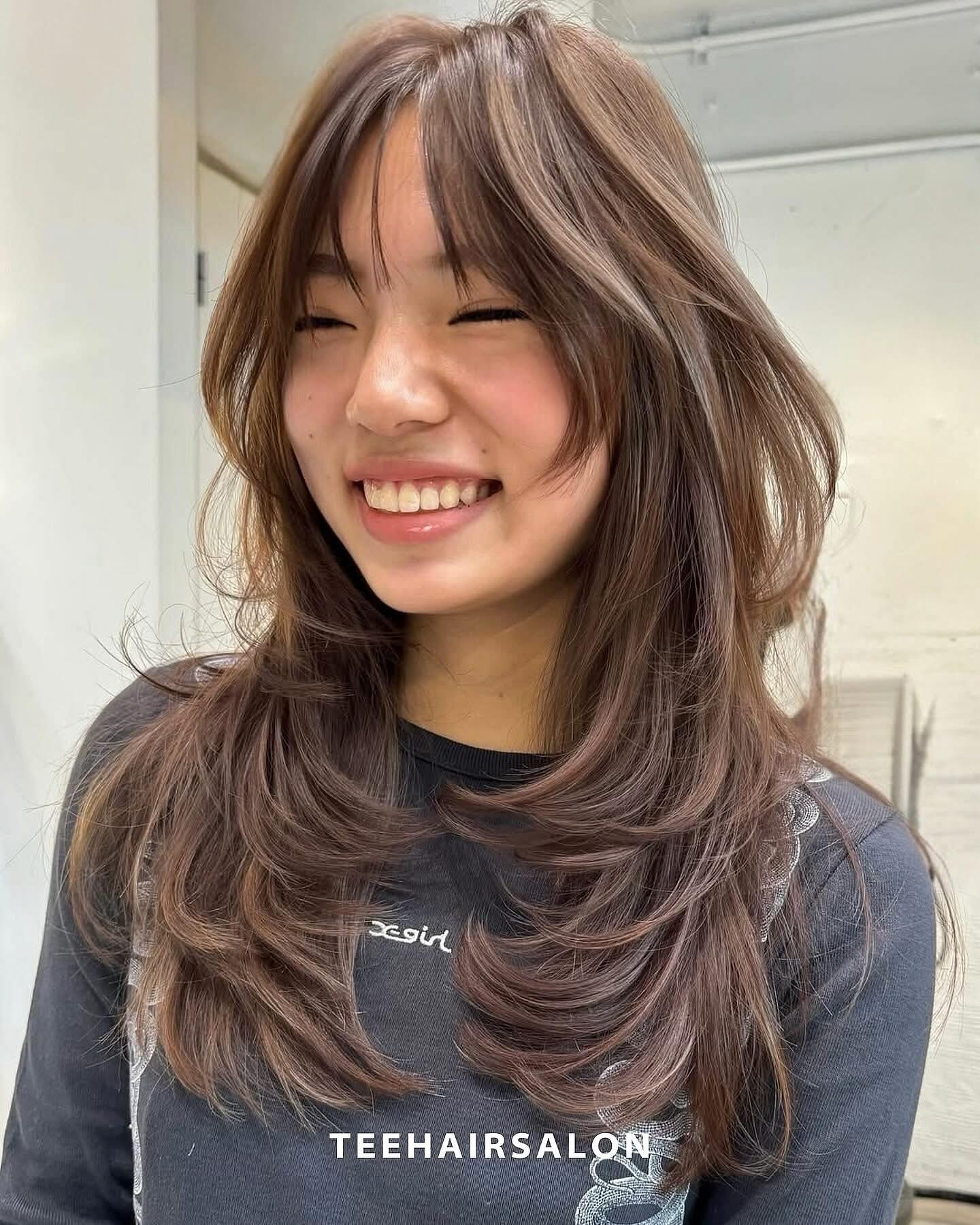
Photo credit by: latest-hairstyles.com
This softer butterfly cut skips the bold colour contrast and lets the layering speak for itself. The textured layers throughout give long hair bounce and movement that one-length hair rarely achieves on its own.
Long layers like these need a trim every ten to twelve weeks — less often than short cuts, but still regular, since split ends travel quickly through layered lengths. The payoff is hair that moves well whether it is worn down or half-up.
Choosing between these thirty-five cuts comes down to three honest questions: how much time will you spend styling each morning, how often will you return for trims, and does your hair’s natural texture support the shape or fight it. A cut that matches all three will look better with minimal effort than a trendier cut that needs daily rescue work. Take the photo of the version you like to your stylist, point out the length and the layers you want, and let the cut — not the styling routine — carry the look through 2027.
Hi, I’m Zoey Mitchell, the creator of ChicStyle Blog.
I share simple, wearable outfit ideas, hairstyles, nail trends, and beauty tips that feel natural and easy to recreate.
This blog is where I explore everything that makes a woman feel put together and confident every day. I’m not an expert — just a woman who genuinely loves style, mixing looks, and discovering what works.
If you love effortless fashion with a personal touch, you’ll feel at home here.