
There is a particular quality to hair that has been cut with intention rather than convention — a shape that reads as deliberate, a color choice that feels like it belongs to the person rather than to a season. Across these images, trendy haircuts for women over 50 surface not as a single silhouette but as a series of quiet, confident decisions about proportion, texture, and tone that let the wearer’s face and movement do the talking.
What makes a haircut work at this stage has less to do with following a universal template and more to do with understanding a handful of design variables. The images gathered here are best read through four lenses: proportion, meaning where volume sits relative to the face and shoulders; color placement, meaning how highlights, lowlights, or solid tones draw the eye; texture, meaning the interplay between smooth, waved, and layered movement; and silhouette, meaning the outer boundary the cut creates from every angle. Some of these cuts are long and flowing, others cropped close to the nape. Some lean into silver and ash, others into warm copper or deep brunette. The thread connecting them is a sense of consideration — nothing accidental, nothing defaulting to what is simply familiar. Each section below examines one image and one styling decision at a time, tracing why it functions visually and what principle a reader might carry forward into her own chair.
1. Warm Blonde Waves With a Deep Side Part
A woman stands near a decorated tree, her hair falling in large, loose waves that reach just past the shoulders. The color is a warm golden blonde with slightly darker roots visible at the crown, and the part sits deep to one side, sending more volume across the opposite temple. She wears a black knit sweater, and the overall frame is warm-toned and softly lit.
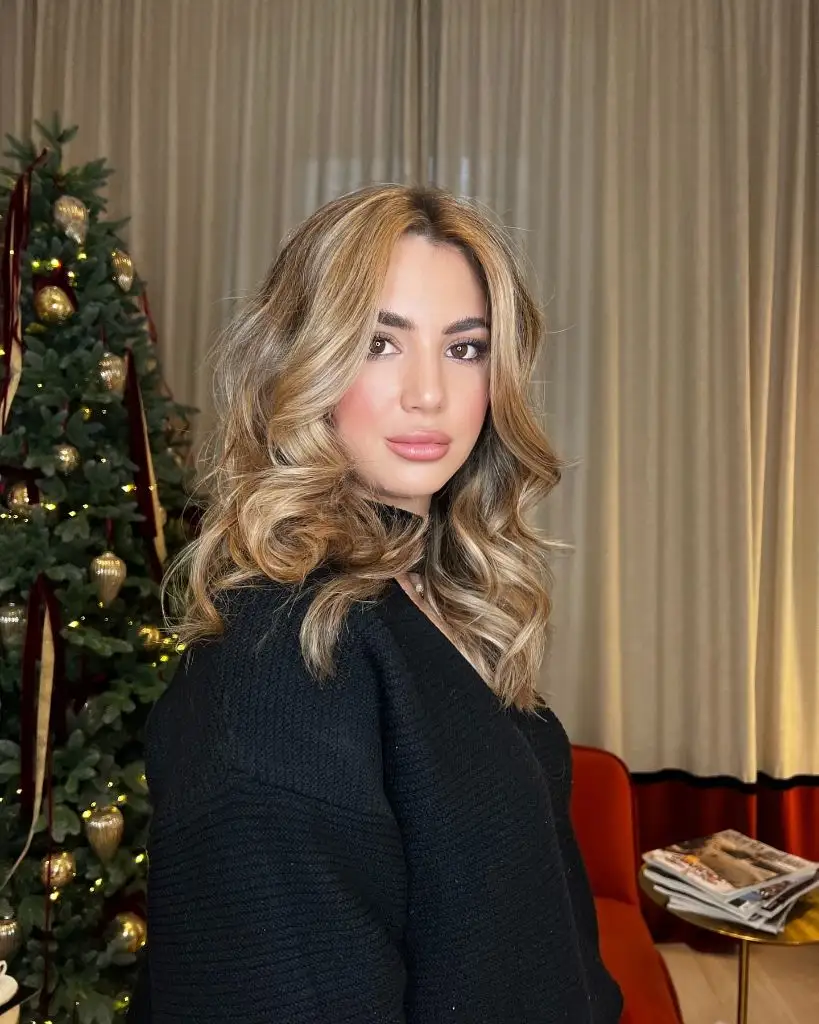
Photo via Instagram
The deep side part is doing most of the structural work here. By pushing the bulk of the hair to one side, it creates asymmetry that keeps the eye moving rather than settling into a static center frame. The warm blonde tones pick up the ambient light and create a tonal conversation with the golden ornaments in the background, while the darker roots add depth without sharpness. Volume lives in the mid-lengths rather than at the crown, which keeps the shape relaxed and grounded. The black sweater acts as a clean canvas, letting the hair color and movement remain the focal point without competition.
The reader takeaway is that a deep side part can restructure the entire proportion of a medium-length cut without changing its length or layers. When volume is directed laterally rather than distributed evenly, even familiar waves gain a sense of architecture that reads as intentional rather than styled by default.
2. Voluminous Brunette Curls With Honey Highlights
A woman smiles broadly, her hair a rich medium brunette threaded with warm honey-toned highlights that concentrate around the face and through the mid-lengths. The curls are large and bouncy, creating significant volume that extends outward from the temples and shoulders. The setting appears to be a salon, with hair products visible on shelves behind her, and she wears a black top.
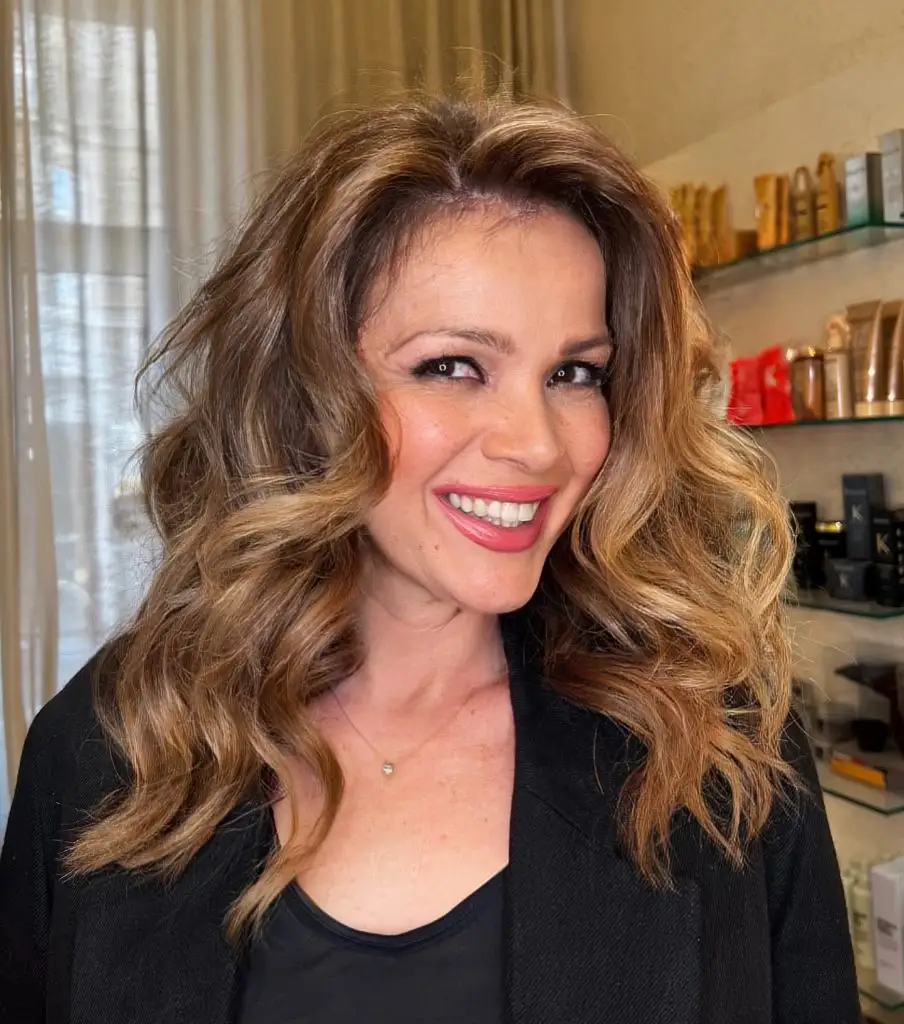
Photo via Instagram
What reads immediately is the sheer width of the silhouette — the curls expand outward generously, and rather than being tamed, that expansion feels like the entire point. The honey highlights are not scattered randomly; they sit where light would naturally catch, around the face frame and through the outer curve of the curls, which creates a sense of sun-touched dimension rather than artificial striping. The darker base at the roots and underneath grounds all that brightness, preventing the warmth from floating without an anchor. The proportional balance between face and hair is confident, with the width of the curls creating its own frame.
The useful move here is letting volume exist fully rather than fighting it into a narrower shape. When highlights are placed along the outer edges of large curls, they emphasize the movement and dimension that the texture naturally provides, making the cut look richer from every angle.
3. Copper Bob With Layered Side-Swept Bangs
The frame captures a woman from the nose down, her hair a vivid warm copper shade cut into a voluminous bob that sits just at chin level. Dramatic side-swept bangs cover one eye entirely, and the layers throughout create a rounded, lifted shape with feathered ends that curve away from the face. She wears a dark navy crewneck top, and behind her a scripted letter is partially visible on the wall.
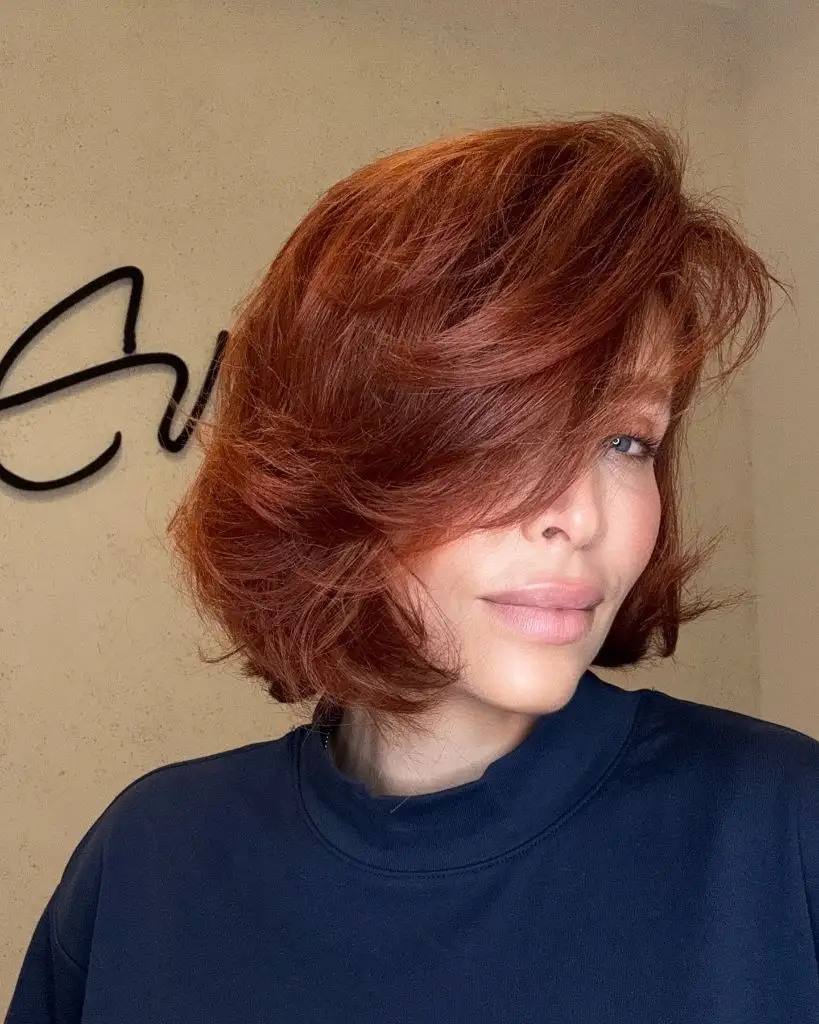
Photo via Instagram
The copper tone is striking not because of its brightness alone but because of how uniformly it carries through the entire shape, from root to tip. There is no visible gradient or balayage here — the single-process richness allows the layers and texture to create all the visual complexity. The side-swept bangs introduce a diagonal line across the face that sharpens the overall composition, while the feathered ends at the jawline soften it again. The dark navy top functions as a cool-toned counterpoint, making the warm copper read even more saturated. Volume sits highest at the crown and temples, creating a rounded silhouette that reads as both structured and organic.
The strongest lesson is that a single bold color, applied evenly, can carry a layered cut without needing tonal variation. When the cut itself provides enough texture and movement, color restraint becomes its own form of confidence.
4. Rich Auburn Layers With Curled Ends
Seen from behind, this mid-length cut falls to just below the shoulders in defined, bouncy layers. The color is a deep auburn copper with warm golden undertones catching the light through the mid-lengths. The ends are curled inward and outward in alternating directions, creating a cascading, almost sculpted shape. The person wears a dark top, and the background shows a window with a soft evening sky.
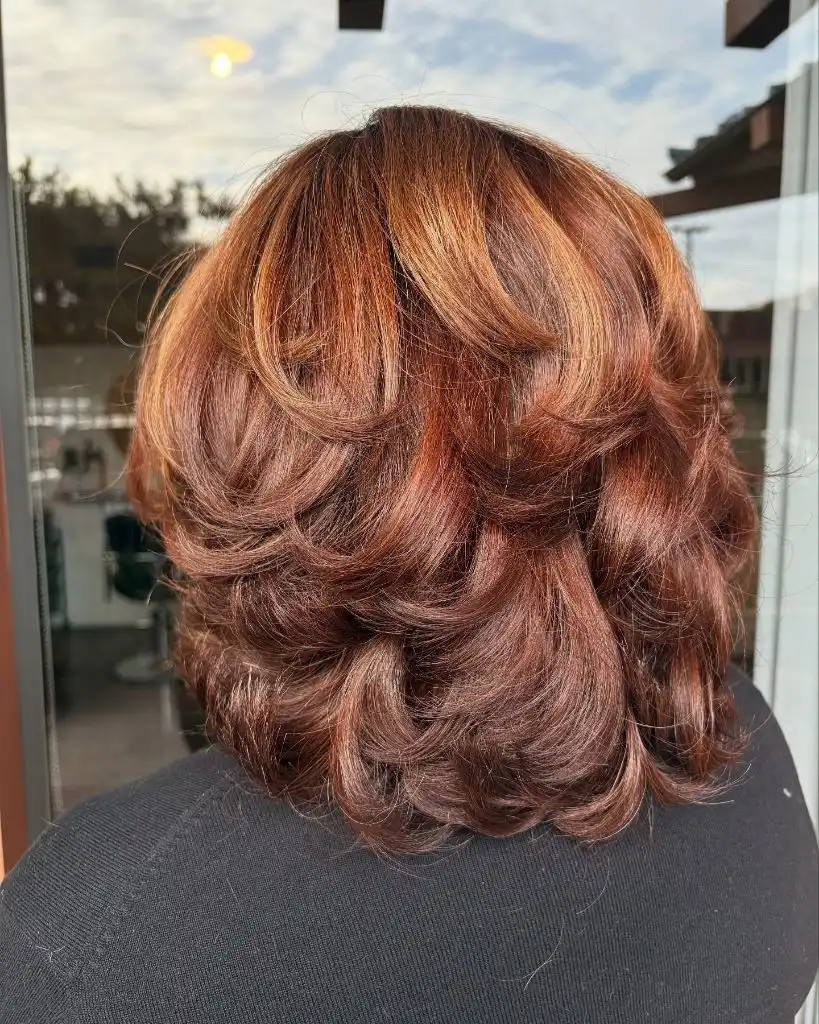
Photo via Instagram
The back view reveals how layering creates its own rhythm when the ends are styled with intention. Each layer curls at a slightly different point, which produces a staggered, dimensional cascade rather than a single uniform flip. The auburn color shifts between deeper reddish-brown in the under-layers and brighter copper where the light hits the outer curves, giving the hair a quality that reads almost metallic. There is no visible parting from this angle, so the shape functions as a complete, self-contained form — rounded at the crown, widening through the mid-back, and narrowing again as the lowest curls taper inward.
What stands out most is the deliberate alternation of curl direction. Mixing inward and outward curves in layered hair prevents the ends from merging into a single line, and that variation is what gives a mid-length cut genuine movement rather than a blow-dried sameness.
5. Dark Brunette Cascading Layers With Subtle Warmth
Photographed from behind in what appears to be a salon, this long hair falls well past the shoulders in heavy, swooping layers. The color is a deep, nearly black brunette with the faintest hints of warm brown catching light at the very ends and along the outermost curves. The person wears a black-and-white striped sweater, and the salon background includes mirrors and recessed lighting.
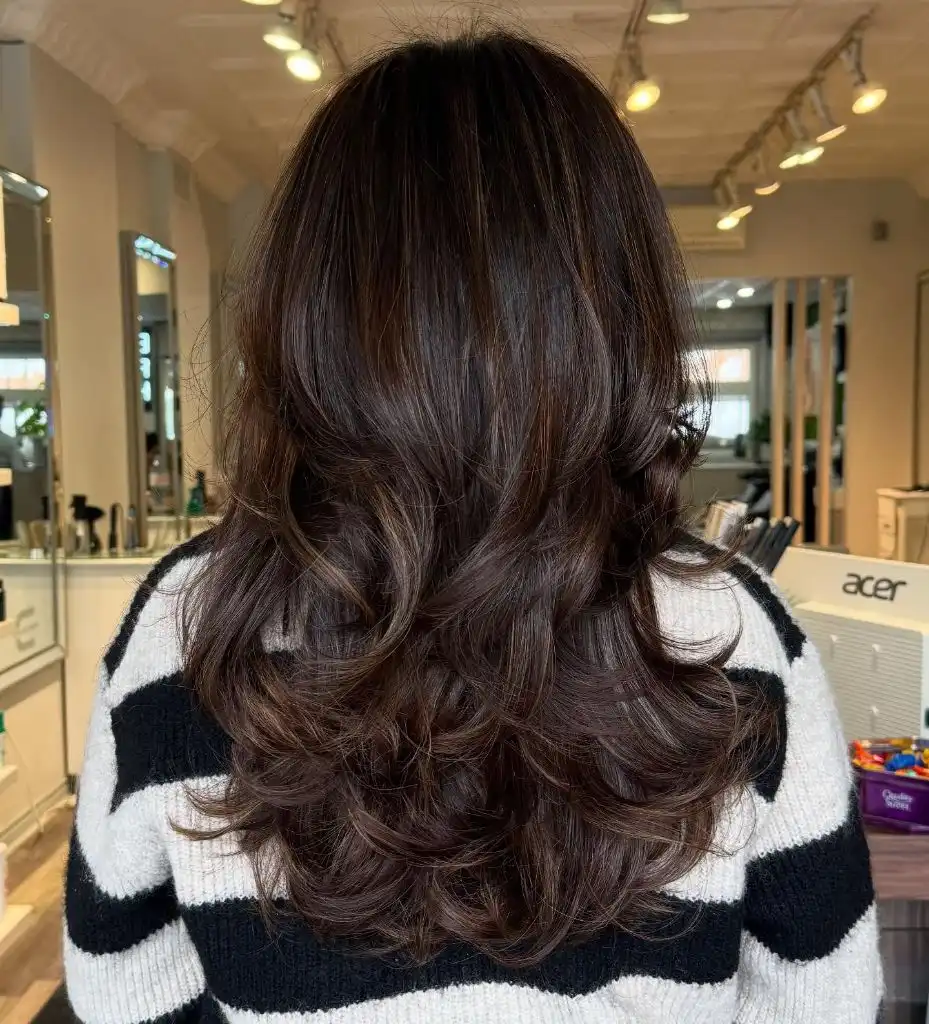
Photo via Instagram
The near-monochromatic color palette here is what gives the layering its clarity. Because the hair is so uniformly dark, every curve and layer reads as a sculptural line rather than a color shift. The warmth at the tips is barely there — it could be natural lightening or the salon light itself — but that tiny tonal break is enough to signal where each layer ends and the next begins. The striped sweater introduces a horizontal rhythm that contrasts with the vertical fall of the hair, and that interplay of directions keeps the image from feeling static. The overall impression is one of weight and density managed through strategic cutting rather than thinning.
The best move here is recognizing that dark, single-tone hair relies entirely on the cut’s architecture for visual interest. Layers in very dark hair need to be pronounced enough to cast their own shadows, which is where dimension comes from when color is not doing that work.
6. Brunette Layered Midsection With Soft Curled Ends
Also taken from behind and in the same salon setting, this image shows mid-length hair in a medium-dark brown tone. The layers are concentrated through the lower half, curling outward in soft, rounded formations. The upper portion of the hair appears smoother and less layered, with visible movement beginning around ear level. The same striped sweater appears, and a box of sweets sits in the background.
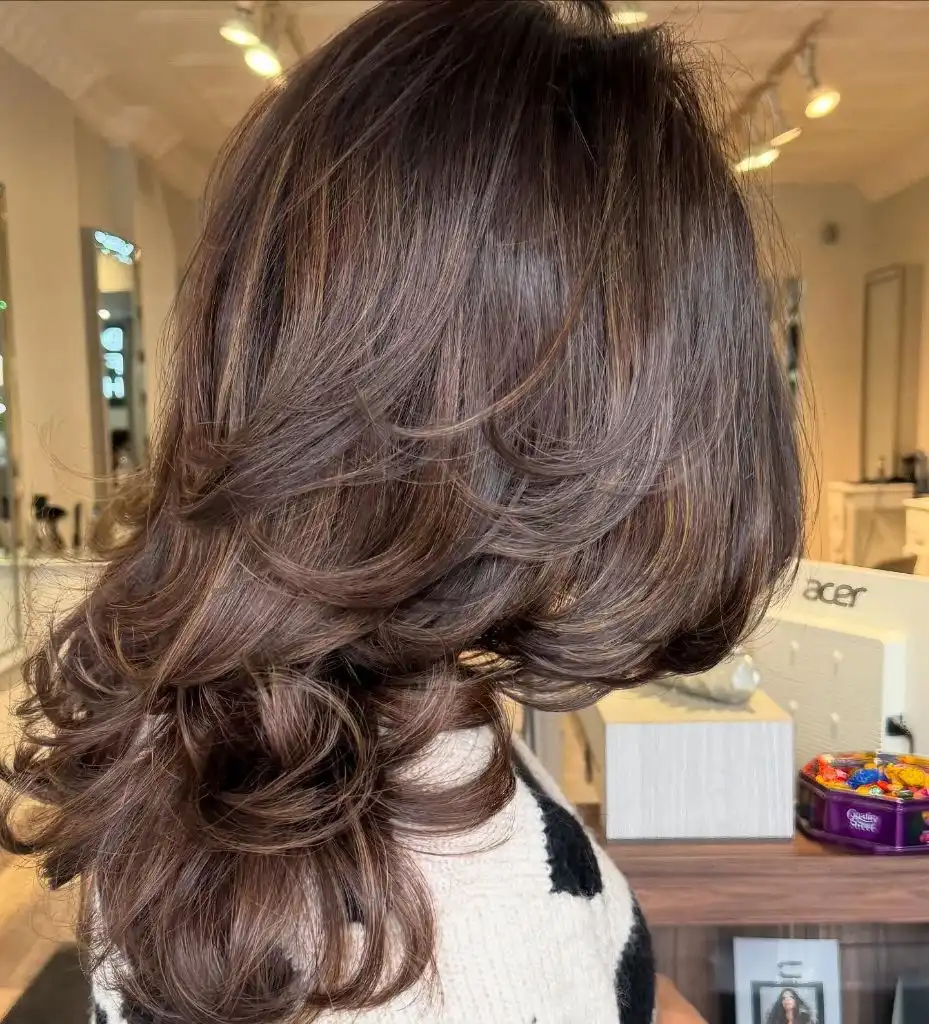
Photo via Instagram
This back view shows a different approach to the same layering principle — here, the upper section is kept relatively flat and smooth, with all the volumetric action happening from the mid-lengths down. That concentration of movement in the lower zone creates a shape that reads almost like a bell, wider at the bottom and sleek at the crown. The color is slightly lighter than the previous image, a milk-chocolate brown with subtle natural variation that appears to come from the hair itself rather than from processing. I like how the curl pattern at the very bottom creates distinct ringlet-like formations that contrast with the smoother flow above, giving the eye a place to land.
The useful idea is that placing all visible texture and movement in the lower half of the hair can create a clean, intentional silhouette. Restraint at the crown gives the styled ends more impact, and that contrast between zones is itself a styling decision.
7. Long Textured Brunette With Center-Parted Waves
A woman faces the camera, smiling, with long dark brown hair that falls past her chest in loose, natural-looking waves. The center part is visible, and the hair has a slightly undone, textured quality with fine lighter strands woven through the mid-lengths. She wears a dark top, and the blurred background suggests a salon with product shelves.
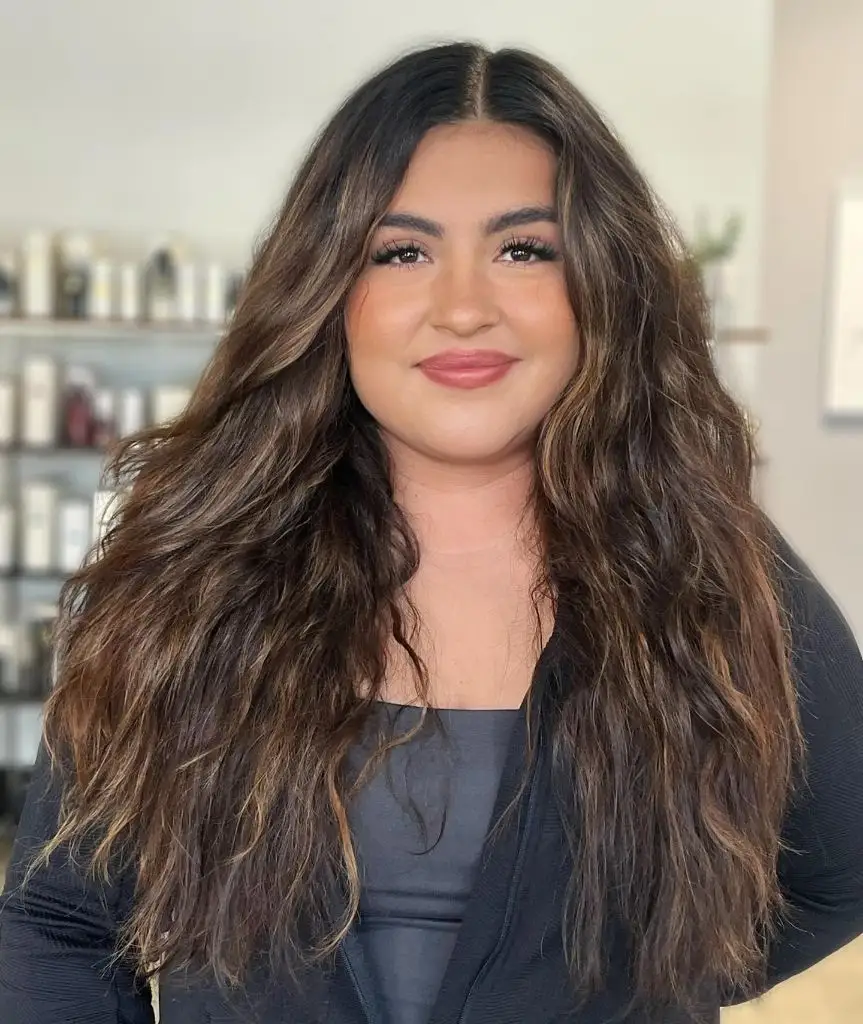
Photo via Instagram
The center part creates immediate symmetry, but the wave pattern itself is deliberately imperfect, which prevents the look from feeling rigid. Some sections bend more tightly than others, and the lighter threads through the lengths read as natural variation rather than placed highlights, giving the whole shape a lived-in quality. The length is substantial — well past the collarbone — and the weight of the hair pulls the waves into elongated S-shapes rather than tight curls. The dark top and the slightly out-of-focus background keep the focus entirely on the hair’s texture and movement, with no visual competition from clothing or setting.
The reader takeaway is that long hair over 50 functions best when texture does the talking rather than precise curl definition. That slightly undone, varied wave pattern creates the sense that the hair has natural movement, and a center part reinforces balance without imposing too much structure.
8. Ash-Toned Straight Hair With Natural Silver Integration
A stylist’s hand holds a section of hair from behind, displaying its length and color. The hair is straight, fine-textured, and falls just past the shoulders. The color is a cool ash tone — a blend of natural silver and light brown that reads as an intentional transition rather than simple grow-out. The person wears a black top, and the salon background is softly blurred.
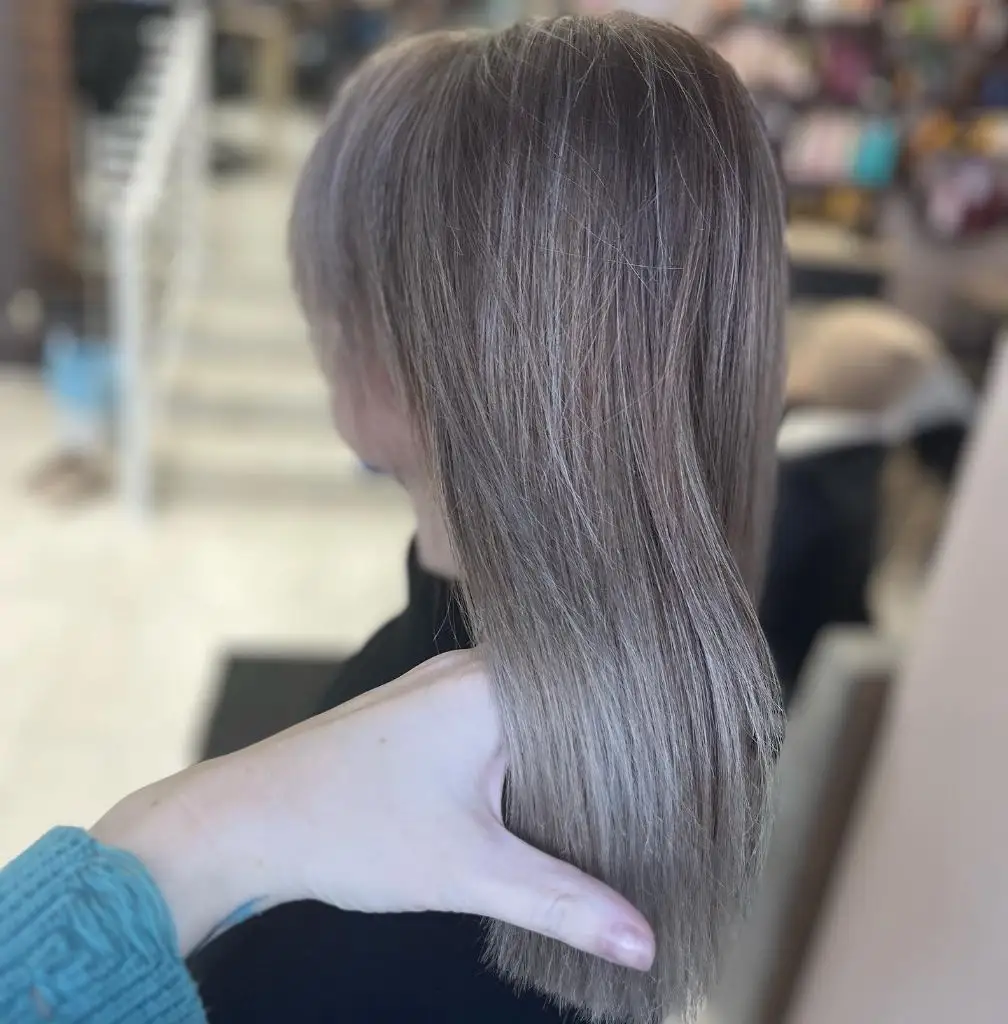
Photo via Instagram
What registers here is the color’s in-between quality — neither fully silver nor fully brown, but a considered midpoint that reads as a tonal choice rather than a maintenance gap. The straightness of the hair allows the color gradient to show clearly, from slightly darker roots through a silvered mid-shaft to ashy ends. There is no layering visible, and the blunt ends create a clean, definitive bottom line that gives the fine texture more visual weight than it would have with wispy, tapered ends. The stylist’s hand draws attention to the hair’s surface quality, which appears smooth and well-conditioned with a subtle natural sheen.
The strongest lesson is that embracing the natural silver-to-brown transition as a color choice, rather than something to correct, can create a tonal range that feels modern and specific. A blunt cut amplifies that decision by keeping the color story uninterrupted to the very last inch.
9. Silver-Toned Layered Bob With Long Curtain Fringe
A woman looks downward, her face mostly hidden by a long curtain fringe that falls past her nose. The hair is a cool silver-ash tone, cut into a layered bob that reaches just below the chin. The fringe is straight and center-parted, while the sides show slight texture and layering. She wears a black turtleneck, and the salon setting is visible but blurred.
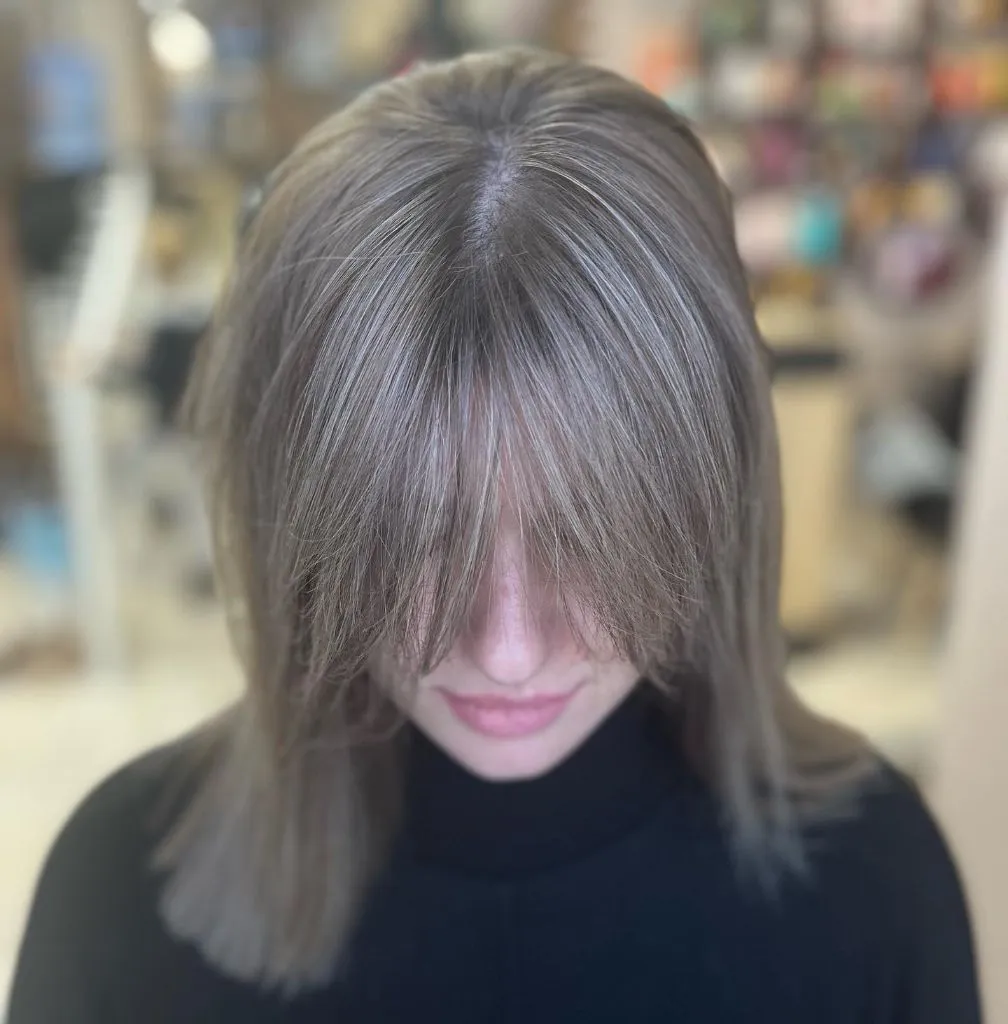
Photo via Instagram
The long fringe transforms the entire architecture of this bob. Rather than framing the face conventionally, it creates a veil effect that makes the hairstyle itself the central visual subject, drawing the eye to the color and texture rather than the wearer’s features. The silver tone is remarkably even throughout, with only the faintest warm undertone visible near the roots, suggesting a skilled toning process. The layers in the sides add just enough movement to prevent the straight fringe from making the overall shape feel too geometric. The black turtleneck creates a stark, clean edge against which the silvered hair stands out with maximum contrast.
The useful move here is understanding that a dramatic fringe can redefine a haircut’s entire personality. On a silver bob, long face-framing layers that nearly obscure the eyes shift the emphasis from shape to color and surface, creating a more editorial quality that still functions in daily life.
10. Platinum Pixie With Textured Crown
Seen from behind and slightly to the side, this short pixie cut shows closely tapered sides and nape with longer, textured pieces through the crown. The color is a light platinum blonde, almost white, with the slightest warm undertone at the roots. The person sits in a salon chair with a white cape, and a small hoop earring is visible.
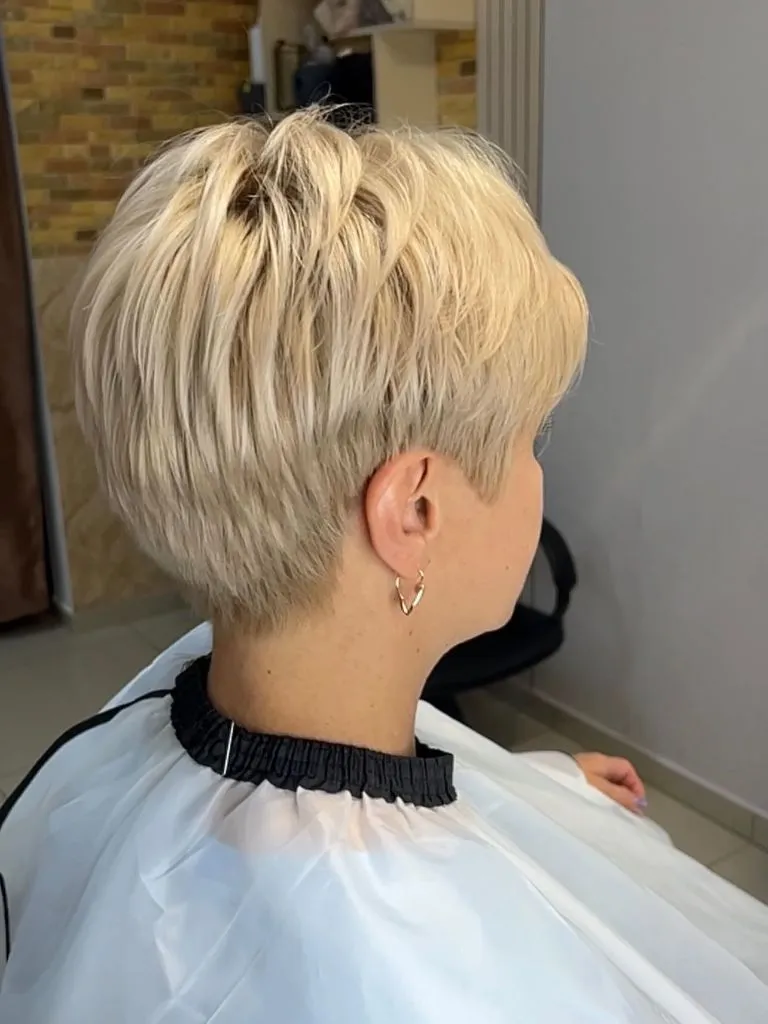
Photo via Instagram
The contrast between the close-cropped nape and the longer, slightly tousled crown creates a sense of architectural intention in a very small amount of hair. The platinum color removes any distraction — there is no tonal variation to interpret, so the eye focuses entirely on the cut’s structure, the way the longer pieces sit forward and upward while the sides taper cleanly against the head. The earring introduces the only curve in an otherwise angular composition. For trendy haircuts for women over 50, this kind of precision cut communicates confidence through reduction rather than addition, letting the shape of the head itself become part of the design.
What stands out most is the power of a pixie cut that commits fully to short length at the sides while maintaining textural interest on top. That single zone of movement is enough to prevent the cut from reading as uniform, and the platinum color ensures it carries visual weight despite its brevity.
11. Silver-Blonde Bob With Blunt Ends
A back view shows a chin-length bob in silver-blonde tones, cut with a perfectly blunt bottom line. The hair is straight and smooth, with a slight natural variation between ashier and warmer strands creating a dimensional effect. The person wears a black crewneck top, and the background appears to be a warmly lit room with a decorative mural.
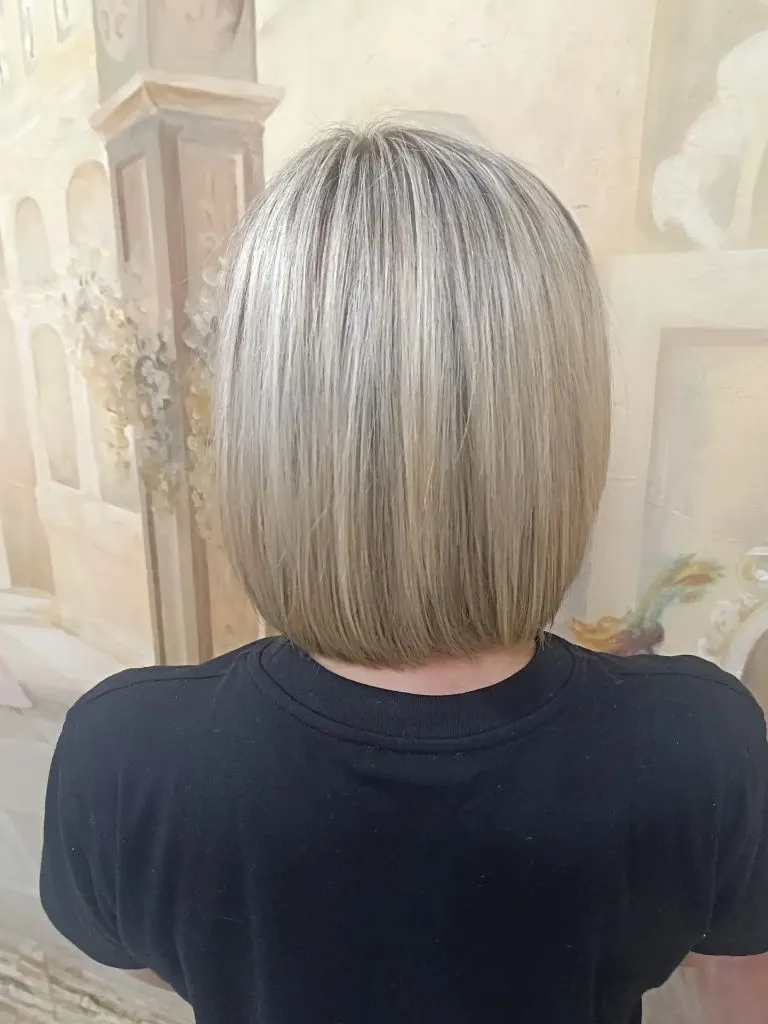
Photo via Instagram
The blunt line at the bottom is the defining gesture of this cut. There is no graduation, no tapering, no texturizing at the ends — just a clean, horizontal edge that gives the fine hair a sense of density and completeness it might not have with a softer finish. The silver-blonde color has a natural quality to it, with strands that range from cool ash to pale champagne, suggesting this may be natural gray that has been toned rather than fully colored. The straight texture allows every strand to participate in that blunt line, and the result is a silhouette that reads as both minimal and decisive. The dark top below creates a strong horizontal border that echoes the cut’s own geometry.
The beauty of this is its commitment to simplicity. A blunt bob in natural silver tones makes a quiet but unmistakable statement that no layering or texturizing could replicate — the precision of the line itself becomes the style.
12. Dark Brunette Graduated Bob With Clean Nape
A back view reveals a short graduated bob in very dark, nearly black brunette. The hair is cut close at the nape with visible graduation upward, creating a stacked, rounded shape at the back of the head. The ends are blunt and the surface is smooth with a faint natural sheen. The person wears a dark top, and the background is a plain light wall.
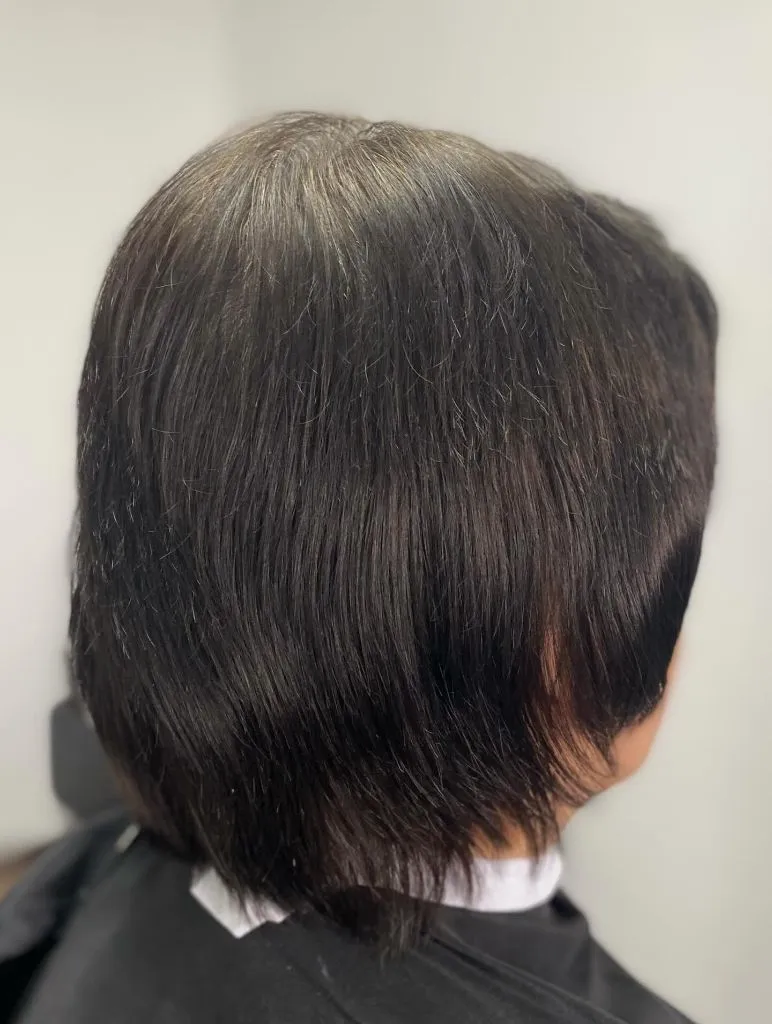
Photo via Instagram
The graduation here is subtle but consequential — the hair is shortest at the nape and longest toward the crown, creating a gentle outward curve that gives the back of the head a rounded, sculptural profile. The dark color makes this shape legible through shadows rather than color shifts, with the deepest shadow sitting right at the nape where the hair is most compact. The blunt ends throughout maintain the cut’s structural integrity and prevent any wisping or feathering that might soften its geometry. Without any visible styling product or curl, the natural fall of the hair follows the graduation faithfully, suggesting a cut that holds its shape with minimal daily effort.
The reader takeaway is that a graduated bob in a single dark tone creates dimension through shape alone. The stacking at the nape is an architectural choice that gives even straight, fine hair a three-dimensional quality from behind, and that back profile matters as much as the front.
13. Sleek Angled Lob With Warm Brunette Fade
A side profile shows a woman in a salon chair wearing a patterned haircutting cape. Her hair is a sleek, straight lob cut at a visible angle — shorter at the back and longer toward the front, reaching just past the chin. The color is a medium-dark brunette that lightens slightly toward warm chestnut at the very ends. The surface is glass-smooth with strong natural shine.
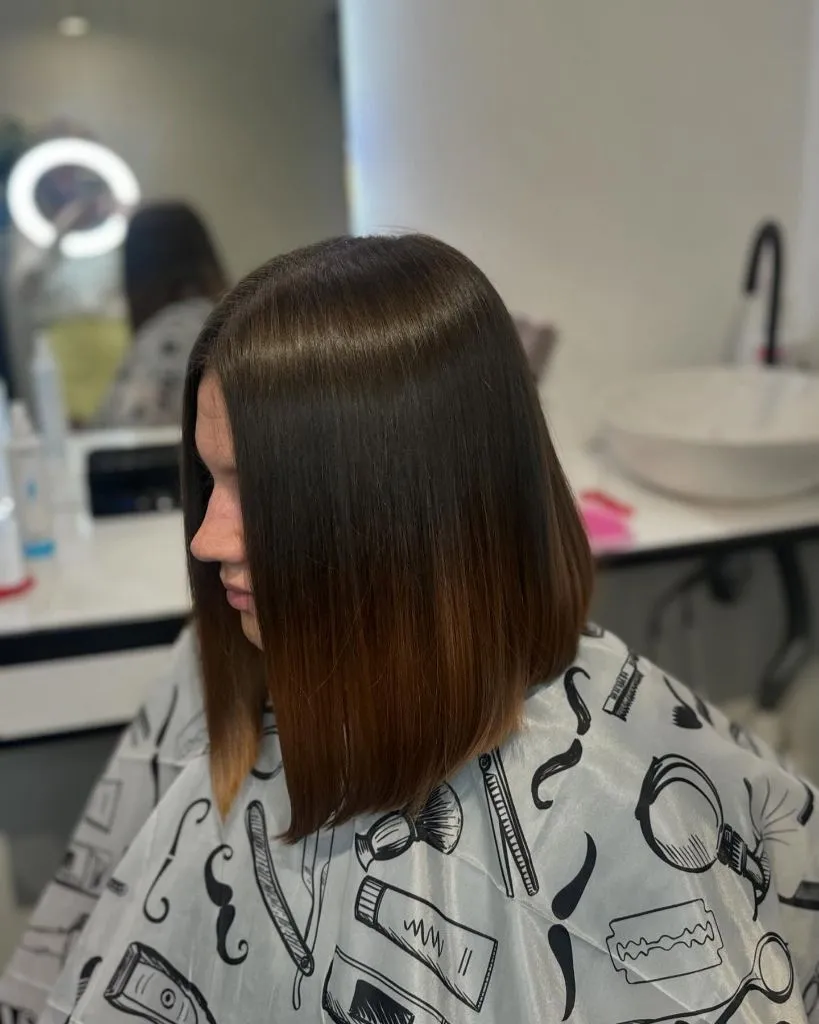
Photo via Instagram
The angle of this cut is its primary design element — the diagonal line from nape to chin creates forward momentum that draws the eye along the jaw. The smoothness of the finish amplifies that angle by eliminating any textural interruption; every strand lies perfectly flat, which makes the geometry unmistakable. The subtle warm shift at the ends could be intentional color placement or natural lightening, but either way it creates just enough tonal break to mark where the cut terminates. The patterned cape introduces the only visual noise in the frame, which makes the hair’s clean lines feel even more controlled by comparison.
The useful idea is that an angled lob gets its power from smoothness. When the surface is perfectly sleek, the diagonal line of the cut reads as a deliberate architectural decision, and even a minimal color shift at the tips reinforces that directionality.
14. Rose-Brown Bob With Uniform Tone
A back view displays a bob that falls just to the lower nape, cut in a slightly rounded, one-length shape. The color is a soft rose-brown — a cool-leaning medium brown with a subtle pink or mauve cast that is most visible in the light hitting the mid-shaft. The texture is straight and smooth, with the ends curving very gently inward. The person wears a light gray top.
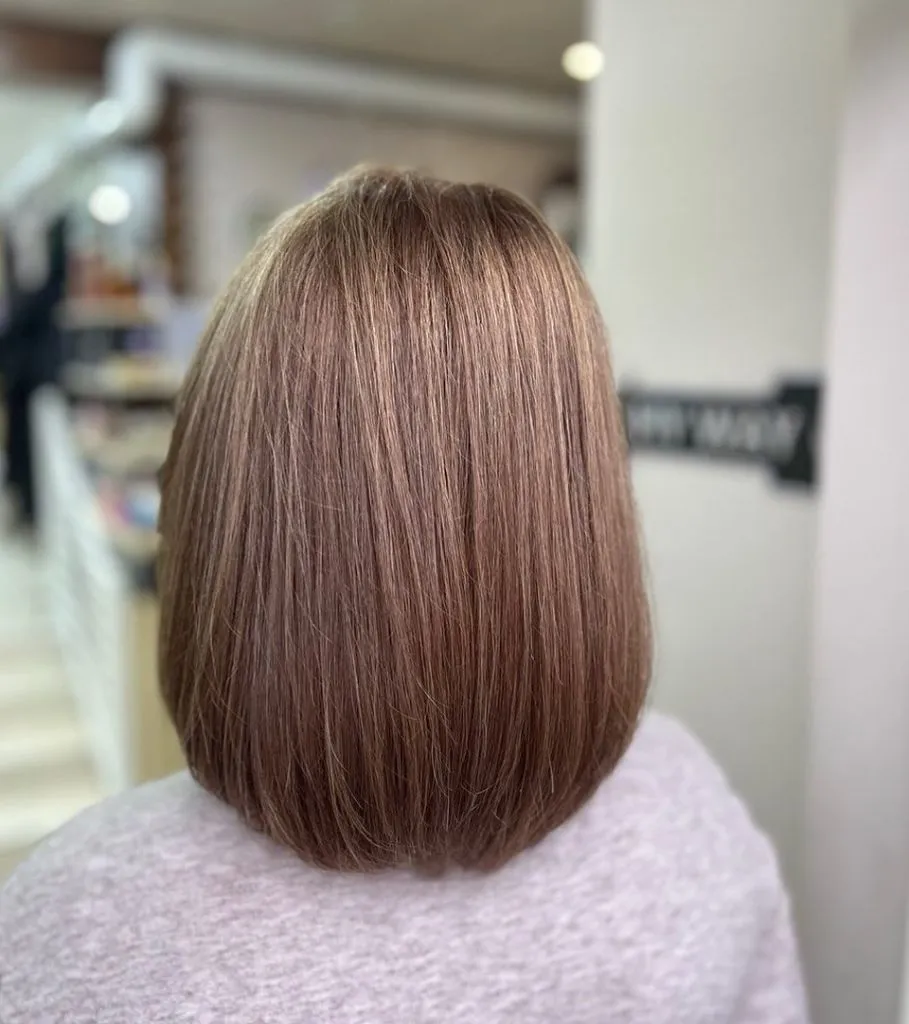
Photo via Instagram
The color here is unusual and specific — neither warm brunette nor cool ash, it sits in a rose-toned middle ground that gives the hair an almost dusty quality. That tonal specificity is what makes the simple, one-length cut feel considered rather than basic. The gentle inward curve of the ends is the only shape variation, and it creates a soft parenthetical around the nape that closes the silhouette neatly. The gray top below is close enough in tonal temperature to avoid contrast, which lets the rose-brown tone read quietly rather than being pushed forward by a competing color. The result is a monochromatic softness that feels deliberate and calm.
The strongest lesson is that an uncommon color tone can transform even the simplest cut into something distinctive. A rose-brown shade occupies a space that most people walk past on the color wheel, and that specificity alone creates visual interest that layers or highlights would otherwise need to provide.
15. Sandy Blonde Textured Crop With Natural Movement
A close back view shows a short crop in sandy blonde tones with visible natural texture and slight wave. The cut is layered throughout, with the longest pieces sitting at the crown and shorter layers graduating toward the nape. The color blends warm blonde highlights with a darker honey base, and the overall impression is natural and low-maintenance. The person wears a dark collar.
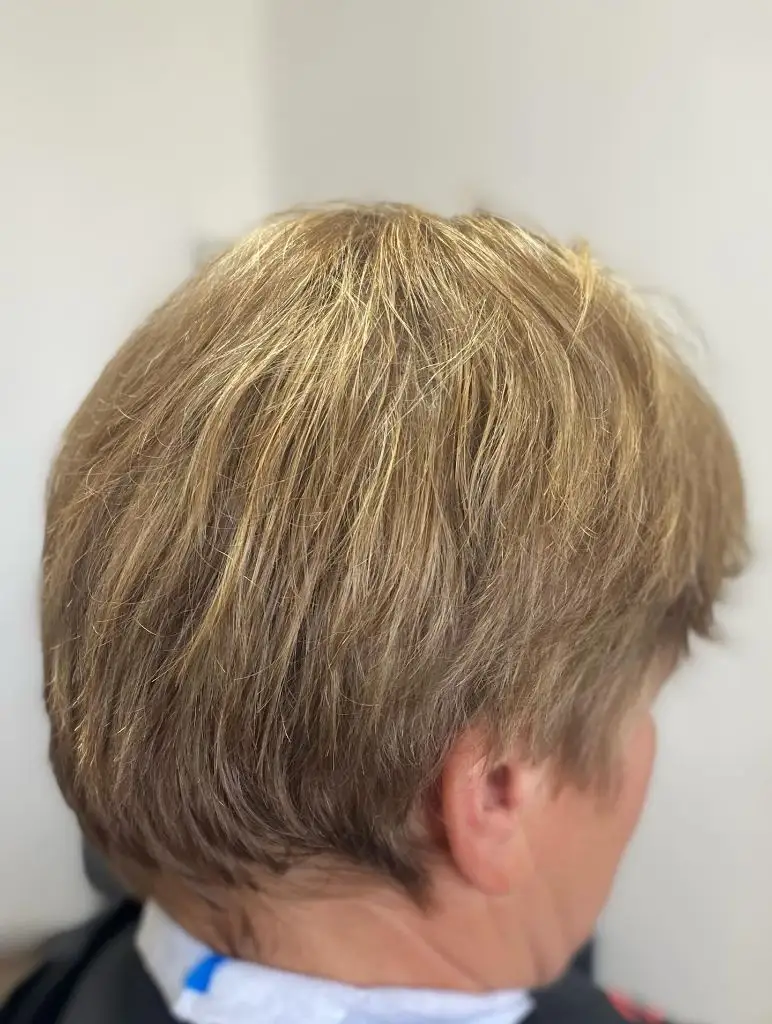
Photo via Instagram
The natural quality of this cut is its defining characteristic — nothing about it reads as aggressively styled or precision-engineered. The sandy blonde tones blend together in a way that suggests sun exposure rather than foil work, and the slight wave in the texture gives the short layers enough movement to keep the shape from looking flat or helmet-like. The graduation from crown to nape is gentle, avoiding the sharp contrast of an undercut while still keeping the lower sections tidy and close to the head. There is a pleasant randomness to how the pieces fall, each layer moving slightly independently.
The best move here is letting a short cut exist in its natural texture rather than smoothing or defining it aggressively. When the color and the wave pattern both read as organic, a short crop gains a softness that makes it approachable rather than severe, which shifts the entire feeling of the style.
16. Silver Hair With Shoulder-Length Natural Movement
A woman takes a selfie from inside a car, sunlight catching her silver-gray hair as it falls just past her shoulders with a natural wave. The color is a true silver with slightly darker roots and a few warmer strands woven through. She wears a dark top with a delicate chain necklace, and the background shows green trees through the car window.
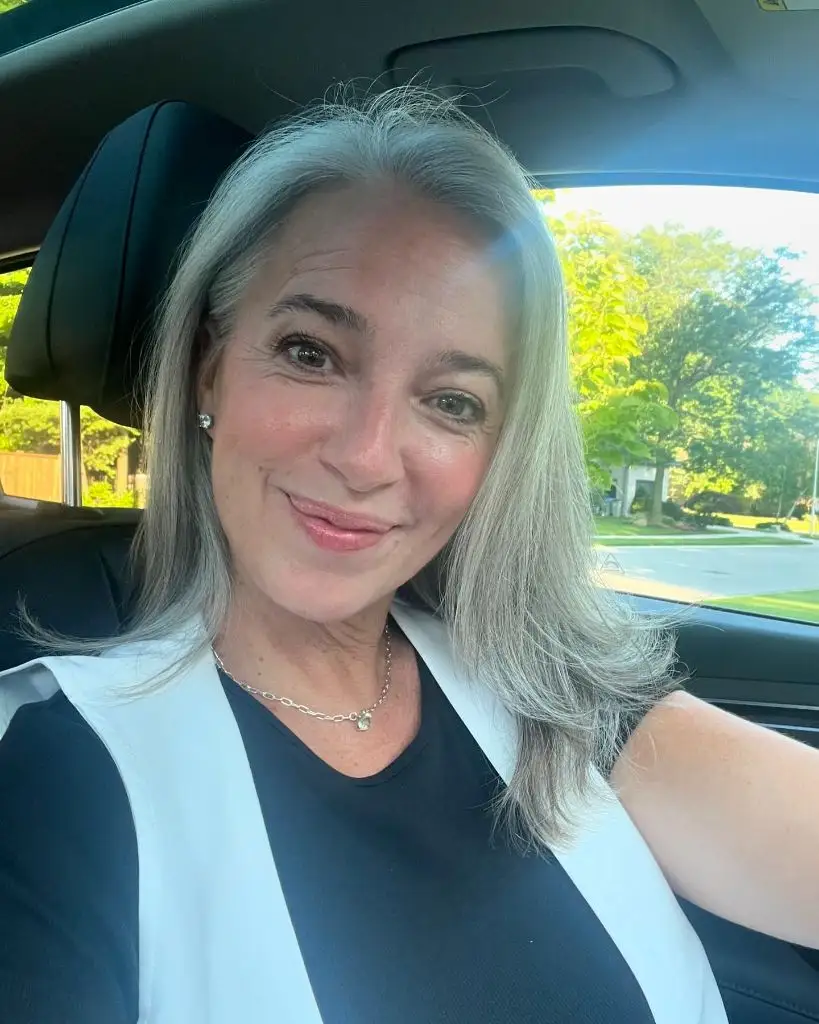
Photo via Instagram
The natural light in this image reveals the full spectrum of the silver — from cooler, almost blue-white strands near the face to warmer, darker pieces at the roots and underneath. That range is what makes fully silver hair visually rich rather than flat, and the shoulder length gives it enough room to display that variation across the full fall. The natural wave adds movement without creating volume, so the hair sits close to the head and shoulders while still carrying gentle curves. The necklace draws a fine line across the collarbone that mirrors the delicacy of the individual silver strands, creating a quiet conversation between accessories and hair.
The reader takeaway is that silver hair at shoulder length benefits from being left mostly alone. Its inherent tonal range — the whites, the warm undertones, the darker roots — provides all the dimension it needs, and a simple wave pattern lets each shade remain visible and distinct.
17. Silver-Streaked Bob With Warm Undertones and Bold Glasses
A woman smiles in a close selfie, wearing large square tortoiseshell glasses and bold pink lipstick. Her hair is a chin-length bob with pronounced silver and white streaks concentrated at the crown and front, transitioning to warmer honey-brown tones through the lengths and at the nape. The texture is wavy and slightly windblown, and she wears a dark tank top.
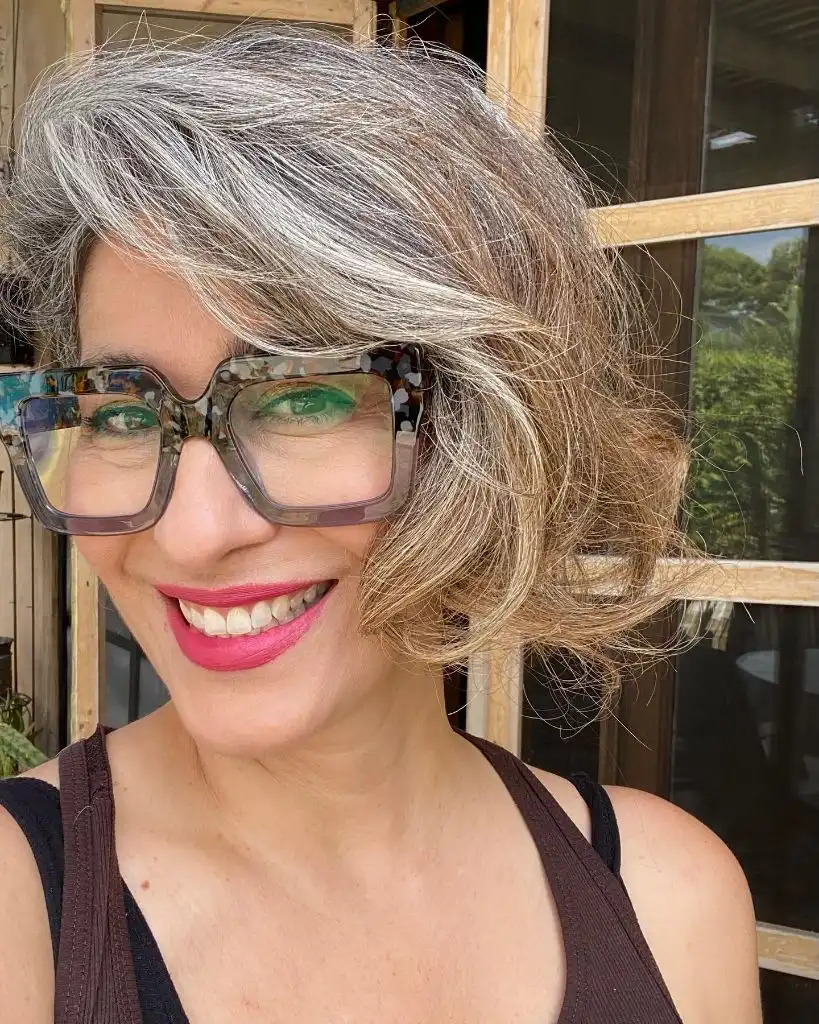
Photo via Instagram
The interaction between the silver-white crown area and the warmer brown ends creates a natural color story that mirrors the transition many women experience, but here it reads as an intentional design choice rather than a maintenance situation. The bold glasses and bright lipstick introduce strong visual anchors that frame the face and elevate the casual bob into something more composed. The wave in the hair is loose and unfussy, which prevents the color transition from being read too precisely — instead it blends softly, with silver and warm tones mingling in the mid-lengths. The overall composition balances high-impact accessories with low-maintenance hair texture.
The useful move here is understanding that bold accessories can recontextualize a transitional hair color as a deliberate style choice. When glasses and lipstick carry strong color and shape, the hair is free to exist in its natural silver-to-brown gradient without looking unfinished.
18. Long Copper Waves With Dark Root Shadow
Photographed from behind near a decorated tree, long hair cascades past the shoulder blades in loose, flowing waves. The color is a rich warm copper that deepens to a dark brunette shadow at the roots, creating visible contrast at the crown. The waves are wide and relaxed, with the most movement appearing in the lower third. The person wears a dark satin-finish jacket.
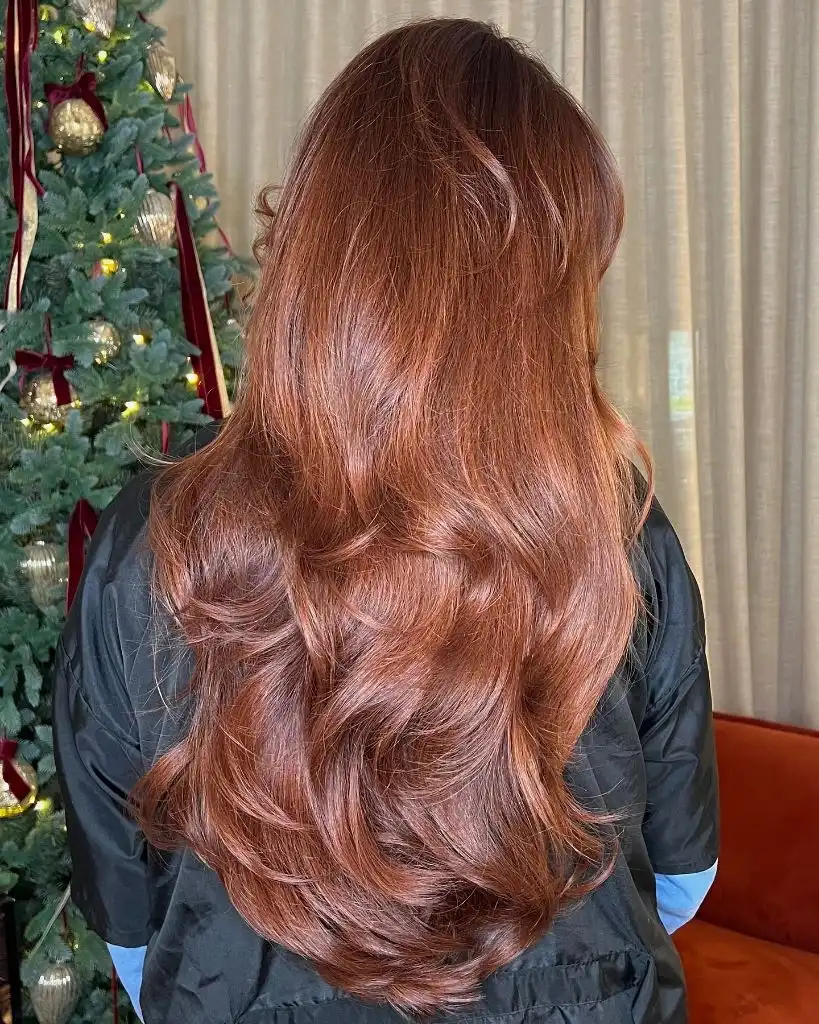
Photo via Instagram
The root shadow is key to why this copper reads as sophisticated rather than costume-like. That dark band at the crown grounds the warmth and gives the eye a starting point from which the copper unfolds gradually, reaching its brightest saturation through the mid-lengths and ends. The waves increase in amplitude as they descend, which means the top section lies relatively smooth while the bottom third carries all the curl and bounce. The satin jacket’s subtle sheen echoes the light-catching quality of the copper tones without competing. The overall shape is a wide, triangular silhouette — narrow at the roots and widening through the curled ends — that feels generous and unhurried.
What stands out most is the dark root shadow as a design tool. On long copper hair, it creates depth and prevents the warm tone from reading as flat or one-dimensional, adding a sense of natural growth that makes the color look lived-in rather than freshly applied.
19. Close-Cropped Brunette With Natural Gray Integration
A woman stands in profile facing a white brick wall, her hair cut very short and close to the head. The color is a natural dark brown with visible gray strands integrated throughout, particularly at the temples and crown. The cut has a slight layered texture on top and tapers cleanly behind the ear and at the nape. She wears a sleeveless animal-print top.
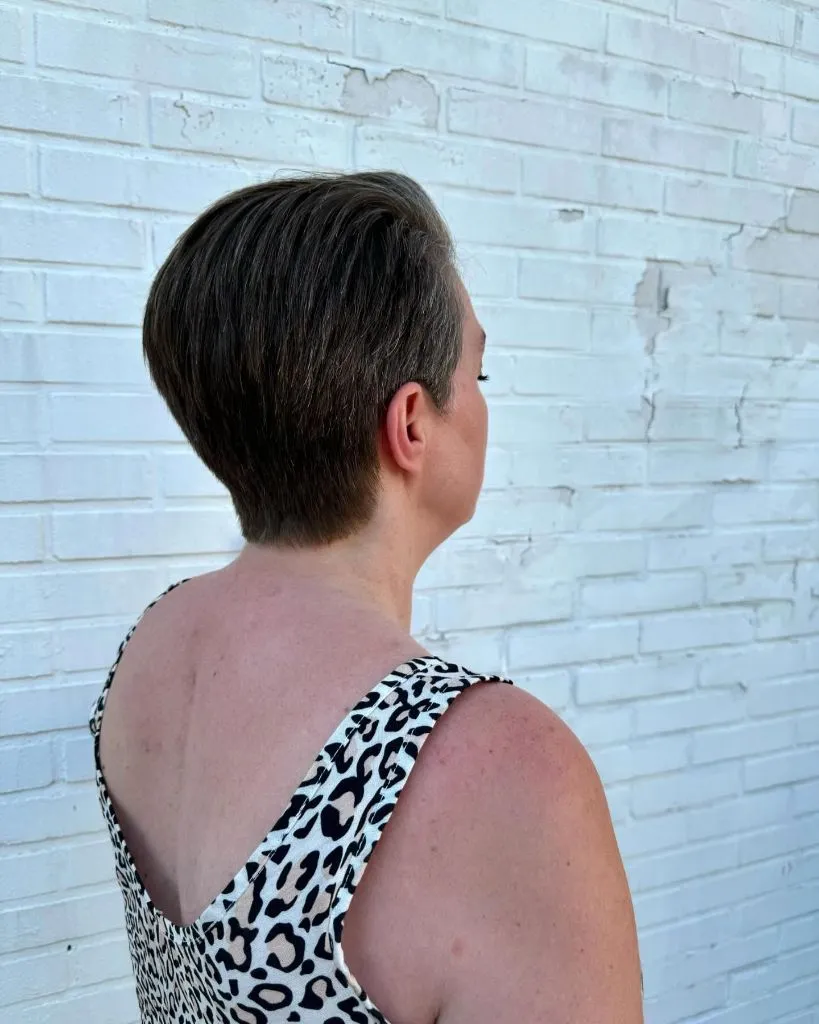
Photo via Instagram
The close crop allows every strand to participate in the overall tonal effect — the gray is not a section or a streak but a distributed presence that mixes with the brunette to create a cool, salt-and-pepper quality. The profile view reveals how the cut follows the contour of the head, sitting close without being shaved, which gives the style a clean but soft boundary. The layering on top provides just enough lift to distinguish the crown from the sides, creating a subtle directional flow toward the forehead. The animal-print top introduces pattern and energy below the neckline, which makes the understated hair feel like a deliberate counterpoint rather than an absence.
The beauty of this is the willingness to let gray exist where it naturally appears rather than concentrating or concealing it. In a very short cut, that integrated gray becomes a textural quality — almost like heathered fabric — that gives the hair visual complexity at a scale where individual strands are genuinely readable.
20. Textured Mid-Length Shag With Warm Highlights
Photographed from behind in a salon, this shoulder-length cut shows pronounced shaggy layering with textured, slightly choppy ends. The color is a medium brown with warm coppery highlights and some lighter pieces concentrated at the crown and outer layers. The texture is naturally wavy with some frizz, giving the cut a lived-in, effortless quality. The person wears a tan ribbed knit top.
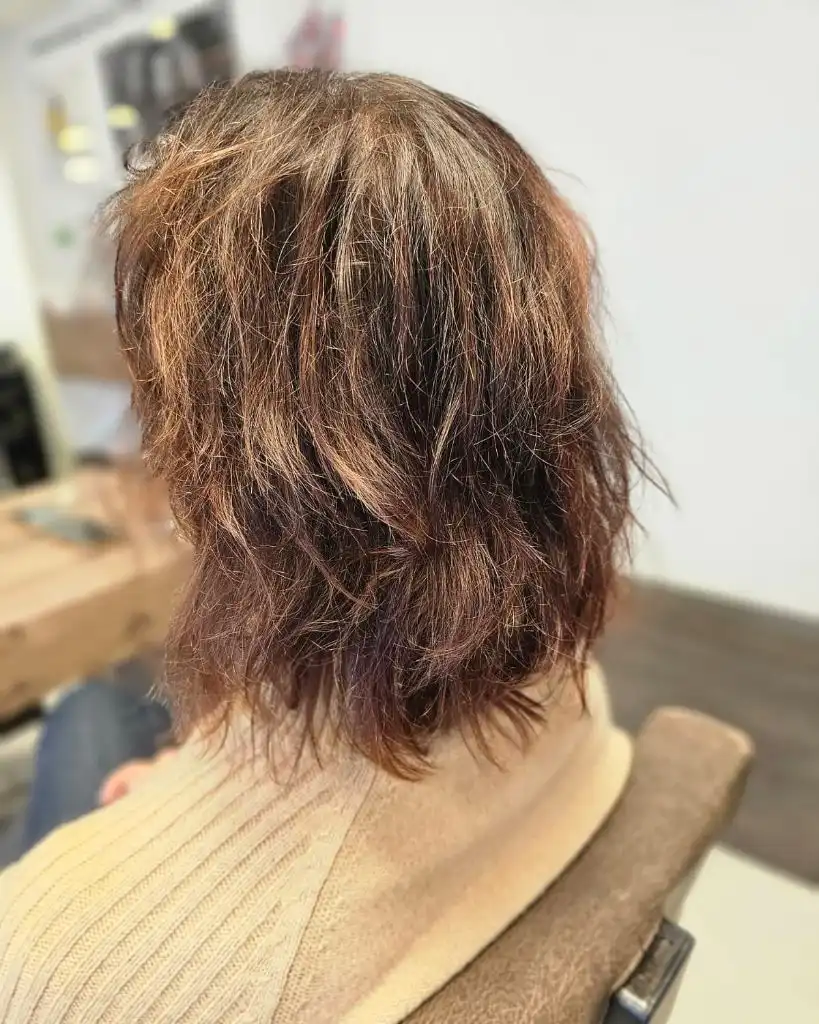
Photo via Instagram
The shag structure here is visible in how the layers separate and move independently — no two sections lie in the same direction, and the ends are cut with enough texture to prevent them from clumping together. The warm highlights provide a secondary layer of visual activity, catching light at different points across the surface and creating a sense of depth that works with, rather than against, the natural frizz and wave. The tan ribbed top is a tonal neighbor to the warm brown base, which keeps the image feeling cohesive and avoids drawing attention away from the hair’s texture. This is a haircut that leans into its own imperfection, and that commitment to natural texture is what makes it feel current.
The reader takeaway is that a shag cut functions best when its natural texture is respected rather than smoothed away. The visible separation between layers and the interplay of highlights with natural wave create the kind of effortless dimension that over-styling would actually diminish.
21. Black Bob With Blonde Peekaboo Highlights
A side profile captures a chin-length bob in jet black hair with distinct blonde highlights placed at the front face-framing section and scattered through the lower layers. The hair is styled in loose, slightly messy waves, and the contrast between the dark base and the light accents is sharp and intentional. The person wears a black top against a light marbled background.
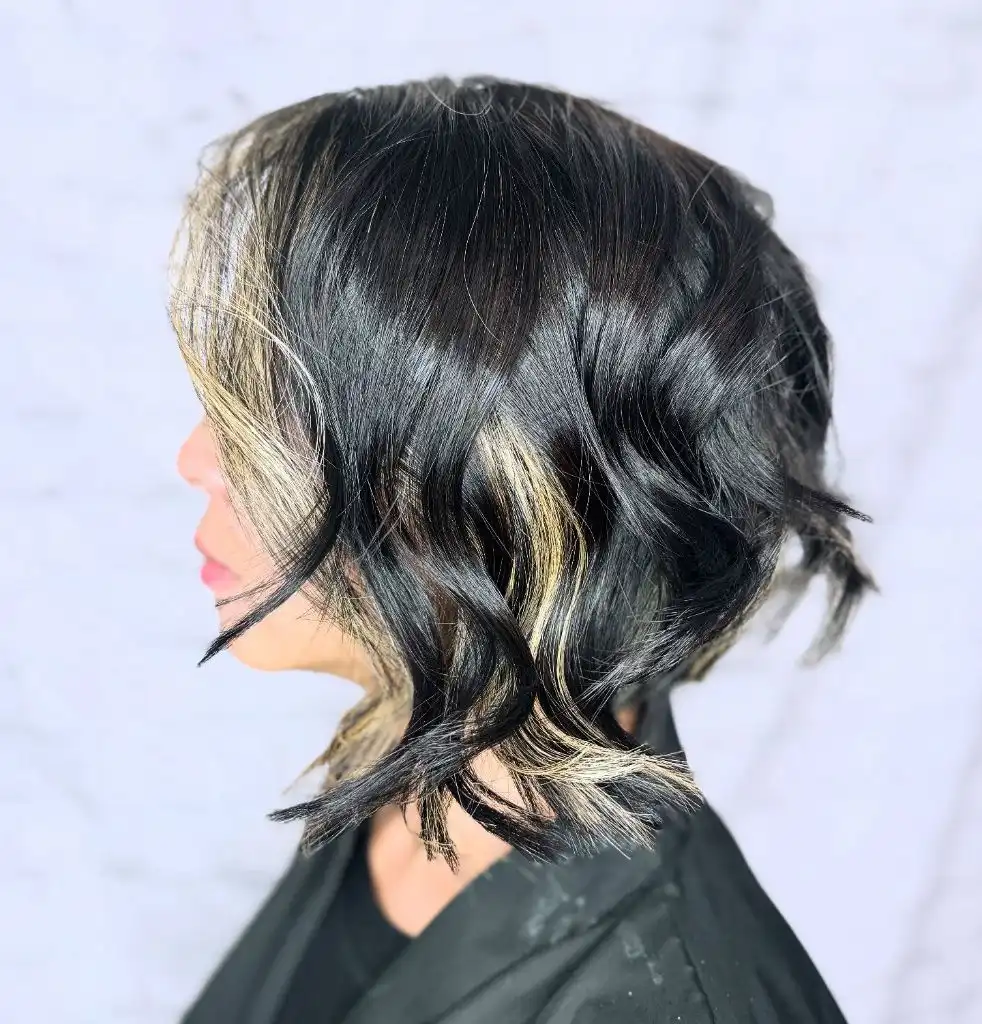
Photo via Instagram
The blonde placement here is strategic rather than blended — it appears in concentrated sections at the front and underneath, which means the highlights reveal themselves through movement rather than sitting visibly on the surface at all times. That peekaboo quality creates surprise and dimension that a more evenly distributed highlight pattern would not achieve. The jet-black base is doing important work as well, providing a clean, high-contrast canvas that makes even a small amount of blonde read as dramatic. The waves are loose enough to reveal and conceal the blonde pieces as the hair moves, which turns a static color choice into something that shifts depending on the angle. The light background creates a frame that further isolates the dark-to-light contrast.
The best move here is placing high-contrast highlights in hidden positions rather than throughout the entire head. When blonde appears only at the face frame and underneath a dark base, it creates a dynamic, changeable quality that keeps a simple bob visually interesting from every angle.

Hi, I’m Zoey Mitchell, the creator of ChicStyle Blog.
I share simple, wearable outfit ideas, hairstyles, nail trends, and beauty tips that feel natural and easy to recreate.
This blog is where I explore everything that makes a woman feel put together and confident every day. I’m not an expert — just a woman who genuinely loves style, mixing looks, and discovering what works.
If you love effortless fashion with a personal touch, you’ll feel at home here.