
There is something about the way blonde hair shifts under low winter light that makes every strand feel considered. The warmth pulls closer to honey, the cool tones lean silver, and the roots sit a little deeper than they would in summer. Winter blonde hair color carries a quieter energy, one where dimension replaces brightness and the whole palette feels grounded without losing movement.
What makes a winter blonde work as a design decision rather than a seasonal default is the balance between several visible variables. The first is root depth, how much shadow the base contributes and where it stops. The second is highlight placement, whether the lightness begins at the face, the midlength, or the ends. The third is tonal temperature, the spectrum from icy platinum through ash and sand to warm honey and golden caramel. The fourth is texture and cut, because a color reads differently on a blunt bob than on layered waves. Throughout this article, each image is examined through those four lenses, looking at how the specific choices in each photo create a result that feels deliberate, dimensional, and suited to the quieter light of cooler months. No two approaches here are identical, and that is the point.
1. Warm Honey Balayage With Loose Curled Ends
The hair here falls past the shoulders in wide, relaxed curls that carry a warm honey balayage from a medium-brown root zone into golden and buttery blonde ends. The face-framing pieces are lighter, pulling attention toward the center of the frame. A teal pendant necklace and dark cardigan sit below, and the salon wash stations in the background confirm this is a fresh result.
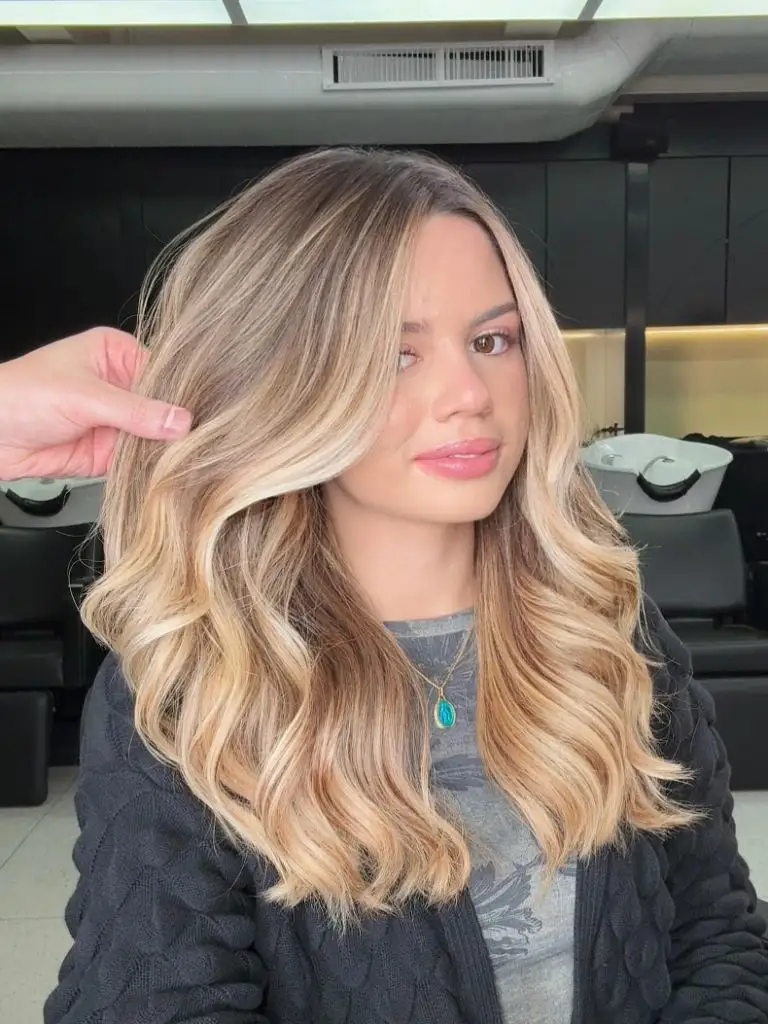
Photo via Instagram
The way this works is in the graduated warmth. The root area carries enough depth to keep the overall palette from reading flat, while the curled ends catch the most golden tones and create visual weight at the bottom third. The face-framing highlights act as a brightness anchor, drawing the eye inward rather than letting it drift to the periphery. The curl pattern adds surface area for the color to show its range, so the tonal shift from caramel to butter reads as a continuous gradient rather than a blunt contrast.
The reader takeaway is that letting the warmest blonde tones gather at the ends rather than scattering them evenly creates a natural-looking depth progression. A relaxed curl pattern is the simplest way to let a warm-toned balayage show its full range, because every bend in the hair reveals a slightly different shade.
2. Cool Ash Blonde Bob With Soft Side Part
The cut here is a chin-length bob with a slight side part, sitting in a cool ash-blonde tone that reads almost neutral. The roots carry a soft brown shadow that blends quickly into the lighter body. The ends have a gentle wave, curving inward at the jawline. A black top frames the neckline, and the background shows a bright, modern salon interior.
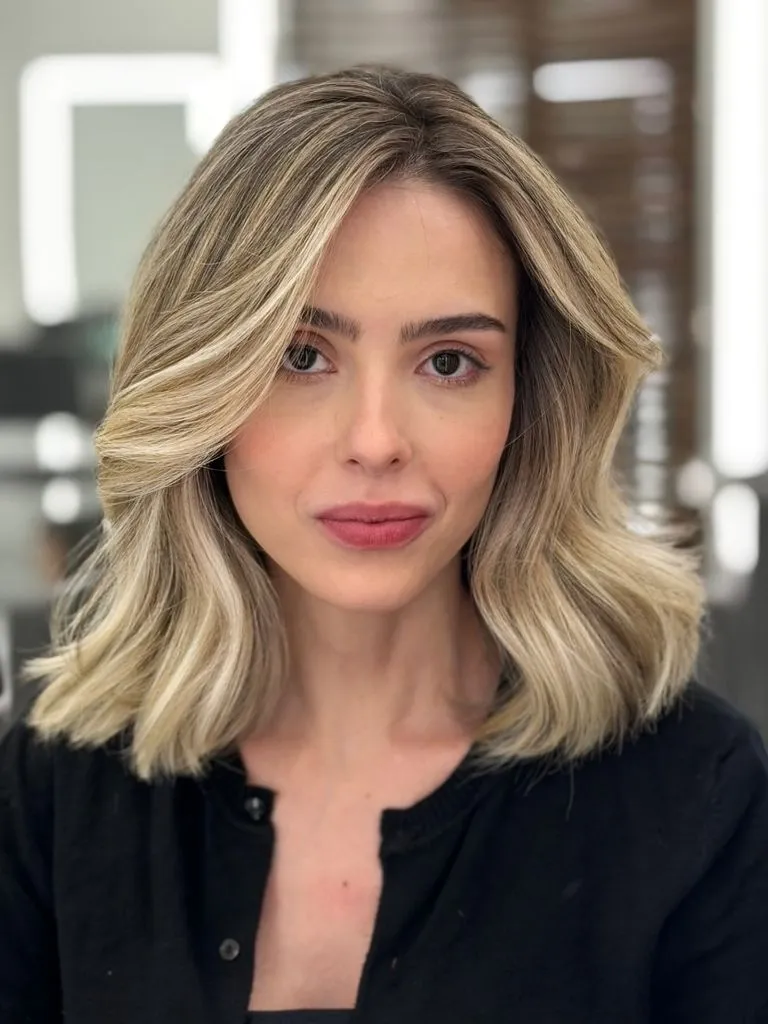
Photo via Instagram
The restraint in this color choice is what gives it its strength. There is no dramatic contrast between root and end, just a quiet shift from muted brown to cool blonde that keeps the entire surface feeling cohesive. The bob length means every strand is visible, so the tonal consistency matters more than it would on longer hair. The inward curve at the jawline creates a framing effect that sharpens the face without any layering needed, and the ash undertone keeps the blonde from reading warm or golden.
The useful move here is choosing a cool, nearly neutral blonde on a shorter cut, where uniformity of tone becomes a structural asset. When the length is limited, a low-contrast root shadow and a single-temperature blonde body can make the shape of the cut itself carry the visual interest.
3. Platinum Waves With Dark Root Contrast
Long, voluminous waves fall well past the shoulders in a pale platinum blonde with a visible dark root zone that extends about two inches. A stylist’s hand lifts one side of the hair, showing the volume at the crown. The person wears a black satin top, red lipstick anchors the face, and the salon shelving behind holds various products.
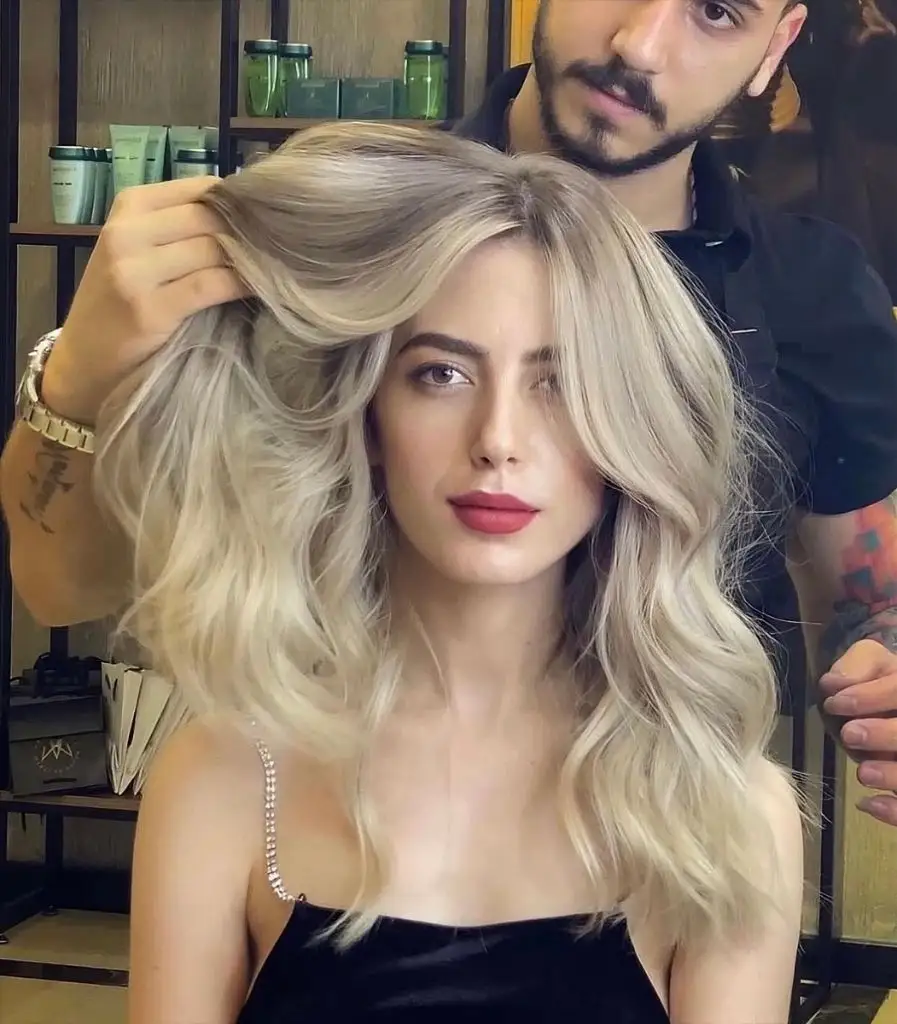
Photo via Instagram
The dark root against the platinum body creates the highest contrast in this entire series. That shadow zone at the scalp grounds the look and prevents the pale blonde from appearing one-dimensional. The loose wave pattern introduces surface texture that picks up light in irregular bands, so the platinum reads as layered rather than flat. The red lip below acts as a secondary color anchor, giving the eye a resting point beneath all that brightness. The result feels intentional because there are clear zones of dark, light, and color.
The strongest lesson is that platinum blonde benefits from deliberate anchoring. A visible root shadow and a strong lip color provide the two counterweights that keep very light hair from floating away visually. That kind of structured contrast is what separates a considered blonde transformation from an accidental one.
4. Natural Sandy Blonde With Lived-In Texture
The hair is long and center-parted, falling in relaxed, barely-there waves with a sandy blonde tone that sits close to natural. The roots are a soft medium blonde rather than a deep brown, and the lighter pieces appear concentrated around the face and through the midlengths. A black top and a small gold pendant are visible, with a salon setting and a television screen in the background.
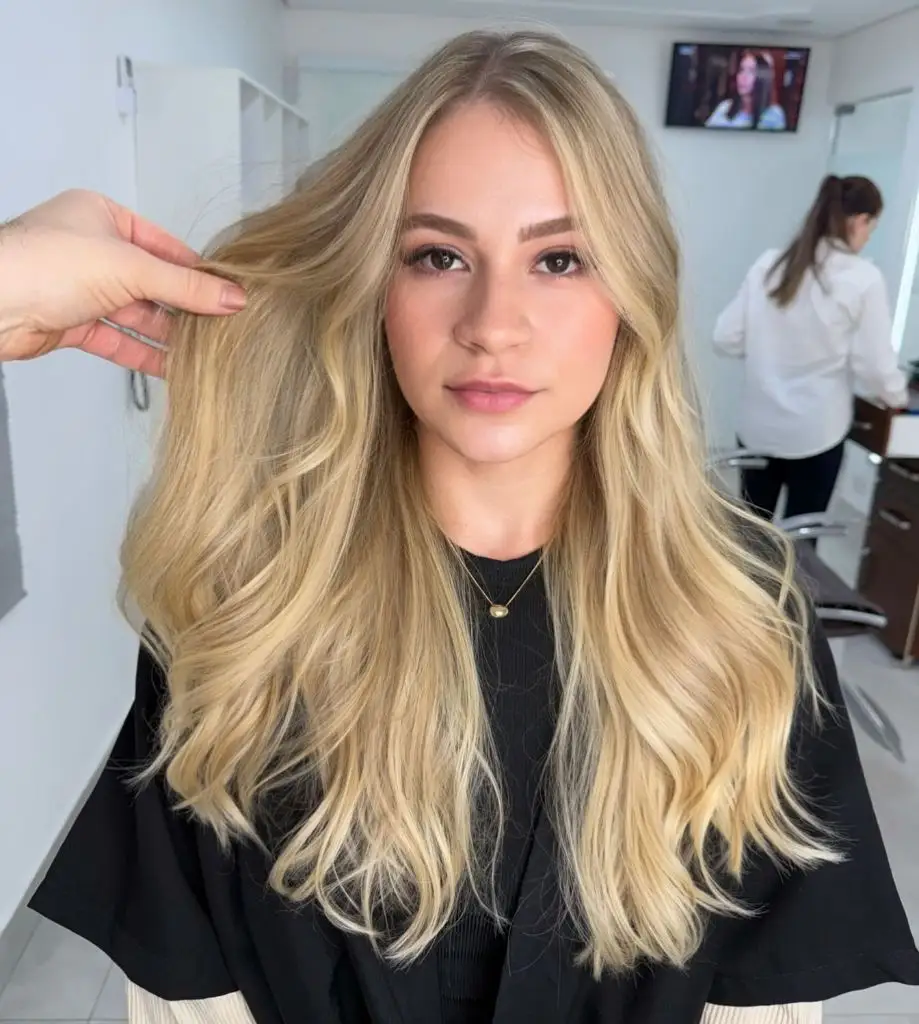
Photo via Instagram
What reads here is ease. The minimal root contrast means there is no hard line where the color shifts, so the whole head appears as one continuous tonal field with soft variation. The face-framing pieces are only slightly lighter than the rest, creating a subtle brightness zone that does not announce itself. The texture is loose enough to show movement without imposing a curl pattern, which suits the low-maintenance quality of the color. This is a winter blonde that works by staying close to what could be a natural base and simply widening its range.
The useful idea is that winter blonde does not require dramatic contrast to feel dimensional. Keeping the root tone close to the midlengths and letting the face-framing pieces carry the lightest value creates a gentle depth that looks unforced and wears well as it grows.
5. Icy Platinum With Subtle Root Melt
Very long, straight-to-slightly-waved hair in a bright icy platinum falls past the chest. The roots show a soft, light-brown shadow that melts into the blonde within the first inch. The texture is smooth and sleek rather than heavily curled. The person wears a dark navy top and a delicate gold necklace, and the background shows a warm-toned salon with exposed wood beams and pendant lights.
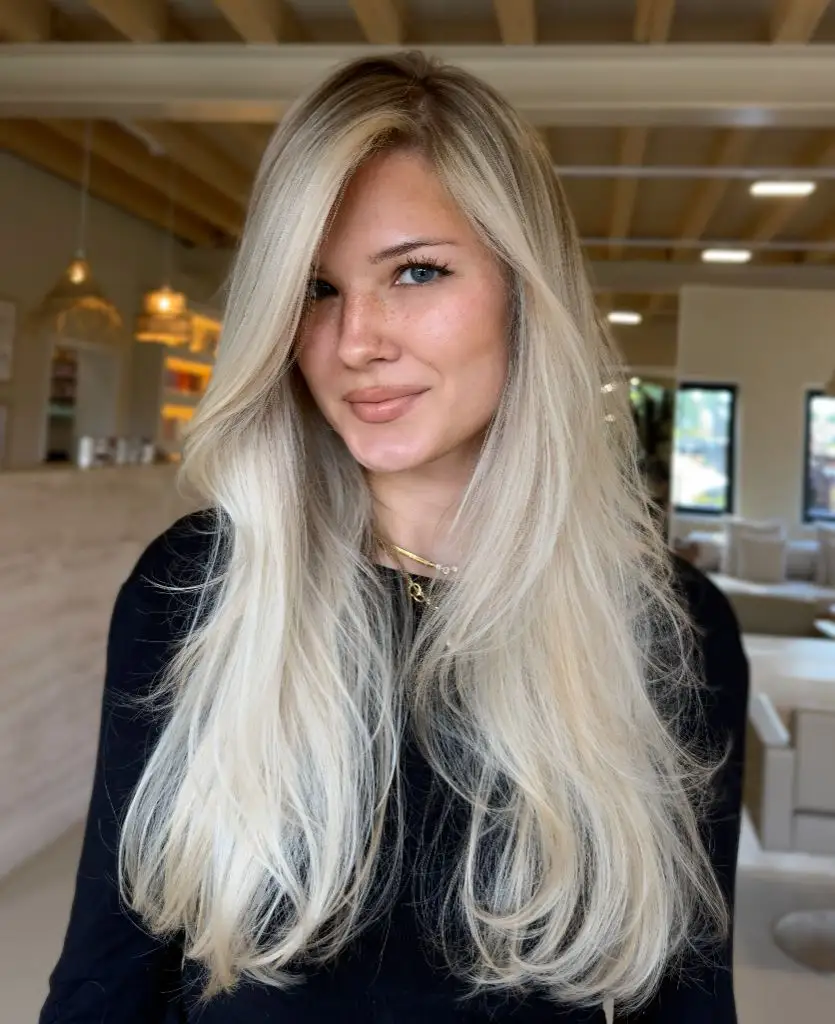
Photo via Instagram
The length here amplifies the color effect. On shorter hair, this level of platinum might read as a single bright tone, but stretched over this much surface area, the slight root shadow and the textural variation become visible layers. The sleek finish keeps the focus on the color itself rather than on movement or curl, so the platinum is the sole protagonist. The warm salon background creates a visual temperature contrast that actually makes the icy tone appear cooler by comparison, which is worth noting as a framing effect.
What stands out most is the decision to keep the texture minimal and let the color do the work. When a blonde is this light and this long, smoothness becomes a form of emphasis, because every surface catches light evenly and the platinum tone reads as uninterrupted from root melt to tip.
6. Sleek Warm Blonde With Side-Swept Layers
Long, straight blonde hair with a strong side part falls over one shoulder in a sleek, smooth finish. The tone is a warm, buttery blonde with very subtle lighter pieces woven through. The person sits in a salon chair wearing a black sleeveless top with metallic grommet details and light-wash jeans, hands clasped together. Product shelves line the background.
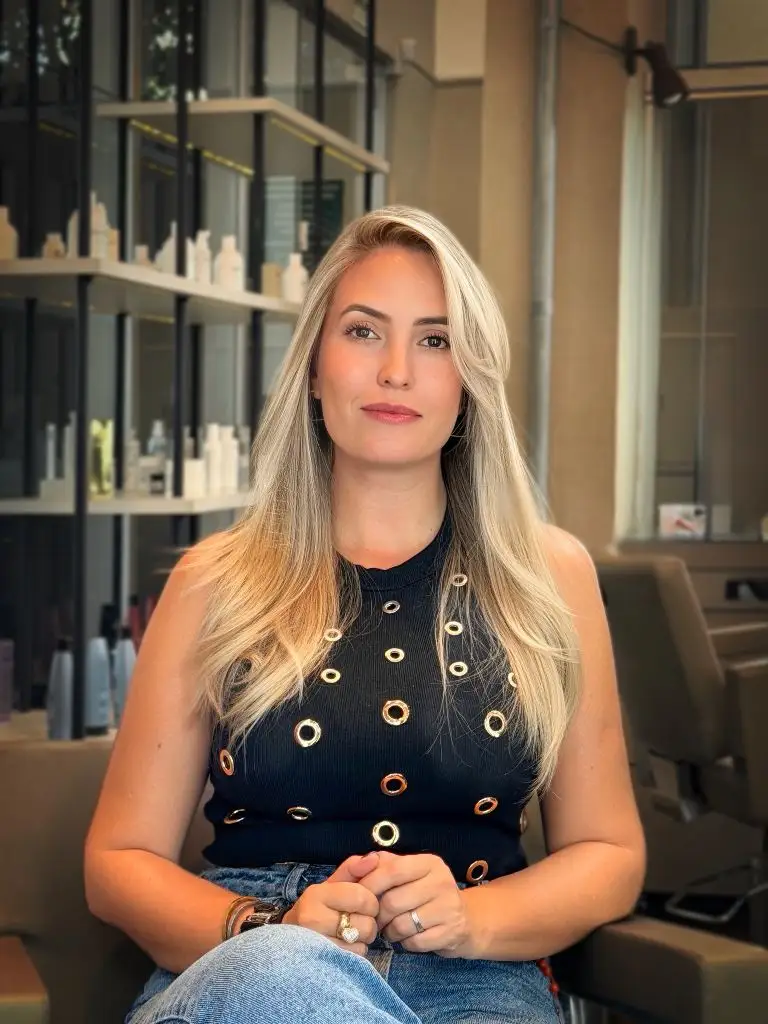
Photo via Instagram
The polish of this look comes from the finish rather than the color complexity. The blonde itself is relatively uniform, sitting in a warm butter-to-wheat range without dramatic highlights or a deep root zone. What gives it its visual impact is the sleekness, the way the hair lies flat and reflects light in long, unbroken bands. The side part creates asymmetry, pushing the volume to one side and leaving the other ear exposed, which adds a structural element that the color alone would not provide. The metallic grommets on the top pick up the warm blonde frequency in a small way.
The best move here is understanding that a uniform warm blonde can feel fully finished when the texture is controlled. Sleekness acts as a styling decision that carries the same weight as a color choice, and pairing it with a strong side part adds just enough asymmetry to keep the overall effect from reading static.
7. Ash Blonde Bob With Angled Volume
A slightly angled bob sits at chin to jaw length in a cool ash-blonde tone with a soft brown root shadow. The hair has been blown out with volume, creating a rounded shape that lifts away from the face. The person wears a dark mauve top and is photographed in profile at three-quarters, with a salon mirror reflecting the back of the cut behind them.
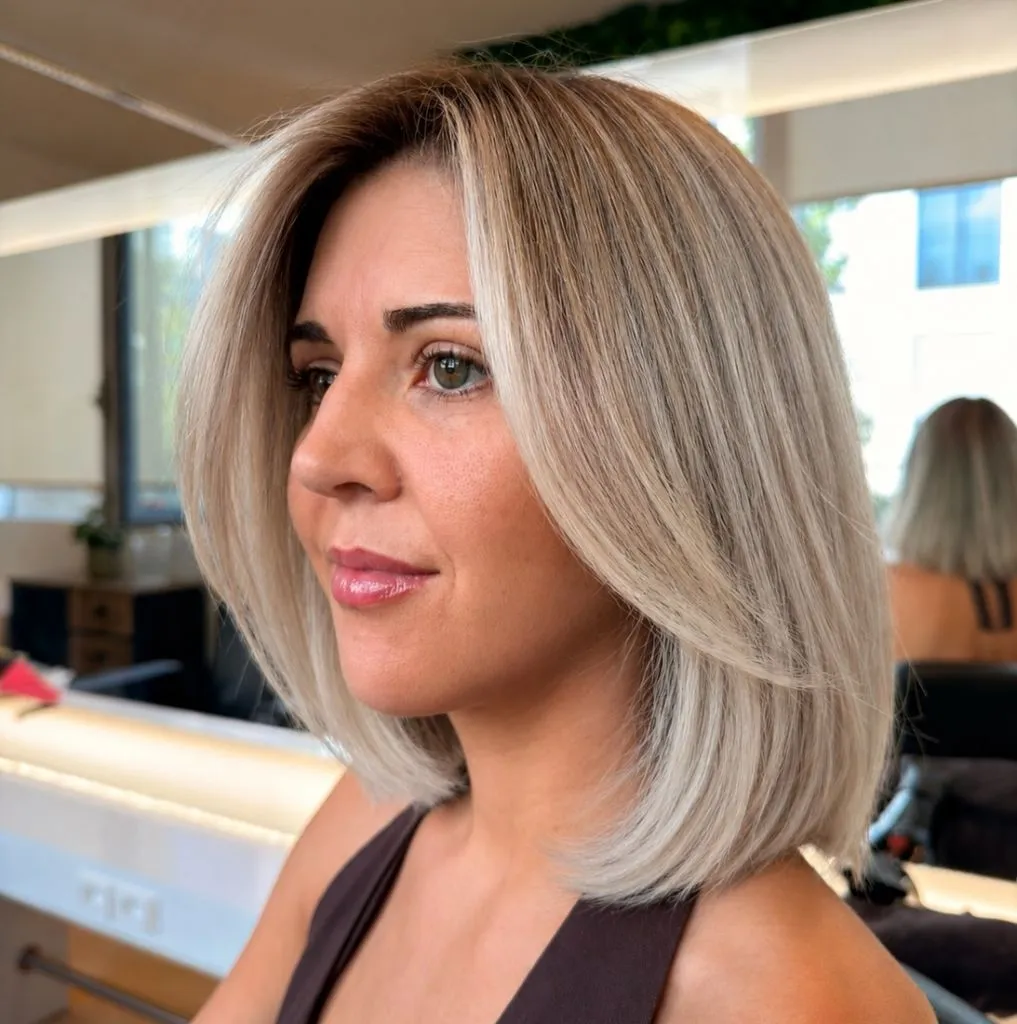
Photo via Instagram
The volume here is doing the structural work. The ash-blonde color is cool and even, without strong highlights or lowlights, so it recedes into a supporting role while the shape of the blowout takes the lead. The rounded silhouette creates a halo effect that makes the cut appear fuller than it might in a flat, natural state. The slight angle, with the front pieces sitting a touch longer than the back, gives the eye a directional line to follow. The reflection in the salon mirror provides a rare view of the back, confirming that the shape holds from every angle.
The reader takeaway is that on a short cut, volume and shape can carry the visual interest that a longer style might rely on color to provide. A cool, even-toned ash blonde becomes a neutral canvas, and the energy of the look shifts entirely to structure, which is a deliberate and effective approach to shorter blonde styles.
8. Layered Sandy Bob With Textured Ends
The back of a layered bob is visible, sitting at the nape of the neck with textured, slightly piece-y ends. The color is a sandy blonde with fine lighter highlights woven through, and the roots carry a warm, wheat-toned base. The hair appears freshly cut, with the layers creating visible separation at the tips. The background includes pampas grass and a gold-framed mirror in what reads as a Parisian-style salon.
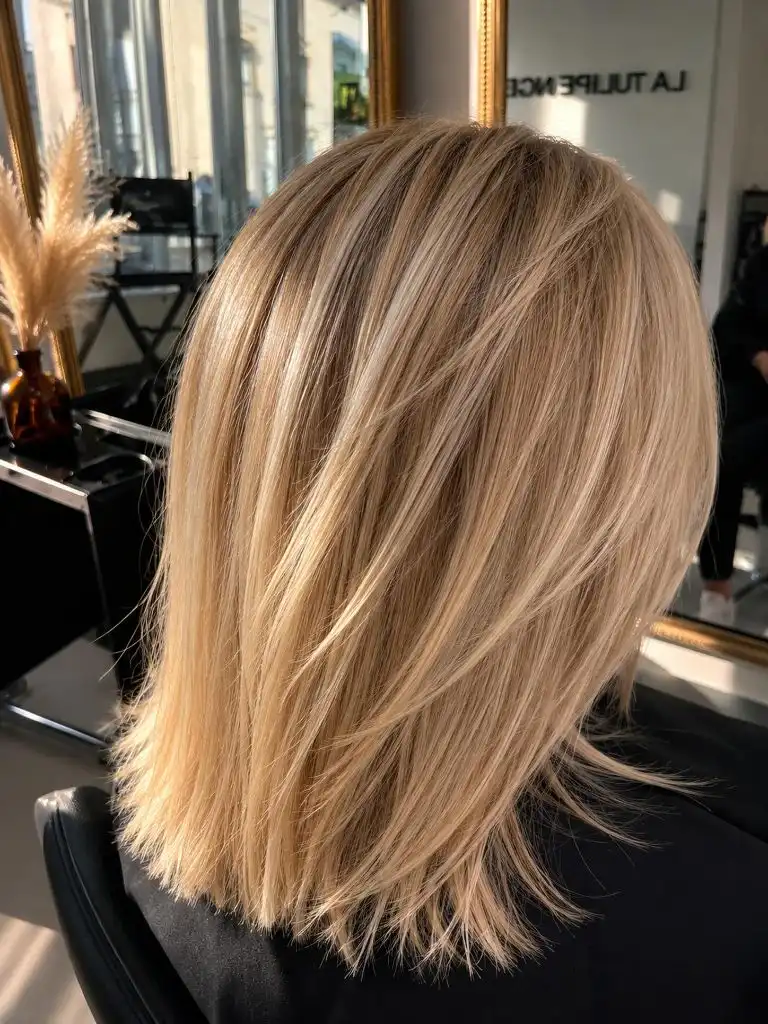
Photo via Instagram
I like how the texture here operates at the smallest scale. The layered ends separate into individual pieces, each catching light slightly differently, so the sandy blonde reads as three or four closely related tones rather than one. The warm root zone is visible at the crown and fades quickly into the lighter body, creating a shallow gradient that feels organic. The back view reveals how the layers are stacked, with shorter interior pieces adding lift and longer exterior pieces adding movement. The salon setting with its warm metallics and neutral tones echoes the palette of the hair itself.
The useful move here is using textured layering to multiply the visible tones within a narrow blonde range. When the color difference between root and tip is small, the cut does the work of creating dimension, and each separated strand becomes its own subtle tonal variation.
9. Warm Caramel Balayage With Long Flowing Layers
Long hair viewed from the side shows a warm caramel-to-honey balayage flowing in soft, loose waves past the shoulders. The roots are a medium brown, transitioning through caramel midlengths into lighter honey-blonde ends. The finish is smooth and glossy, with the layers creating gentle movement at the bottom third. A black salon cape is visible, and the background includes green plants and a modern interior.
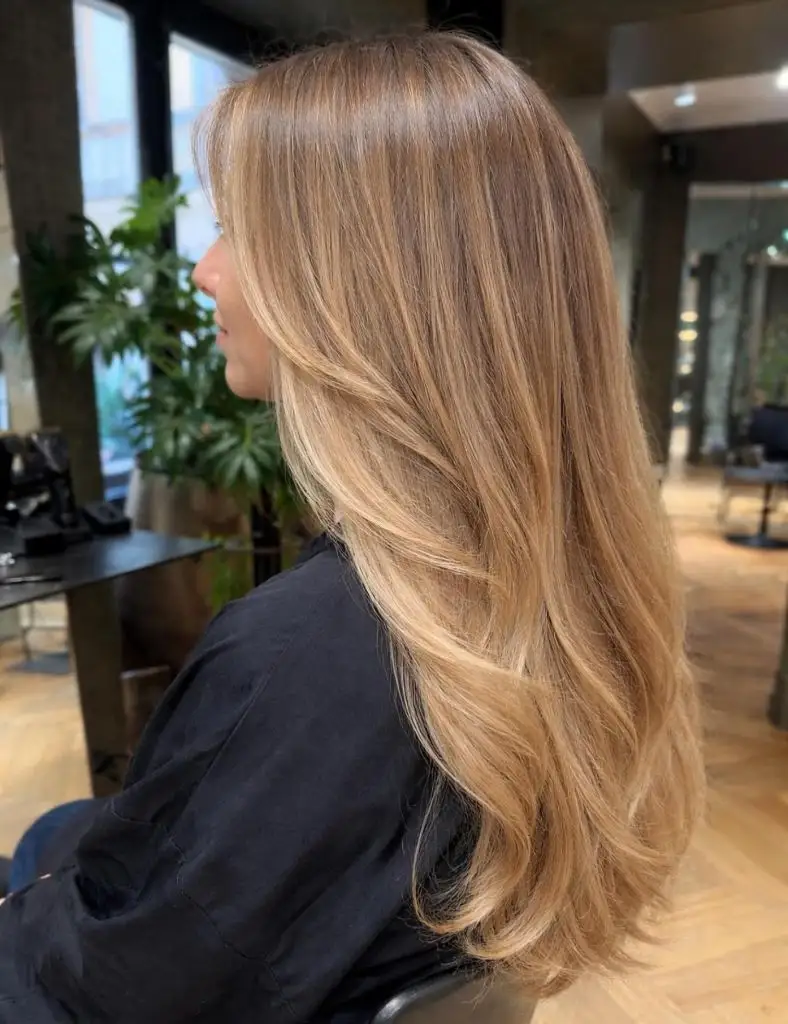
Photo via Instagram
The graduation from brown to honey is slow and even here, spanning the full length of the hair rather than concentrating the shift in one zone. That long gradient is what makes the color feel natural rather than applied. The glossy finish amplifies the tonal range by reflecting light at different points, so the caramel midlengths and the honey ends each have their own reflective quality. The loose wave pattern creates just enough surface interruption to break the monotony of a purely straight fall, and the layered ends add a rhythm of movement at the bottom.
The strongest lesson is that a gradual tonal shift over long hair reads as more dimensional than a concentrated one. Stretching the transition from brown root to blonde tip across the entire length creates a soft, continuous gradient where the color appears to develop naturally rather than beginning abruptly at any single point.
10. Bright Blonde Balayage With Face-Framing Volume
A stylist’s hands frame long, voluminous hair that falls in loose waves with a bright blonde balayage. The roots are a warm medium brown, and the blonde pieces are concentrated heavily around the face and through the front sections, with the midlengths and ends carrying the most brightness. The stylist wears beaded bracelets on one wrist, and the hair cascades forward over a dark salon cape.
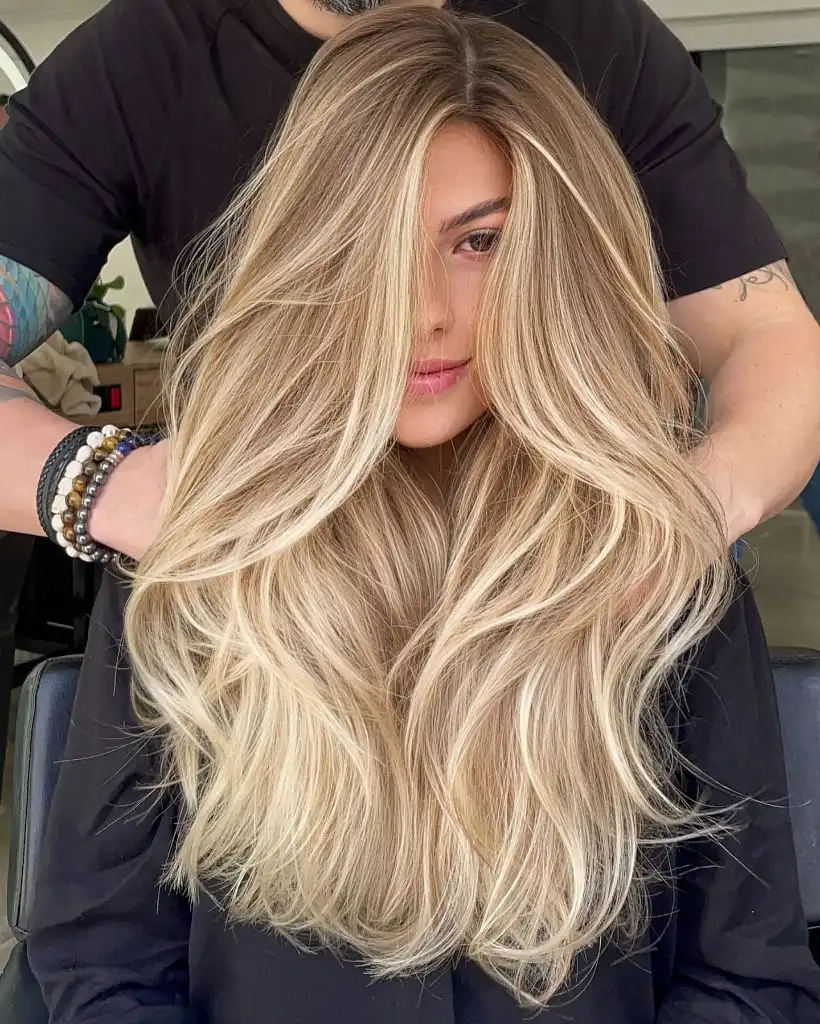
Photo via Instagram
The placement strategy here is front-loaded. The brightest blonde tones sit at the face-framing sections and gradually diminish in intensity toward the back and interior, which means the color reads as most impactful from the front view. The volume the stylist creates by lifting the hair adds dimension that the color alone would not supply, because the raised pieces catch light at different angles than the pieces falling flat. The warm brown root zone acts as a depth anchor, keeping the overall palette from reading as one-note despite the amount of brightness present.
What stands out most is the deliberate concentration of the lightest tones around the face. That forward-heavy placement means the color works hardest where it is most visible, and the deeper tones toward the back provide a quiet supporting contrast that gives the brightness context rather than competition.
11. Golden Strawberry Blonde With Soft Outdoor Light
Long, wavy hair in a warm golden-strawberry blonde is shown from the back and side, catching natural outdoor light. The tone sits between gold and copper, with subtle lighter pieces running through the midlengths. The waves are soft and relaxed, and the hair falls past the shoulder blades. The person wears a muted mauve top, and the background shows an outdoor walkway with greenery and a building entrance.
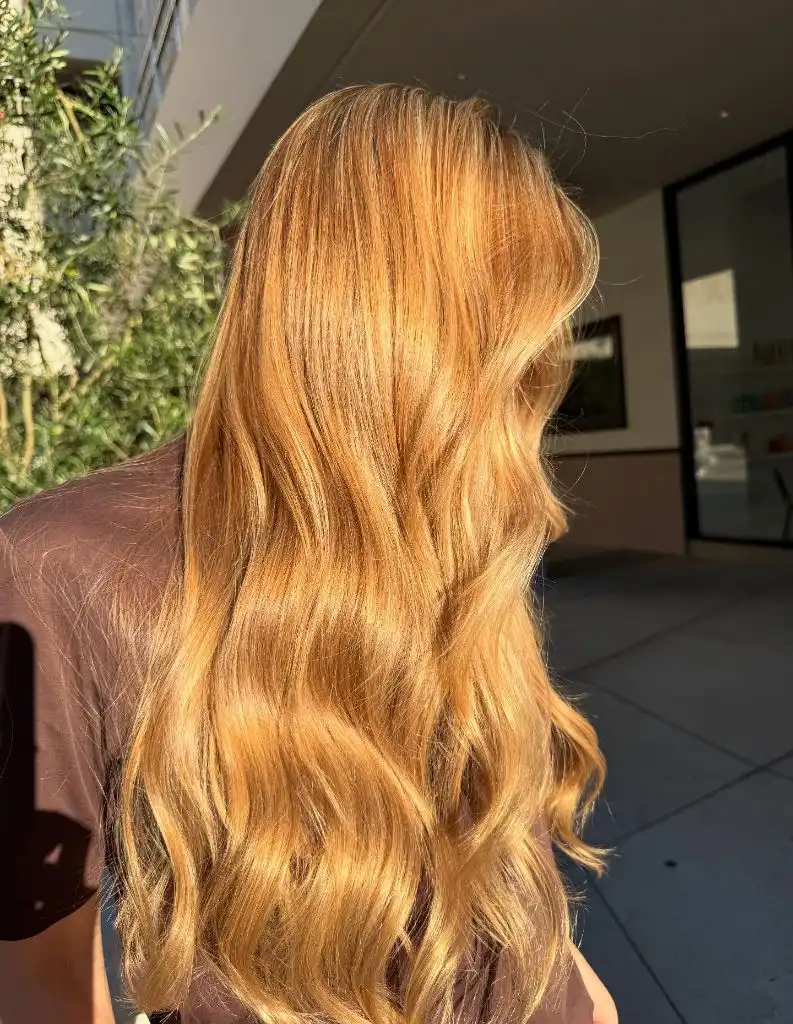
Photo via Instagram
The natural light here is the key variable. Under salon lighting, this color might read as a standard warm blonde, but the outdoor sun pulls out the copper and strawberry undertones that give it its distinctive warmth. The lighter pieces through the midlengths are subtle enough that they function as texture rather than as obvious highlights, adding visual complexity without a clear line of demarcation. The relaxed wave pattern lets the color shift as each curve turns toward or away from the light source, creating an organic play of warm and cool within a single strand.
The beauty of this is the way environment changes how a warm blonde reads. A golden-strawberry tone that might look simply warm indoors becomes a multidimensional spectrum outside, which suggests that considering how and where hair will be seen is as important as the tone itself when choosing a winter shade.
12. Curled Blonde Highlights With Medium-Brown Base
Medium-length hair is shown from the back in bouncy, defined curls with blonde highlights over a medium-brown base. The highlights vary from cool wheat to warmer gold, creating a mixed-temperature effect. The curls are uniform and well-defined, sitting at shoulder length. The person wears a black top, and the background shows a modern salon space with neutral furnishings.
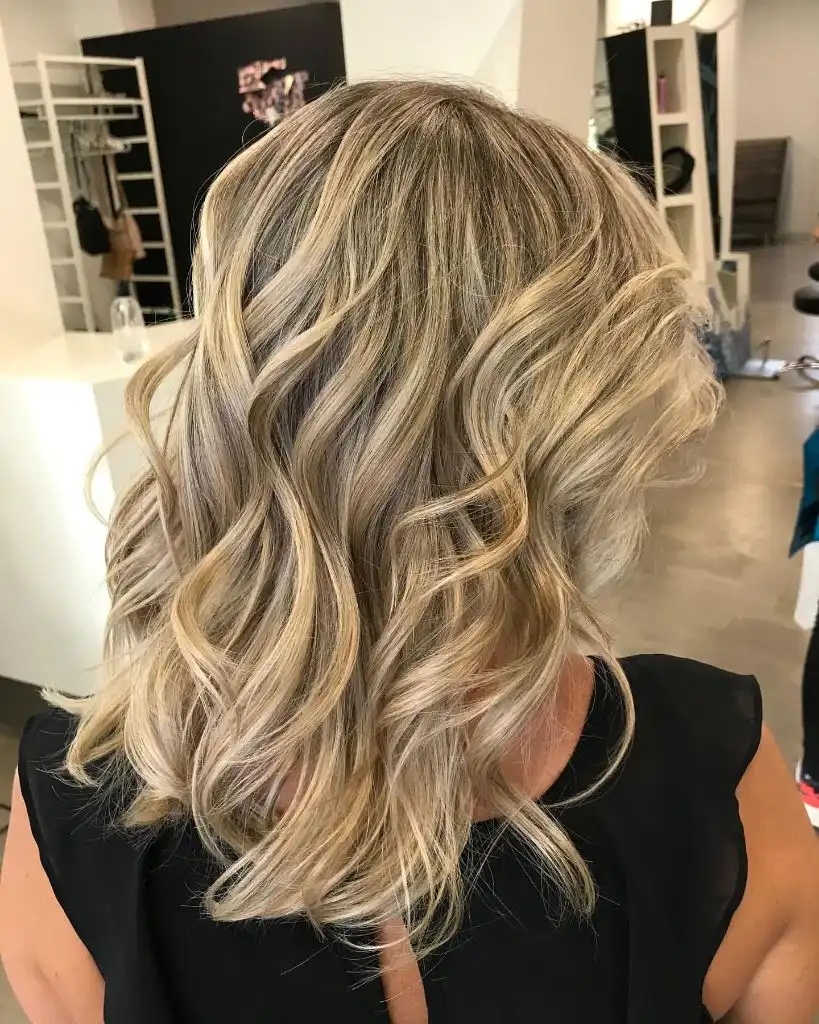
Photo via Instagram
The curl pattern here is the vehicle for the color story. Each curl wraps around its own axis, showing the highlighted exterior and the darker interior in alternation, which creates a rhythm of light and shadow that straight hair could not produce. The mixed temperatures within the highlights, some cooler and some warmer, add complexity without requiring a wide tonal range. The shoulder-length cut means the curls sit in a compact, dense mass where the interplay between dark base and light highlights is maximized by proximity.
The useful idea is that defined curls can double the perceived dimension of a highlight pattern. The rotation of each curl reveals both the lighter and darker tones in rapid succession, so even a modest amount of highlighting reads as richly layered when presented in this textured, curled format.
13. Soft Bronde Waves With Subtle Face-Framing Pieces
Long hair with a gentle wave falls forward over a dark salon cape, showing a bronde, a brown-blonde blend, with lighter pieces concentrated around the face. The roots and crown are a medium-warm brown, and the lighter tones appear primarily through the front sections and midlengths. The profile view shows the hair covering part of the face, and the background includes salon furnishings and a partially visible name on the cape.
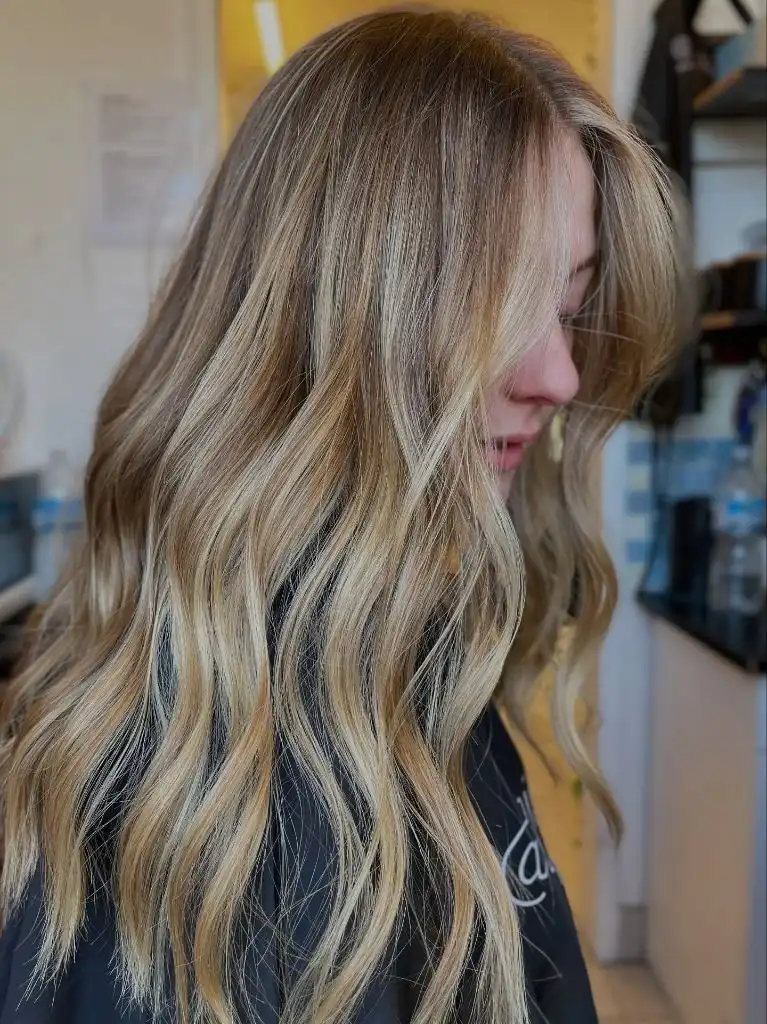
Photo via Instagram
The bronde range here is narrow, sitting between medium brown and soft blonde without venturing into either extreme. That restraint gives the hair a cohesive appearance where the lighter pieces feel like natural variations rather than applied highlights. The face-framing placement is subtle, with only a few strands carrying the lightest value, so the overall read is still predominantly warm brown with a blonde accent. The wave pattern is loose enough to show the color shifts without imposing a strong textural personality.
The reader takeaway is that the narrowest tonal range can still produce visible dimension when the placement is strategic. Keeping the lightest pieces near the face and letting the rest of the hair sit in a close brown-blonde middle ground creates a lived-in effect that requires minimal maintenance and reads as naturally sun-touched.
14. Ash-Toned Ombre With Long Loose Waves
Long hair is shown from the back against a gray wall, with an ombre transition from medium ash-brown roots through a cool ash zone at the midlengths into a lighter, pale ash-blonde at the ends. The waves are loose and relaxed, and the hair falls past the mid-back. A black salon robe is visible, and the overall palette is cool and muted throughout.
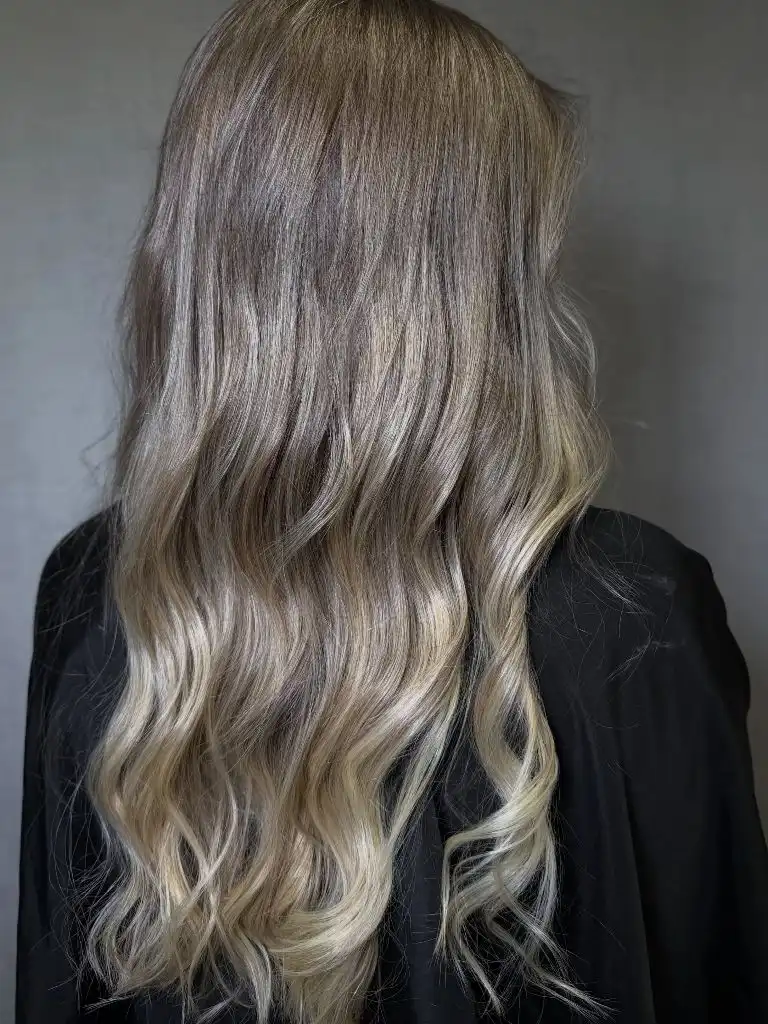
Photo via Instagram
The temperature here is uniformly cool, which gives this ombre its cohesion. Unlike warm balayage transitions that shift between gold and honey, this version moves from cool brown through cool ash to cool pale blonde, so the entire length shares the same undertone family. That consistency means the tonal shift reads as a value change, from dark to light, rather than a temperature change, which gives the gradient a smoother visual logic. The gray background reinforces the cool palette by providing a neutral stage that neither warms nor competes with the hair tones.
The best move here is committing to a single temperature throughout the entire ombre transition. When every zone of the hair shares the same cool undertone, the shift from dark to light feels like one continuous idea rather than a collision of different color decisions, and that unity is what makes a winter blonde ombre feel deliberate.
15. Dark-to-Blonde Transition With Sleek Interior Shine
Long, straight hair is shown from the back in a dimly lit salon setting. The top half is a dark brown, and the bottom half transitions into a warm, golden blonde. The finish is smooth and sleek with a visible shine, and the separation between the dark and light zones is gradual rather than abrupt. The person wears a light-colored top, and warm ambient lighting from pendant fixtures illuminates the background.
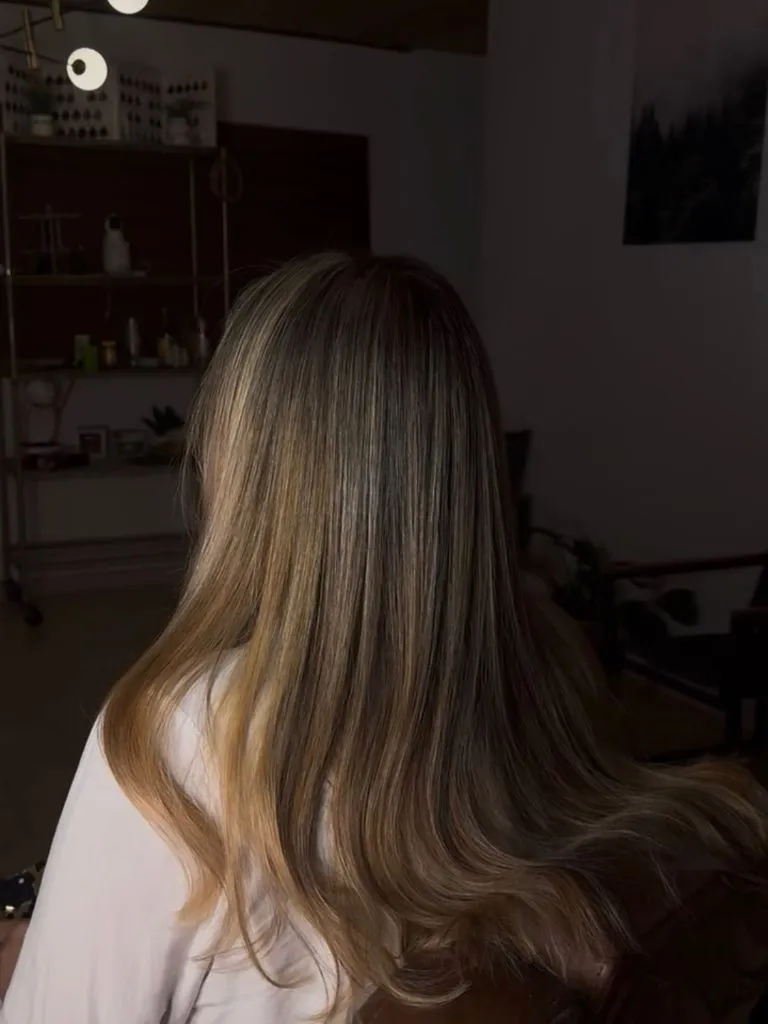
Photo via Instagram
The low lighting in this image emphasizes the shine, making the golden blonde ends glow against the darker upper section. The transition zone through the midlengths is where the color story lives, a slow dissolve from brown into gold that avoids a hard line. The straight, sleek texture amplifies the shininess of both zones and creates long, unbroken light reflections that make the gradient visible even in dim conditions. There is a deliberate quality to the darkness here, both in the hair and in the environment, that makes the blonde feel earned rather than imposed.
The strongest lesson is that a dark-to-light blonde gradient gains dramatic presence in low light when the finish is sleek and reflective. The shine becomes the delivery mechanism for the color shift, and the smoothness of the surface ensures that every tonal change is visible as a continuous, glowing band rather than a diffuse scatter.
16. Warm Sandy Blonde With Curtain Layers
Medium-length hair in a warm sandy blonde falls in a smooth, blowout style with ends that curve gently inward. A subtle side part and face-framing layers create a curtain effect around the face. The roots carry a slightly deeper warm-brown tone that blends into the sandy body within the first few inches. The person wears a gray button-front henley, and a small cross necklace and a delicate chain are visible.
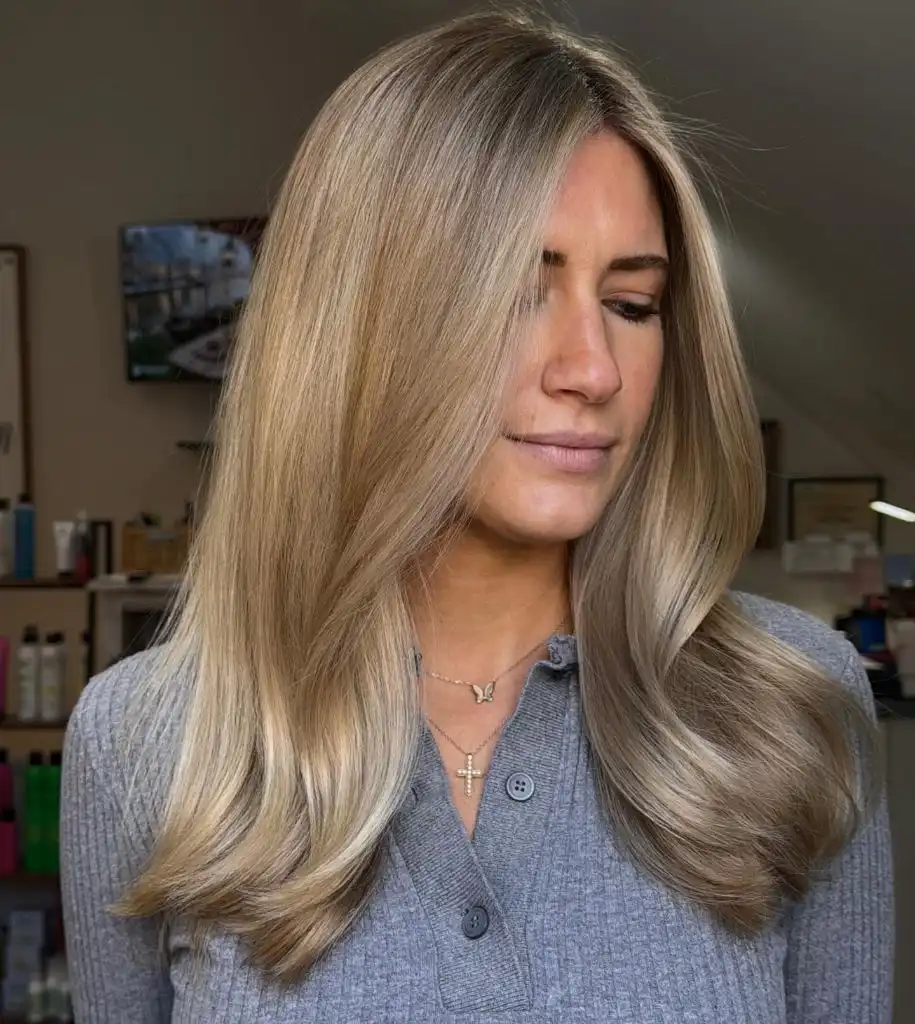
Photo via Instagram
The curtain-layer framing is what organizes this look. The face-framing pieces are the lightest strands in the entire head, and they sweep outward before curving back in, creating a frame-within-a-frame effect that draws attention to the center. The sandy tone is warm but not golden, sitting in a wheat-beige range that feels neutral enough to pair with the cool gray of the henley without clashing. The root shadow is shallow and warm, so the overall contrast is low, which gives the entire head a soft, tonal unity.
The useful move here is pairing curtain-framing layers with the lightest blonde value in the head to create a natural spotlight effect around the face. That strategic placement means the winter blonde dimension works hardest at the most visible point, while the rest of the hair sits in a quieter, supporting tone.
17. Bright Platinum Waves From Behind
The back of medium-long hair in a bright, near-white platinum blonde is shown with soft, rounded waves. A subtle root zone in a very light ashy tone is barely visible at the crown, and the rest of the hair is a uniform, very pale platinum. The waves are polished and bouncy, and the person wears a black long-sleeve top. The background shows a warm-toned room with a couch, a woven rug, and a framed photograph.
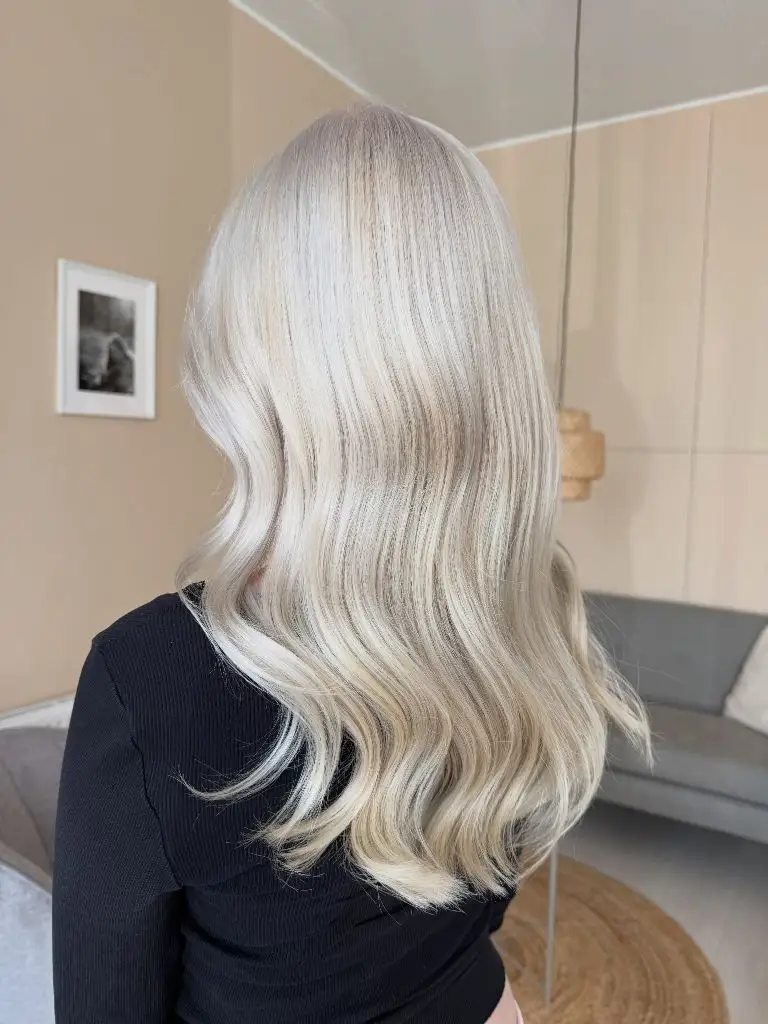
Photo via Instagram
This is the lightest result in the collection, and the near-absence of root shadow means the platinum reads as almost total coverage. The polished waves add a reflective quality that makes the pale tone appear luminous rather than flat, because each curve creates a highlight-and-shadow pair from the same color. The warm background, with its beige walls and natural-fiber rug, creates a temperature contrast that makes the cool platinum appear even icier. The black top anchors the bottom of the frame and provides the only strong dark value in the composition.
The reader takeaway is that when the blonde is this close to white, the wave pattern becomes the primary source of visual dimension. Without a significant root shadow or highlight variation, the hair relies entirely on surface texture to create light-and-dark zones, and a polished wave delivers that variation in the most controlled, deliberate way.
18. Sleek Light Blonde Blunt Cut
The back of a blunt-cut bob is shown at shoulder-blade length, with perfectly straight, sleek hair in a light warm blonde. The tone is even from root to tip, with perhaps the faintest hint of a slightly deeper root that barely registers. A hand holds the ends to demonstrate the precision of the blunt line. The person wears a black strapless top, and a gold bracelet is visible on the wrist.
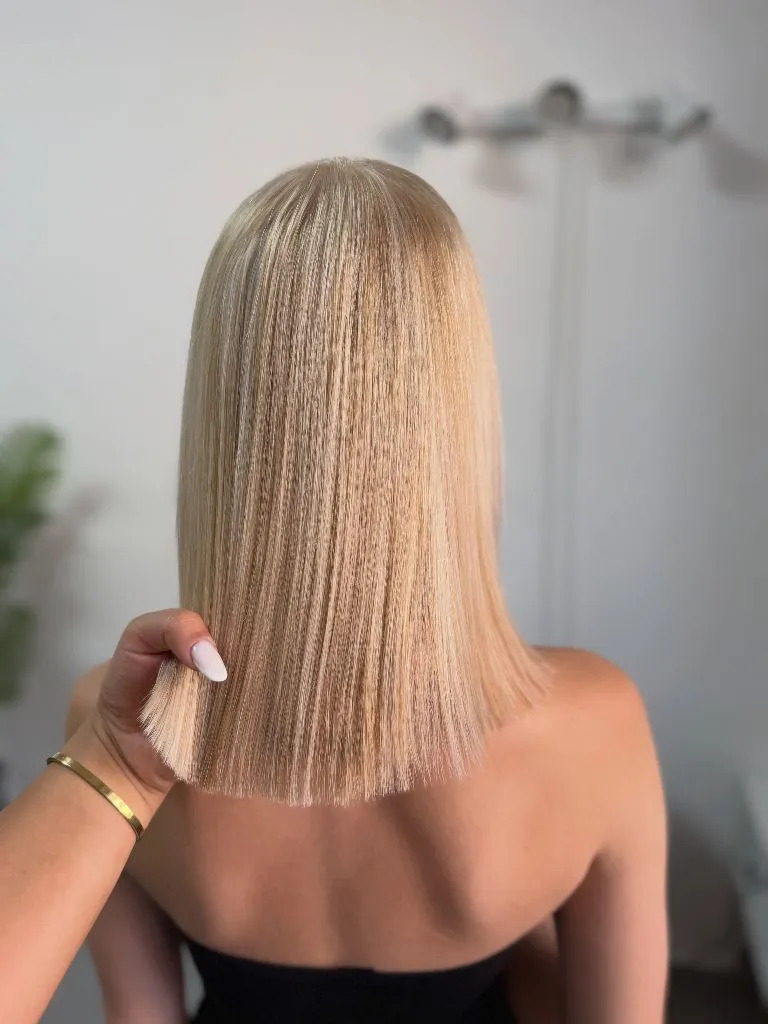
Photo via Instagram
The precision of the cut is the entire statement here. The blunt line at the bottom is mathematically straight, and the sleek finish removes any textural distraction that might compete with that geometric edge. The color is deliberately uniform, a single light-blonde value from scalp to tip, which turns the hair into a smooth, reflective plane. The gold bracelet and the hand’s position draw the eye downward to the clean terminal line, reinforcing the precision as the focal point. There is no layering, no wave, and almost no tonal variation, so every design decision points back to the cut.
What stands out most is how a single-tone blonde gains its entire identity from the cut rather than the color. The absence of highlights, lowlights, or texture means the blunt line and the sleek surface are the only visual events, and that extreme simplicity reads as a confident, considered choice rather than an omission.
19. Rooted Blonde Waves With Dark Crown Contrast
Long, wavy hair with a visible dark root zone and lighter blonde pieces from the ear down frames the face and falls past the shoulders. The roots are a medium-dark brown, and the blonde shifts from cool wheat tones at the midlengths to brighter, warmer pieces at the ends. The person wears a black cropped top and high-waisted denim, and the salon interior is visible behind with a warm wood counter and styling stations.
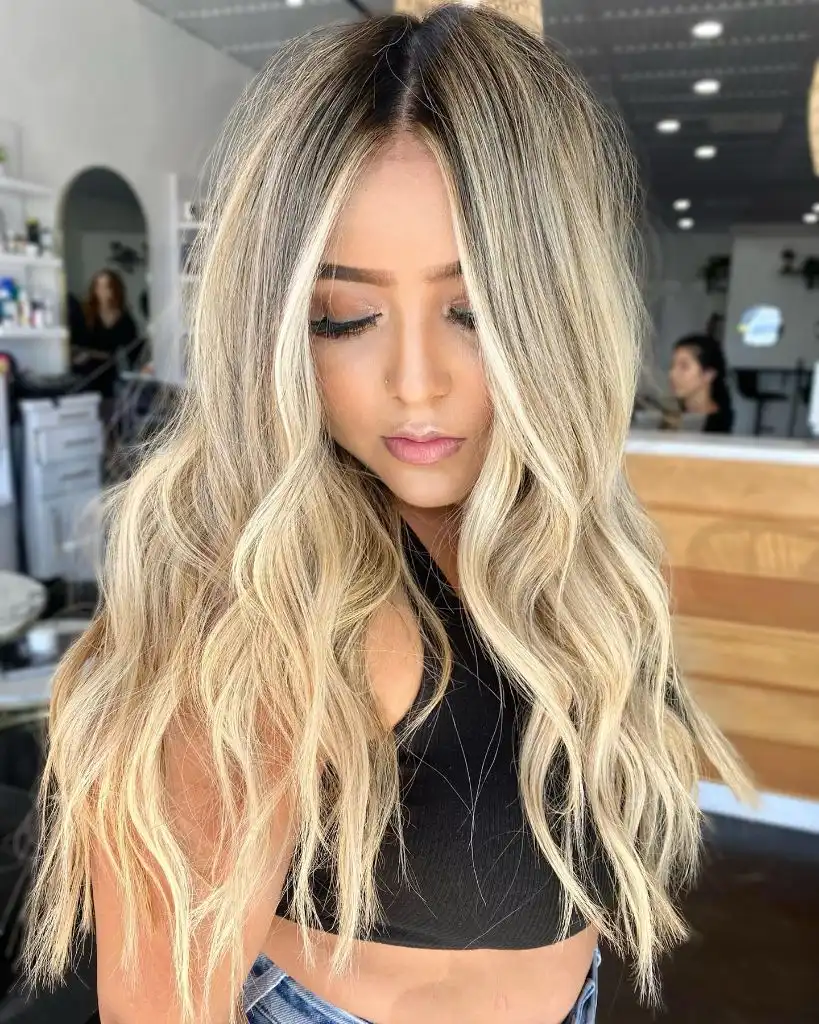
Photo via Instagram
The root depth here is the deepest in this series, which gives the blonde pieces their maximum contrast and visual impact. The dark crown creates a shadow zone that makes the lighter midlengths and ends feel brighter by comparison, and the wave pattern distributes that brightness unevenly, concentrating it on the outer curves and hiding it in the valleys. The temperature shift from cool wheat midlengths to warmer blonde ends adds a secondary layer of complexity, so the eye travels not only from dark to light but also from cool to warm as it moves down the length.
The beauty of this is the depth that a pronounced root zone creates for the blonde below it. The darker the crown, the more luminous the lighter lengths appear, and that contrast is one of the most effective tools for making a cool-weather blonde palette feel rich and intentional.
20. Bright Ash Blonde With Long Beachy Texture
Very long hair in a bright ash-to-cool blonde falls in loose, beachy waves well past the shoulders. The roots carry a subtle ashy-brown shadow, and the body of the hair is a uniform cool blonde with a slight silvery quality. The person wears a black sweatshirt with partially visible white text reading what appears to be a brand name, and they sit in a salon with a gold-framed mirror, salon chairs, and hanging greenery visible behind them.
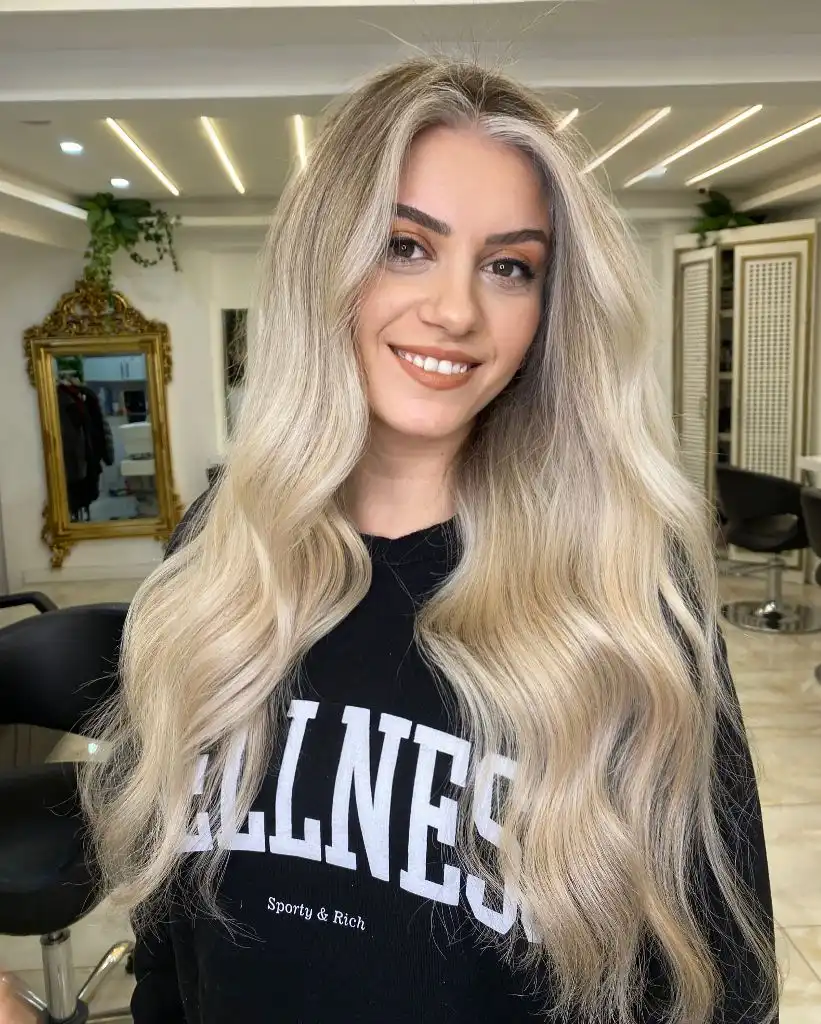
Photo via Instagram
The length and the cool tone work together here to create a cascading effect where the ash blonde reads as a single, continuous value across a large surface area. The beachy wave pattern introduces enough irregularity to keep the eye moving, but the tonal consistency means there is no single point of contrast to anchor attention, so the overall impression is one of diffuse, even brightness. The subtle root shadow is barely more than a half-tone darker than the body, functioning as a soft foundation rather than a visible contrast zone.
The useful idea is that a long, cool-blonde palette with minimal root contrast reads as volume and movement rather than as a color story. The uniformity of the tone turns the hair into a textural canvas where the wave pattern and the sheer amount of length become the primary visual events rather than any tonal shift.
21. Rich Brunette-to-Blonde Balayage With Deep Waves
Long, deeply waved hair is shown in three-quarter profile with a rich brunette root zone that transitions through warm caramel midlengths into lighter honey-blonde ends. The waves are full and defined, creating substantial volume and movement. The person wears a black top with a gold watch or bracelet visible at the wrist, and the background shows a warm-toned salon interior with upholstered seating.
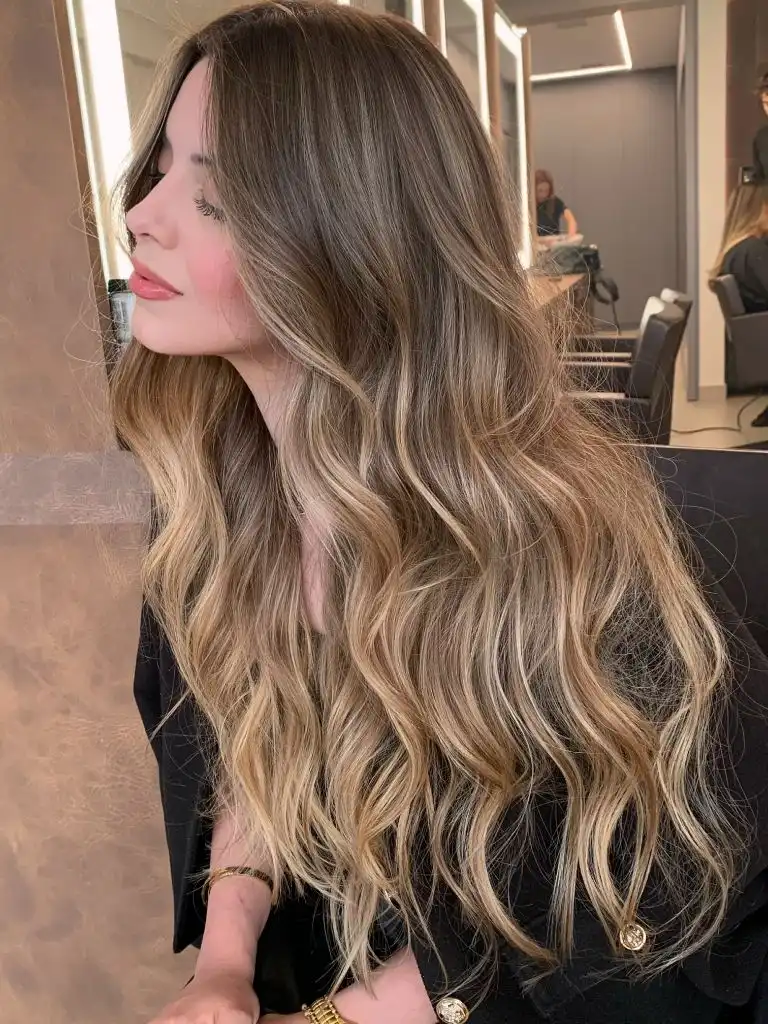
Photo via Instagram
The tonal range here is the widest in the collection, spanning from deep brunette at the roots to true honey blonde at the tips. That breadth creates a clear narrative of light emerging from dark, and the defined wave pattern amplifies this by turning each curl into a miniature gradient where the lighter exterior wraps around the darker interior. The volume adds further depth because the layered waves stack shadow upon shadow, making the caramel midlength zone appear particularly rich. The gold bracelet picks up the warm undertones of the blonde ends, creating a small but noticeable echo of color.
The strongest lesson is that the widest root-to-tip range produces the most dramatic visual story, and deep waves are the ideal vehicle for telling it. Each curl reveals the full spectrum of the transition, and the volume ensures that every layer of hair contributes its own version of that dark-to-light gradient.
22. Golden Honey Waves Against Stone
The back of long, wavy hair in a rich golden-honey blonde is shown against a textured stone wall. The tone is warm and saturated, sitting in a pure gold range with subtle lighter highlights running through the midlengths and ends. The waves are loose and natural-looking, and the hair falls past the shoulder blades. The person wears a dark top, and natural sunlight appears to illuminate the hair from above.
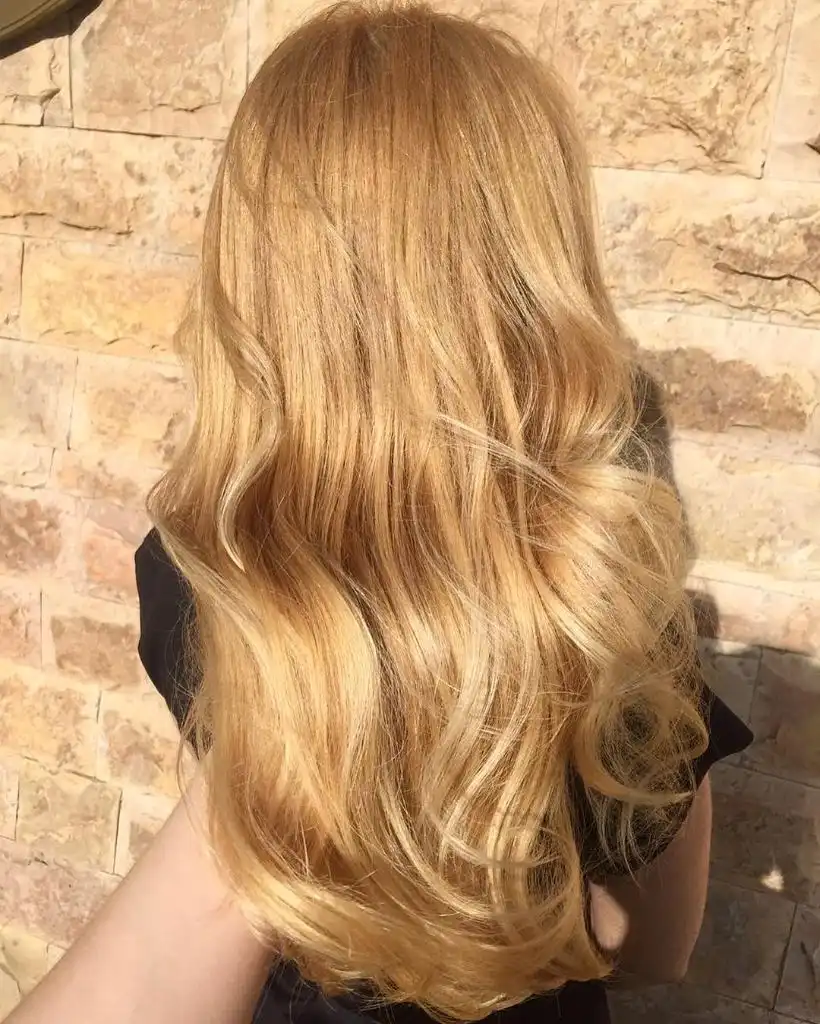
Photo via Instagram
The stone background is a critical part of this image. Its warm, sandy texture creates a tonal echo with the golden-honey blonde, so the hair appears to exist in dialogue with its environment rather than in isolation. The natural sunlight pulls the warmest values forward, making the gold tones appear saturated and luminous in a way that studio lighting might not replicate. The loose wave pattern allows the light to hit different sections at different angles, producing a range of gold values from a single base tone. The highlights are so close to the base color that they read as natural tonal variation rather than as placed color.
The best move here is recognizing that the warmest blonde tones respond most dramatically to natural light and warm surroundings. A golden honey blonde that might read as simply warm indoors becomes a complex, almost three-dimensional color in sunlight, which suggests that the final assessment of any winter blonde should account for the light it will actually live in.

Hi, I’m Zoey Mitchell, the creator of ChicStyle Blog.
I share simple, wearable outfit ideas, hairstyles, nail trends, and beauty tips that feel natural and easy to recreate.
This blog is where I explore everything that makes a woman feel put together and confident every day. I’m not an expert — just a woman who genuinely loves style, mixing looks, and discovering what works.
If you love effortless fashion with a personal touch, you’ll feel at home here.