
There is something about the way warm light catches a brunette wave in cooler months that shifts the entire mood of a color. A caramel ribbon through a dark root, a copper thread near the ends, or a quiet mocha gloss over mid-lengths — these are the small decisions that make cozy winter hair color ideas feel like they belong to a specific person rather than a generic palette. The season invites depth, and brunette dimension answers that invitation with restraint.
What makes a winter brunette color work is rarely one single shade. It is the relationship between variables: the contrast between root and mid-length, the warmth or coolness of the highlight tone, the placement of lighter pieces relative to the face, and the texture or movement that reveals hidden dimension. A balayage that reads as one color when straight may open into three distinct tones once styled with a wave. A gloss that appears flat in cool light might glow amber when the hair shifts. Throughout this article, each section examines one image through those four lenses — contrast, tone, placement, and movement — to identify the specific visual decisions that give each brunette color its seasonal weight and character. The goal is not to name trends but to read what each color does and why it functions the way it does.
1. Warm Caramel Ribbons With Layered Curls
The hair falls past the shoulders in long, face-framing layers, viewed from behind. The base sits in a medium chocolate brown, and hand-painted caramel ribbons emerge from the mid-lengths downward. The ends are styled into bouncy, curled-under waves that fan outward, and the curls separate the lighter pieces visually, creating depth through movement. The person wears a rust-toned top, and the background reads as an outdoor or patio setting with neutral stone.
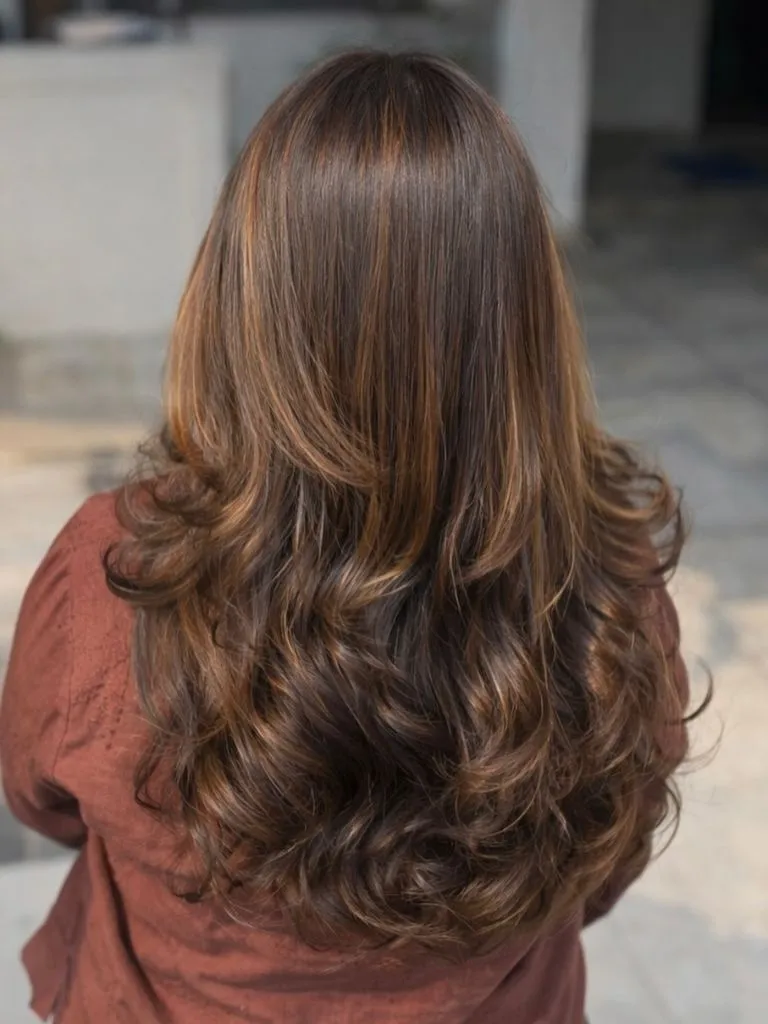
Photo via Instagram
The curled ends are doing most of the heavy lifting here. When the lighter caramel sits flat against the darker base, the contrast would read as two clean stripes, but the curl introduces a third dimension — shadow inside the coil, light on the outer edge. The rust-toned fabric underneath echoes the warmer end of the highlight spectrum without matching it exactly, and that near-repetition ties the frame together. The root zone stays deliberately dark and uninterrupted, which gives the eye a quiet place to rest before the warmth begins. That kind of graduated entry into color keeps the overall look from feeling busy, even with this much tonal range in play. Approaches like these are worth studying alongside other brunette styling ideas that rely on layered dimension.
The reader takeaway is that curl pattern can multiply the perceived number of tones in a single color. Caramel on straight hair reads as one shade; the same caramel wrapped around a barrel separates into highlight, shadow, and mid-tone all at once. The principle is simple — if the color has warmth built in, let the styling do the revealing rather than adding more lightness.
2. Glossy Chocolate Waves With Soft Center Part
The hair is long, thick, and styled in loose, glossy S-waves that drape over both shoulders. A soft center part divides the hair evenly. The base is a rich chocolate brown, and subtle warm undertones emerge through the mid-lengths where the wave catches light. A stylist’s hand holds one side of the hair outward at shoulder height. The person wears a dark charcoal salon wrap with a gold-toned insignia near the hem, and the background shows a salon interior with black-and-white flooring.
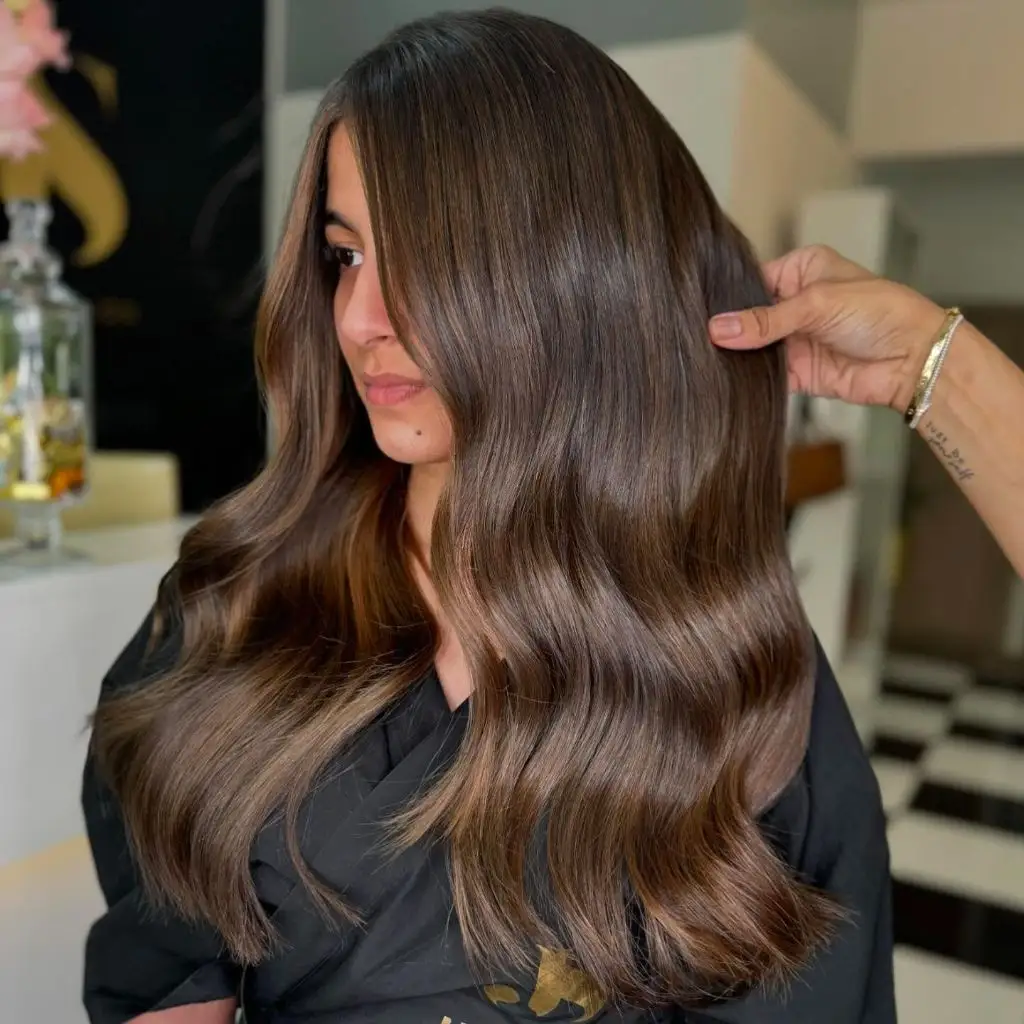
Photo via Instagram
What stands out is how little visible highlighting there is, yet the hair still reads as dimensional. The gloss is the variable doing the work — it catches directional light on the outer curve of each wave and releases it into shadow on the inner side. The center part creates symmetry, and the even weight distribution across both shoulders gives the overall shape a curtain-like quality. The dark wrap fabric beneath provides enough contrast to make the warmer mid-length tones legible without competing. That restraint in color placement, keeping the warmth subtle and interior rather than surface-level, lets the shine act as the primary design element.
The useful move here is recognizing that a high-gloss finish on a near-single-process brunette can deliver dimension that rivals a full balayage. The wave shape opens and closes the hair surface like a shutter, alternating between reflective crests and matte troughs. For anyone drawn to low-maintenance color, the takeaway is that investing in gloss and styling technique can replace the need for heavy lightening.
3. Seamless Brunette Melt With Loose Body Waves
Viewed from behind, the hair hangs in long, loose waves with a gentle S-pattern. The roots are a deep chocolate, and the color transitions into a warm medium brown by the mid-lengths with no visible demarcation line. The ends curve softly outward. The person wears a dark top, and the salon background is softly blurred with pink flowers and neutral furniture visible.
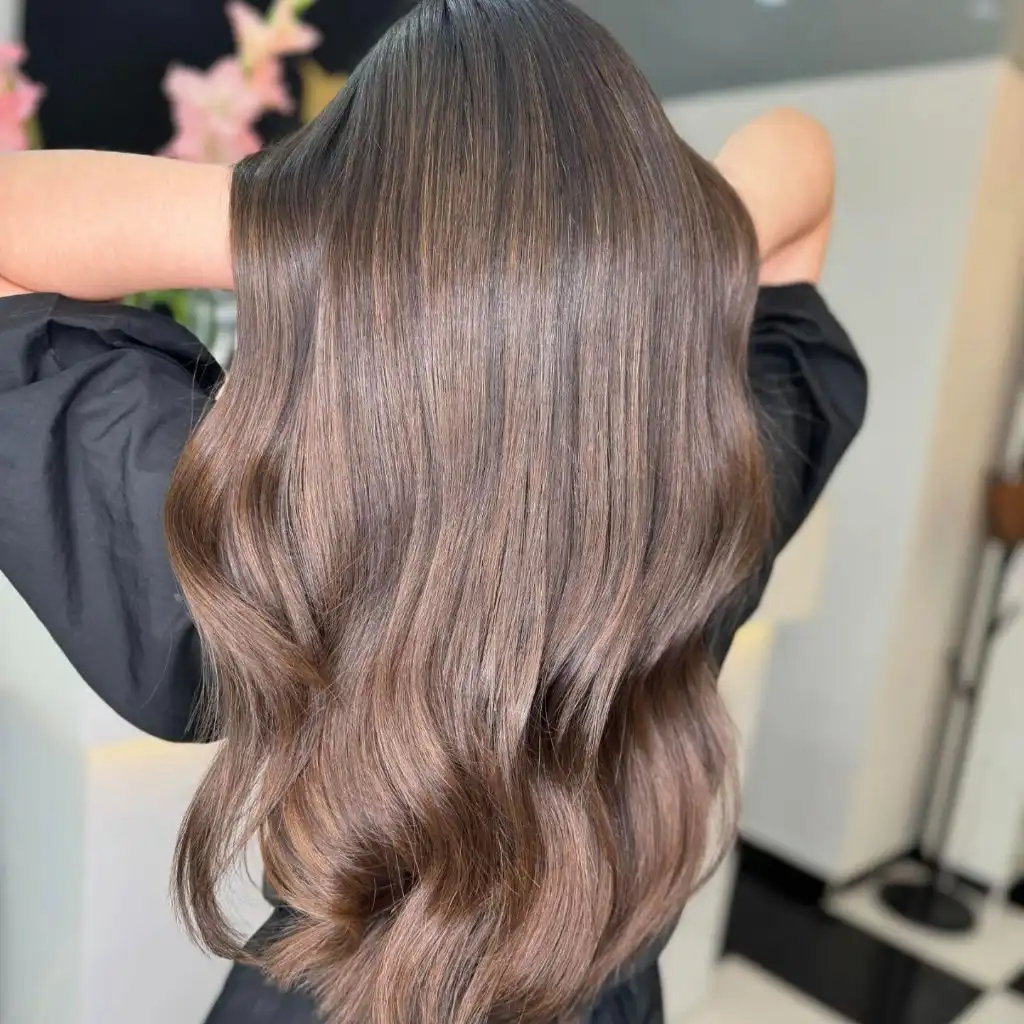
Photo via Instagram
The melt here is almost invisible, which is exactly the point. There is no sharp line where dark ends and light begins — the gradient happens slowly, over several inches, and the loose wave texture keeps that transition in constant motion. The overall palette stays within a narrow band, perhaps two levels of lift at most, and that closeness creates a cohesive warmth rather than a dramatic contrast. The soft flick at the ends opens the color just enough to show the lightest point without announcing it. The blurred background keeps the focus entirely on the tonal journey from root to tip. This kind of subtle root-to-tip graduation is central to the approach explored across many warm hair color guides focused on natural dimension.
The strongest lesson is that a color melt does not need a wide tonal range to be effective. Two closely related shades, blended slowly over length, can produce a sense of warmth and depth that reads as naturally sun-touched rather than salon-created. The narrower the tonal gap, the softer the perceived shift, and that softness is what gives the color its cozy, lived-in quality.
4. Ash-Toned Brunette With Dramatic Curtain Layers
The hair is cut into long, face-framing layers that sweep outward at the ends, creating a curtain-like silhouette. The color is a cool-leaning dark brunette with ashy undertones visible where the hair catches light near the face and along the parted fringe. The person looks downward, and the hair covers most of the face. They wear a fitted black top, and behind them a large fiddle-leaf fig plant and a shelf of salon products are visible.
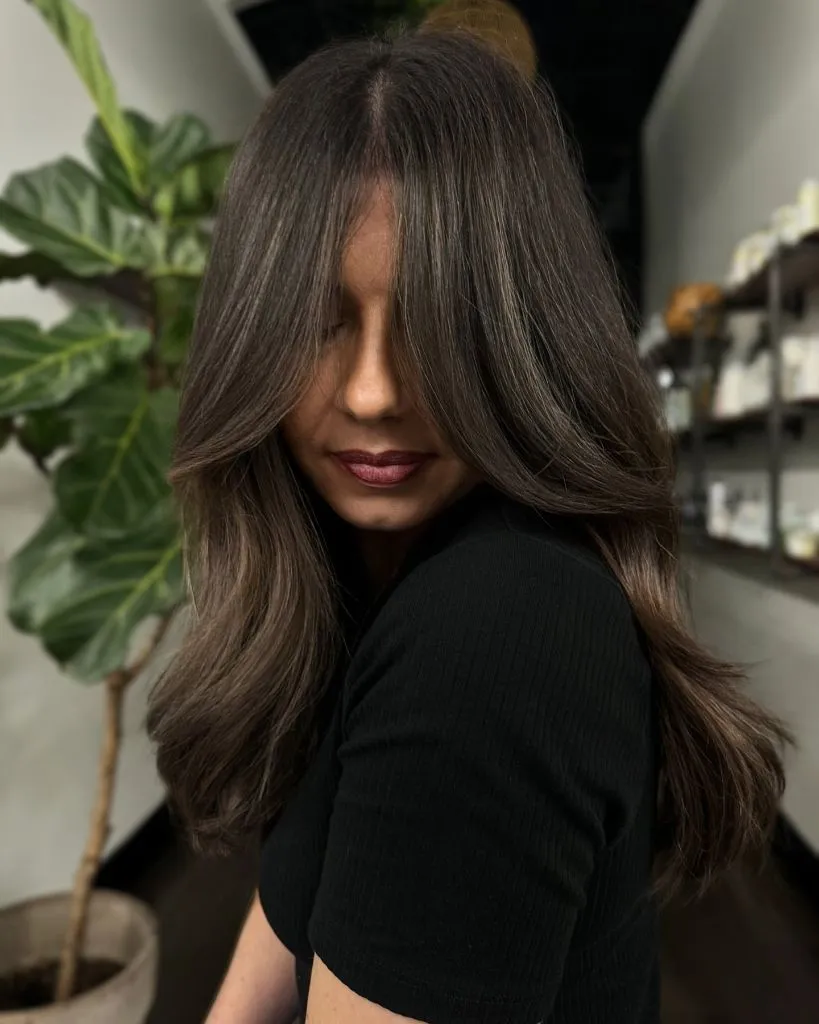
Photo via Instagram
The cool undertone is the quiet anchor of this entire look. Where the previous images lean warm — caramel, mocha, honey — this one pulls in the opposite direction, and the ash quality reads most clearly in the lighter areas near the face where the layering creates separation. The dramatic sweep of the curtain layers means the hair moves outward from the center part in two broad arcs, and that movement reveals the ashy mid-tones that would stay hidden in straighter styling. The black top absorbs light and pushes the slightly lighter ends forward by contrast. The overall mood reads as deliberately muted, which suits the cooler end of a cozy winter hair color palette.
What stands out most is the way a cool undertone can create winter dimension without any warmth at all. Not every seasonal brunette needs caramel or copper — an ashy base with layered movement can produce its own kind of depth. The principle is that tone temperature is a design choice, not a default, and cooler shades carry their own version of richness.
5. Grown-Out Balayage With Natural Wave Texture
The hair is very long, reaching past the mid-back, and sits in its natural wave pattern without heat styling. The roots and upper lengths are a dark brown approaching black, and a grown-out balayage emerges through the lower half in warm golden-brown and honey tones. A few lighter pieces near the front are visible. The person wears a colorful floral salon cape with pink and animal-print details, and salon equipment including a mixing bowl and a green brush are visible on a table behind.
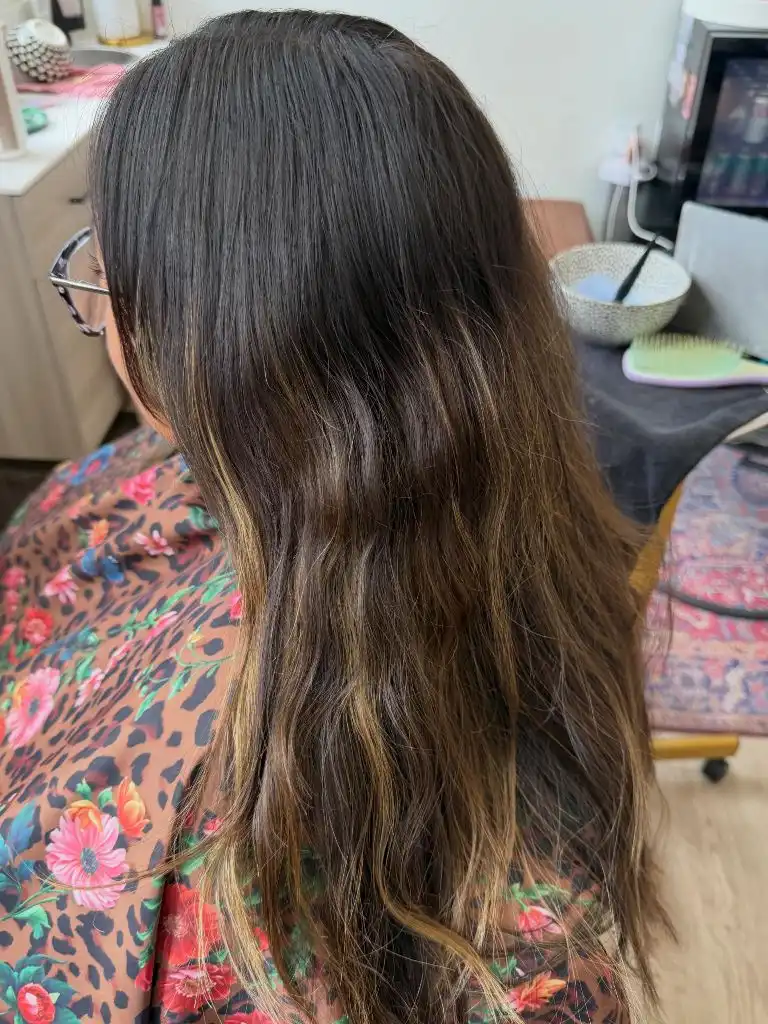
Photo via Instagram
This is the most unfinished-looking color in the set, and that is part of what makes it instructive. The balayage has clearly grown several inches from its original placement, and the gap between the dark root zone and the warm lower half is wider than in a freshly done service. But the natural wave texture softens that gap — the bends and curves in the hair break up the transition line, making it read as gradual rather than neglected. The honey tones at the very ends catch the most light and serve as the visual endpoint, pulling the eye downward through the length. The colorful cape adds visual noise, but the hair holds its own tonal story.
The useful idea is that growth patterns can become a feature rather than a flaw when paired with the right texture. A cozy winter hair color does not need to be freshly applied to carry dimension — the distance between root and lightened ends can read as intentional depth if the natural movement supports it. Embracing the grow-out phase as part of the design changes the maintenance timeline entirely.
6. Voluminous Layered Bob With Soft Brunette Depth
The hair is cut into a medium-length layered bob, roughly chin to shoulder length, with voluminous styling that lifts the crown and sweeps the layers outward. The color is a uniform dark chocolate brown with no visible highlights or contrasting tones. The person smiles broadly, showing teeth, and wears a taupe-gray salon cape printed with the name of a hair salon. The setting is a warmly lit interior with pendant lighting and a reception counter behind.
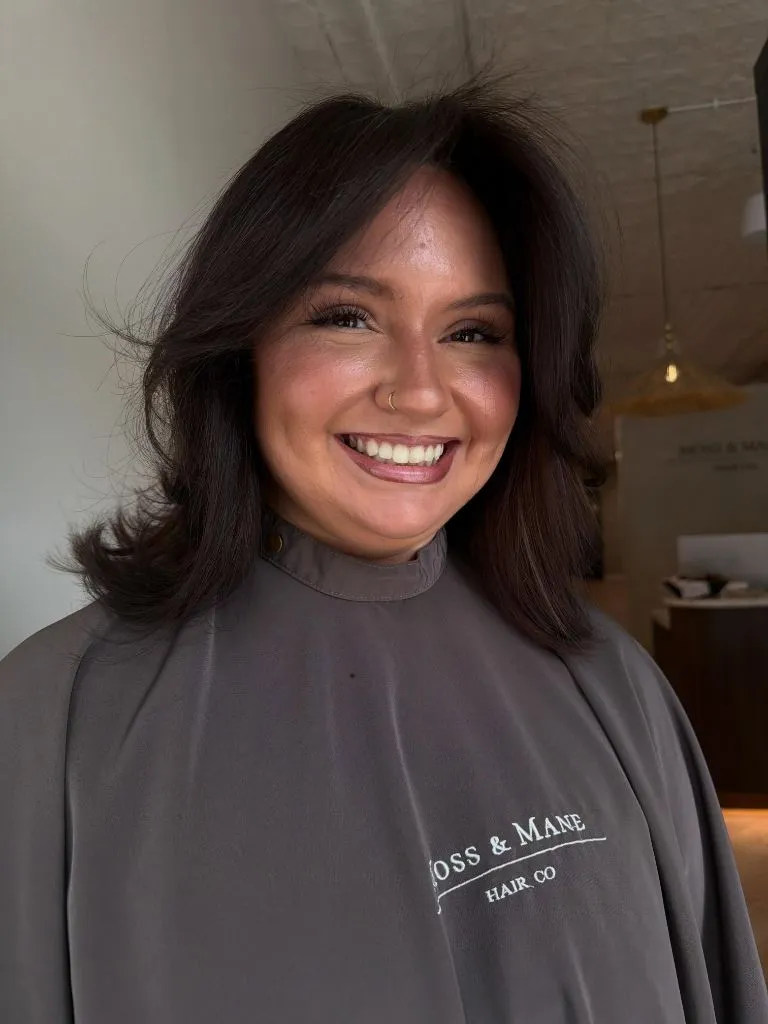
Photo via Instagram
Here the color is deliberately singular — one shade, no balayage, no highlights, no tonal variation. The dimension comes entirely from the cut and the styling. The layered ends flip outward, and the volume at the crown creates a rounded shape that catches overhead light on its highest points and falls into shadow along the sides. That light-to-dark movement mimics what a multi-toned color would do, but achieves it structurally. The taupe cape is close enough to the hair’s warm brown family to create a tonal continuity that frames the face softly. Understanding how cut and volume create the illusion of dimension is something covered in detail on hairstyle trend pages that address shape as a styling tool.
The beauty of this is that a single-process brunette can deliver visual interest equal to a complex color service when the cut provides the architecture. Volume, layer placement, and directional styling are all forms of dimension. The transferable idea is that color and cut are not separate decisions — one can compensate for the simplicity of the other.
7. Medium Brunette With Fine Caramel Highlights
Viewed from behind at a slight downward angle, the hair is medium length, falling just past the shoulders, and styled in soft, bouncy curls at the ends. The base is a medium-dark brown, and fine caramel highlights are woven throughout the mid-lengths and ends, most visible where the curls separate. The person wears a dark top, and the salon background shows shelving with blue product bottles and styling tools.
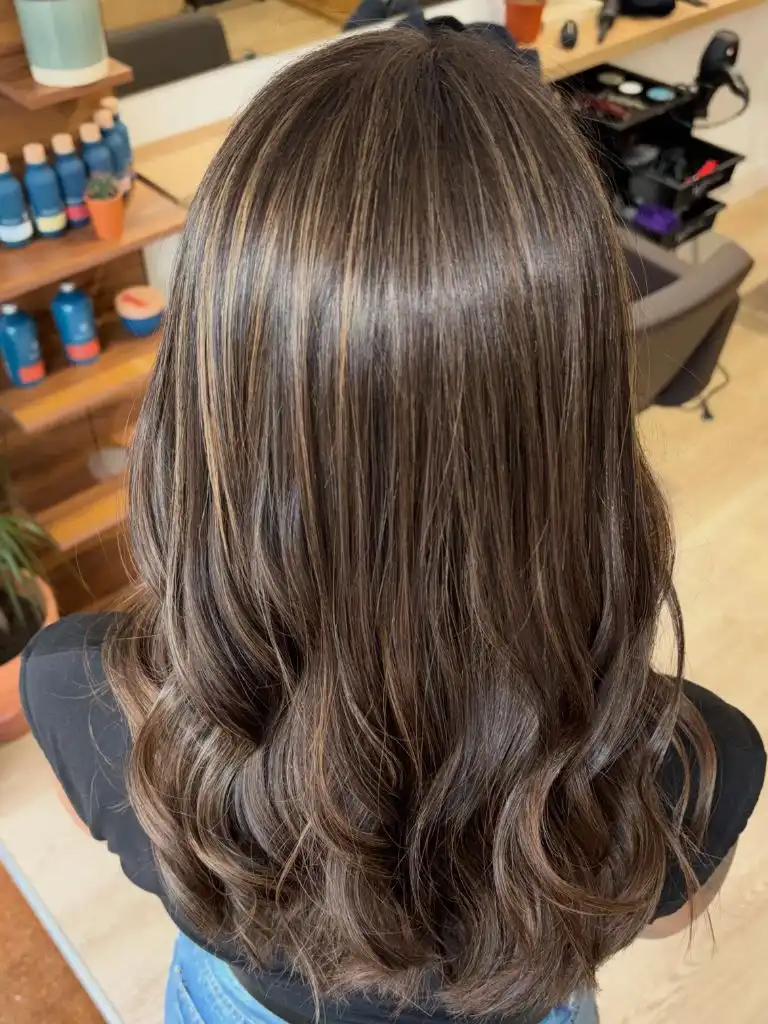
Photo via Instagram
The highlights here are finer and more evenly distributed than in the earlier caramel-ribbon image. Rather than a few bold painted pieces, these are thin, closely spaced strands that blend into the base when the hair is still and separate into individual tones when the curl opens. The result is a shimmering, almost woven quality that reads as texture rather than color contrast. The curls at the ends act as little light traps, and each one holds its own micro-gradient from highlighted crest to shadowed interior. The even distribution means there is no single focal point — the eye travels across the surface evenly.
The reader takeaway is that the density of highlight placement changes the character of the color entirely. Bold, widely spaced pieces create contrast and drama; fine, closely woven pieces create texture and cohesion. For a winter brunette that wants warmth without strong contrast, the finer weave produces a result that feels integrated rather than layered.
8. Sharp Angled Bob in Dark Espresso
The hair is a short, precisely cut angled bob that is longer in the front and shorter at the nape. The color is a deep, near-black espresso with a high-shine finish. The hair is blow-dried perfectly straight with no wave or curl. Viewed in profile from behind, the clean geometric line of the cut is the dominant feature. The person wears a black salon cape with snap closures at the neck, and the salon interior shows a counter and hardwood-toned flooring.
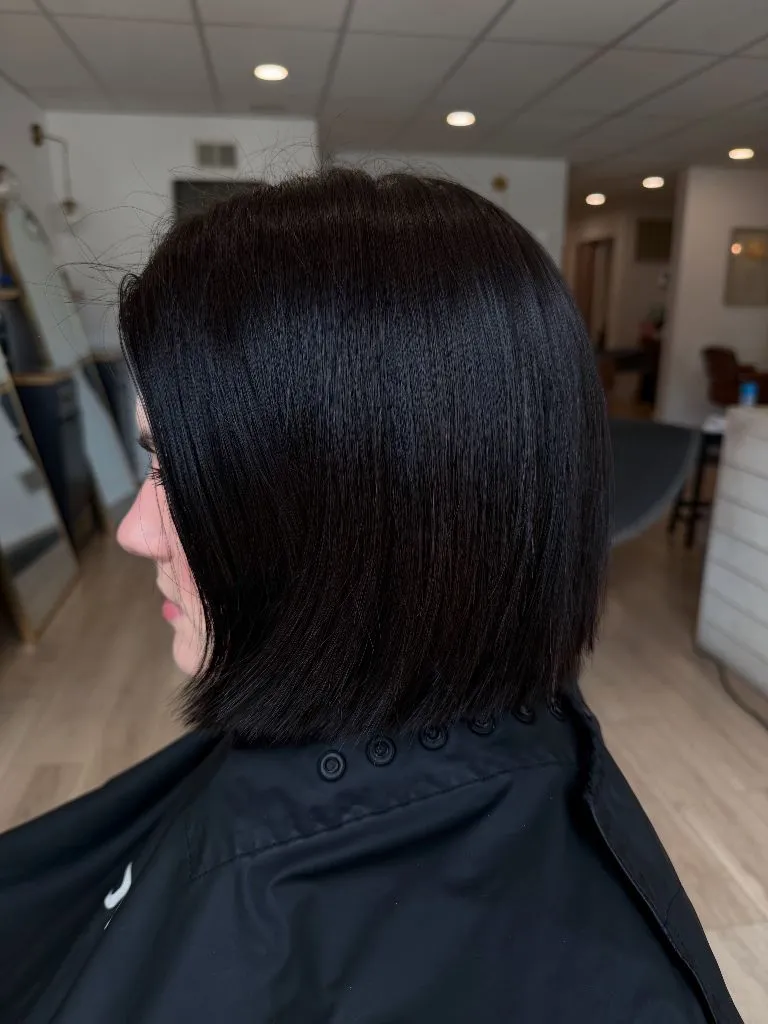
Photo via Instagram
This is the most architectural image in the entire set. There is no color variation, no tonal play, and no texture — the design is entirely in the line. The angled cut creates a diagonal that draws the eye from the shorter nape point forward to the longer front pieces, and the high-gloss finish on the straight surface turns the hair into a single reflective plane. The espresso shade is so deep it almost absorbs light, but the shine rescues it from appearing flat. The black cape disappears into the hair color, which makes the jawline cut edge the only visible boundary. That precision suggests a commitment to shape as a foundational styling element that carries more visual weight than any color decision.
The best move here is the recognition that darkness and shine, combined with a geometric cut, produce their own kind of winter richness. Not every cozy winter hair color idea requires warmth or lightness — deep espresso with architectural precision reads as deliberate and polished. The principle is that the cut line can become the dimension.
9. Dark Cherry Brunette With Textured Lob
The hair is cut to a shoulder-length lob with a slight wave through the mid-lengths and ends. The color is a very dark brunette base with a subtle cherry or burgundy undertone that reads most clearly near the ends and along the wave crests where light hits. A soft middle part frames the face. The person wears a pale green sleeveless top, and a pendant necklace hangs at the collarbone. The salon interior behind is warm-toned with shelves of products and round mirrors.
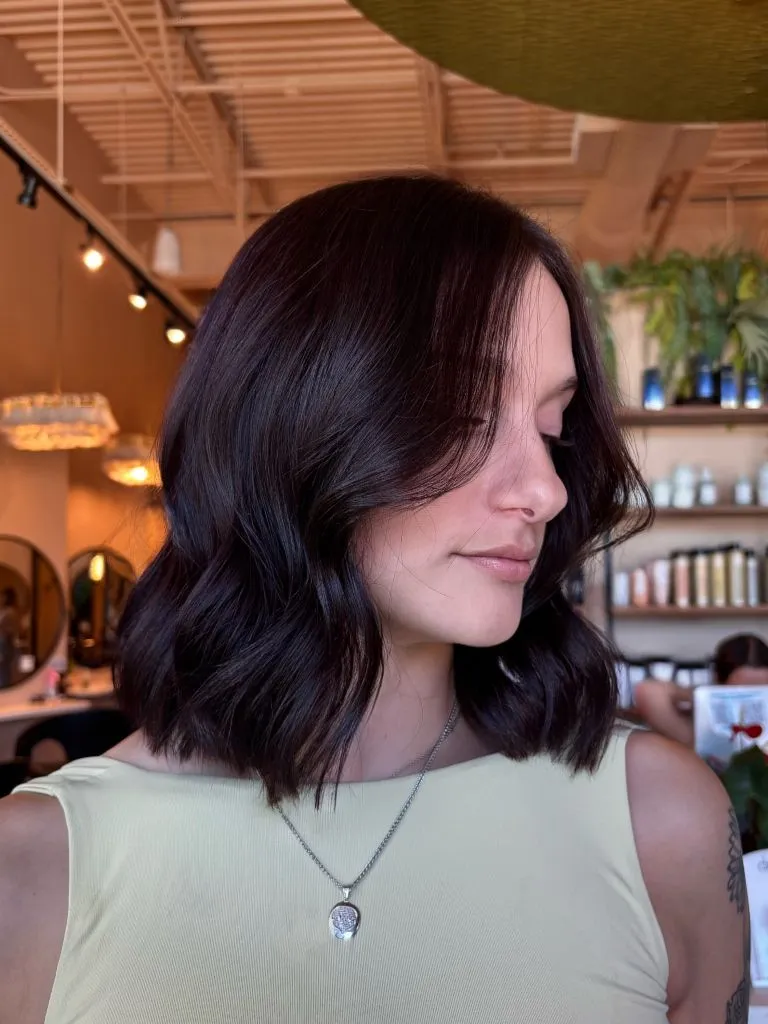
Photo via Instagram
The cherry undertone is quiet enough that it might not register in flat lighting — it reveals itself only at the wave peaks where the surface angles toward the light source. That conditionality is what makes the color feel complex. In shadow, the hair reads as near-black; in light, the burgundy appears almost like a stain beneath the surface. The shoulder-length lob keeps the volume compact, and the wave texture provides just enough surface variation to activate the hidden undertone. The pale green top creates a cool contrast against the warm burgundy, and that opposition sharpens the perception of the red tones. I appreciate how the pendant necklace sits at exactly the point where the hair ends, creating a small anchor that resolves the vertical line.
The useful move here is using an undertone rather than an overtone to introduce a second color into a brunette base. A cherry or burgundy stain beneath a dark surface reads as mood rather than color, and it shifts depending on lighting and movement. The transferable idea is that hidden warmth, the kind that appears and disappears, creates a seasonal richness that feels discovered rather than applied.
10. Cool Ash Brunette With Face-Framing Dimension
The hair is long, past the shoulders, with a side-swept part and long layers. The base is a cool-toned dark brunette, and lighter ash-brown and sandy pieces frame the face, concentrated from the part line through the front sections. The mid-lengths and ends carry a softer wave with flipped ends. The person looks downward with eyes closed, and wears an olive or sage green top. The background suggests a home or apartment interior with hardwood floors and a doorway.
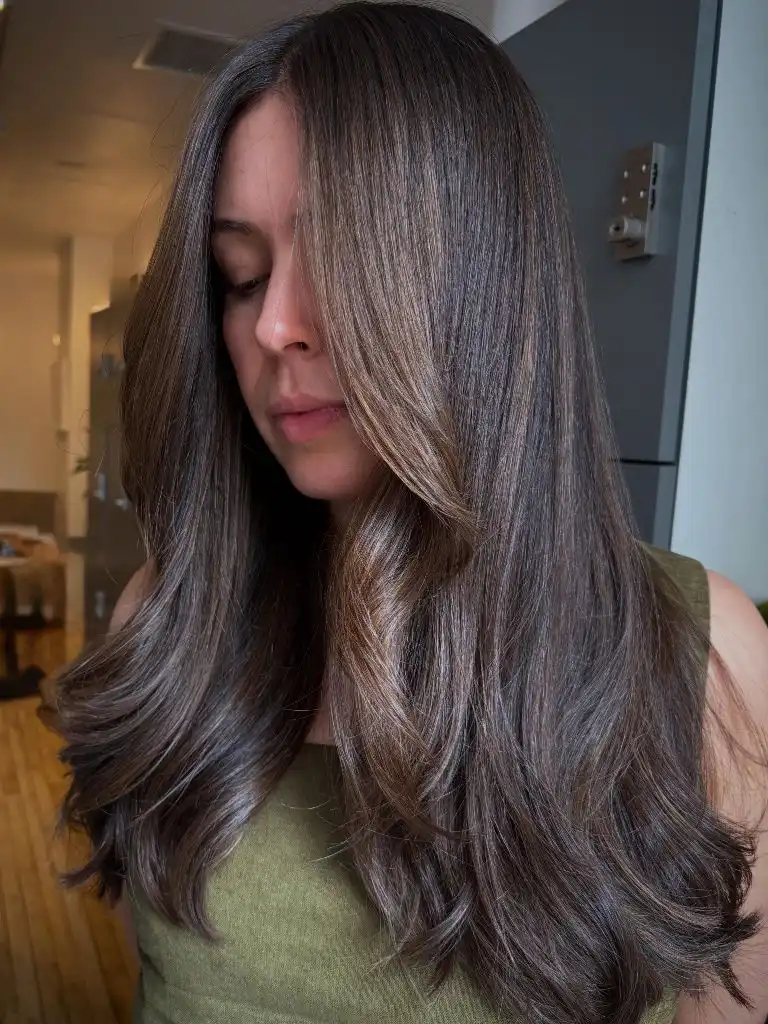
Photo via Instagram
The face-framing pieces are the focal device in this image. They sit two to three levels lighter than the base and carry a noticeably cooler, ashier tone than any of the caramel-warm variations seen earlier. That coolness concentrates the lightness around the face, creating a natural-looking frame that contrasts with the darker mass of hair behind. The layers fall in a cascading shape that widens as it descends, and the flipped ends add a gentle outward movement that prevents the longer lengths from hanging flat. The cool-warm dialogue between the ashy highlights and the olive top creates a muted, tonal palette that reads as cohesive. Exploring how seasonal color palettes interact with skin tone and fabric can deepen the understanding of this kind of tonal coordination.
The strongest lesson is that face-framing placement changes not just the hair but the perception of the entire face. Lighter pieces around the part line act as a brightening frame, and when those pieces carry a cool undertone, the effect is softer and more understated than warm alternatives. The principle: placement near the face carries disproportionate visual weight.
11. Rich Chocolate Waves With Volume at the Crown
The hair is medium-long, styled in soft, voluminous waves with significant lift at the crown and root area. The color is a warm, rich chocolate brown with subtle tonal variation through the mid-lengths where the wave opens. A hand reaches up from behind to touch the hair near the crown. The person wears a dark navy or black top. The background is warmly lit with indoor plants visible, suggesting a salon environment.
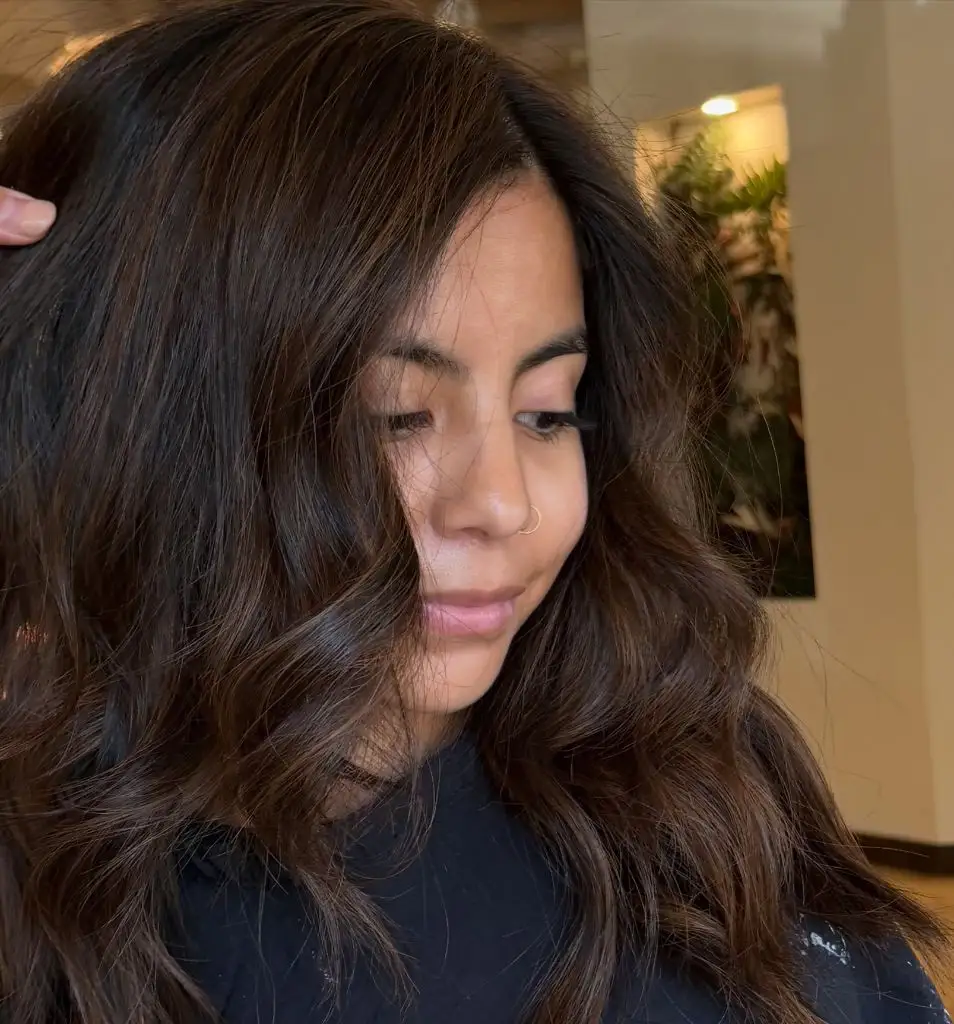
Photo via Instagram
The volume is the dominant design element, and the hand position draws attention directly to where the lift is greatest. The crown area sits two to three inches above where the hair would naturally fall, and that elevated silhouette changes the entire shape of the style from cascading to structured. The chocolate tone benefits from this volume because the increased surface area catches more ambient light, revealing warm undertones that would be compressed and hidden in flatter styling. The wave pattern through the lower lengths is looser and less defined than in earlier images, and that softness below the structured crown creates a pleasing tension between control and relaxation. The dark top provides a uniform base that does not compete with the hair’s warm tonal range.
What stands out most is the relationship between volume and color perception. The same shade of chocolate brown reads differently at different heights — warmer and lighter at the crown where it catches overhead light, deeper and cooler along the sides where it falls into shadow. The transferable principle is that styling decisions are color decisions, and volume placement is a tool for revealing or concealing warmth.
12. Voluminous Bronde Waves With Curtain Bangs
The hair is long and very voluminous, styled in large, loose waves that frame the face symmetrically from a center part. The color is a warm bronde — the border between brunette and blonde — with darker roots transitioning into golden-brown mid-lengths and slightly lighter ends. Curtain-style bangs or face-framing layers sweep outward at cheekbone level. The person wears a white strapless top, and a delicate gold chain necklace sits at the collarbone. The background is a gray textured wall with a dark green plant edge visible.
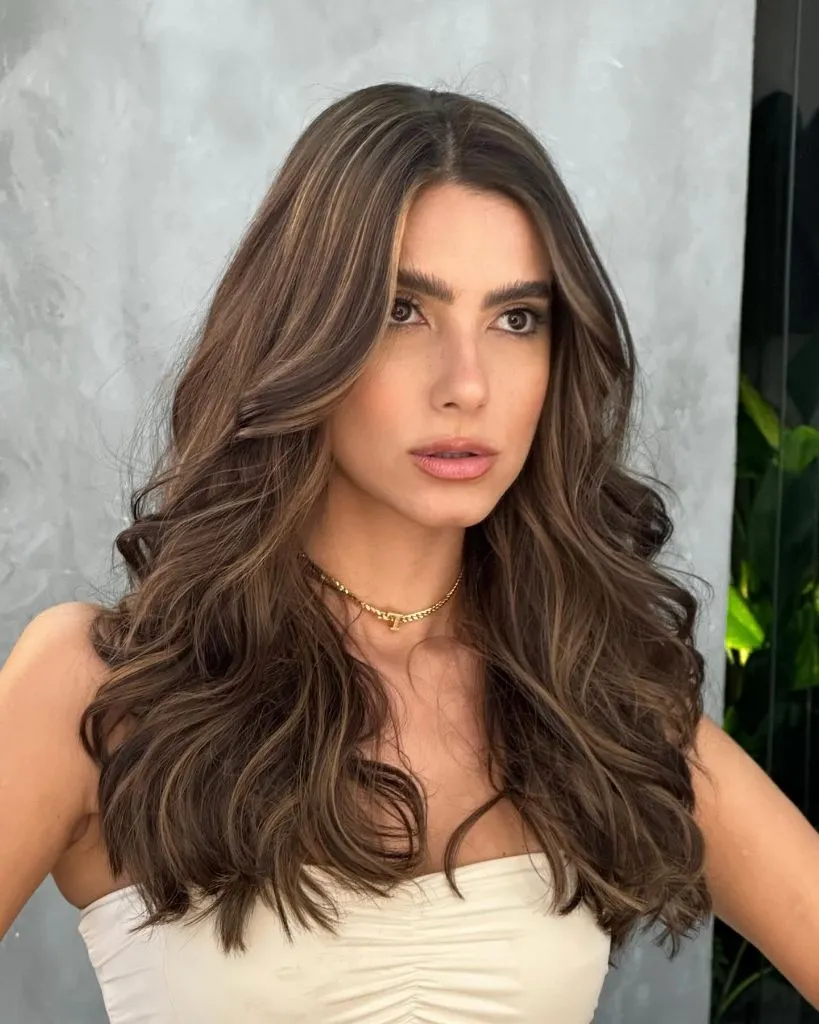
Photo via Instagram
The bronde tone here sits at the warmest and lightest end of the spectrum in this article, and the volume amplifies that lightness by spreading the golden-brown across a large surface area. The curtain bangs create a second framing layer inside the larger wave structure — the outer waves frame the shoulders, while the bangs frame the cheekbones, producing a nested effect. The dark root grounds the lightness and prevents the overall look from drifting too far from brunette territory. The white top reflects upward light onto the lower lengths of the hair, which brightens the ends further and extends the perceived tonal range. The gold necklace picks up the warmest note in the color and repeats it as a metallic accent. This kind of layered color strategy connects to the principles found in warm brunette color guides that examine how surrounding elements influence perceived shade.
The reader takeaway is that bronde occupies a useful middle zone between full brunette and full blonde, and its effectiveness depends on the root contrast keeping it anchored. Without the dark root, this color would read as light brown; with it, the golden tones register as highlights against a brunette foundation. The lesson is that the anchor matters as much as the accent.
13. Caramel Balayage With Deep Copper Undertones
Viewed from behind, the hair is very long and styled in large, defined waves. The base is a deep chocolate brown, and the balayage transitions into warm caramel and copper tones through the mid-lengths and ends. The copper undertone is most visible in the lower third, where the hair catches direct light. The person wears a white eyelet-lace blouse with long sleeves, and their hands are raised behind the head. A rose gold watch is visible on one wrist. The salon background shows a bright, mirror-lined space.
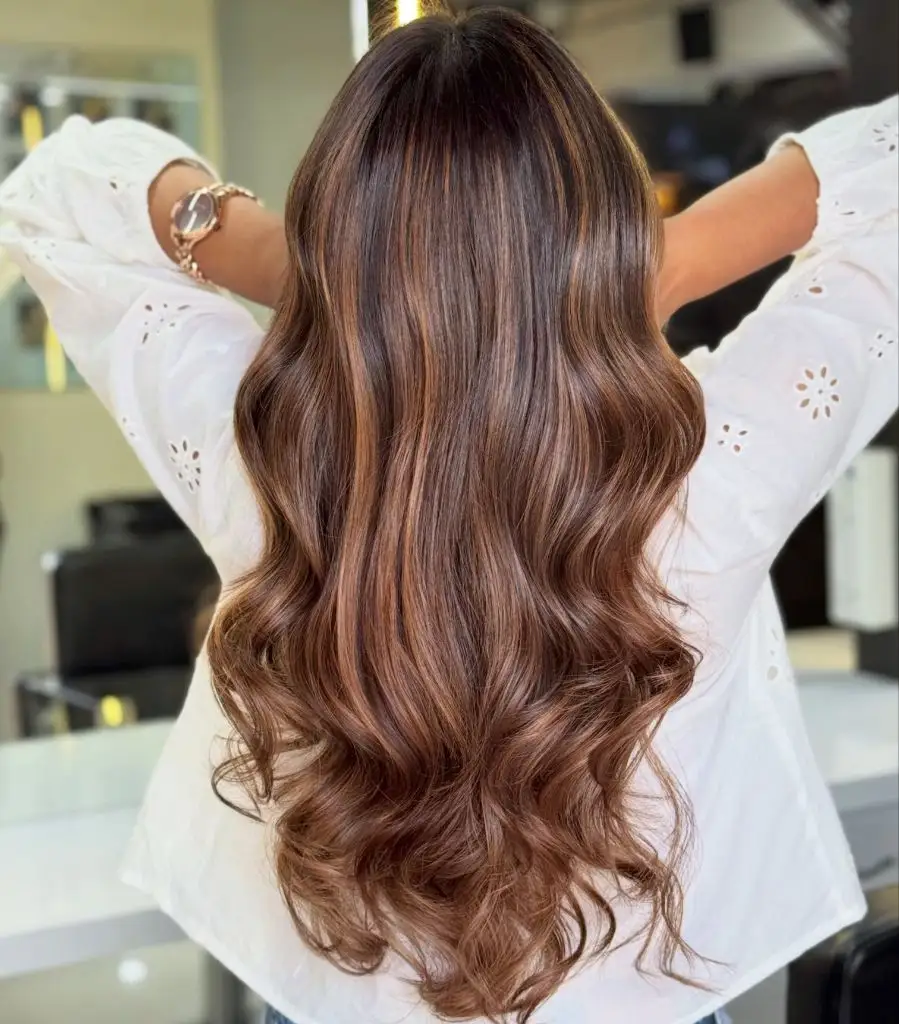
Photo via Instagram
The copper undertone is the distinguishing feature here — where other caramel balayages in this article lean golden or honey, this one pushes into a warmer, almost reddish territory. The large wave pattern creates wide bands of alternating light and shadow, and the copper reads most strongly on the convex surface of each wave where direct light hits. The deep chocolate root provides a dramatic contrast that makes the warm ends appear even more saturated by comparison. The white eyelet blouse serves as a high-contrast frame that pushes the hair forward visually, and the rose gold watch creates a small but effective color echo of the copper in the hair. That repetition of warm metallics across hair and accessory ties the image together without being obvious.
The beauty of this is the way copper and caramel can coexist within a single balayage, shifting from one to the other depending on where the wave turns. The principle is that warmth is a spectrum, and allowing the balayage to travel across that spectrum — from golden to copper — creates a richer result than staying within a single warm tone.
14. Hollywood Waves in Warm Chestnut With Gloss Finish
The hair is long, styled in structured Hollywood-style waves that cascade over one shoulder. The color is a warm chestnut with a high-gloss finish, and the roots are approximately one shade deeper than the mid-lengths. The waves are smooth and uniform, creating a polished, deliberate pattern. The person wears a white eyelet or broderie anglaise blouse, and the background shows a salon interior with mirrors and lighting fixtures.
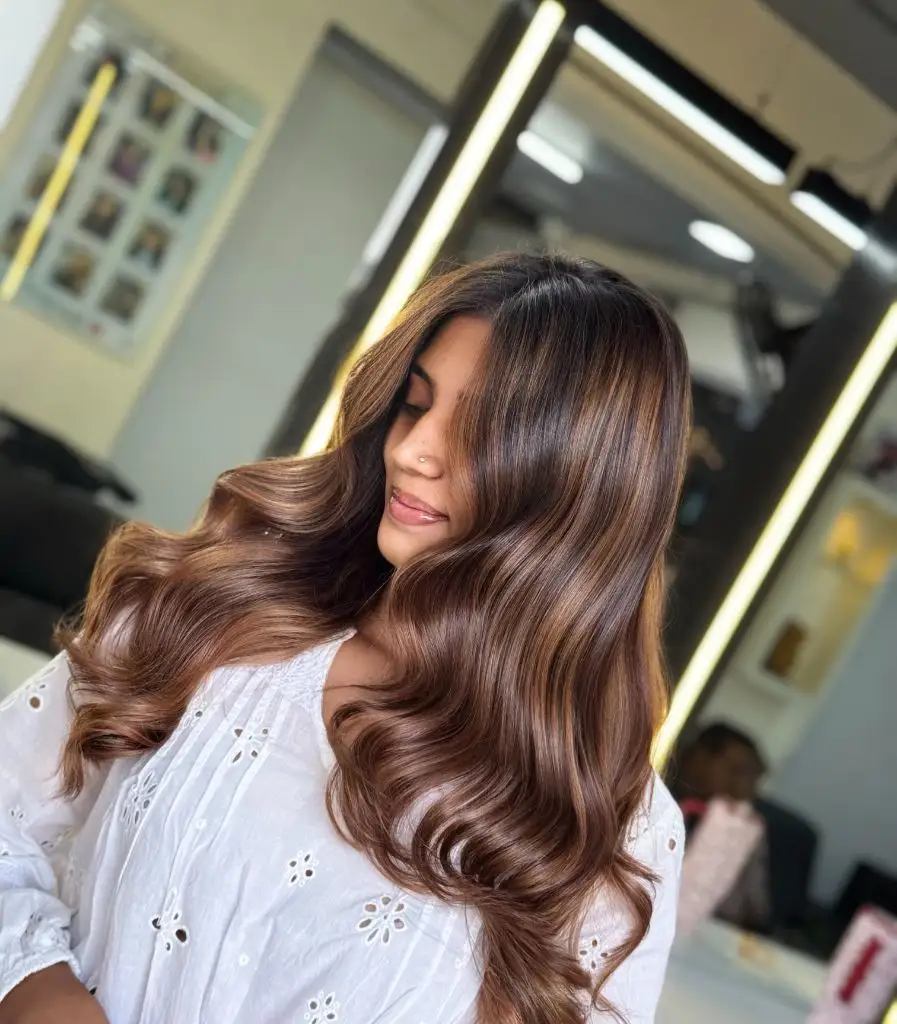
Photo via Instagram
The Hollywood wave styling introduces a formality that changes how the color is perceived. The same chestnut shade in beachy, undone waves would read as casual and warm; in this structured wave pattern, it reads as polished and intentional. The gloss finish amplifies the wave structure by creating bright, hard-edged reflections on each crest and deep shadows in each trough. The tonal difference between root and mid-length is minimal — perhaps a single level — but the wave structure magnifies that small difference by alternating between the two zones rhythmically. The white blouse provides a clean, bright base that makes the warm chestnut appear richer by contrast. This kind of structured, warm-toned styling represents the polished approach to seasonal hair that relies on surface finish as much as color.
The useful idea is that wave pattern dictates the formality and perceived complexity of a color. The same shade in different wave structures tells different stories. For a cozy winter hair color that needs to move between casual and formal settings, the wave pattern is the adjustable variable — the color can stay fixed while the styling shifts the mood.
15. Teddy Bronde With Defined Color Formula
The hair is long, styled in soft waves with a center part. The color is labeled in on-screen text as “Teddy Bronde” with specific L’Oreal Professional formulas noted: Diacolor 6.23 at the roots, a global formula of 6.13 plus 7.17, and a Dialight 7.23 gloss. The result is a warm, medium brunette with golden-brown tones through the mid-lengths. The person wears a black V-neck ribbed top and a delicate chain necklace. The background is plain and neutral.
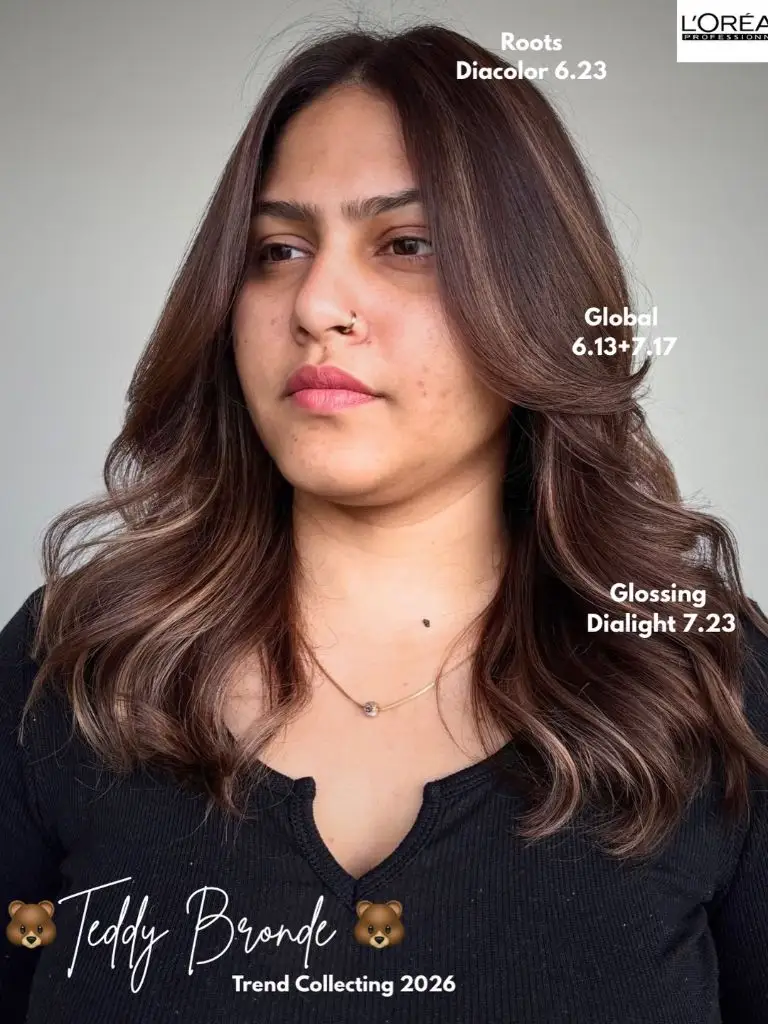
Photo via Instagram
The formula overlay is an unusual element that transforms this from a style image into something closer to a technical reference. The three-zone approach — a distinct root formula, a global mid-length formula, and a separate gloss — reveals that what reads as one cohesive warm brunette is actually three deliberate color decisions layered on top of one another. The root sits slightly darker and warmer, the global shade introduces a mix of ash and warmth, and the gloss adds a golden veil over everything. The result looks seamless, but the construction is specific and considered. The warm tones in the hair pair naturally with the black ribbed top, which provides a clean frame that lets the golden-brown dimensions come forward.
The strongest lesson is that a natural-looking color often requires multiple carefully layered formulas rather than a single application. The “one shade of brown” effect is frequently an illusion created by strategic layering. The transferable principle for anyone discussing color with a stylist is that asking about the formula architecture — root treatment, global shade, and finishing gloss — produces more informed conversations than asking for a single color name.
16. Cool Mushroom Brunette With Soft Waves
Viewed from behind, the hair is long, styled in soft, loose waves. The color is a cool-toned mushroom brown with a slightly mauve or ashy cast, distinct from the warmer shades in earlier sections. The roots are a shade or two deeper, and the ends lighten slightly but stay within the cool spectrum. The person wears a burgundy or wine-colored knit sweater and dark bottoms. The setting appears to be a bright room with hardwood flooring and an arched mirror visible in the background.
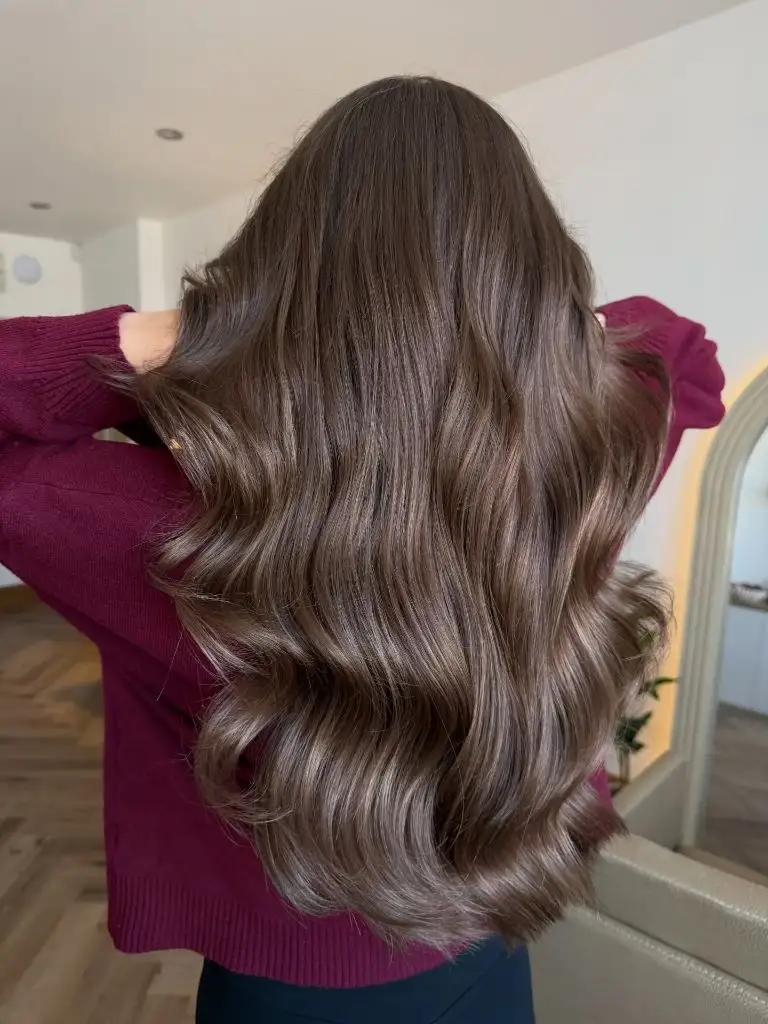
Photo via Instagram
The mushroom or mauve undertone places this color in a distinctly different camp from the warm, caramel-driven shades that dominate this article. The cool cast gives the hair a smoky quality, and the slightly ashy ends read as faded rather than highlighted, which contributes to a soft, worn-in aesthetic. The burgundy sweater introduces a warm contrast that makes the cool hair tones appear even cooler by juxtaposition — that push-pull between warm clothing and cool color creates visual tension in a productive way. The wave pattern is gentle and unfussy, and the overall impression is of a color that has been lived in rather than freshly applied. This tonal contrast between cool-toned hair and warm fabric is a relationship worth studying for anyone drawn to mushroom and mauve shades.
The reader takeaway is that mushroom brunette works as a winter color precisely because its coolness mirrors the season’s palette. The slightly mauve or ashy undertone reads as deliberate when paired with warm, saturated clothing. The principle: cool hair tones and warm wardrobe tones create a contrast that serves both elements well.
17. Deep Cherry Cola With High-Gloss Waves
Viewed from behind, the hair is very long and styled in loose, defined waves. The color is a deep cherry cola — a very dark base with rich burgundy and plum tones that emerge most clearly at the wave crests and along the ends. Text on the image reads “The 2026 Color of the Year” with a cherry emoji, and the lower right corner carries a salon watermark. The person wears a dark navy or black top, and the background shows a dark stone wall with green plants.
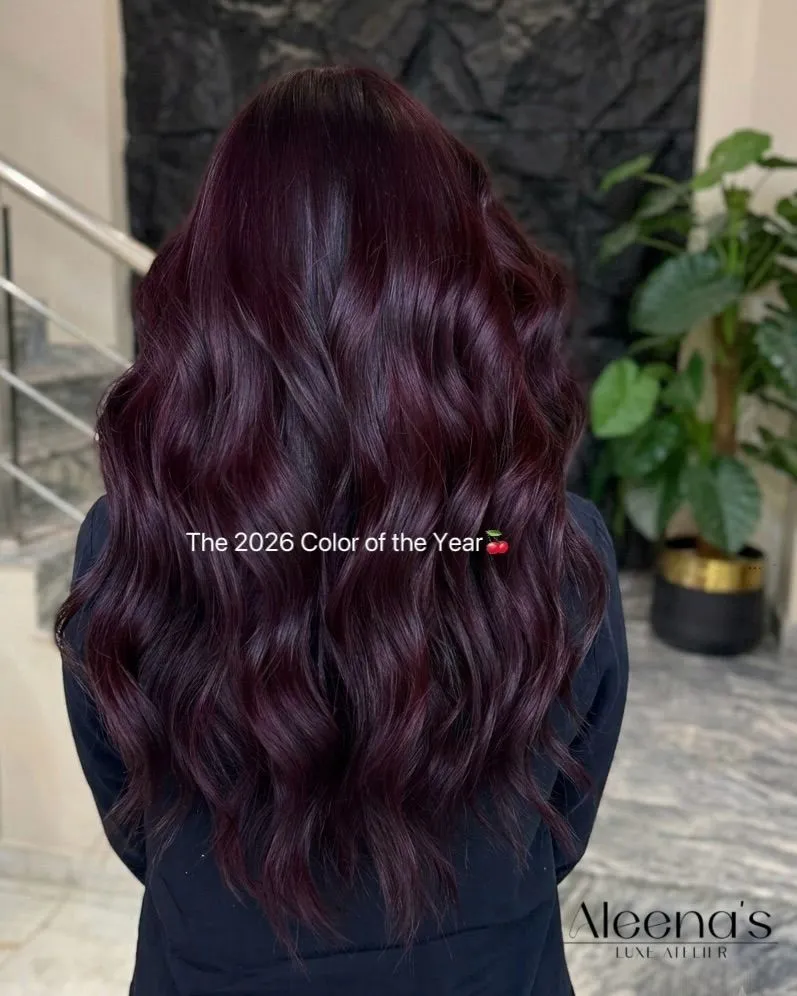
Photo via Instagram
The depth of this color is remarkable — in the troughs of each wave, the hair reads as nearly black, but on the crests, the burgundy and plum emerge like a light source beneath the surface. That conditional visibility creates an effect where the color appears to pulse between dark and saturated as the hair moves. The dark background and dark clothing strip away any external contrast, which forces all the visual interest onto the hair itself. The wave structure is large and sweeping, and each wave functions almost like a lens that focuses light onto the warm red undertones. This is the most dramatic color in the article, but it achieves that drama through saturation and depth rather than through lightness or high contrast. Colors with this kind of rich seasonal depth tend to work especially well under the warm, low-angle light of winter months.
What stands out most is how cherry and plum tones create their own kind of winter warmth — one that leans into richness rather than lightness. The transferable principle is that going darker can be a form of going warmer, because the increased saturation concentrates the warm undertones into a more intense experience. Depth and warmth are not opposites.
18. Dimensional Mocha With Caramel Weave
Viewed from behind, the hair is long and styled in soft, defined waves. The base is a deep mocha brown, and caramel-toned highlights are woven throughout the mid-lengths and ends, creating a multi-tonal effect. The text on the image reads “Dimensional Mocha” with a coffee cup emoji, and a salon watermark appears in the lower left. The person wears a black long-sleeve top and holds their hands up behind the head. The background shows a dark stone wall and a large green monstera leaf.
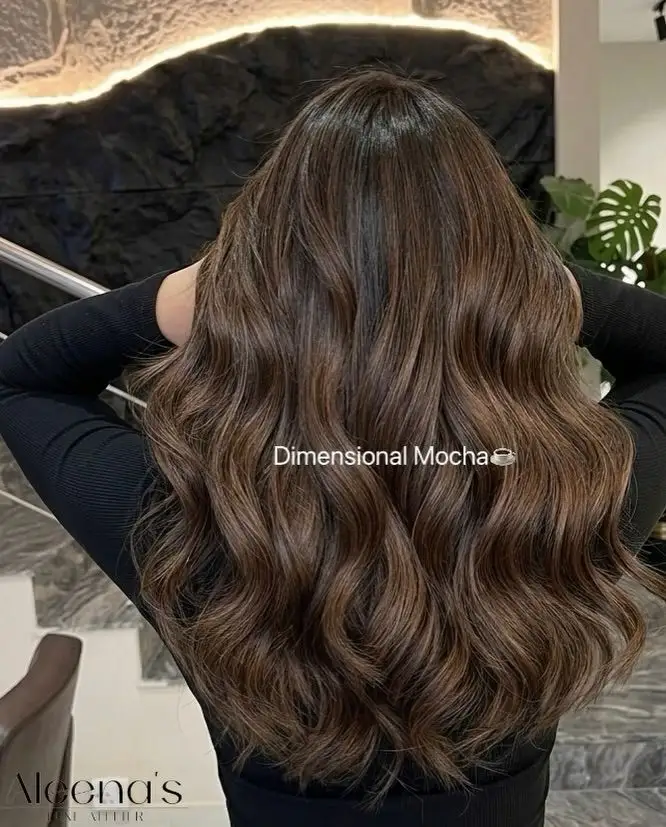
Photo via Instagram
The mocha base reads as a warm neutral — neither as cool as the mushroom shade nor as golden as the bronde — and the caramel highlights sit just close enough in tone to blend seamlessly when the hair is still. The wave structure pulls them apart, revealing the two-tone conversation that exists throughout the length. The distribution of the lighter pieces appears concentrated in the mid-lengths, leaving the roots and the very ends slightly darker, which creates a soft halo of warmth in the middle zone. The monstera leaf in the background introduces a green that, against the warm brown palette, makes the caramel tones register as even warmer. The black fabric does what it does consistently throughout this article — it disappears, giving the hair full visual priority.
The best move here is the mid-length concentration of the lighter tone, which creates a warm zone that frames the shoulders and the movement area of the hair. Rather than carrying highlights all the way to the ends or starting them at the root, the placement targets the section where waves and movement are most active. The principle: place the lightest tones where the most motion occurs.
19. Nutella Beige Bob With Fine Highlights
The hair is cut into a chin-length to slightly-below-chin bob, styled smooth with a slight curve at the ends. The color is labeled “Nutella Beige” in on-screen text. The base is a medium-warm brown, and fine, closely spaced highlights in a beige-blonde tone are woven throughout, most visible where the hair is held away from the head. The person holds a section of hair outward to display the color. They wear a warm brown ribbed knit top and a delicate gold chain necklace.
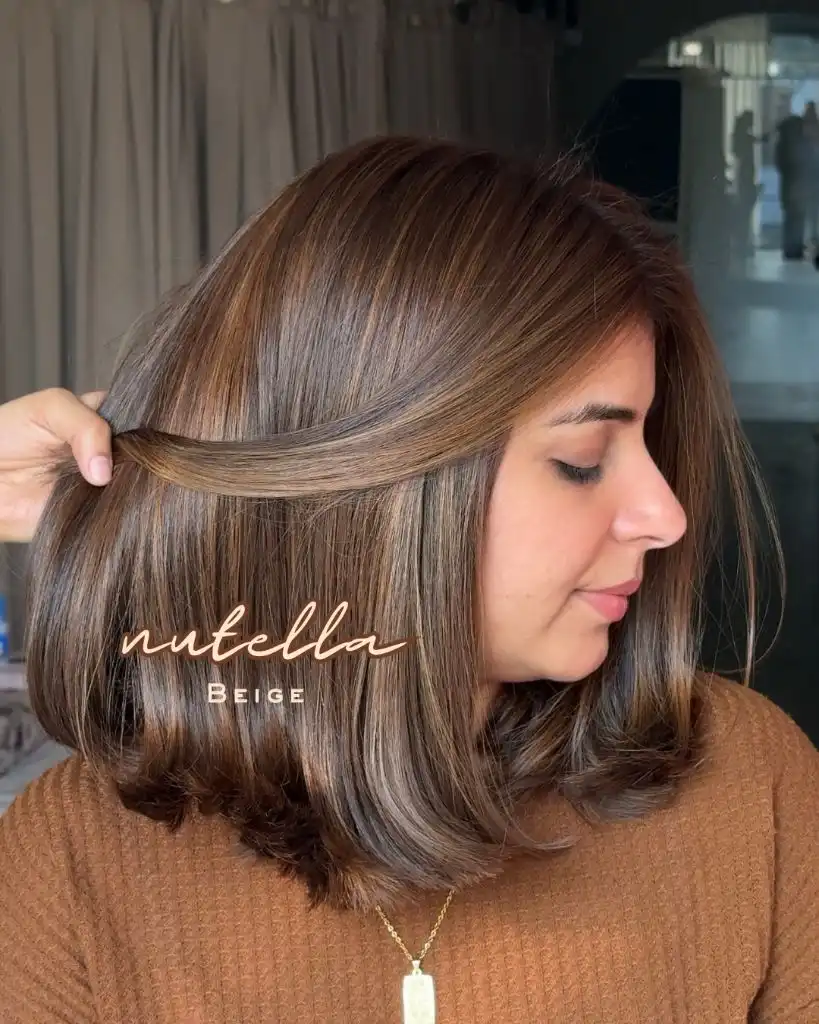
Photo via Instagram
The hand holding the hair outward is a deliberate display gesture — it separates the strands so the fine highlights become individually legible, revealing a density of tonal variation that would compress into a single shade when the hair lies flat. The nutella beige name captures the color well: it sits in the warm neutral space between brown and blonde, leaning neither too golden nor too ashy. The bob length keeps the color concentrated, and the slight curve at the ends adds just enough movement to activate the tonal play without creating dramatic waves. The ribbed brown top creates an almost monochromatic palette with the hair, which makes the beige highlights the single point of contrast in the entire frame. For those interested in how shorter cuts interact with highlight placement, this image is an instructive example.
The useful move here is understanding that fine highlights in a short cut operate differently than in long hair. There is less surface area to distribute them across, so they read as denser and more present. The principle is that highlight density should scale with length — shorter cuts can carry fewer, finer pieces and still achieve a fully dimensional look.
20. Burnt Copper Collage With Warm Styling Variations
The image is a four-panel collage showing four different views of burnt copper hair. The upper left shows long copper waves from behind against a white drape. The upper right shows a front-facing view with copper hair pulled into a high ponytail. The lower left shows layered, textured copper falling loosely. The lower right shows a half-up style with large barrel curls. All four share a warm, reddish-brown copper tone, and the text “BURNT COPPER” is centered across the image.
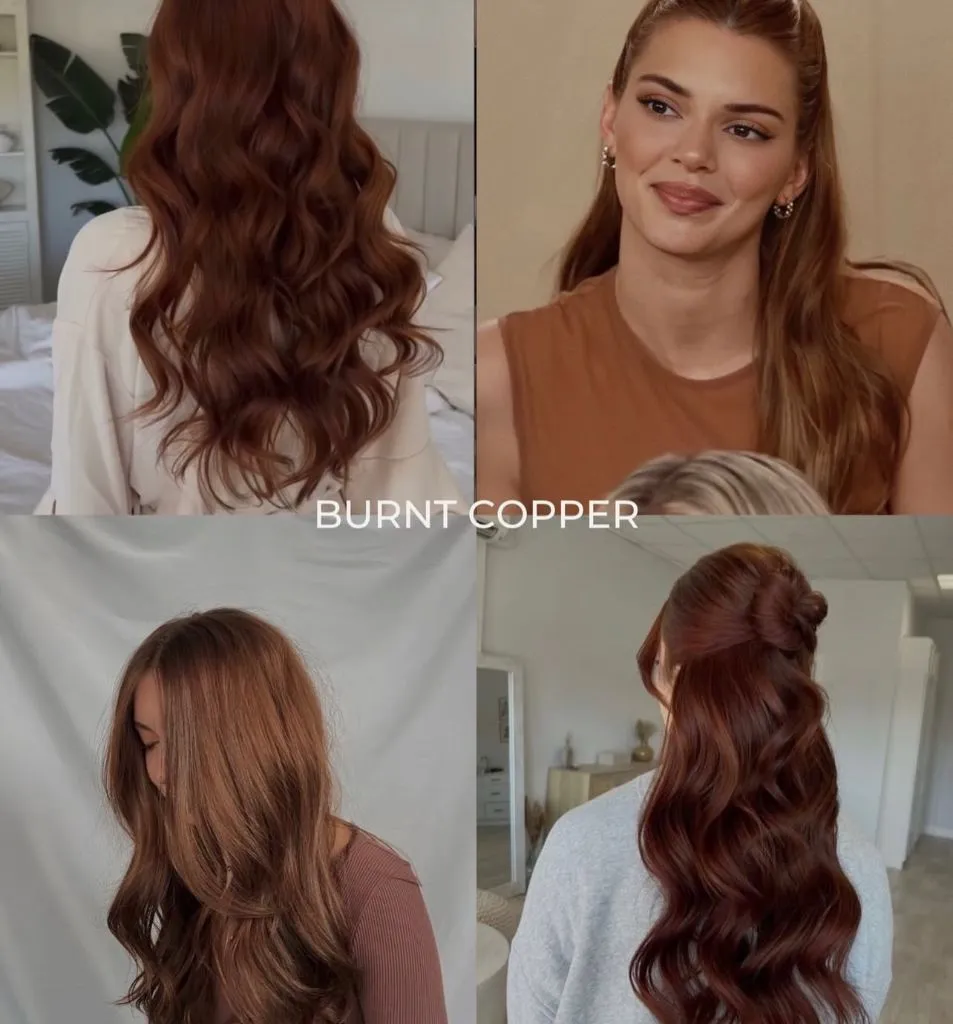
Photo via Instagram
The collage format serves a specific purpose — it demonstrates that a single color can look like four different shades depending on styling, length, texture, and lighting. The long waves in the upper left read as a rich auburn; the ponytail appears lighter and more golden because the hair is pulled taut and catches light along a wider surface; the loose layers in the lower left appear darker because of the shadows between strands; and the half-up barrel curls split the difference, reading as medium copper. This variation from a single dye formula illustrates the exact principle that runs through this entire article: how texture and styling decisions alter the perceived color even when the formula remains unchanged.
The reader takeaway is that committing to a burnt copper shade means committing to a color that will shift constantly with styling. That variability is not a limitation but a feature — it means a single salon session produces a color that offers multiple visual identities. The principle is that dynamic colors reward dynamic styling, and copper may be the most responsive shade in the brunette family.
21. Cool Plum-Brown Waves With Mauve Cast
Viewed from behind, the hair is medium-long, styled in soft, loose waves. The color is a cool-toned dark brown with a visible plum or mauve cast, particularly through the mid-lengths and ends where light reveals the undertone. The overall impression is of a cool, slightly purple-shifted brunette. The person wears a gray or silver-toned top, and the background is a simple cream wall with a green plant leaf visible.
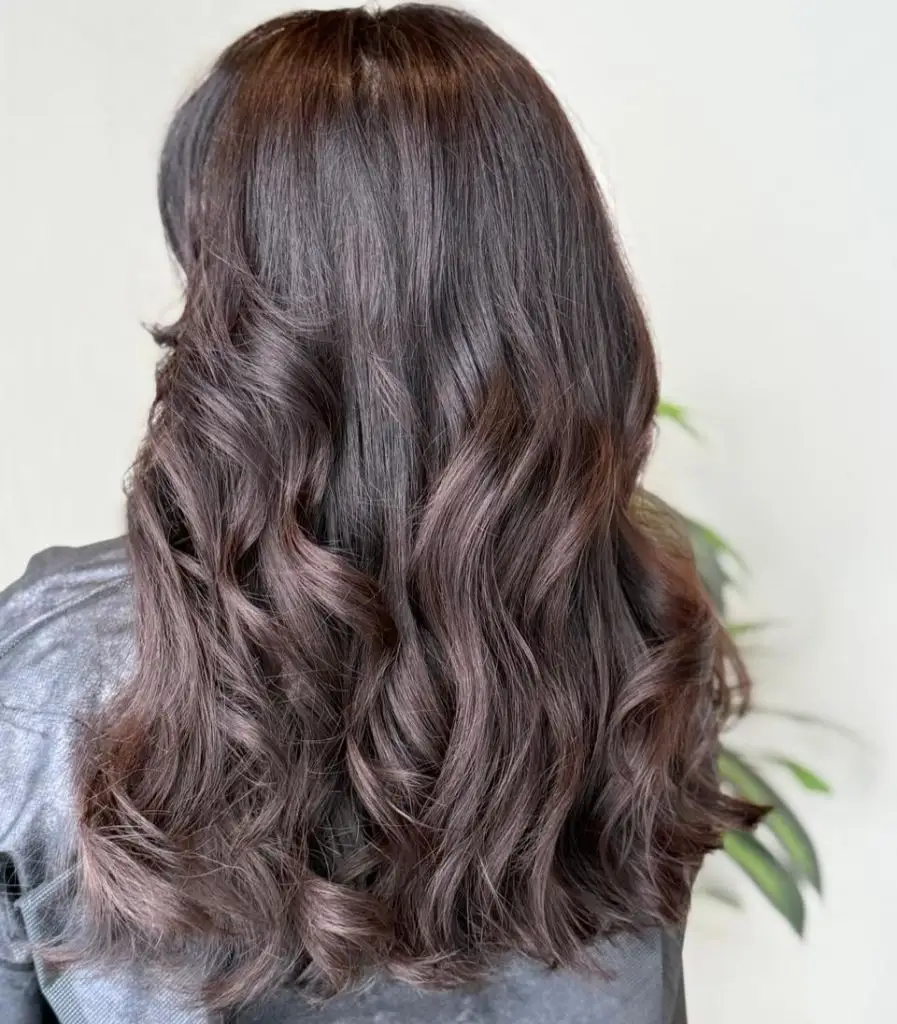
Photo via Instagram
The mauve cast places this shade in close conversation with the mushroom brunette from earlier, but with a slightly deeper, more violet lean. Where mushroom reads as earthy and muted, this plum-brown reads as slightly more intentional, as if a tonal filter has been laid over a natural brunette base. The gray top is a smart pairing — it sits in the same cool family as the hair, creating a monochromatic cool palette that makes the subtle plum undertone the most vivid element by default. The waves are soft and unstyled-looking, and their loose pattern reveals the color shift gradually as the surface curves. The cream wall background provides just enough warmth to prevent the overall image from feeling cold, and that balance between cool subject and warm environment creates a gentle tension.
The strongest lesson is that plum and mauve undertones offer an alternative winter warmth that operates in the cool spectrum. These tones work particularly well when the surrounding palette — clothing, background, lighting — stays cool, because the hair becomes the subtly warmest element in the frame. The principle: a color’s warmth is always relative to its context.
22. Dark Brunette Balayage With Sandy-Toned Dimension
The hair is long, styled in soft waves with a center part. The base is a dark brunette, and sandy or beige-toned highlights are placed through the mid-lengths and ends, creating a dimensional effect that reads as sun-touched. The person wears a beige or sand-colored linen dress with a gathered neckline. They look downward and slightly to the side. The background shows a salon interior with equipment and warm lighting.
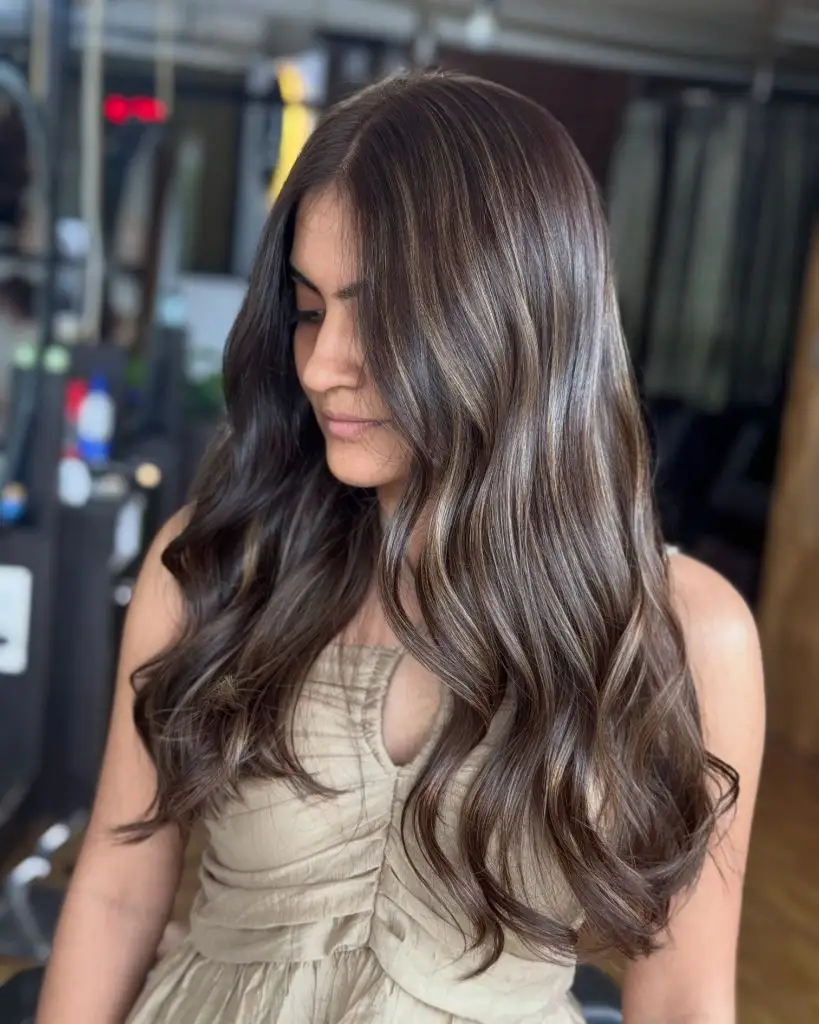
Photo via Instagram
The sandy highlight tone is notably different from the caramel and golden shades seen elsewhere — it carries more beige and less yellow, which gives the balayage a muted, natural quality rather than a warm, saturated one. The center part splits the highlights symmetrically, and the waves ensure that both sides display an even amount of tonal variation. The beige linen dress creates a near-match with the highlight tone, and that repetition of sandy beige between hair and fabric is the most considered color echo in the entire article. The dark root provides the necessary contrast to make the lighter pieces register as highlights rather than just a lighter base. The overall mood reads as understated, with every element staying within a narrow, muted palette. The approach mirrors the kind of tonal coordination between hair and wardrobe that creates a cohesive visual identity without relying on bold contrast.
The useful idea is that matching the highlight tone to the wardrobe creates a unified visual field that makes both the hair and the clothing appear more intentional. The transferable principle is simple: when choosing a highlight tone, consider what colors sit closest to the face most often, and let that inform the warmth or coolness of the lighter pieces.

Hi, I’m Zoey Mitchell, the creator of ChicStyle Blog.
I share simple, wearable outfit ideas, hairstyles, nail trends, and beauty tips that feel natural and easy to recreate.
This blog is where I explore everything that makes a woman feel put together and confident every day. I’m not an expert — just a woman who genuinely loves style, mixing looks, and discovering what works.
If you love effortless fashion with a personal touch, you’ll feel at home here.