
A hair color chart is only useful if it answers the question you actually walk into the salon with: which shade will suit your base, your texture and the amount of upkeep you are honestly willing to do. The 2027 chart leans lived-in, with soft root shadows, hand-painted balayage and glossy dimension replacing flat, uniform color. These eighteen ideas run the full range, from low-commitment brown-and-blonde blends to copper reds, gray blends, a blue melt and the shade charts that help you compare tones before you commit. The concept gets a fuller treatment in Winter Hair Color 2027.
1. Layered Chest-Length Hair in Warm Brown with Blonde Highlights

Photo credit by: latest-hairstyles.com
A warm brown base with blonde highlights woven through long layers is the chart’s most reliable starting point. The layers keep thick hair from sitting as one solid block of color, and the lighter pieces catch the light as the hair moves, which is what gives the whole cut its sense of movement. For the fuller picture, Winter Blonde Hair Colors For 2026 2027 is worth your time.
This combination suits medium to thick hair at chest length or longer, and the face-framing pieces soften the outline without a fringe. A blowout with a round brush shows the dimension off best, and a trim every eight to ten weeks keeps the layers from going limp. You’ll find the same spirit in Fox Hair Color Ideas To Transform Your Look In 2026.
2. Long Hair with a Root Shadow and Soft Blonde Highlights
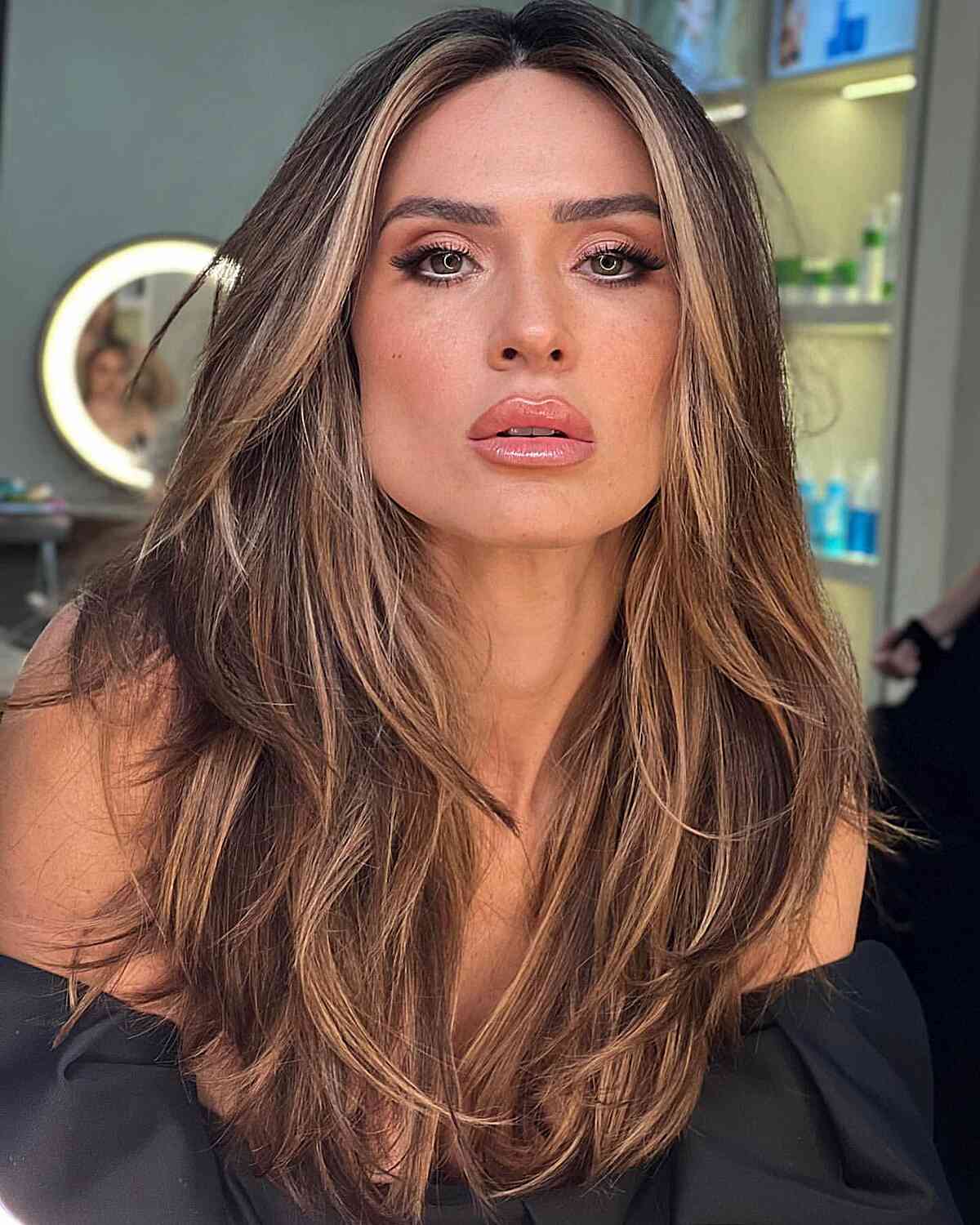
Photo credit by: latest-hairstyles.com
A root shadow is the quiet trick behind most low-maintenance blonde: the darker base is blended down into the lighter pieces so there is no hard line when the hair grows out. The result reads as deliberately lived-in rather than overdue for an appointment, and it can buy several extra weeks between salon visits.
The softness at the root also lets the blonde sit brighter through the lengths without looking harsh against the skin. It works best when the highlights are kept fine near the face and a little bolder toward the ends, so the brightness builds gradually.
3. Wavy Mid-Back Hair in Dark Brown with Blonde Balayage

Photo credit by: latest-hairstyles.com
Balayage and traditional highlights start from the same chair but do different jobs. Foils run root to tip for even lightness, while balayage is painted on by hand, landing heavier on the mid-lengths and ends for a softer, sun-touched blend. On a dark brown base, that painted placement keeps the root area dense and dark, then lightens gradually through the waves.
Thick, wavy hair at mid-back length is an ideal canvas because the wave pattern itself shows off the color variation. The grow-out stays gentle, with no stripe of demarcation, which is the main reason balayage remains the default for brunettes going lighter. See also Dazzling Christmas Hair Color Ideas For 2026 for more variations on this look.
4. Close-Up Dimension on Dark Brown Hair with Blonde Balayage

Photo credit by: latest-hairstyles.com
Seen up close, good balayage is not a uniform stripe but a series of soft, hand-painted ribbons that show dimension at every angle. Some pieces sit fine and close to the face, others run wider through the lengths, and the gaps of untouched dark brown between them are what stop the blonde from looking flat.
Styling matters here: a smooth blowout gives the color structure, and loose waves made with a large-barrel iron display the variation better than straight hair. A texture spray at the finish keeps the ribbons separated instead of clumping into one block of blonde.
5. Collarbone Bob with a Dark Blonde Base and Lighter Balayage

Photo credit by: latest-hairstyles.com
A collarbone bob is where balayage earns its keep on shorter hair. The dark blonde base keeps the color grounded, while lighter blonde pieces concentrated on the ends and the face-framing sections stop the cut from looking heavy or one-dimensional.
Because the grow-out is gradual rather than stripey, this is a forgiving first step into blonde for brunettes. Medium-density hair holds the loose wave best, and a trim every six to eight weeks keeps the bob’s outline from turning shapeless.
6. Bright Blonde Balayage on Collarbone-Length Hair

Photo credit by: latest-hairstyles.com
Bright blonde balayage turns the volume up on the same idea: the base stays dark enough to anchor the look, but the blonde pieces are lifted further and placed more boldly, especially around the face. The contrast is the point, and it reads brightest in sunlight and against darker clothing. We break down a similar look in Winter Red Hair Color Trends 2026 2027 You Need To See.
The trade-off is upkeep. Bright blonde on a dark base can throw brass after a few weeks, so a toning appointment every six to eight weeks is the realistic price of keeping it cool. Medium to thick hair carries the wave pattern best without collapsing.
7. Dark Brown Lob with Blonde Balayage and a Side Part

Photo credit by: latest-hairstyles.com
The lob earns its work-to-weekend reputation from its balance: long enough to tie back, short enough to hold a wave without hours of styling. A side part adds lift at the crown, and blonde balayage painted through a dark brown base gives medium-density hair a fuller silhouette.
Fall and winter suit this palette particularly well, when the darker base feels grounded and the blonde pieces catch what little light there is. Balayage touch-ups land around every three to four months, which suits anyone who books appointments well in advance.
8. Long Layers in Medium Brown with Blonde Balayage
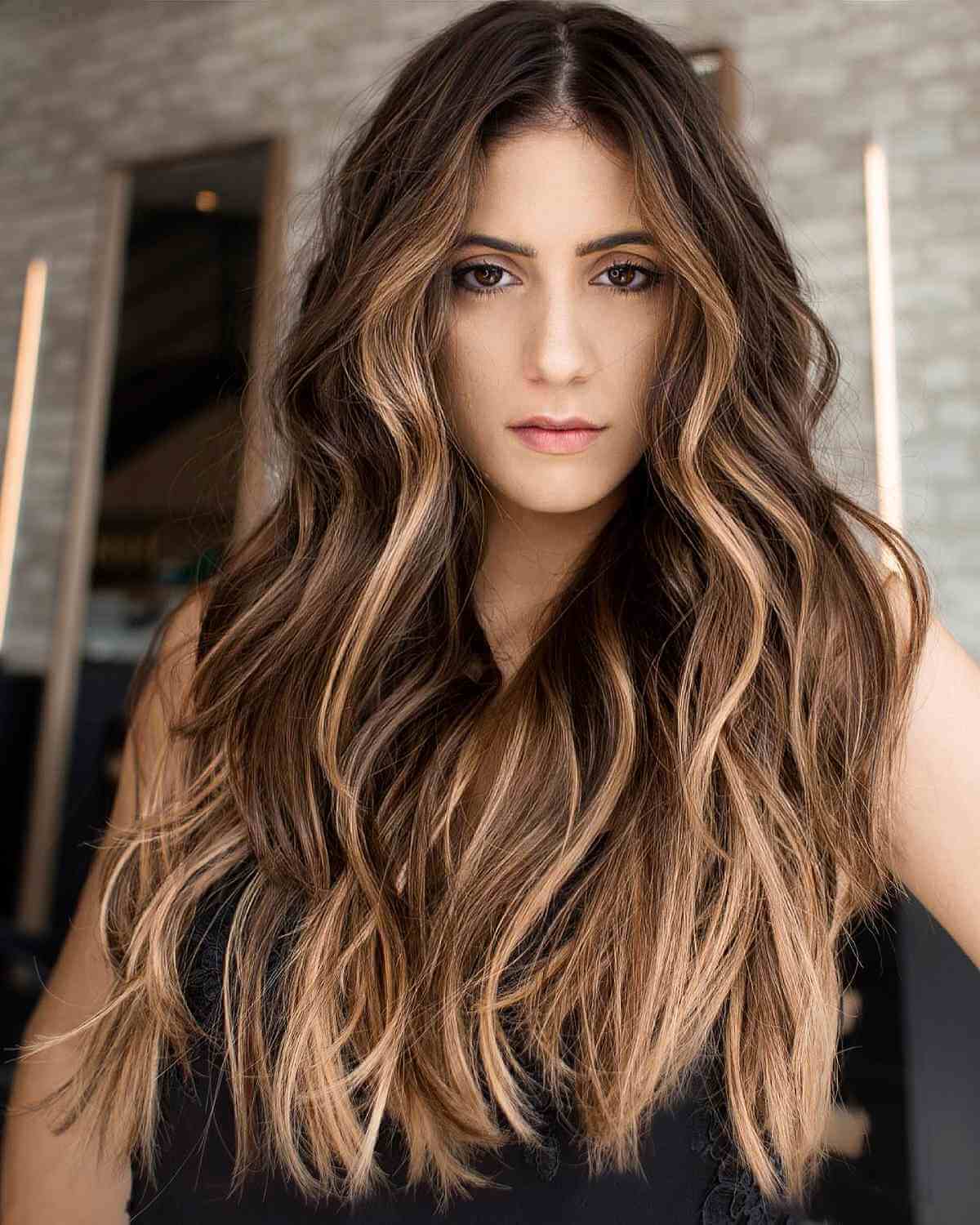
Photo credit by: latest-hairstyles.com
On thick hair, long layers do the structural work and the color does the visual work. The layers remove weight without sacrificing length, and the blonde balayage pieces break up what could otherwise be a solid wall of medium brown. A side part adds lift at the crown for rounder face shapes. We covered this territory more deeply in Lived In Blond Ideas To Transform Your Hair Color In 2026.
Because the color is painted rather than foiled to the root, salon visits can stretch to ten or twelve weeks. Thick hair holds the wave pattern well with a medium-barrel iron and a heat protectant, and the texture tends to stay defined for a full day without re-curling.
9. Loose Waves in Warm Copper Red

Photo credit by: therighthairstyles.com
Warm copper red works best when it is built with lighter tones woven through the ends rather than painted flat from root to tip. That variation keeps the base from feeling one-dimensional and lets the color shift in different light, which is the whole appeal of a multi-tonal red.
Long layers and a middle part give the loose waves room to move without tangling. Medium-density wavy hair takes this color well because the texture holds the lighter pieces, and a color-depositing conditioner every second wash helps the copper last between appointments.
10. Rich Copper Red Waves with Long Layers

Photo credit by: therighthairstyles.com
Rich copper red at longer lengths is a commitment, and the reason is consistency: the color has to read evenly from crown to ends, with no banding or uneven fade. Long layers and loose waves create the movement that makes a solid red read as glossy rather than heavy.
The upkeep reality is that red fades faster than any other shade, and a tone refresh every four to six weeks is the norm if the saturation matters to you. Color-safe shampoo and cooler water are non-negotiable, and medium-density wavy hair reflects light at multiple angles, so the color keeps looking dimensional even as the wave pattern relaxes. For more ideas in the same lane, see our November Hair Colors 2026.
11. Wavy Mid-Back Hair in Deep Copper Red

Photo credit by: therighthairstyles.com
If auburn leans too brown and true red reads a little flat, deep copper red splits the difference. It sits somewhere between a penny and a new brick, with enough warmth to catch overhead light but no orangey neon edge, and mid-back length gives the color room to show its subtle tonal shifts.
The shade works best on hair that starts at a medium or light brown base, since lifting from darker shades can pull the tone more orange. A color-depositing conditioner every other wash keeps the richness from fading toward pink, and that is the only real maintenance trick beyond the usual color-safe routine.
12. Dark Brown Hair with Caramel Balayage for Everyday Wear
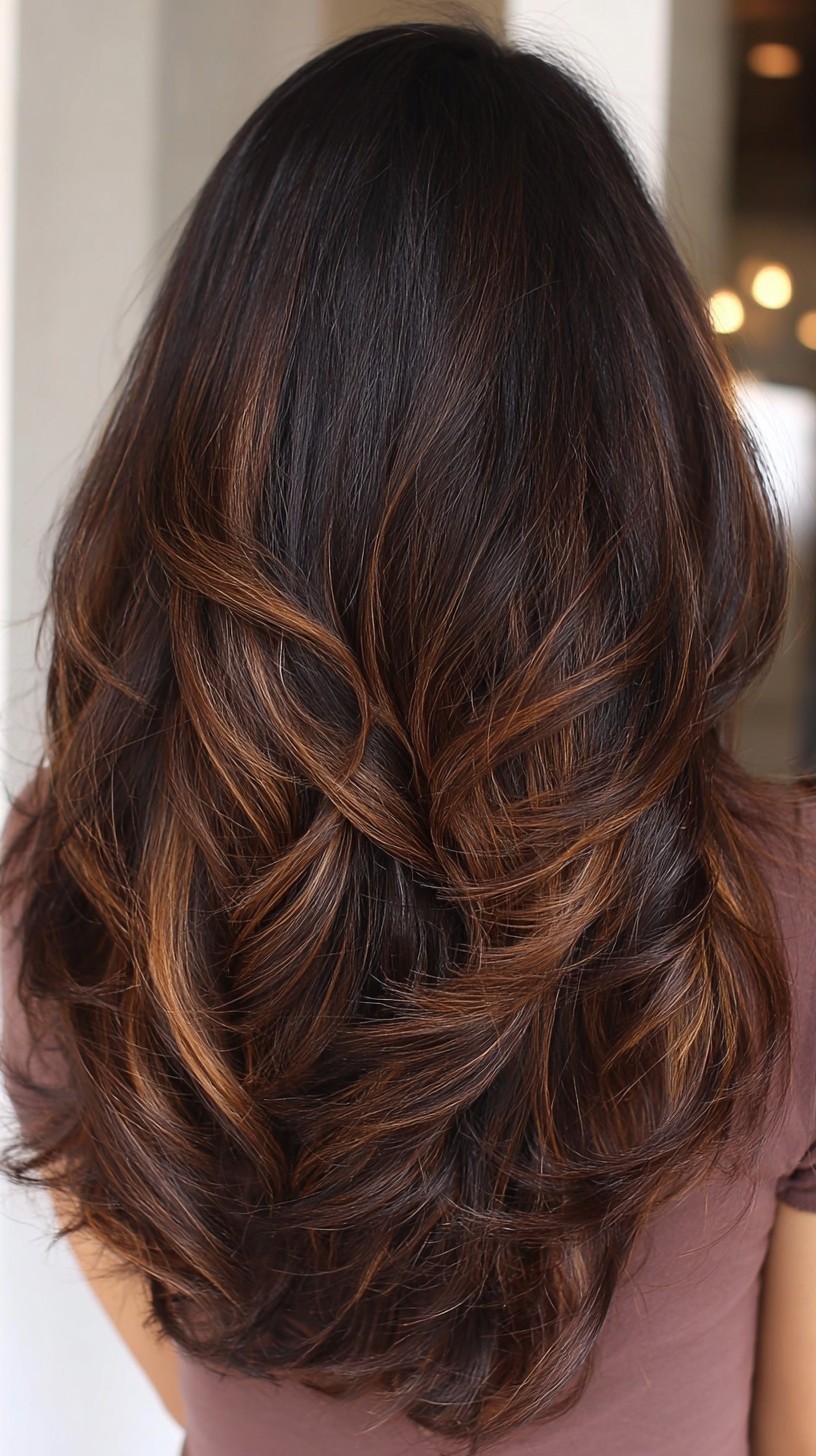
Photo credit by: latest-hairstyles.com
Caramel balayage is the everyday version of going lighter: a dark brown root and lower lengths, with caramel painted through the ends and around the face. The overall impression stays brunette, with a soft lift exactly where the hair naturally bends and catches light.
The placement is what makes it look grown-in rather than freshly done. More brown stays at the crown, the lighter pieces concentrate where the hair moves, and a blowout with loose waves pulls the caramel forward. For oval and long faces, a middle part balances the length without adding extra weight at the sides. A companion piece, Cozy Winter Hair Color Ideas, explores the same palette.
13. Chest-Length Dark Blonde Hair with Bright Face-Framing Balayage

Photo credit by: nextstyleideas.com
Face-framing highlights offer the brightness of a full head of blonde with far less root maintenance. The dark blonde base sits close to the natural level for most light brunettes, and the bright blonde balayage concentrates around the face and through the mid-lengths, so the eye reads blonde even though most of the head is not.
Chest length gives the color gradient enough room to show a smooth transition, and loose, glossy waves keep the finish polished. A smoothing serum on damp hair before blow-drying helps the gloss, and the soft framing works well on round and square face shapes.
14. Collarbone-Length Gray Hair with White Blonde Highlights

Photo credit by: latest-hairstyles.com
Gray that does not read as washed out is built on contrast. A cool, smoky gray base with white blonde highlights woven through face-framing layers lets the white pieces catch the light while the gray absorbs it, and loose, slightly undone waves keep the finish from looking stiff.
The gray base usually requires lifting to a pale blonde first, then toning with a violet-based formula to neutralize warmth. A purple shampoo once a week keeps both the gray and the white from yellowing, and the face-framing layers soften a square jawline without shortening the overall length.
15. Dark Brown Hair Melting into Blue Ends

Photo credit by: latest-hairstyles.com
This is not a subtle color shift. A dark brown base at the root and crown transitions into vibrant blue on the ends, and the contrast is deliberate: the brown anchors the look, the blue provides the payoff. Wavy styling lets the two colors sit next to each other without blending into a muddy middle. For a different spin on the same theme, browse Winter Blonde Hair Color Ideas.
Blue fades faster than any warm tone, with visible fading after four to six washes if you use warm water or sulfate shampoo. A color-depositing conditioner in a matching blue tone stretches the time between salon visits, but this is a commitment to cold-water washes and less frequent shampooing.
16. Black Hair with Gray and Purple Balayage

Photo credit by: latest-hairstyles.com
A black base fading into gray and purple sounds like a mood board, but on longer hair with layers the transition is deliberate. The middle part lets the color land evenly on both sides, and loose curls catch each shade separately without blurring them together into one murky tone.
The grow-out is low drama since the black base stays dark, but the gray and purple ends need a toning appointment every six to eight weeks to keep the ash from turning muddy. It is a cold-weather move that holds its own against holiday metallics and winter neutrals.
17. Ash Blonde Shade Swatches, Light to Ultra Light

Photo credit by: gkhair.com
Choosing ash blonde from a single photo is guesswork; a swatch chart settles the question of which ash actually looks ash and not beige. The straight texture of a swatch shows the true undertone without curl interference, so you can hold it next to pre-lightened hair and match the level before committing. Our Blonde Winter Hair Color Ideas rounds up more takes on this exact idea.
The upkeep is a purple shampoo used once or twice a week and a toning appointment every four to six weeks. Skip the conditioner for one wash if you want a cooler result faster, and remember that numbering differs between brands, so confirm the level with your colorist rather than trusting the box alone.
18. A Semi-Permanent Color Swatch Book for Trying Bold Shades

Photo credit by: hairandbeautyworld.com.au
A swatch book with names and numbers visible is the closest thing to a cheat sheet for temporary color. Reds, pinks, blues and greens arranged in rows let you see the opacity and the undertone before you commit a tube to your hair, which matters because semi-permanent formulas deposit color without lifting, so the result depends on your starting shade.
Application takes about thirty minutes at home, and the color fades gradually over six to twelve washes. That makes it the lowest-risk way to test a shade you would not wear for a full grow-out cycle, and the easiest way to preview a bold idea from this chart before booking it as a permanent service.
Start from your base, not from the photo: dark hair keeps caramel, honey and copper honest, while lighter bases carry ash, gray and fashion color without a fight. Take the chart to your colorist, point at the placement as well as the shade, and agree on the toning schedule before the first appointment, because maintenance is what decides whether a color still looks good at week six. The right shade is the one that grows out gracefully and still feels like you.

Hi, I’m Zoey Mitchell, the creator of ChicStyle Blog.
I share simple, wearable outfit ideas, hairstyles, nail trends, and beauty tips that feel natural and easy to recreate.
This blog is where I explore everything that makes a woman feel put together and confident every day. I’m not an expert — just a woman who genuinely loves style, mixing looks, and discovering what works.
If you love effortless fashion with a personal touch, you’ll feel at home here.